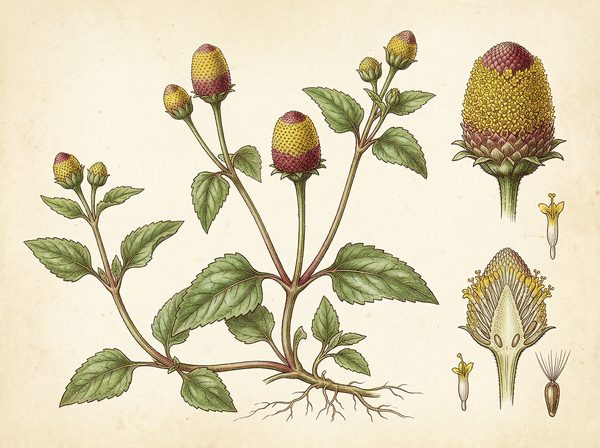
Western Herbalism
Toothache Plant
Spilanthes acmella
Also known as Para Cress.
Primary traditional use for oral pain via local anesthetic effect from chewing flowers limited human clinical data, mostly animal/in vitro and ethnobotanical tingling sensation indicates quality 3858870 3888711

Ask Herbert about Toothache Plant. Herbert is the master herbalist inside Bountiful Herbs: he answers from this plate and eleven hundred others, with dosing, pairing and cautions. Your first ten questions are free.
Ask HerbertActions
Indications what the tradition reached for it in
- Cuts
- Periodontitis
- Parasitic worms
- Gingivitis
- Colic
- Tongue paralysis
- Urinary calculi
- Stammering
- Bleeding gums
- Rheumatism
- Boils
- Malaria
- Stomachache
- Leukorrhea
- Stomatitis
- Toothache
- Headache
- Cough
- Oral ulcers
- Muscle pain
- Flu
- Wounds
- Snakebite
- Diarrhea
- Fever
- Dysentery
- Gum infections
- Sore throat
- Scabies
- Edema
Safety
Pregnancy: Pregnancy Caution
The record lists 6 contraindications; open the plate in the library to read them in full.
Dosing as the sources wrote it
| Preparation | As written | Metric |
|---|---|---|
| Tincture | Tincture 1:2-1:3 fresh aerial parts 55-65% alcohol, 1-2 mL up to 6x/day (traditional/herbalist) | 2-2 mL |
Doses are reproduced from the sources for practitioners and are not a recommendation for any person.
From the sources
Clinical Notes. Primary traditional use for oral pain via local anesthetic effect from chewing flowers limited human clinical data, mostly animal/in vitro and ethnobotanical tingling sensation indicates quality 3858870 3888711
primary-actions. Toothache Plant acts primarily as: Analgesic, Local anesthetic, Anti-inflammatory, Stomachic, Antimicrobial, Antifungal. Secondary actions include Diuretic, Aphrodisiac, Antioxidant, Antinociceptive, Immunomodulator.
indications. Toothache Plant is traditionally indicated for: Cuts, Periodontitis, Parasitic worms, Gingivitis, Colic, Tongue paralysis, Urinary calculi, Stammering, Bleeding gums, Rheumatism, Boils, Malaria, Stomachache, Leukorrhea, Stomatitis, and 27 further conditions.
constituents. Notable constituents of Toothache Plant include: Spilanthol (N-isobutyl-2,6,8-decatrienamide), N-alkylamides, acmellonate, triterpenoids (α-amyrin, β-amyrin), flavonoids, tannins, phenolics, sesquiterpenes.
Nearby on the shelf
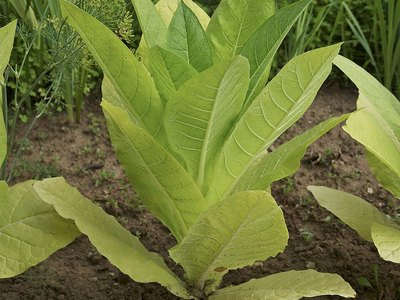 TobaccoNicotiana tabacum
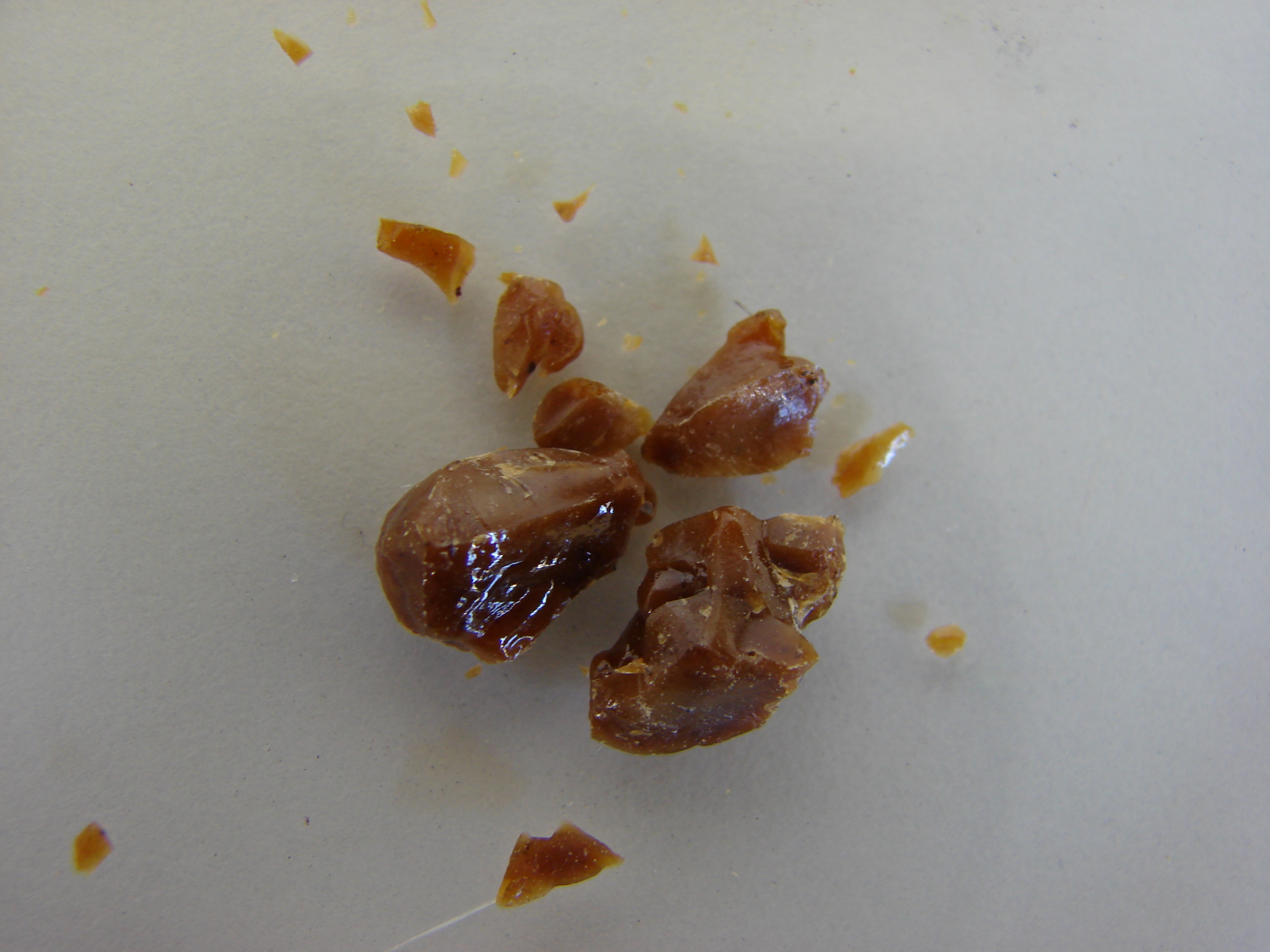 ToluBalsam tolu
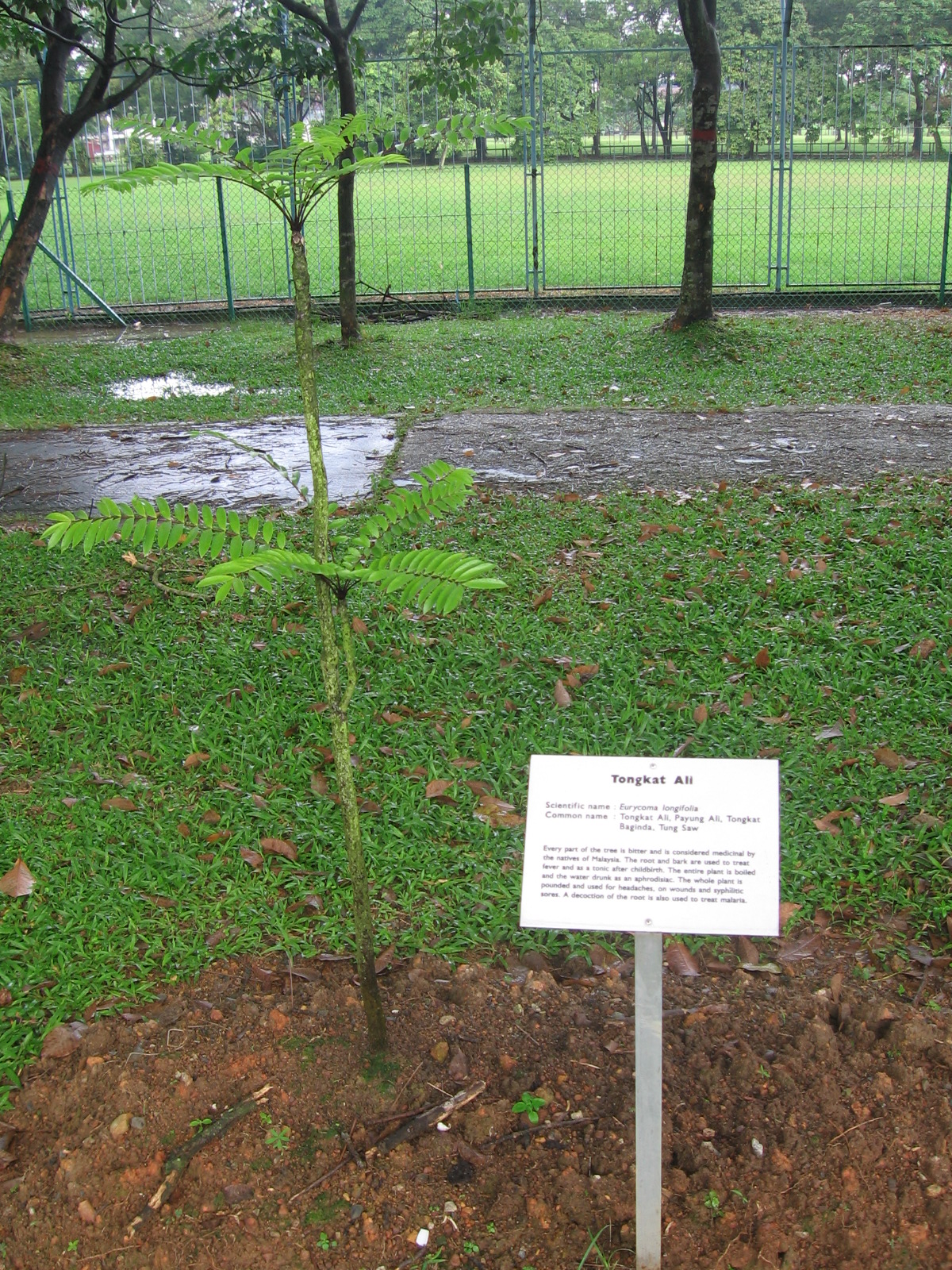 Tongkat AliEurycoma longifolia
 Tongue fernPyrrosia lingua
 TormentilPotentilla erecta
 TragacanthAstragalus verus
 Tree peonyPaeonia suffruticosa
 TriphalaTriphala
The whole plate is in the library. The compass, Compare, the Sky of eleven hundred plants and the formulary open with an email address and a password, free, with the formula builder and its safety engine. Herbert without limit, his formulating, clients, the handouts and the labels are the paid room.
Open the library, free