Chinese Herbalism
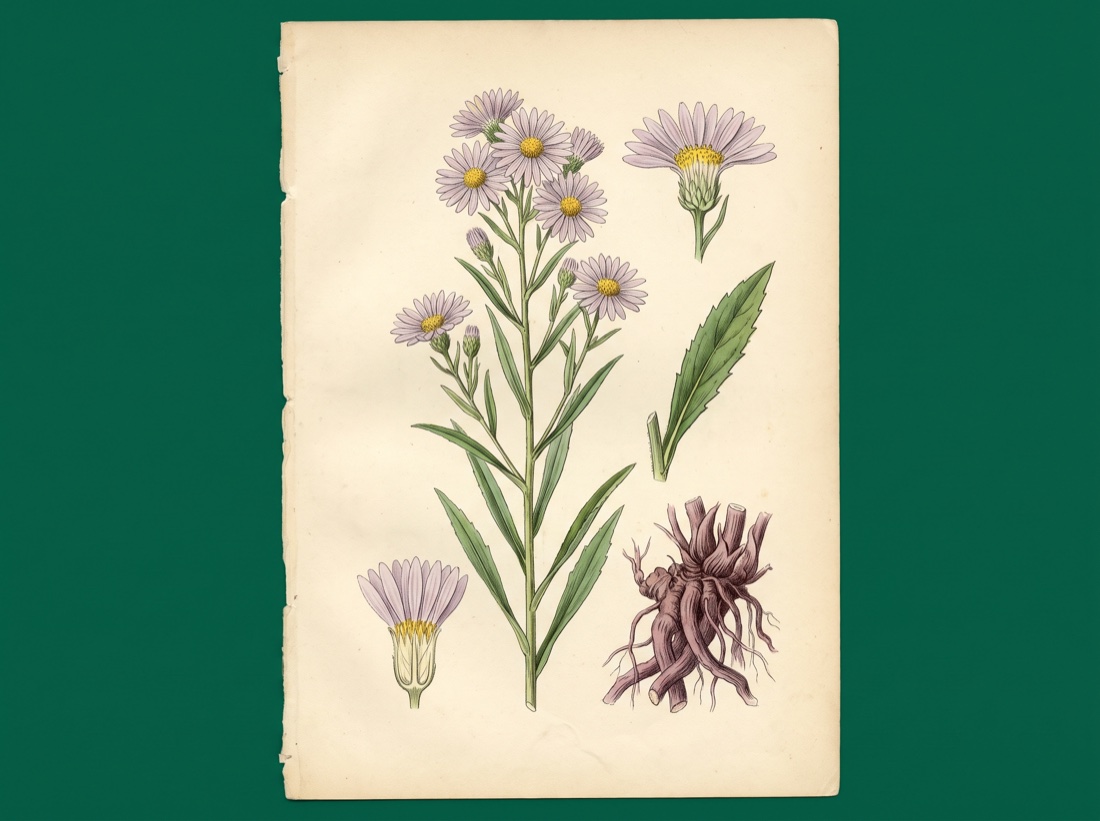
Tatarian aster
Aster tataricus
Also known as Tartarian aster, purple aster root, zi wan, zǐ wǎn, mì zǐ wǎn.
Zi wan is the dried root and rhizome of the Tatarian aster, a tall perennial with lilac daisy flowers native to grasslands and forest edges across northern China, Mongolia, Siberia, Korea and Japan and widely cultivated in Hebei and Anhui. The fine, fibrous purplish roots are gathered in spring or autumn, plaited into braids and dried, and are used raw or honey-fried. In Chinese medicine it is one of the gentlest and most widely used cough herbs, valued because it neither dries nor cools, and so can be fitted to almost any cough with the right partners.

Ask Herbert about Tatarian aster. Herbert is the master herbalist inside Bountiful Herbs: he answers from this plate and eleven hundred others, with dosing, pairing and cautions. Your first ten questions are free.
Ask HerbertActions
Indications what the tradition reached for it in
- Cough with phlegm that is hard to raise
- Acute cough from wind-cold with sticky sputum
- Chronic cough from Lung deficiency
- Cough with blood-streaked sputum
- Chronic bronchitis with persistent productive cough
- Wheezing with phlegm rattling in the throat (with other herbs)
- Post-infectious cough that lingers for weeks
- Whooping cough (with other herbs)
- Dry cough of yin deficiency with a little phlegm (honey-fried, with other herbs)
- Urinary retention or difficulty from Lung qi failing to descend (traditional)
Specific indications
A cough of any age that produces thick phlegm only with effort, whether the patient is hot or cold, where it is paired with kuan dong hua
The cough that will not leave after a cold, tickling and phlegmy, with no strong heat or cold signs, the picture of Zhi Sou San
Chronic weak cough with occasional blood streaks in an older patient, using the honey-fried root with bai he and mai men dong
Safety
The record lists 4 contraindications; open the plate in the library to read them in full.
In practice
Zi wan is the practitioner's all-purpose cough herb. Its classical partner is kuan dong hua, and the pair appear together in Zhi Sou San (with bai bu, jie geng, bai qian, jing jie, chen pi and gan cao) for the lingering cough after a cold, and in She Gan Ma Huang Tang for cold wheezing with throat rattling.
In Chinese medicine
Temperature: slightly warm. Taste: bitter, acrid, sweet. Channels: Lung. Actions: Moistens the Lung and directs qi downward; Dissolves phlegm and stops cough; Gently unblocks the Lung to relieve wheezing and, by extension, urinary retention.
Dosing as the sources wrote it
| Preparation | As written | Metric |
|---|---|---|
| Decoction (raw or honey-fried root) | 5-10 g dried root daily | 5000-10000 mg |
| Decoction, stubborn productive cough | 10-15 g dried root daily | 10000-15000 mg |
| Powder in pills or capsules | 1-3 g dried root powder two to three times daily | 1000-3000 mg |
Doses are reproduced from the sources for practitioners and are not a recommendation for any person.
From the sources
Overview. Zi wan is the dried root and rhizome of the Tatarian aster, a tall perennial with lilac daisy flowers native to grasslands and forest edges across northern China, Mongolia, Siberia, Korea and Japan and widely cultivated in Hebei and Anhui. The fine, fibrous purplish roots are gathered in spring or autumn, plaited into braids and dried, and are used raw or honey-fried. In Chinese medicine it is one of the gentlest and most widely used cough herbs, valued because it neither dries nor cools, and so can be fitted to almost any cough with the right partners.
Clinical Notes. Zi wan is the practitioner's all-purpose cough herb. Its classical partner is kuan dong hua, and the pair appear together in Zhi Sou San (with bai bu, jie geng, bai qian, jing jie, chen pi and gan cao) for the lingering cough after a cold, and in She Gan Ma Huang Tang for cold wheezing with throat rattling.
Chinese Medicine Profile. Temperature: slightly warm. Taste: bitter, acrid, sweet. Channels: Lung. Actions: Moistens the Lung and directs qi downward; Dissolves phlegm and stops cough; Gently unblocks the Lung to relieve wheezing and, by extension, urinary retention.
In formulas
Tatarian aster stands in 11 documented formulas in the library, among them bũ fei tāng, zhi sòu sǎn, shè gàn má huáng tàng, rên shèn huáng qí sắn.
Often paired with
 Licorice rootGlycyrrhiza glabra
 Balloon Flower RootPlatycodon grandiflorus
 tangerineCitrus reticulata
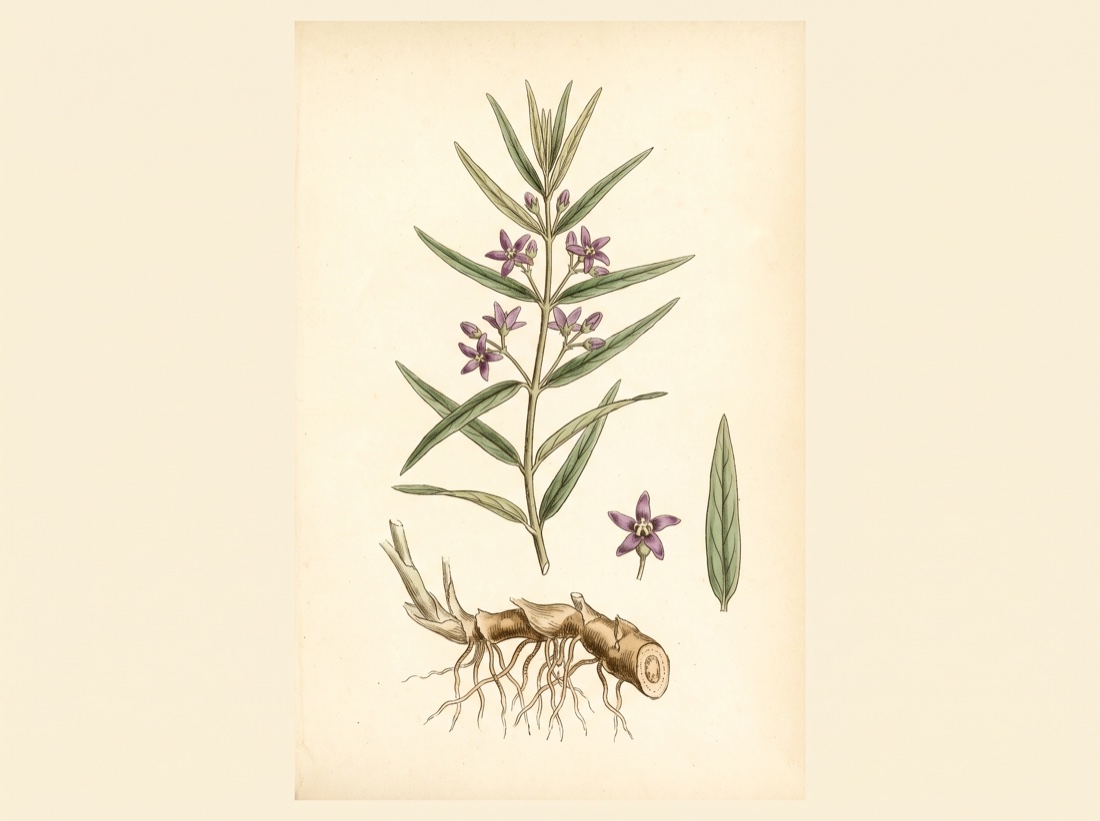 willowleaf swallowwortVincetoxicum stauntonii
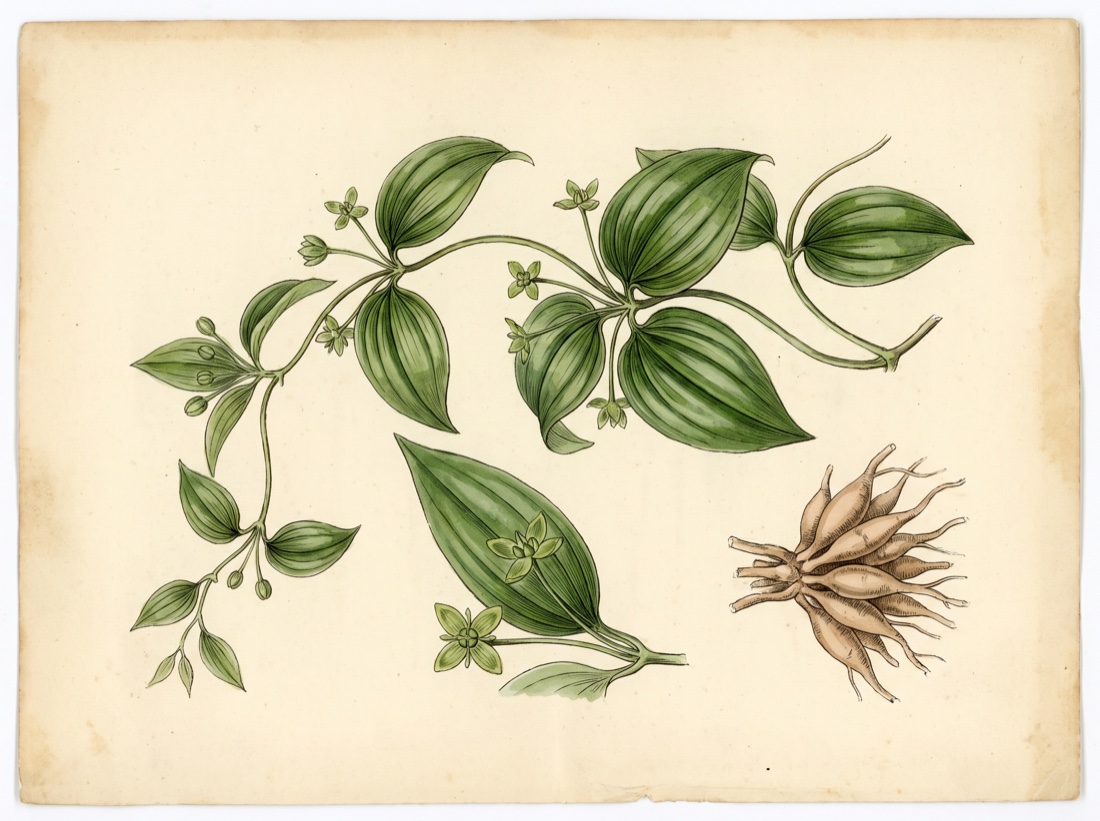 Japanese stemonaStemona japonica
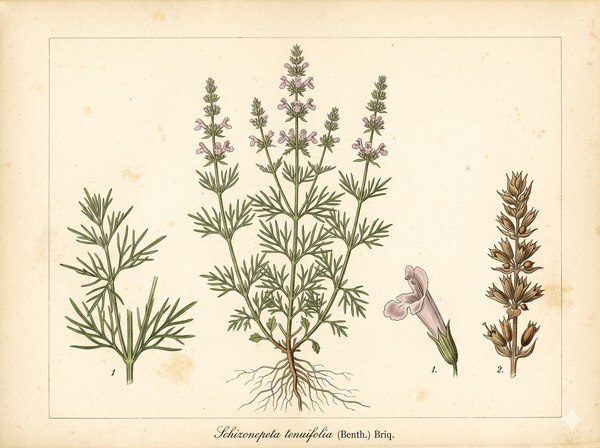 Jing JieSchizonepeta tenuifolia
Nearby on the shelf
 TansyTanacetum vulgare
 TapiocaManihot
 TarragonArtemisia dracunculus
 Tea treeMelaleuca alternifolia
 TeaselDipsacus fullonum
 ThapsiaThapsia garganica
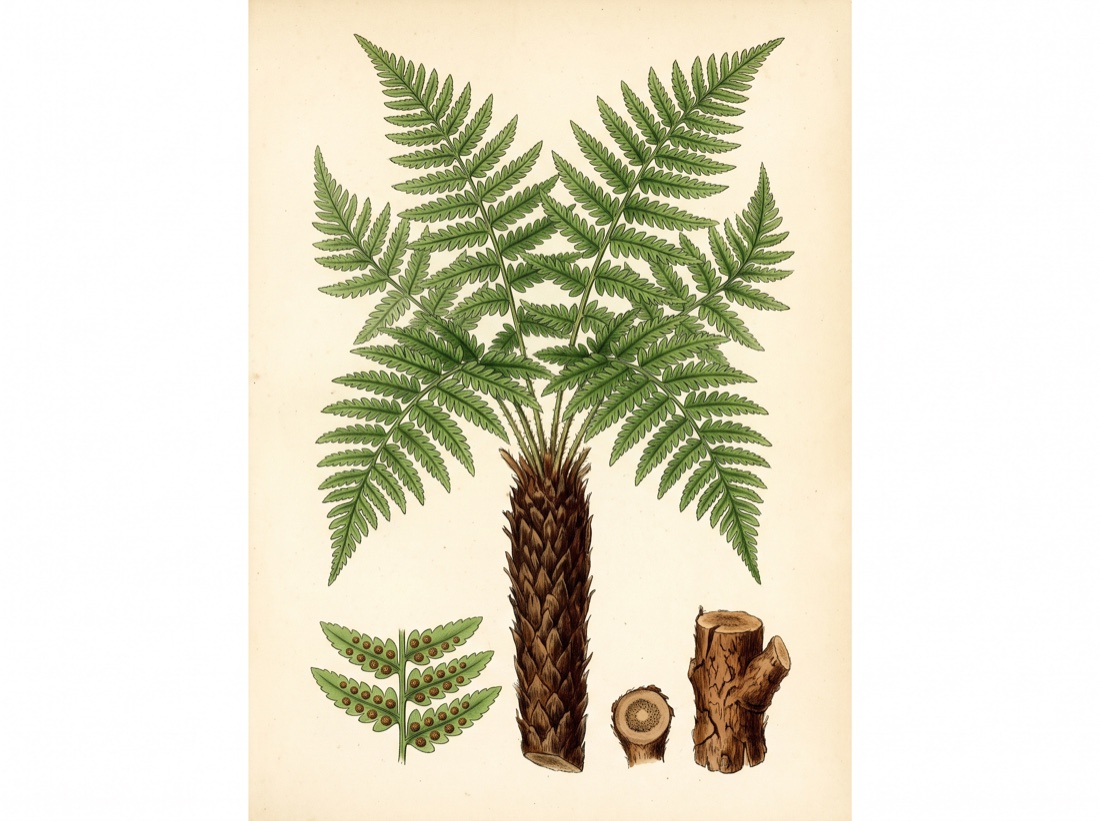 Thick-stemmed wood fernDryopteris crassirhizoma
The whole plate is in the library. The compass, Compare, the Sky of eleven hundred plants and the formulary open with an email address and a password, free, with the formula builder and its safety engine. Herbert without limit, his formulating, clients, the handouts and the labels are the paid room.
Open the library, free