Western Herbalism
Sweet chestnut
Castanea vesca
Also known as Spanish chestnut, European chestnut, Chestnut, Castanea.
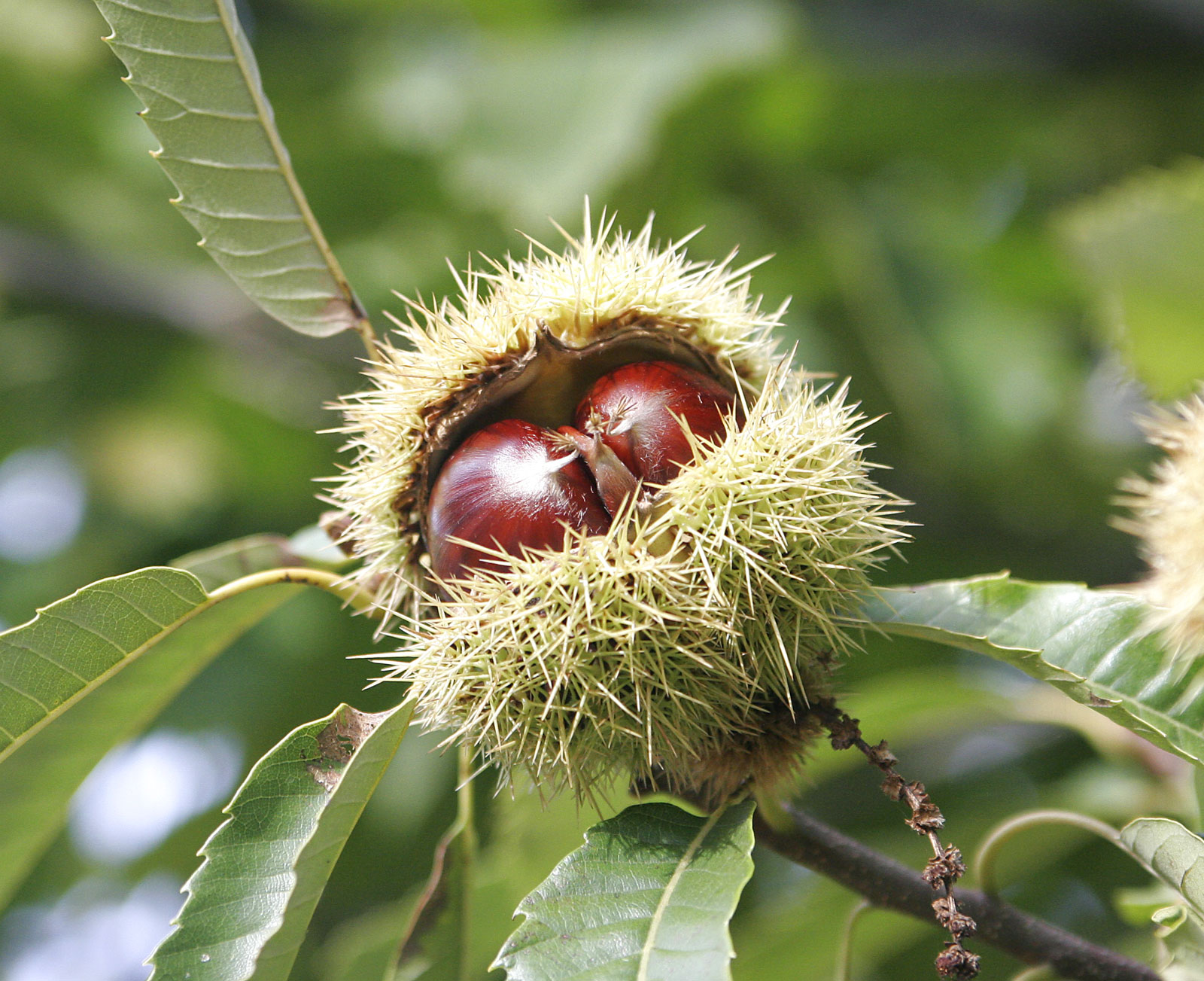
Castanea vesca, the sweet or Spanish chestnut, is a large deciduous tree of the beech family long cultivated across Europe and parts of North America for its edible nuts. Eclectic and physiomedical practitioners of the nineteenth century used the leaves, not the nuts, as a mild astringent tonic. The tree's serrate leaves are gathered and dried for infusion, and the remedy has a modest but well regarded place in old American domestic and midwifery practice, valued for its gentleness rather than its strength.

Ask Herbert about Sweet chestnut. Herbert is the master herbalist inside Bountiful Herbs: he answers from this plate and eleven hundred others, with dosing, pairing and cautions. Your first ten questions are free.
Ask HerbertActions
Indications what the tradition reached for it in
- Chronic and sub-acute diarrhea
- Dysentery
- Menorrhagia
- Excessive lochia after childbirth
- Whooping cough
- Irritable dry cough
- Bronchitis with tickling cough
- Sore throat (as a gargle)
- General debility with lax tissue tone
Specific indications
Heavy, prolonged menstrual bleeding in a woman with generally lax, atonic tissue, where a gentle astringent tonic rather than a harsh styptic is wanted.
A dry, irritating, spasmodic cough, particularly in children with whooping cough, where the leaf's tannins soothe the irritated mucosa while providing mild astringency.
Safety
The record lists 1 contraindication; open the plate in the library to read them in full.
In practice
Chestnut leaf earns its place as a gentle astringent that can be used where a stronger tannin-rich herb would be too harsh, particularly in cases of prolonged, moderate uterine bleeding or excessive lochia following delivery.
Dosing as the sources wrote it
| Preparation | As written | Metric |
|---|---|---|
| Infusion | 2-4 g dried leaf steeped in 250 mL boiling water, three times daily | 2000-4000 mg |
| Tincture (1:5, 40%) | 2-4 mL three times daily | 2-4 mL |
| The dose in substance is from ten to twenty grains three times a day | 648-1296 mg | |
| The dose of this is from a half to two fluid drachms | 1.85-7.39 mL | |
| It should be given in full doses every two or three hours. | ||
| Infusum Castaneae, Infusion of Castanea | Dose, 1/2 - 2 fluidrachms. | 1.85-7.39 mL |
Doses are reproduced from the sources for practitioners and are not a recommendation for any person.
From the sources
Overview. Castanea vesca, the sweet or Spanish chestnut, is a large deciduous tree of the beech family long cultivated across Europe and parts of North America for its edible nuts. Eclectic and physiomedical practitioners of the nineteenth century used the leaves, not the nuts, as a mild astringent tonic. The tree's serrate leaves are gathered and dried for infusion, and the remedy has a modest but well regarded place in old American domestic and midwifery practice, valued for its gentleness rather than its strength.
Clinical Notes. Chestnut leaf earns its place as a gentle astringent that can be used where a stronger tannin-rich herb would be too harsh, particularly in cases of prolonged, moderate uterine bleeding or excessive lochia following delivery.
Action and Therapy. The freshly prepared infusion of the leaves is a remedy for paroxysmal or convulsive cough. For some unexplained reason it is sometimes one of the most effective medicines for whooping cough. In many cases it acts remarkedly well, while in others its effects are not so apparent. It is seldom, however, that it does not do some good. The infusion (which is by far the best preparation) may be sweetened if desired, and given freely to the patient several times a day.
Therapy. This agent is lauded as a specific for whooping-cough. The evidence adduced would lead to the conclusion that certain conditions not yet determined, must be present if it exercises curative powers. In certain experiments it has apparently ameliorated the symptoms promptly. In some cases there was a prompt arrest of the disease. In other cases no results have been apparent. It should receive thorough investigation to determine the specific conditions in which it will exercise a curative influence. It should be given in full doses every two or three hours. If it proves curative in whooping-cough it should be found of service in other bronchial coughs with free secretion.
Drawn from Cook's Physio-Medical Dispensatory; King's American Dispensatory, 18th edition (Felter and Lloyd); Ellingwood's American Materia Medica, Therapeutics and Pharmacognosy; Felter's Eclectic Materia Medica, Pharmacology and Therapeutics, and the Bountiful Herbs editorial.
Nearby on the shelf
 SundewDrosera rotundifolia
 SunflowerHelianthus annuus
 Supple jackBerchemia volubilis
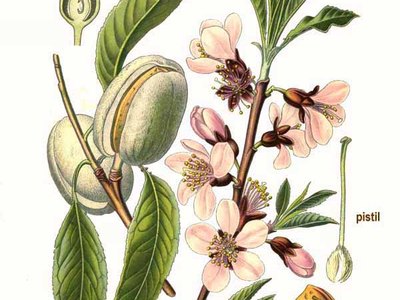 Sweet almondAmygdalus communis dulcis
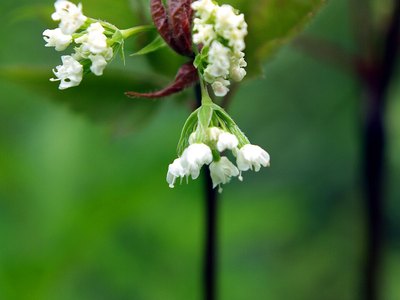 Sweet cicelyOsmorhiza longistylis
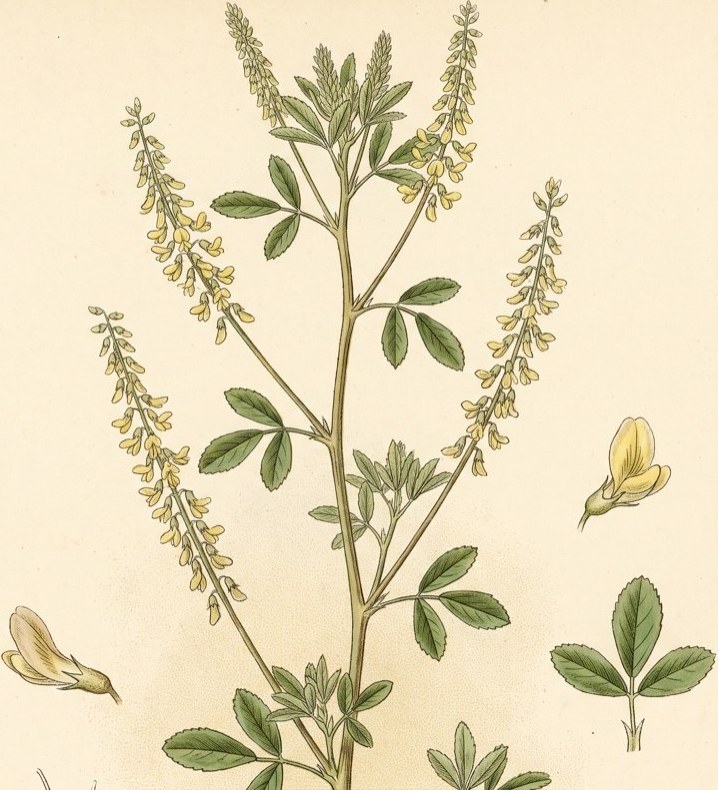 Sweet cloverMelilotus officinalis
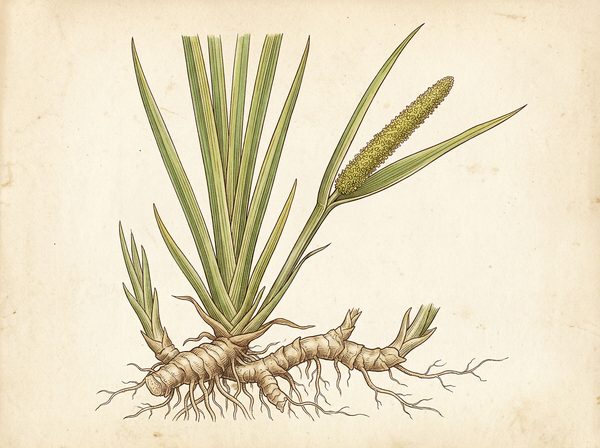 Sweet flagAcorus calamus
 Sweet GoldenrodSolidago odora
The whole plate is in the library. The compass, Compare, the Sky of eleven hundred plants and the formulary open with an email address and a password, free, with the formula builder and its safety engine. Herbert without limit, his formulating, clients, the handouts and the labels are the paid room.
Open the library, free