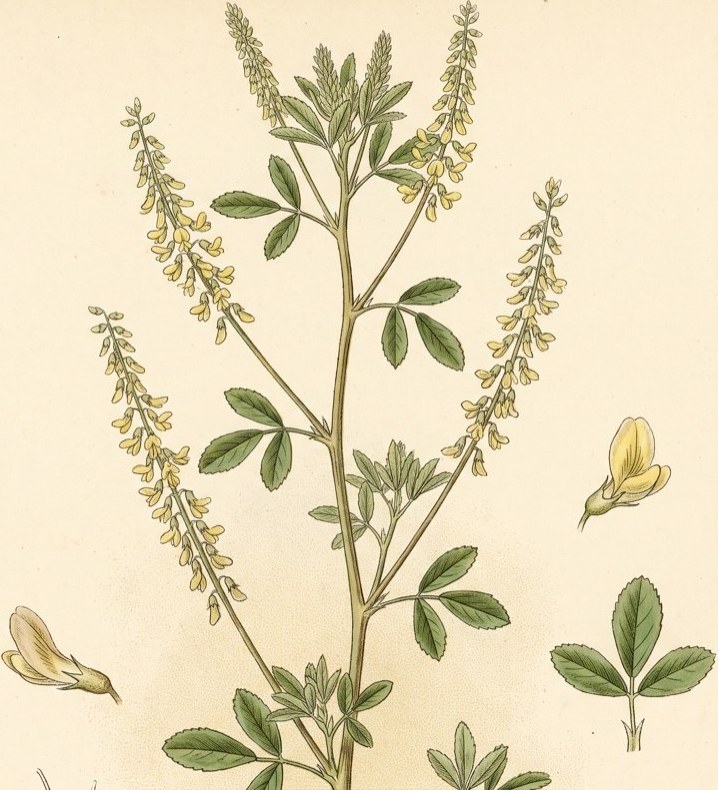
Western Herbalism
Sweet clover
Melilotus officinalis
Also known as yellow sweet clover, yellow melilot, king's clover, Melilotus, Yellow Melilot Clover, Melilot.
Sweet clover is a biennial legume with small yellow flowers and a distinctive sweet, hay-like scent that develops as the herb dries, due to its coumarin content. Native to Europe and Western Asia, it now grows widely as a naturalized roadside and pasture plant across temperate regions. The flowering aerial parts are used medicinally, chiefly in Western herbal and phytopharmaceutical practice for conditions of poor venous and lymphatic return.

Ask Herbert about Sweet clover. Herbert is the master herbalist inside Bountiful Herbs: he answers from this plate and eleven hundred others, with dosing, pairing and cautions. Your first ten questions are free.
Ask HerbertActions
Indications what the tradition reached for it in
- Chronic venous insufficiency
- Varicose veins
- Hemorrhoids
- Lymphedema
- Post-thrombotic syndrome
- Bruising and contusions
- Nervous tension with heaviness in the legs
- Mild peripheral edema
- Phlebitis (adjunct)
Specific indications
Heavy, aching, tired legs with visible varicosities that worsen through the day and ease with elevation
Persistent limb lymphedema following breast surgery or lymph node removal, with a sense of tightness and swelling
Safety
Low dose botanical. Used in drop doses in the classical practice; not a plant to dose freely.
Pregnancy: Avoid in pregnancy, as safety data are insufficient and the herb has a mild anticoagulant action through its coumarin content.
Breastfeeding: Avoid during lactation due to lack of safety data.
The record lists 9 contraindications; open the plate in the library to read them in full.
In practice
Sweet clover is reached for when the primary picture is one of venous stasis and lymphatic congestion, heavy legs, visible varicosities, ankle swelling that is worse by evening and improves with rest and elevation.
Dosing as the sources wrote it
| Preparation | As written | Metric |
|---|---|---|
| Dried herb infusion | 1-2 g dried aerial parts as infusion, two to three times daily | 1000-2000 mg |
| Tincture (1:5, 45%) | 2-4 mL three times daily | 2-4 mL |
| Standardized extract (coumarin content) | per product labeling, typically providing 3-30 mg coumarin daily for venous insufficiency | 3-30 mg |
| Specific Melilotus | Dose, from one to ten drops. | 0.02-0.2 mL |
| Engorged conditions of the uterus are treated very successfully by four or five-drop doses every two hours of melilotus. | ||
| Dose, 1 to 30 grains. | 64.8-1944 mg |
Doses are reproduced from the sources for practitioners and are not a recommendation for any person.
From the sources
Overview. Sweet clover is a biennial legume with small yellow flowers and a distinctive sweet, hay-like scent that develops as the herb dries, due to its coumarin content. Native to Europe and Western Asia, it now grows widely as a naturalized roadside and pasture plant across temperate regions. The flowering aerial parts are used medicinally, chiefly in Western herbal and phytopharmaceutical practice for conditions of poor venous and lymphatic return.
Clinical Notes. Sweet clover is reached for when the primary picture is one of venous stasis and lymphatic congestion, heavy legs, visible varicosities, ankle swelling that is worse by evening and improves with rest and elevation.
Action and Therapy. Melilotus is a remedy for pain associated with a sensation of coldness of the extremities and marked tenderness, lameness, or soreness to the touch. With these indications it is very effectual in some cases of ovarian neuralgia and dysmenorrhea.
Therapy. Melilotus is a stimulant to the local circulation, and is adapted to those cases where debility or a feeble vital power , as in delicate females and poorly nourished infants, is associated with congestion, as in atonic neuralgias and spasms occurring during the period of dentition, and in congestion of the uterus, ovaries, rectum, bowels, stomach, or bladder in feeble subjects.
Drawn from King's American Dispensatory, 18th edition (Felter and Lloyd); Ellingwood's American Materia Medica, Therapeutics and Pharmacognosy; Felter's Eclectic Materia Medica, Pharmacology and Therapeutics, and the Bountiful Herbs editorial.
Nearby on the shelf
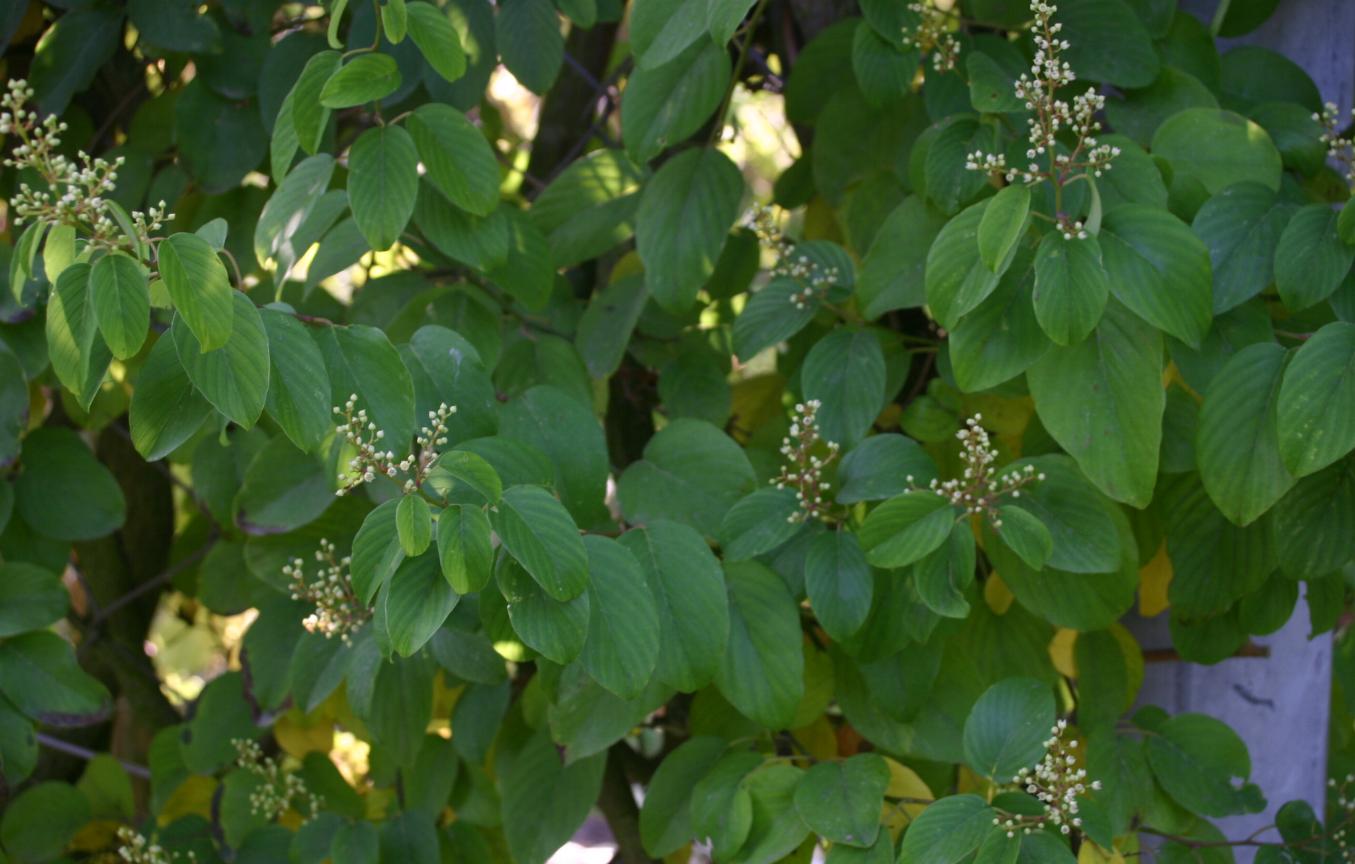 Supple jackBerchemia volubilis
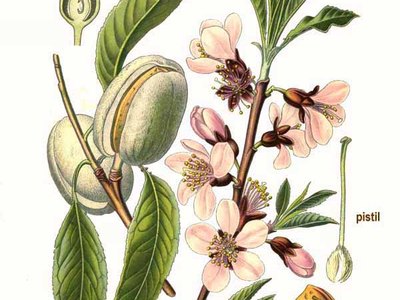 Sweet almondAmygdalus communis dulcis
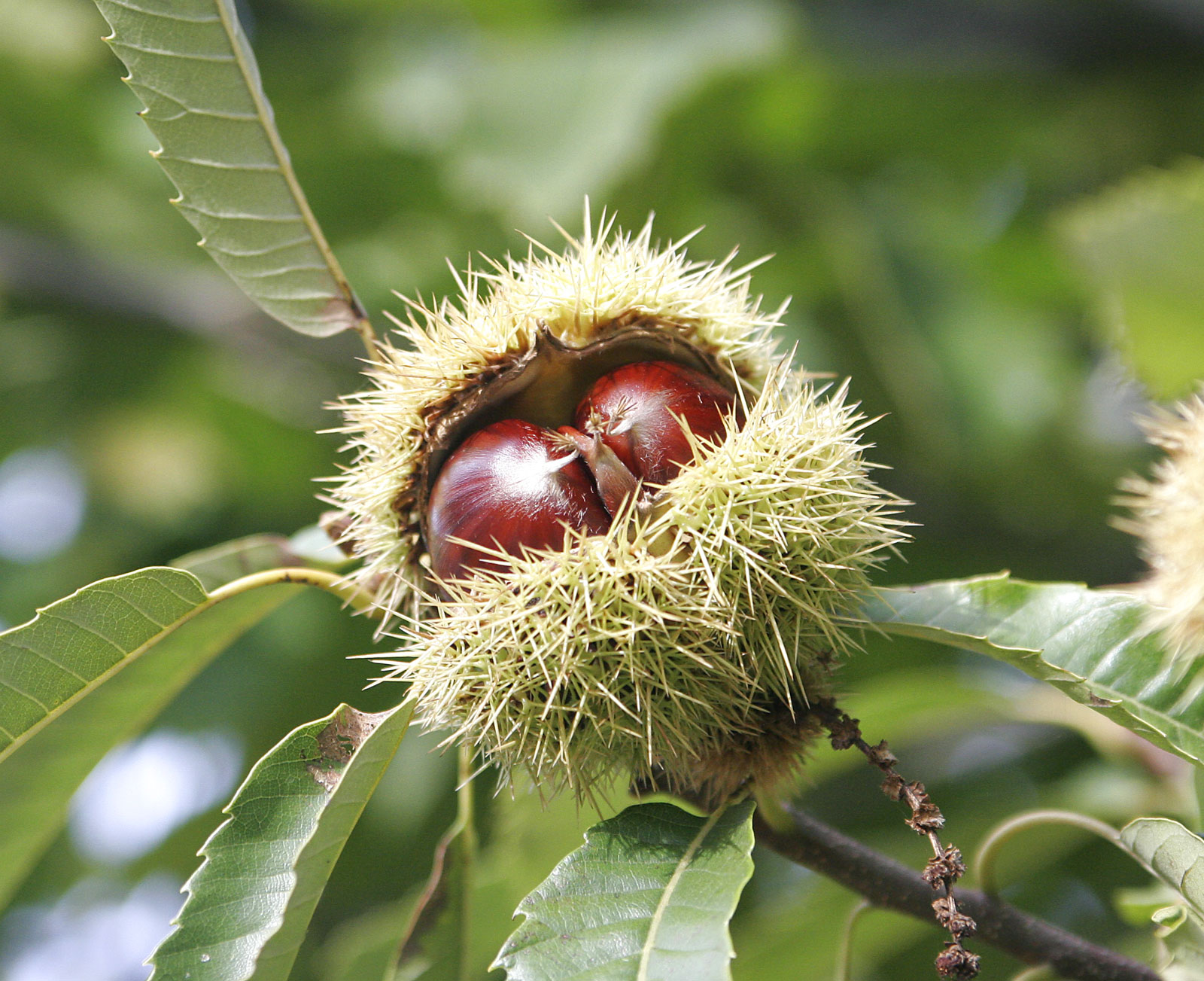 Sweet chestnutCastanea vesca
 Sweet cicelyOsmorhiza longistylis
 Sweet flagAcorus calamus
 Sweet GoldenrodSolidago odora
 Sweet magnoliaMagnolia glauca
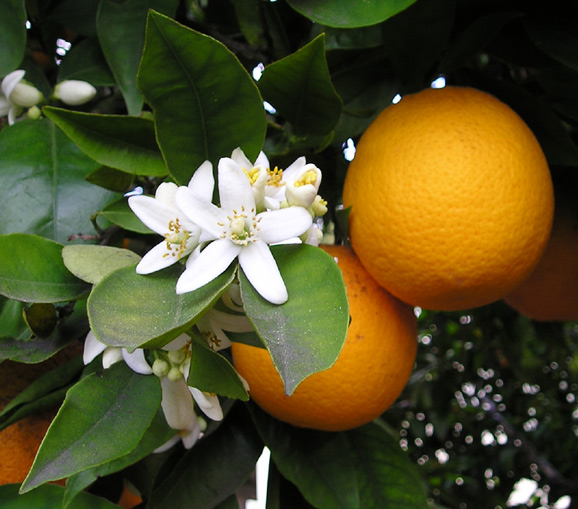 Sweet OrangeCitrus sinensis
The whole plate is in the library. The compass, Compare, the Sky of eleven hundred plants and the formulary open with an email address and a password, free, with the formula builder and its safety engine. Herbert without limit, his formulating, clients, the handouts and the labels are the paid room.
Open the library, free