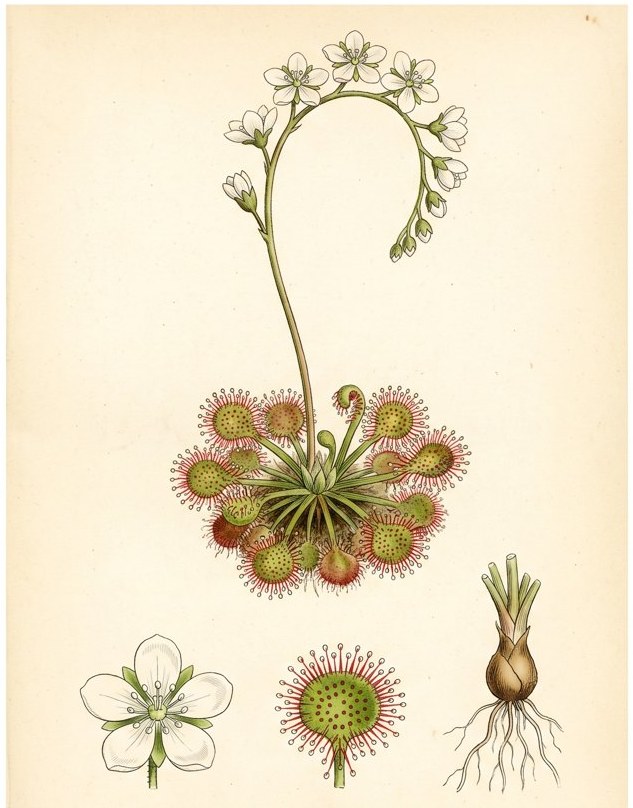
Western Herbalism
Sundew
Drosera rotundifolia
Also known as Round-leaved Sundew, Drosera, Youthwort, Lustwort.
Traditionally used in European herbal medicine for respiratory conditions now cultivated due to conservation concerns flavonoids primarily responsible for antispasmodic effects, naphthoquinones for historical use but potentially toxic no Ph. Eur. monograph yet but quality parameters proposed

Ask Herbert about Sundew. Herbert is the master herbalist inside Bountiful Herbs: he answers from this plate and eleven hundred others, with dosing, pairing and cautions. Your first ten questions are free.
Ask HerbertActions
Indications what the tradition reached for it in
- Coughing fits
- Dry cough
- Acute bronchitis
- Irritative cough
- Upper respiratory infection
- Bronchitis
- Paroxysmal cough
- Tracheitis
- Asthma
- Common cold cough symptoms
- Whooping cough
- Spasmodic cough
- Colic
- Cough
- Cramps
- Inflammation
- Mucosal irritation
- Muscle spasms
- Respiratory congestion
- Sore throat
- Infection
- Respiratory complaints
- Pertussis
- Gastric ulceration
- Specifically for asthma
- Chronic bronchitis with peptic ulceration
- Gastritis
Safety
Pregnancy: Not safe. Not for use in pregnancy (our record's flag)
Pregnancy, our record's flag: Caution. Use with care in pregnancy (our record's flag)
Pregnancy, a modern clinical reference: The safety of drosera has not been established; In view of the lack of toxicity data, the use of drosera during pregnancy and lactation should be avoided
Breastfeeding: Not safe. Not for use while breastfeeding (our record's flag)
Breastfeeding, a modern clinical reference: In view of the lack of toxicity data, the use of drosera during pregnancy and lactation should be avoided
The record lists 2 contraindications; open the plate in the library to read them in full.
Dosing as the sources wrote it
| Preparation | As written | Metric |
|---|---|---|
| Dried herb | Dried herb 3 g daily | 3000 mg |
| Dried plant 1-2 g as an infusion three times daily | 1000-2000 mg | |
| Liquid extract 0.5-2.0 mL (1 : 1 in 25% alcohol) three times daily. Tincture 0.5-1.0 mL (1 : 5 in 60% alcohol) three times daily | ||
| Dose, 1/10 to 10 drops. | ||
| Dose, of the saturated tincture, 1 to 6 drops; specific drosera to 5 drops. | ||
| Mother tincture (1:10 EtOH 45%, fresh herb) |
Doses are reproduced from the sources for practitioners and are not a recommendation for any person.
From the sources
Clinical Notes. Traditionally used in European herbal medicine for respiratory conditions now cultivated due to conservation concerns flavonoids primarily responsible for antispasmodic effects, naphthoquinones for historical use but potentially toxic no Ph. Eur. monograph yet but quality parameters proposed
Therapy. Drosera, preferably in small doses, is of great value in the spasmodic dry cough characteristic of measles, and to a lesser extent for that of whooping cough and the irritability of the larynx following the latter. There may be simple irritation, particularly centered in the larynx, or inflammation may be present. It also relieves the tickling sensation in that organ giving rise to spasmodic cough. To a lesser extent it is useful in the coughs of bronchitis, incipient phthisis, spasmodic asthma, and in nervous or sympathetic cough occurring reflexly from other diseases. It probably acts upon the vagus.
Therapy. It is an antispasmodic, expectorant, and sedative as applied to such coughs. It will also relieve coughs of sympathetic origin, and so-called nervous coughs. It will cure the cough of measles more quickly than other remedies, and it will cure the after-cough of whooping-cough.
Action, Medical Uses, and Dosage. This agent appears to exert a peculiar action upon the respiratory apparatus, and its effects are best observed from the use of small doses. It is peculiarly adapted to dry, spasmodic, or explosive coughs, such as are met with in many cases of whooping-cough and measles ...
Drawn from Scudder's Specific Medication and Specific Medicines; King's American Dispensatory, 18th edition (Felter and Lloyd); Ellingwood's American Materia Medica, Therapeutics and Pharmacognosy; Felter's Eclectic Materia Medica, Pharmacology and Therapeutics, and the Bountiful Herbs editorial.
Nearby on the shelf
 SumaPfaffia paniculata
 SumbulFerula sumbul
 Summer savorySatureja hortensis
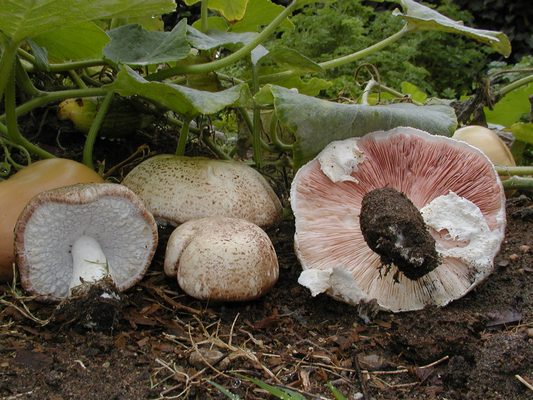 Sun MushroomAgaricus subrufescens
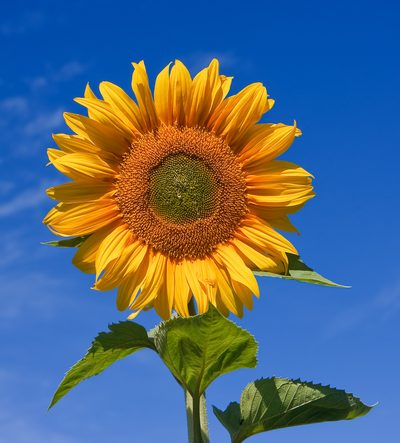 SunflowerHelianthus annuus
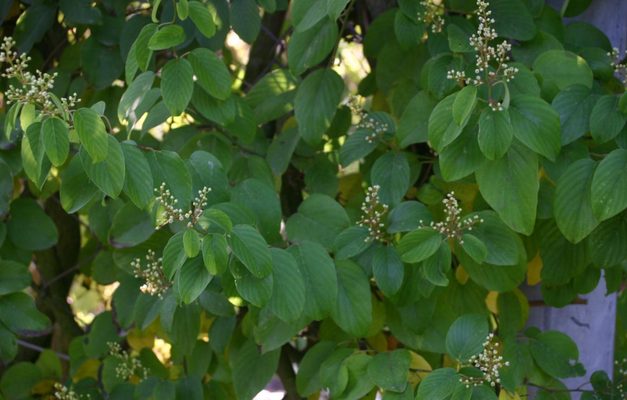 Supple jackBerchemia volubilis
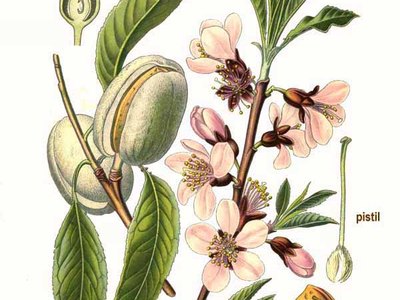 Sweet almondAmygdalus communis dulcis
 Sweet chestnutCastanea vesca
The whole plate is in the library. The compass, Compare, the Sky of eleven hundred plants and the formulary open with an email address and a password, free, with the formula builder and its safety engine. Herbert in full, his formulating, clients, the handouts and the labels are the paid room.
Open the library, free