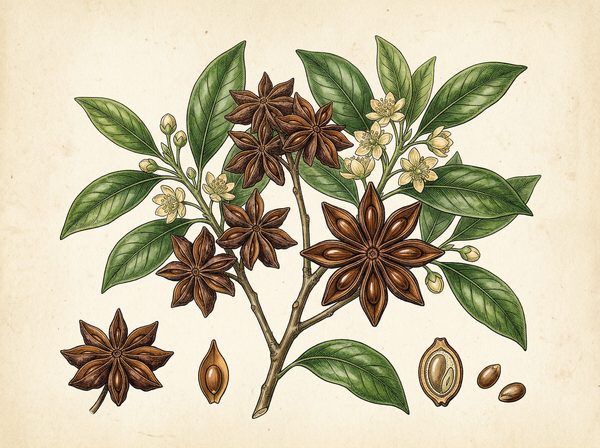
Western Herbalism
Star Anise
Illicium verum
Also known as Illicium, Star-anise fruit, Chinese anise; Semen badiana, Anisi stellata fructus.
A stimulant and carminative; used in cases of flatulency, flatulent colic of infants, and to remove nausea. Sometimes added to other medicines to improve their flavor, correct griping and other disagreeable effects. The dose of aniseed, crushed or powdered, is from 20 to 40 grains. Infusion (ʒij or ʒiij to aqua Oss.), for infants, in doses of a teaspoonful.

Ask Herbert about Star Anise. Herbert is the master herbalist inside Bountiful Herbs: he answers from this plate and eleven hundred others, with dosing, pairing and cautions. Your first ten questions are free.
Ask HerbertActions
Indications what the tradition reached for it in
- Colic
- Flatulence
- Rheumatism
- Arthritis
- Hernia
- Bronchitis
- Asthma
- Qi stagnation pain
- Toothache
- Phlegm
- Cough
- Food stagnation
- Abdominal pain
- Scrotal swelling
- Tetanus
- Lumbago
- Diarrhea
- Cold-induced pain
- Bloating
- Indigestion
- Abdominal distension
- Cramps
- Digestive discomfort
- Fungal infections
- Gas
- Infection
- Inflammation
- Muscle spasms
- Pain
- Respiratory congestion
Safety
Pregnancy: Pregnancy Caution
Breastfeeding: Lactation (source flag notSafeInLactation)
The record lists 2 contraindications; open the plate in the library to read them in full.
Dosing as the sources wrote it
| Preparation | As written | Metric |
|---|---|---|
| Decoction/tea: 0.5-3 g dried fruit/day | 500-3000 mg | |
| Essential oil: 0.06-0.6 mL or 0.3 g/day | 0.06-0.6 mL | |
| powder | The dose of the powder is from 10 to 20 grains; of the oil, from 1 to 10 drops. | 648-1296 mg |
Doses are reproduced from the sources for practitioners and are not a recommendation for any person.
From the sources
Action, Medical Uses, and Dosage. A stimulant and carminative; used in cases of flatulency, flatulent colic of infants, and to remove nausea. Sometimes added to other medicines to improve their flavor, correct griping and other disagreeable effects. The dose of aniseed, crushed or powdered, is from 20 to 40 grains. Infusion (ʒij or ʒiij to aqua Oss.), for infants, in doses of a teaspoonful.
primary-actions. Star Anise acts primarily as: Carminative, Expectorant, Antispasmodic, Antimicrobial, Anti-inflammatory. Secondary actions include Antioxidant, Analgesic, Antiviral, Antifungal, Insecticidal.
Description. "About 4 or 5 Mm. (⅙ to ⅕ inch) long, ovate, compressed at the sides, grayish, finely hairy, and consisting of 2 each with a flat face, and 5 light-brownish, filiform ridges, and about 15 thin oil-tubes, which can be seen in a transverse section by the microscope. It has an agreeable, aromatic odor, and a sweet, spicy taste. It may be distinguished from conium fruit (which it somewhat resembles, and which has been mistaken for it), by the odor and taste, and by the conium fruit consisting usually of single mericarps, which are smooth, grooved upon the face, and have crenate ridges with wrinkles between them, and no oil-tubes" ... (U. S. P.).
History. Anise originally came from Egypt, and is at present cultivated in many of the warm countries of Europe; the fruit of the Spanish plant is that which is more generally selected for medical purposes. The fruit, popularly called aniseed, is the official portion.
Drawn from King's American Dispensatory, 18th edition (Felter and Lloyd), and the Bountiful Herbs editorial.
Often paired with
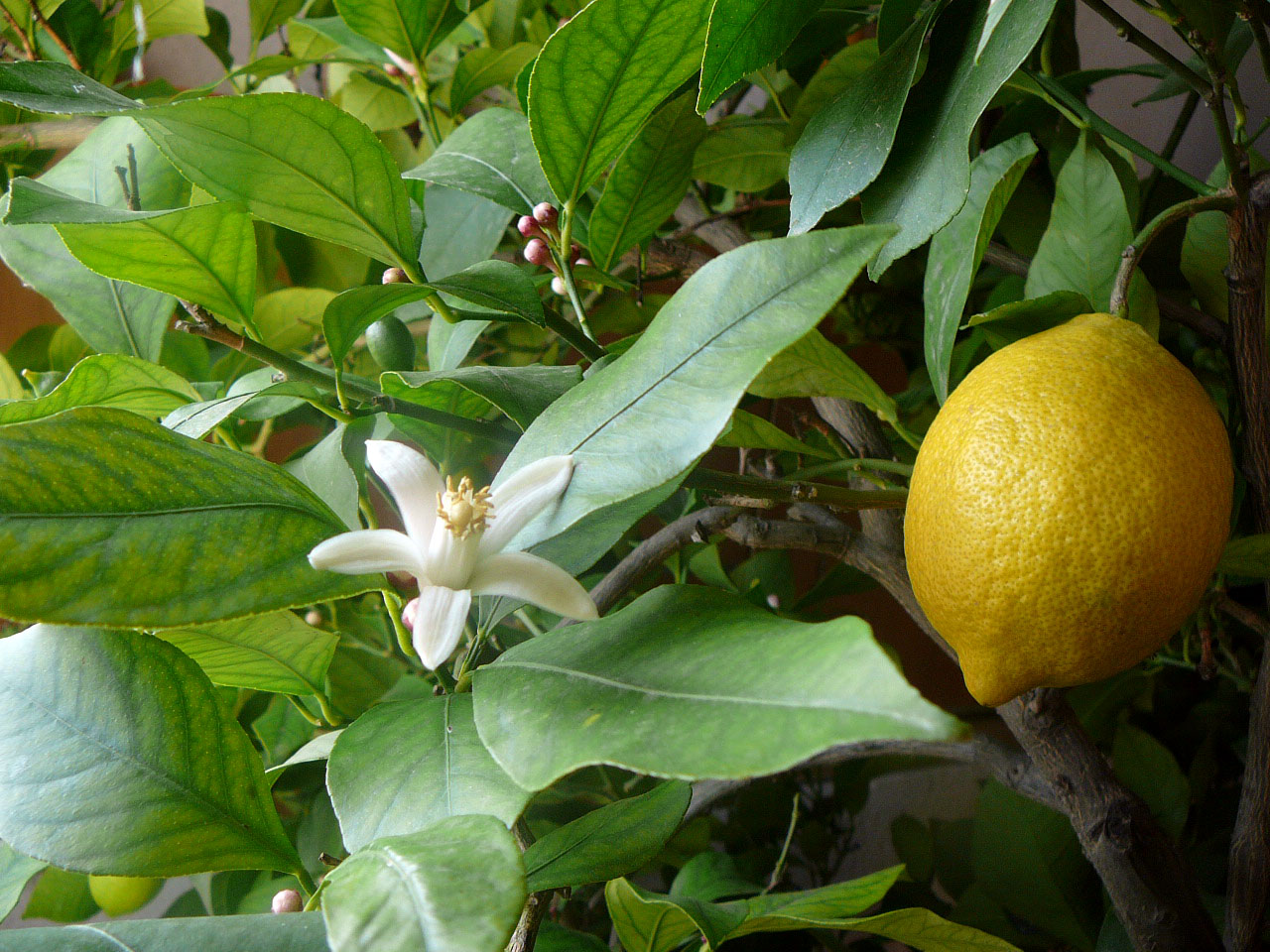 lemonCitrus limon
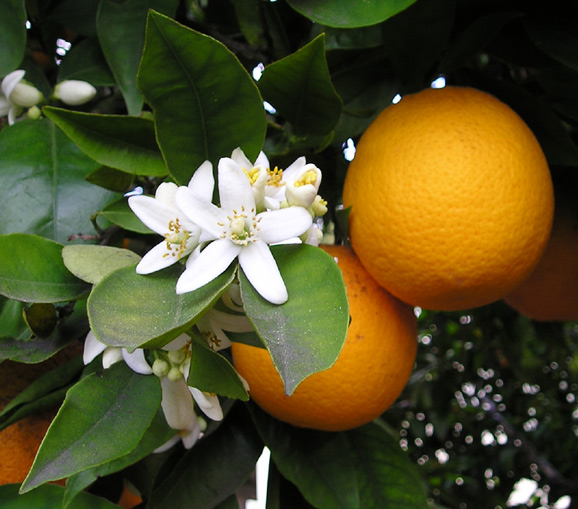 Sweet OrangeCitrus sinensis
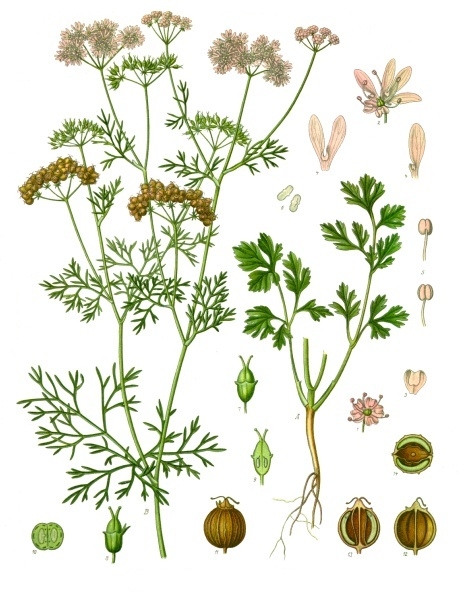 corianderCoriandrum sativum
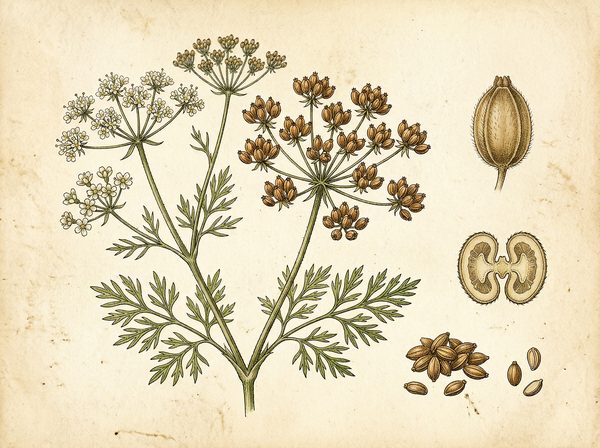 AnisePimpinella anisum
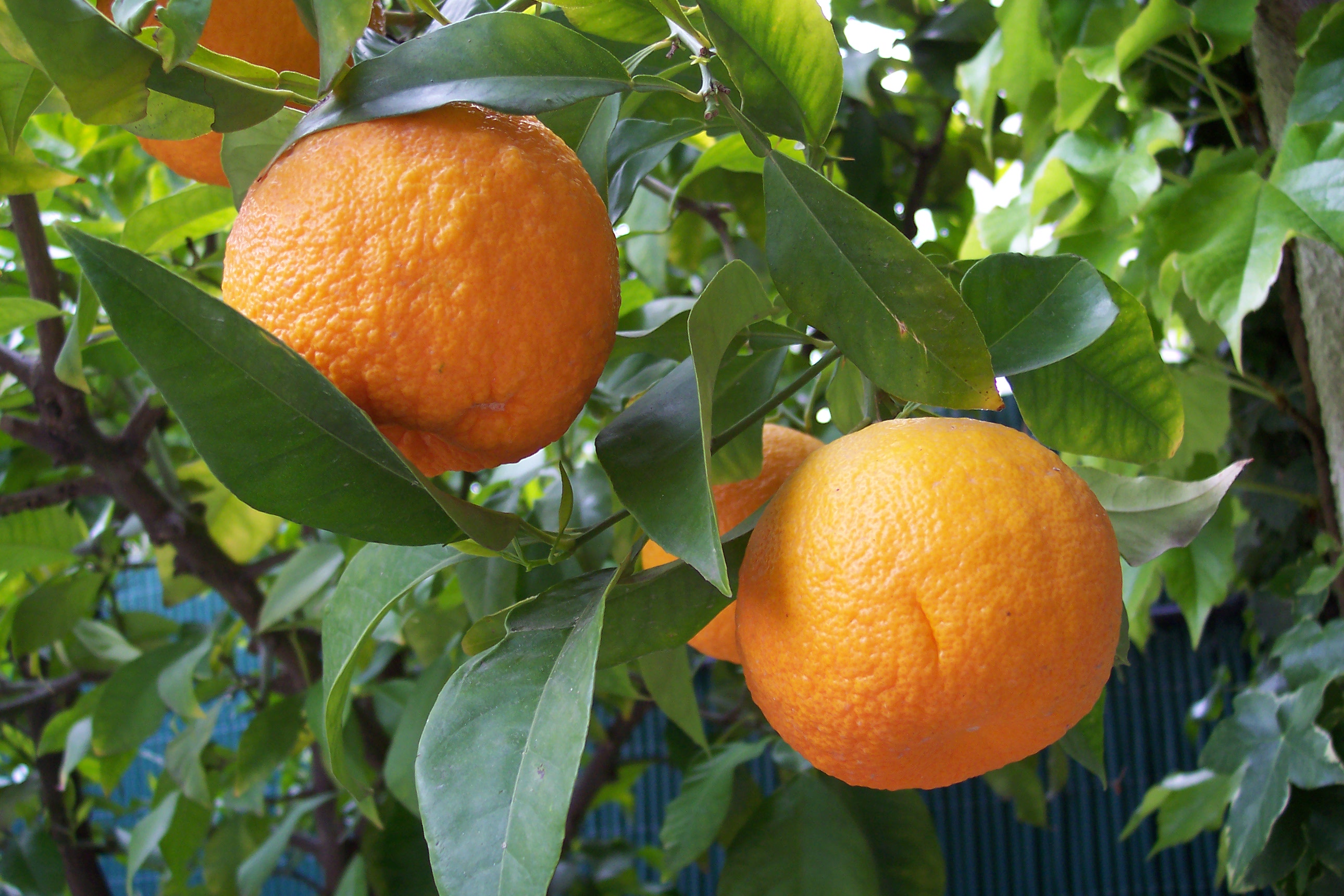 Bitter OrangeCitrus aurantium
 OrangeOrange
Nearby on the shelf
 SpirulinaArthrospira platensis
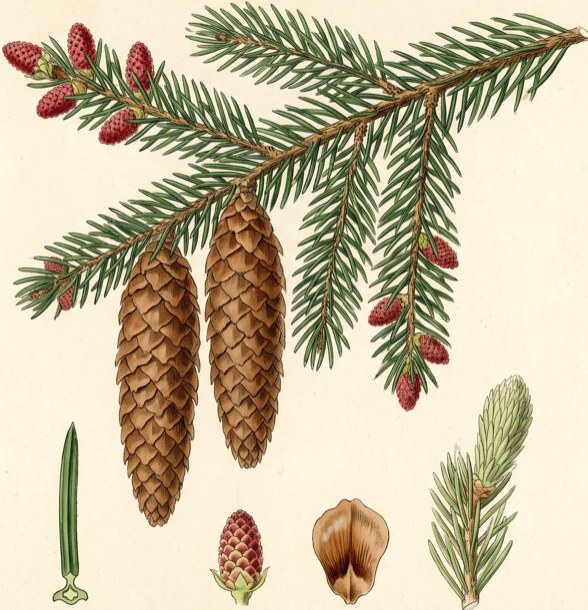 SprucePicea abies
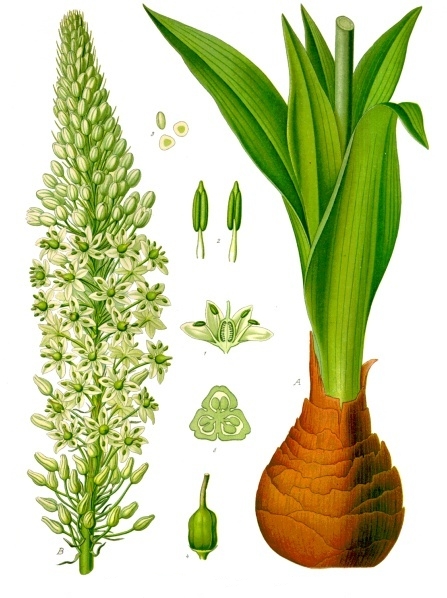 SquillDrimia maritima
 St. John's WortHypericum perforatum
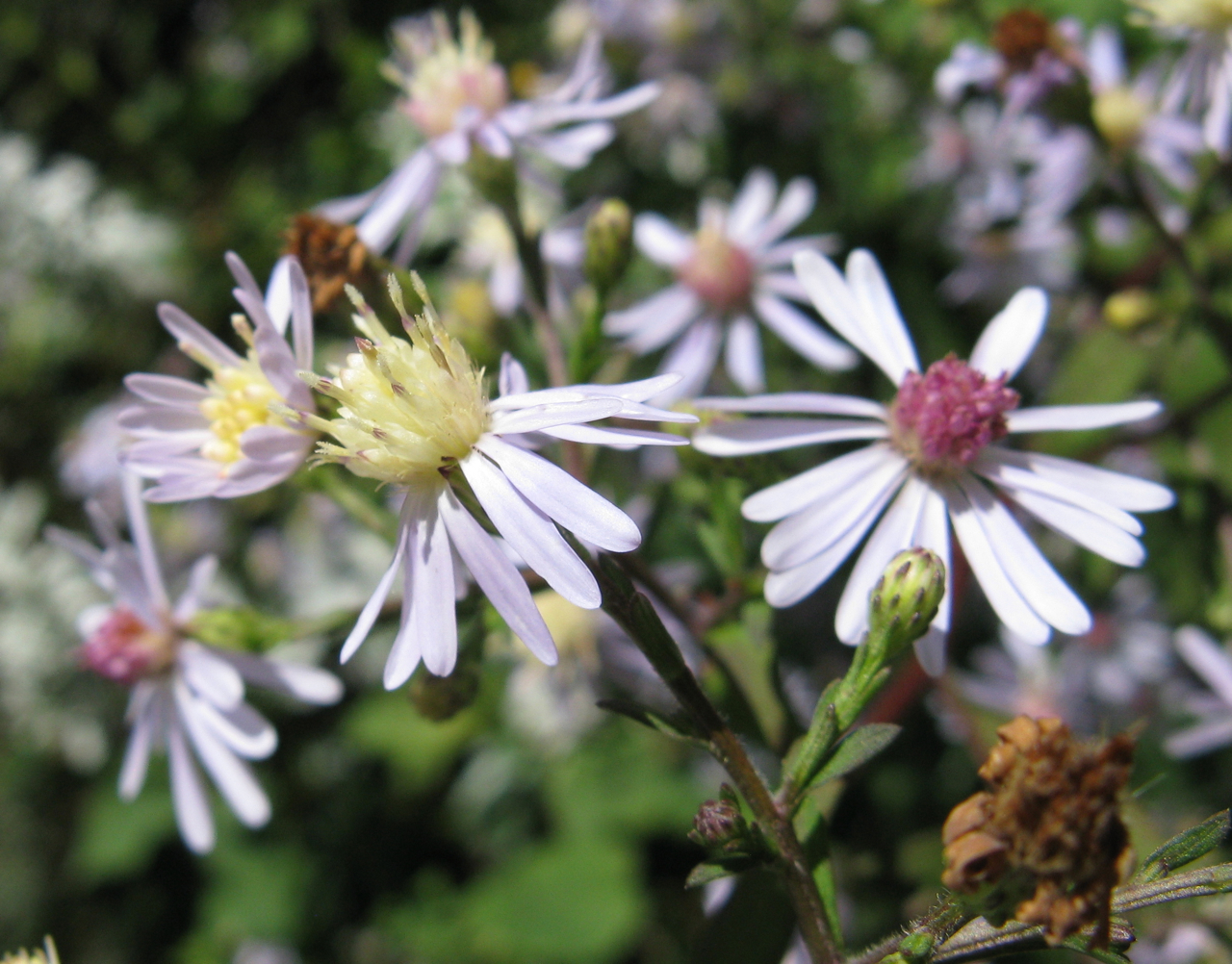 StarwortAster cordifolius
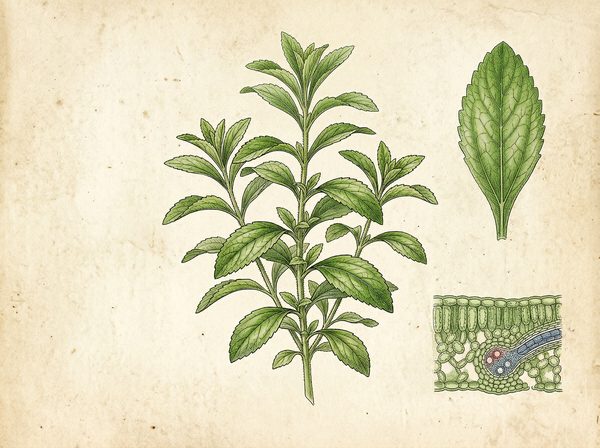 SteviaStevia rebaudiana
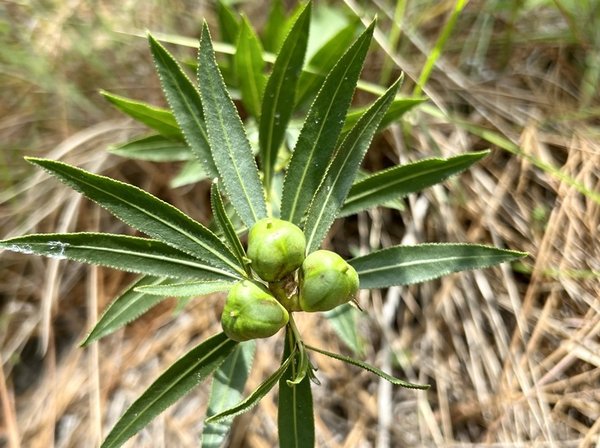 StillingiaStillingia sylvatica
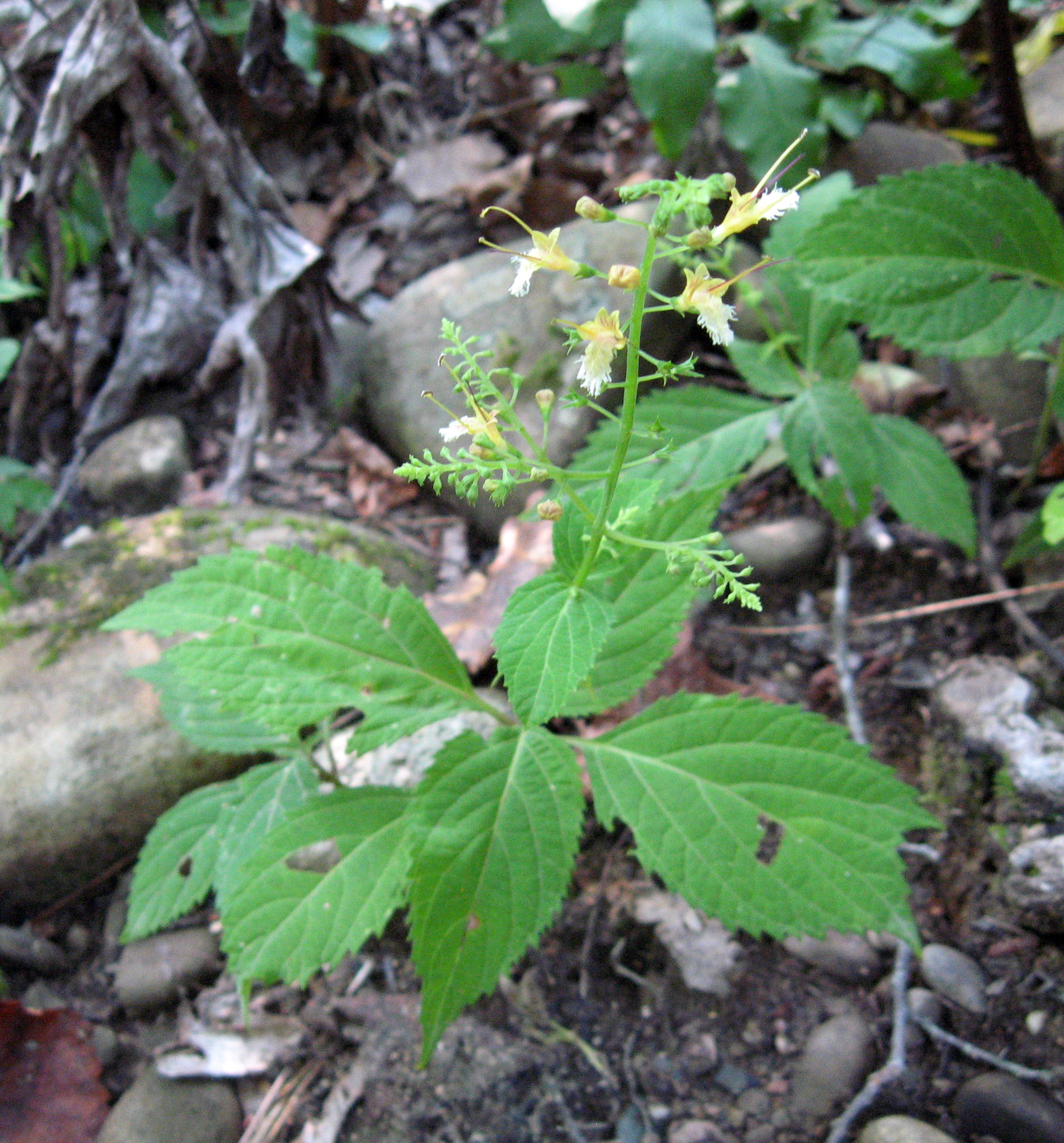 Stone RootCollinsonia canadensis
The whole plate is in the library. The compass, Compare, the Sky of eleven hundred plants and the formulary open with an email address and a password, free, with the formula builder and its safety engine. Herbert without limit, his formulating, clients, the handouts and the labels are the paid room.
Open the library, free