Western Herbalism
Starwort
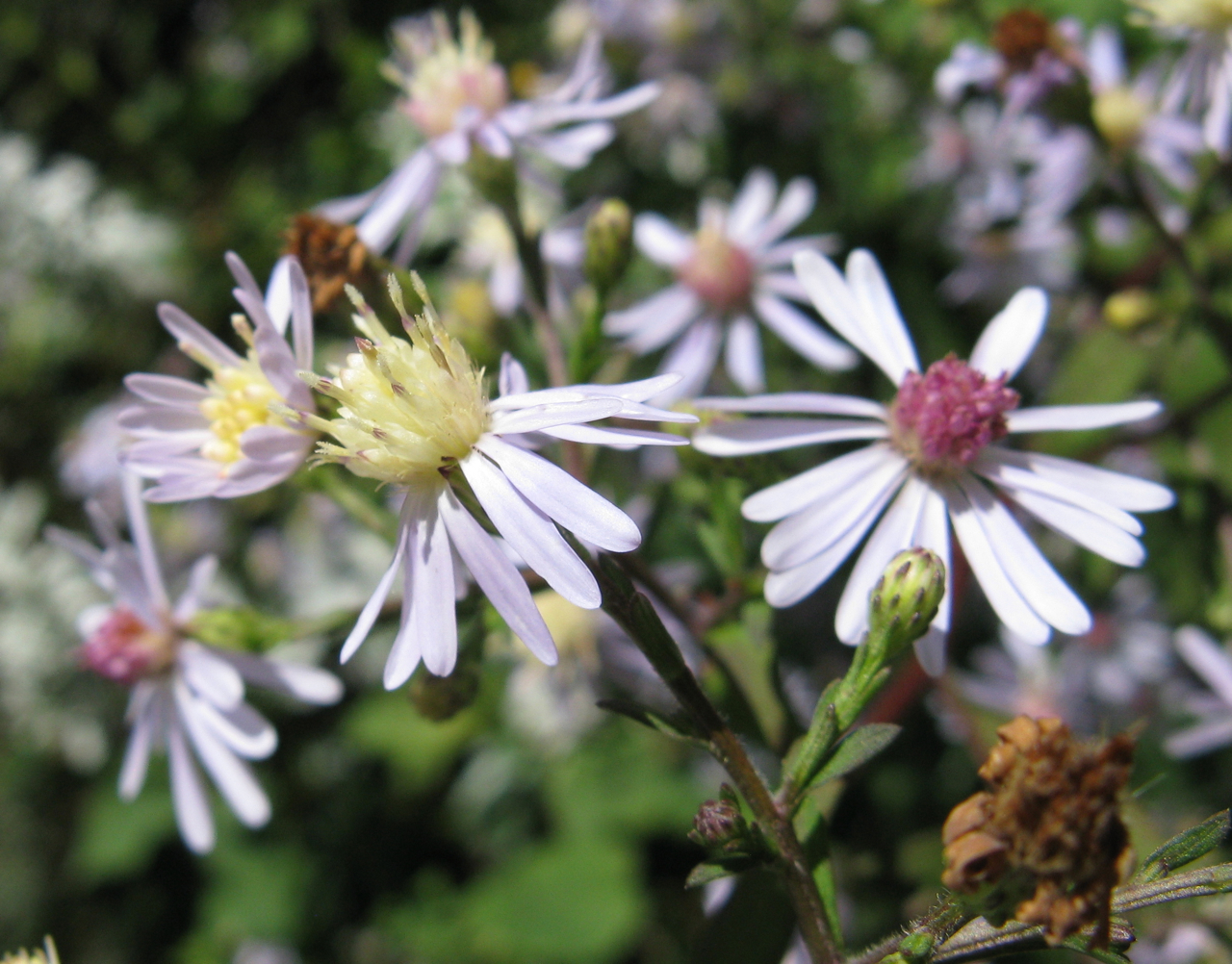
Aster cordifolius
Also known as Blue wood aster, Heart-leaved aster, Common blue wood aster.
Aster cordifolius, now more commonly classified as Symphyotrichum cordifolium, is a native North American woodland perennial bearing pale blue to whitish ray flowers in autumn. The root was used by nineteenth century physiomedical and Eclectic practitioners under the common name Starwort, generally grouped with other native Aster species used in a similar way. It has no significant place in modern herbal practice and survives mainly as a historical curiosity in the physiomedical literature.

Ask Herbert about Starwort. Herbert is the master herbalist inside Bountiful Herbs: he answers from this plate and eleven hundred others, with dosing, pairing and cautions. Your first ten questions are free.
Ask HerbertActions
Indications what the tradition reached for it in
- Feverish colds with sluggish or delayed sweating
- Low-grade fever with restlessness
- Delayed or suppressed menses
- Mild dysmenorrhea with a sense of chilliness
- Flatulent colic
- Minor digestive spasm
- Nervous restlessness accompanying fever
- Minor wounds or insect and snake bites (topical poultice, historical use)
Specific indications
Low fever with restlessness where sweating is slow to break
Suppressed menses in a person who feels chilly and internally tense
Safety
The record lists 3 contraindications; open the plate in the library to read them in full.
In practice
In the physiomedical framework this root was regarded as a gently diffusive, warming remedy suited to fevers where the surface was cool and sweating slow to establish, and to complaints where tone in the pelvic organs seemed sluggish, such as delayed menses with a background of chilliness and tension.
Dosing as the sources wrote it
| Preparation | As written | Metric |
|---|---|---|
| Decoction | 2-4 g dried root daily, divided in two to three doses | 2000-4000 mg |
| Tincture (1:5, 45%) | 1-2 mL three times daily | 1-2 mL |
Doses are reproduced from the sources for practitioners and are not a recommendation for any person.
From the sources
Overview. Aster cordifolius, now more commonly classified as Symphyotrichum cordifolium, is a native North American woodland perennial bearing pale blue to whitish ray flowers in autumn. The root was used by nineteenth century physiomedical and Eclectic practitioners under the common name Starwort, generally grouped with other native Aster species used in a similar way. It has no significant place in modern herbal practice and survives mainly as a historical curiosity in the physiomedical literature.
Clinical Notes. In the physiomedical framework this root was regarded as a gently diffusive, warming remedy suited to fevers where the surface was cool and sweating slow to establish, and to complaints where tone in the pelvic organs seemed sluggish, such as delayed menses with a background of chilliness and tension.
Properties and Uses. This plant was introduced to the profession by Prof. Rafinesque; and experience has confirmed the brief account he gave of it. The root is relaxant and aromatically stimulant, acting slowly and rather permanently.
Description. Natural Order, Compositae. The Genus ASTER is a large and very common one throughout our country, flowering late in the autumn; with the ray florets always well marked, varying from whitish-purple to bluish purple, but never yellow, always in a single row, and pistillate.
Drawn from Cook's Physio-Medical Dispensatory, and the Bountiful Herbs editorial.
Nearby on the shelf
 SprucePicea abies
 SquillDrimia maritima
 St. John's WortHypericum perforatum
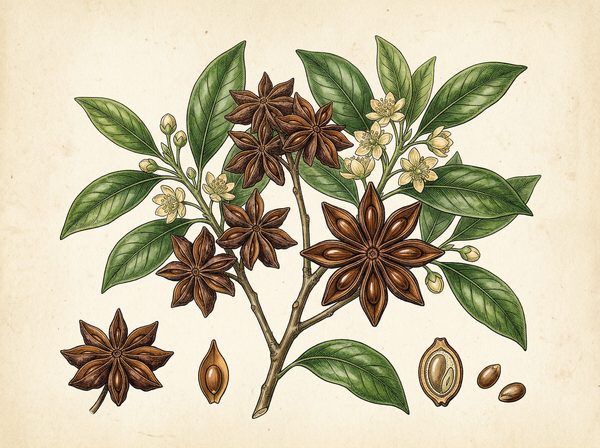 Star AniseIllicium verum
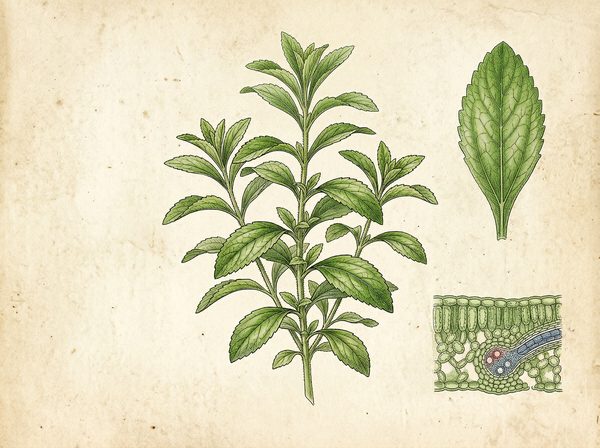 SteviaStevia rebaudiana
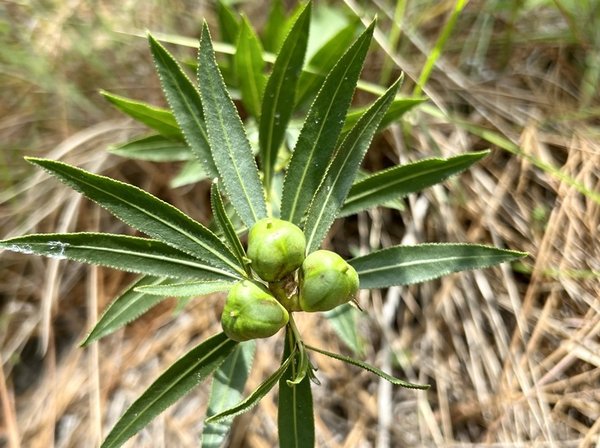 StillingiaStillingia sylvatica
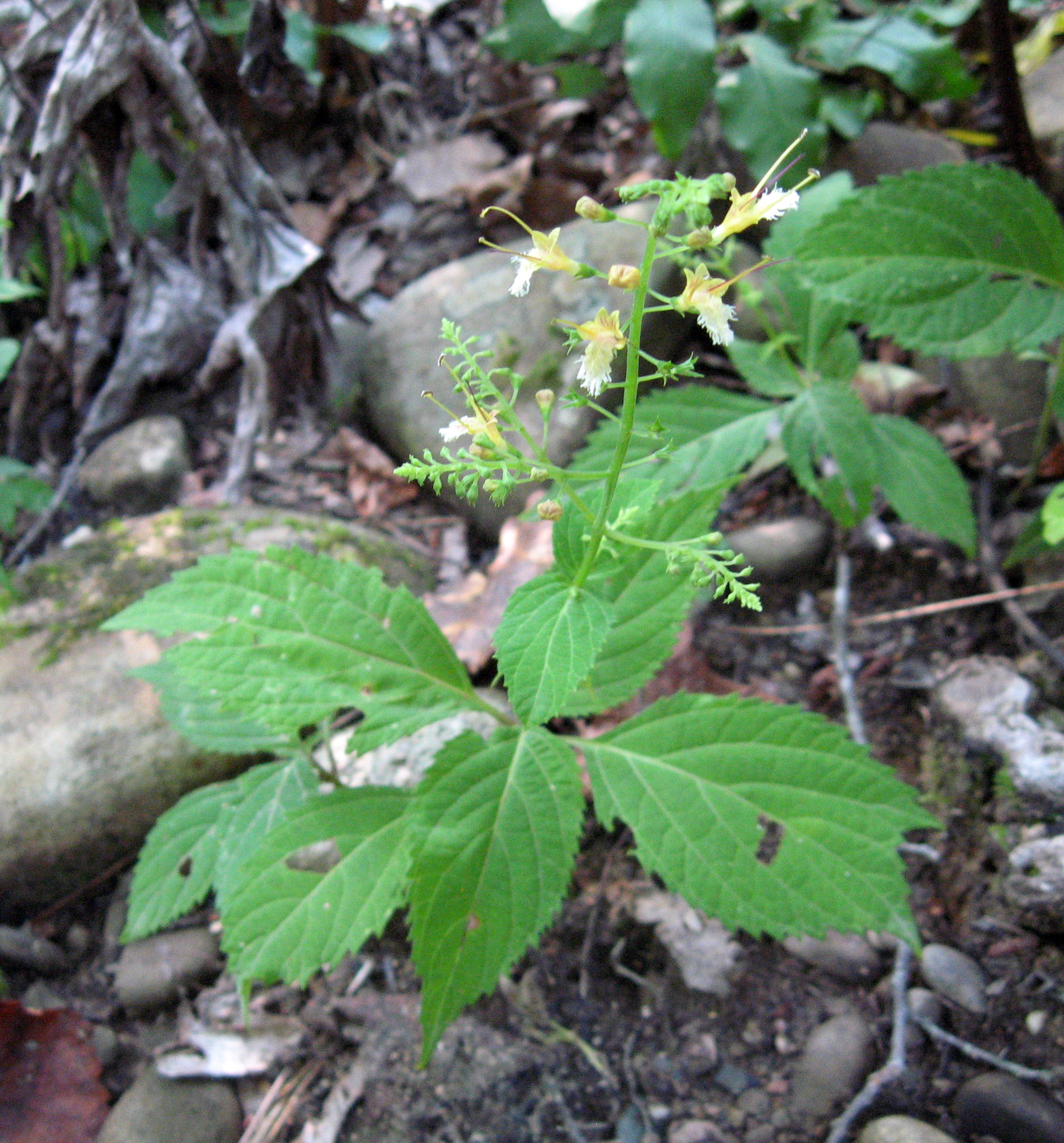 Stone RootCollinsonia canadensis
 StoraxStyrax officinale
The whole plate is in the library. The compass, Compare, the Sky of eleven hundred plants and the formulary open with an email address and a password, free, with the formula builder and its safety engine. Herbert without limit, his formulating, clients, the handouts and the labels are the paid room.
Open the library, free