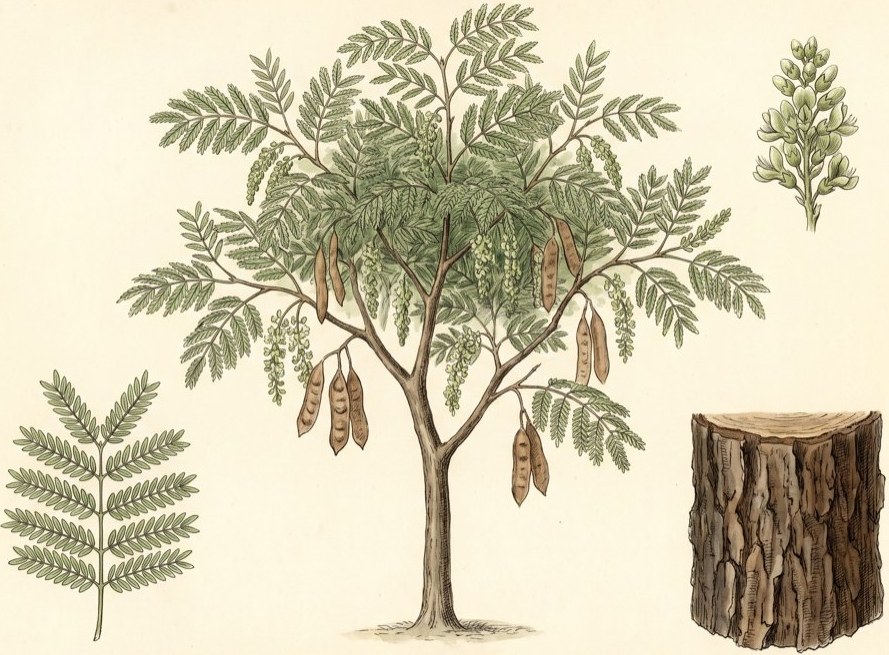
Western Herbalism
Sassy bark
Erythrophleum
Also known as Mancona bark, Casca bark, Ordeal bark, Teli, Bondou, Bourane des floupes.
Erythrophleum is a genus of West and Central African trees in the legume family, of which the bark, known to trade as sassy bark or mancona bark, was historically employed both as a judicial ordeal poison in West African communities and, in far smaller and carefully hedged doses, by nineteenth century eclectic physicians as an experimental cardiac remedy. The bark contains diterpene alkaloids of the erythrophleine type (cassaine, cassaidine and related compounds) that act on cardiac muscle in a manner loosely comparable to the cardiac glycosides, but with a much narrower and less predictable margin between an effective and a lethal dose. It has no place in modern herbal practice and is included here chiefly for historical and toxicological completeness.

Ask Herbert about Sassy bark. Herbert is the master herbalist inside Bountiful Herbs: he answers from this plate and eleven hundred others, with dosing, pairing and cautions. Your first ten questions are free.
Ask HerbertActions
Indications what the tradition reached for it in
- Functional cardiac weakness (historical, eclectic use only)
- Cardiac debility with weak irregular pulse (historical)
- Not used in modern practice due to toxicity
Specific indications
Historically reserved by eclectic physicians for cases of profound cardiac weakness where digitalis-type action was wanted but the remedy was considered too unpredictable for routine use
Safety
Recognised toxicity. This plant carries a toxicity flag in the record; it is for trained practitioners only.
Low dose botanical. Used in drop doses in the classical practice; not a plant to dose freely.
Pregnancy: Contraindicated: the plant is a potent, unpredictable cardiotoxin with no established safe dose in pregnancy.
Breastfeeding: Contraindicated: no safety data exist and the alkaloids are cardiotoxic even in adults.
The record lists 5 contraindications; open the plate in the library to read them in full.
In practice
Sassy bark bark was investigated by the eclectic school in the second half of the nineteenth century as a possible substitute for digitalis and strophanthus in cases of cardiac debility, on the strength of reports that small doses slowed and strengthened the pulse.
Dosing as the sources wrote it
| Preparation | As written | Metric |
|---|---|---|
| Historical eclectic tincture (obsolete, not recommended) | not established; historical doses were minute (fractions of a milliliter) and unreliable owing to variable alkaloid content | |
| Scudder states that it may be "given to stimulate the capillary circulation, to increase secretion of urine, arrested by feeble circulation, and to check atonic diarrhoea." For this purpose he suggests the minute dose, a teaspoonful of a solution of 1 drop of the tincture in 4 ounces of water. | 0.05 mL | |
| A tincture of the bark is probably the best form for administration in doses of from a fraction of a drop to 5 drops. | 0.1 mL |
Doses are reproduced from the sources for practitioners and are not a recommendation for any person.
From the sources
Overview. Erythrophleum is a genus of West and Central African trees in the legume family, of which the bark, known to trade as sassy bark or mancona bark, was historically employed both as a judicial ordeal poison in West African communities and, in far smaller and carefully hedged doses, by nineteenth century eclectic physicians as an experimental cardiac remedy.
Clinical Notes. Sassy bark bark was investigated by the eclectic school in the second half of the nineteenth century as a possible substitute for digitalis and strophanthus in cases of cardiac debility, on the strength of reports that small doses slowed and strengthened the pulse.
Drawn from King's American Dispensatory, 18th edition (Felter and Lloyd), and the Bountiful Herbs editorial.
Nearby on the shelf
 SantonicaArtemisia pauciflora
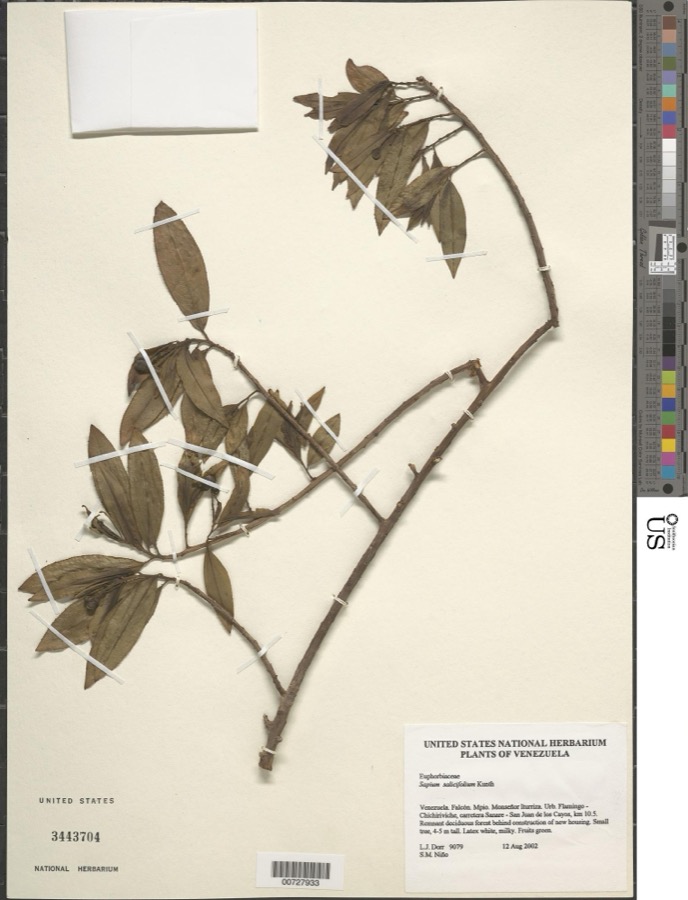 SapiumSapium salicifolium
 SarsaparillaSmilax spp.
 SassafrasSassafras albidum
 SavinJuniperus sabina
 Saw palmettoSerenoa repens
 SaxifrageSaxifraga pennsylvanica
 ScammonyConvolvulus scammonia
The whole plate is in the library. The compass, Compare, the Sky of eleven hundred plants and the formulary open with an email address and a password, free, with the formula builder and its safety engine. Herbert without limit, his formulating, clients, the handouts and the labels are the paid room.
Open the library, free