Western Herbalism
Polymnia
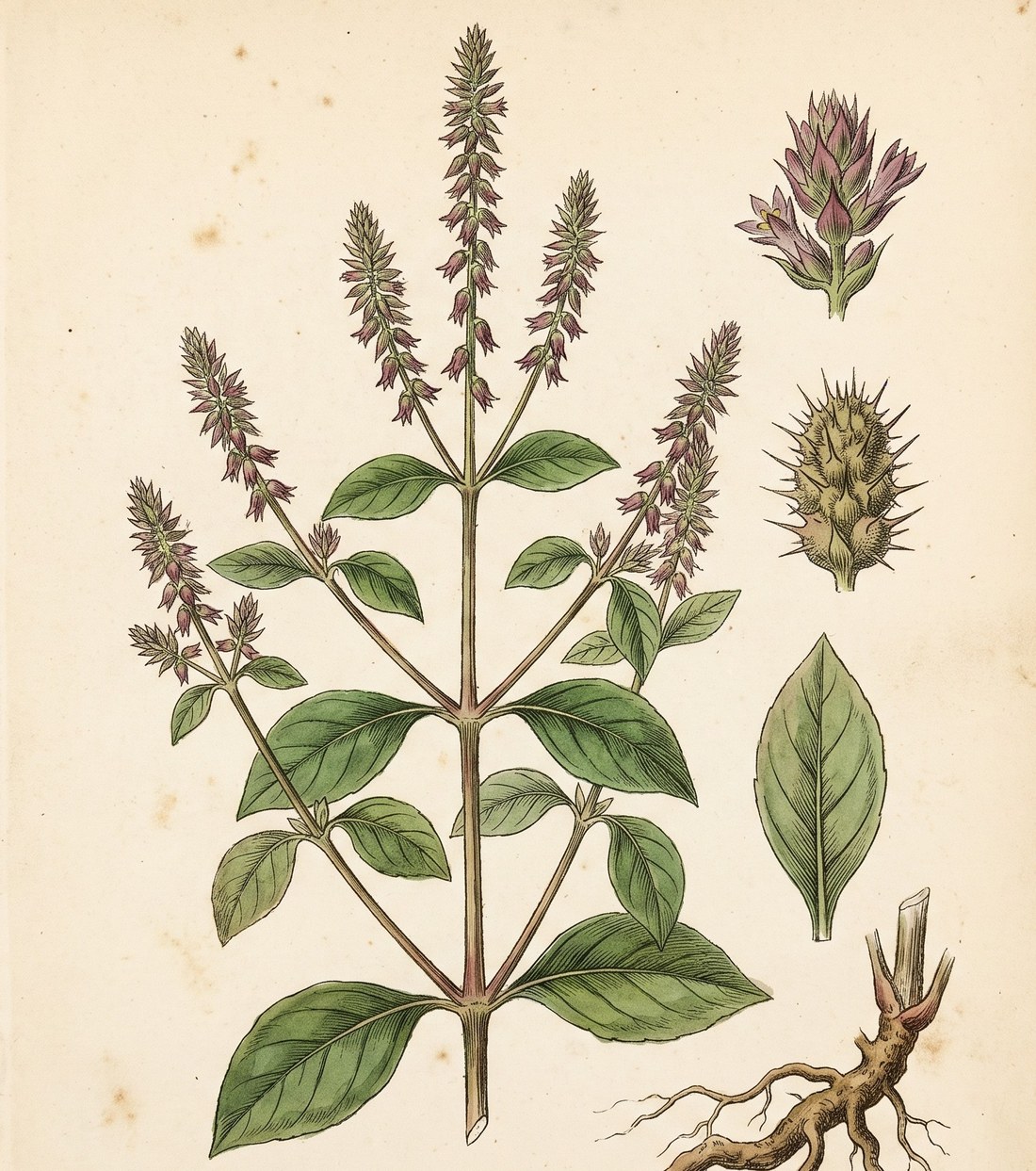
Polymnia uvedalia
Also known as Bearsfoot, Leaf-cup, Yellow leaf-cup, Uvedalia, Bear’s Foot.
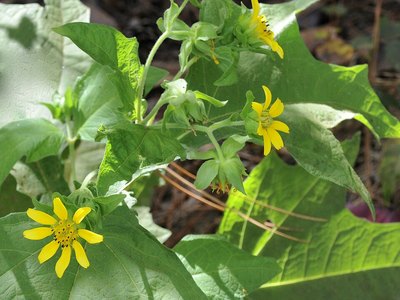
Bearsfoot is a tall, coarse perennial of the daisy family native to open woods and thickets of the eastern and central United States. Nineteenth century Eclectic physicians used the dried root, prepared as a fluid extract or specific medicine, as an alterative and deobstruent for sluggish, congested organs, particularly the spleen and liver. It has no meaningful place in contemporary phytotherapy and survives mainly as a historical curiosity in Eclectic materia medica.

Ask Herbert about Polymnia. Herbert is the master herbalist inside Bountiful Herbs: he answers from this plate and eleven hundred others, with dosing, pairing and cautions. Your first ten questions are free.
Ask HerbertActions
Indications what the tradition reached for it in
- Chronic splenic enlargement
- Hepatic torpor with sluggish portal circulation
- Glandular enlargement
- Lymphatic stasis
- Passive congestion of abdominal viscera
- Chronic engorgement of tissue with poor tone
- Intermittent fever with residual splenic swelling (historical use)
- Obesity associated with sluggish lymphatic and glandular function
Specific indications
Full, flabby, sallow tissues with poor tone and a sense of sodden inelasticity
Enlarged, indurated spleen or liver with a dragging sense of fullness
Safety
Low dose botanical. Used in drop doses in the classical practice; not a plant to dose freely.
Pregnancy: Avoid in pregnancy: emeto-cathartic action at higher doses and lack of modern safety data make it unsuitable.
Breastfeeding: Avoid in lactation due to absence of safety data and known emetic/cathartic potential.
The record lists 5 contraindications; open the plate in the library to read them in full.
In practice
Eclectic writers reached for bearsfoot in patients they described as flabby, sallow, and poorly toned, with a sense of passive fullness or stagnation in the abdomen, especially where the spleen or liver felt enlarged and heavy. It was given in very small, frequently repeated doses of the fluid extract or specific medicine, the idea being to stimulate glandular and circulatory tone gradually rather than to purge. Because the plant's emeto-cathartic action appears quickly once the dose is pushed, historical practice was to start low (a few drops) and increase cautiously, stopping well short of nausea. This is not a remedy for acute or inflammatory conditions of the abdomen; it was reserved for chronic, low-grade congestive states. Given the total absence of modern quality control, standardization, or clinical study, its use today should be considered historical rather than evidence based.
Dosing as the sources wrote it
| Preparation | As written | Metric |
|---|---|---|
| Fluid extract | 0.2-1 mL every 3 hours, increased gradually as tolerated | 0.2-1 mL |
| Specific medicine (Eclectic preparation) | 0.1-0.5 mL three times daily | 0.1-0.5 mL |
| Extractum Uvedaliae Fluidum, Fluid Extract Uvedalia; not miscible with water | Dose, three to fifteen drops every three hours, gradually increased. | 0.15-0.75 mL |
| Specific Medicine Uvedalia | Dose, two to ten drops. | 0.04-0.2 mL |
| Dose, 5 to 30 grains. | 324-1944 mg | |
| Specific Medicine Polymnia | Dose, 1 to 30 drops. | 0.02-0.6 mL |
Doses are reproduced from the sources for practitioners and are not a recommendation for any person.
From the sources
Overview. Bearsfoot is a tall, coarse perennial of the daisy family native to open woods and thickets of the eastern and central United States. Nineteenth century Eclectic physicians used the dried root, prepared as a fluid extract or specific medicine, as an alterative and deobstruent for sluggish, congested organs, particularly the spleen and liver. It has no meaningful place in contemporary phytotherapy and survives mainly as a historical curiosity in Eclectic materia medica.
Clinical Notes. Eclectic writers reached for bearsfoot in patients they described as flabby, sallow, and poorly toned, with a sense of passive fullness or stagnation in the abdomen, especially where the spleen or liver felt enlarged and heavy.
Action and Therapy. External. Uvedalia stimulates the growth of hair. Scudder advised the following hair tonic: Rx Specific Medicine Polymnia, 2 fluidounces; Bay Rum, 6 fluidounces. Mix. Sig.: Rub thoroughly into the scalp once or twice a day.
Therapy. The older writers of our school lauded this remedy as of much importance in rheumatism. Others spoke of it favorably in the same class of cases in which phytolacca is used. Dr. Pruitt used it in the form of an ointment, in inflammation of the mammary glands, and other glandular inflammations, especially if abscesses had formed.
Drawn from King's American Dispensatory, 18th edition (Felter and Lloyd); Ellingwood's American Materia Medica, Therapeutics and Pharmacognosy; Felter's Eclectic Materia Medica, Pharmacology and Therapeutics, and the Bountiful Herbs editorial.
Nearby on the shelf
 Poke rootPhytolacca americana
 PoleoHedeoma oblongifolia
 PolygalaPolygala senega
 Polygala rootPolygala tenuifolia
 PomegranatePunica granatum
 PoriaWolfiporia extensa
 Prickly AshZanthoxylum americanum
 Prickly chaff flowerAchyranthes aspera
The whole plate is in the library. The compass, Compare, the Sky of eleven hundred plants and the formulary open with an email address and a password, free, with the formula builder and its safety engine. Herbert without limit, his formulating, clients, the handouts and the labels are the paid room.
Open the library, free