Western Herbalism
Marsh Parsley
Peucedanum palustre
Also known as Marsh smallage.
Marsh smallage is emmenagogue, diuretic, and antispasmodic, but abandoned as an internal remedy on account of its caustic and dangerously poisonous properties. Ten or 20 grains, according to the patient's age, repeated every 5 hours, and, after a time, gradually augmented, have cured several cases of epilepsy in the course of from 3 to 6 months, but it must not be used where abdominal obstruction exists, or where there is an exalted sensibility of the genital apparatus.

Ask Herbert about Marsh Parsley. Herbert is the master herbalist inside Bountiful Herbs: he answers from this plate and eleven hundred others, with dosing, pairing and cautions. Your first ten questions are free.
Ask HerbertSafety
Pregnancy: Caution. Use only under professional guidance in pregnancy. A single nineteenth century materia medica describes the root as emmenagogue, caustic and dangerously poisonous, and no modern safety data exist.
Breastfeeding: Caution. Use only under professional guidance while breastfeeding. A nineteenth century materia medica describes the root as caustic and dangerously poisonous, and no data exist on transfer into breast milk.
Dosing as the sources wrote it
| Preparation | As written |
|---|---|
| Two-grain doses, repeated twice daily, have proved almost immediately beneficial in the dentition convulsions of children. |
Doses are reproduced from the sources for practitioners and are not a recommendation for any person.
From the sources
Action, Medical Uses, and Dosage. Marsh smallage is emmenagogue, diuretic, and antispasmodic, but abandoned as an internal remedy on account of its caustic and dangerously poisonous properties. Ten or 20 grains, according to the patient's age, repeated every 5 hours, and, after a time, gradually augmented, have cured several cases of epilepsy in the course of from 3 to 6 months, but it must not be used where abdominal obstruction exists, or where there is an exalted sensibility of the genital apparatus.
History, Description, and Chemical Composition. This plant is the Cnidum palustre of Sprengel, the Peucedanum montanum of Koch, and the Conioselinum of Fischer, also known as Peucedanum palustre of Moench. This plant grows in marshes and boggy meadows in the north and middle of Europe.
Botanical Source. Marsh parsley has a simple, tapering, perennial root, with many long fibers. Its stem is erect, 4 or 5 feet high, hollow, deeply furrowed, not hairy, branched and corymbose in the upper part, and bright-purple at the base.
Related Species. (See Levisticum, Heracleum, and Imperatoria.) Selinum canadense, Bentham and Hooker; Marsh or Hemlock parsley, Selinum canadense, or Cnidium canadense of Sprengel, and Conioselinum canadense of Fischer, which grows in swamps, wet woods, and around the months of large rivers from Canada to Carolina, and westward, is a species of the above plant, and deserves a trial in the diseases just mentioned.
Drawn from King's American Dispensatory, 18th edition (Felter and Lloyd), and the Bountiful Herbs editorial.
Nearby on the shelf
 Manna ashFraxinus ornus
 MarijuanaCannabis sativa
 MarjoramOriganum majorana
 Marking nutSemecarpus anacardium
 Marsh rosemaryStatice caroliniana
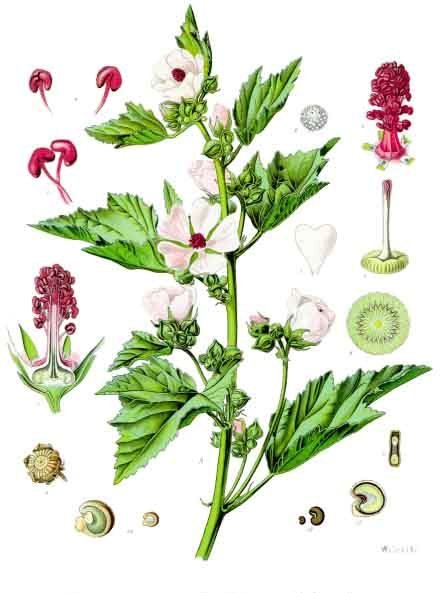 MarshmallowAlthaea officinalis
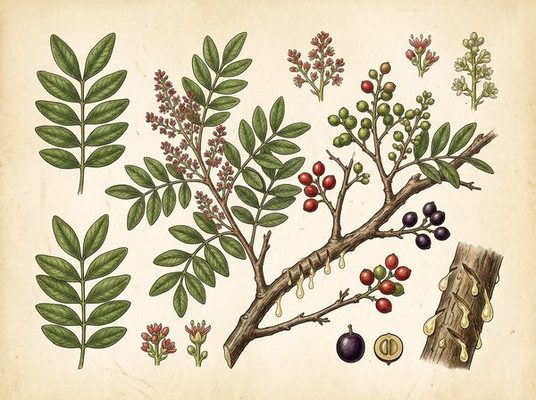 MasticPistacia lentiscus
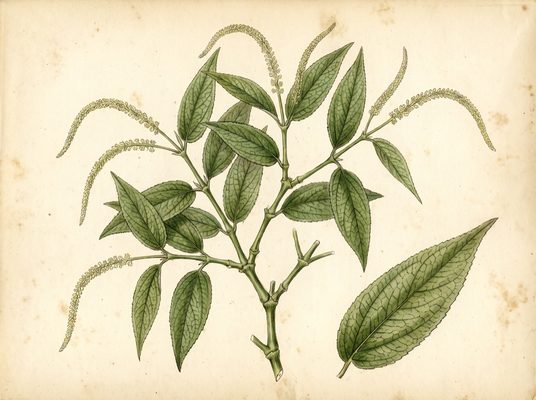 MaticoArtanthe elongata
The whole plate is in the library. The compass, Compare, the Sky of eleven hundred plants and the formulary open with an email address and a password, free, with the formula builder and its safety engine. Herbert in full, his formulating, clients, the handouts and the labels are the paid room.
Open the library, free