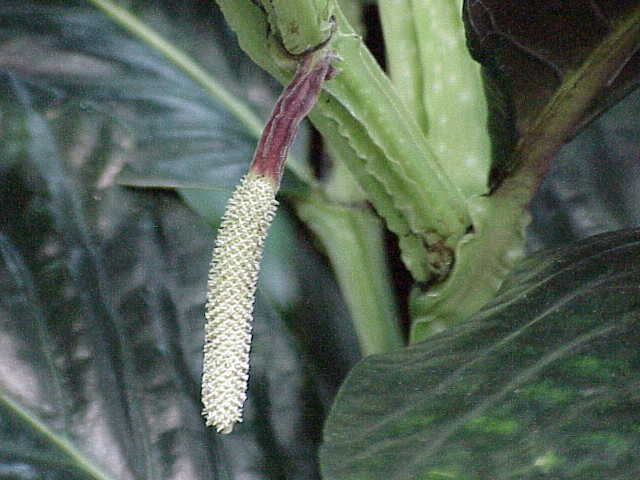
Western Herbalism
Matico
Artanthe elongata
Also known as Soldier's herb, Yerba soldado, Matico Leaves.
Matico is the dried leaf of a jointed, shrubby Piper native to the warmer valleys of Peru and neighboring parts of South America, where it has long been carried as a household remedy for wounds and bleeding. Early physiomedicalist and eclectic writers in North America adopted it from South American folk use, prizing it as a leaf that first warms and moves blood to the surface and then leaves a mild astringent, toning effect behind. It has been used both internally, as an infusion or tincture, and topically, applied directly or as a poultice to cuts and ulcers.

Ask Herbert about Matico. Herbert is the master herbalist inside Bountiful Herbs: he answers from this plate and eleven hundred others, with dosing, pairing and cautions. Your first ten questions are free.
Ask HerbertActions
Indications what the tradition reached for it in
- Uterine hemorrhage
- Menorrhagia
- Hemoptysis
- Epistaxis
- Chronic bronchitis with excess secretion
- Diarrhea with mucus or blood
- Leucorrhea
- Chronic urethral discharge
- Slow-healing wounds and ulcers
- Skin abrasions with oozing
Specific indications
Brisk internal hemorrhage where a prompt, warming astringent action is wanted rather than a slow, purely contracting one
Wounds or ulcerated surfaces with thin, watery discharge that need both stimulation of local circulation and mild astringent toning
Safety
Pregnancy: Avoid in pregnancy given its traditional reputation as an active uterine hemostatic and stimulant, which has not been formally assessed for safety in pregnancy.
Breastfeeding: Insufficient information on use during lactation; avoid unless under experienced clinical supervision.
The record lists 4 contraindications; open the plate in the library to read them in full.
In practice
Physiomedicalist writers valued matico specifically for its two-stage action: an immediate, diffusive warming that brings blood promptly to the periphery, followed by a milder astringent toning of the tissue once the initial stimulation has passed.
Dosing as the sources wrote it
| Preparation | As written | Metric |
|---|---|---|
| Infusion | 1-2 g dried leaf as a short infusion in warm water, up to three times daily | 1000-2000 mg |
| Tincture (1:5, 45-60%) | 1-3 mL three times daily | 1-3 mL |
| Topical | strong infusion or crushed fresh leaf applied directly to wounds or ulcers as needed | |
| of which the dose is from one to two fluid ounces, repeated every hour or half hour, according to circumstances | 29.57-59.15 mL | |
| of which the dose is from one to three fluid drachms | 3.7-11.09 mL | |
| Dose, 1 to 2 fluidrachms. | 3.7-7.39 mL |
Doses are reproduced from the sources for practitioners and are not a recommendation for any person.
From the sources
Overview. Matico is the dried leaf of a jointed, shrubby Piper native to the warmer valleys of Peru and neighboring parts of South America, where it has long been carried as a household remedy for wounds and bleeding. Early physiomedicalist and eclectic writers in North America adopted it from South American folk use, prizing it as a leaf that first warms and moves blood to the surface and then leaves a mild astringent, toning effect behind. It has been used both internally, as an infusion or tincture, and topically, applied directly or as a poultice to cuts and ulcers.
Clinical Notes. Physiomedicalist writers valued matico specifically for its two-stage action: an immediate, diffusive warming that brings blood promptly to the periphery, followed by a milder astringent toning of the tissue once the initial stimulation has passed.
Properties and Uses. The leaves are diffusibly stimulating, distributing the blood promptly to the superficial capillaries, inducing gentle warmth and moistness of the skin, and leaving behind a mild tonic impression of a slightly astringent character.
Description, Medical Uses, and Dosage. (See Matico). This preparation well represents the virtues of matico, although in our opinion a better representative results when alcohol alone is employed, instead of a mixture of alcohol and water. It is of a greenish-black color as made by the official process, of a green color when made with alcohol only. Dose, 20 minims to 2 fluid drachms.
Drawn from Cook's Physio-Medical Dispensatory; King's American Dispensatory, 18th edition (Felter and Lloyd); Felter's Eclectic Materia Medica, Pharmacology and Therapeutics, and the Bountiful Herbs editorial.
Nearby on the shelf
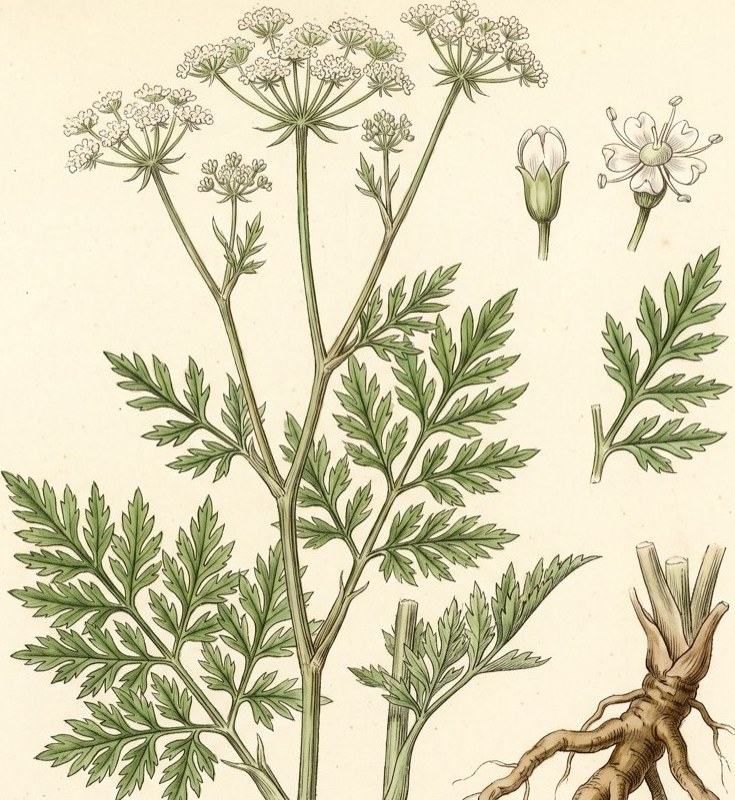 Marsh ParsleySelinum
 Marsh rosemaryStatice caroliniana
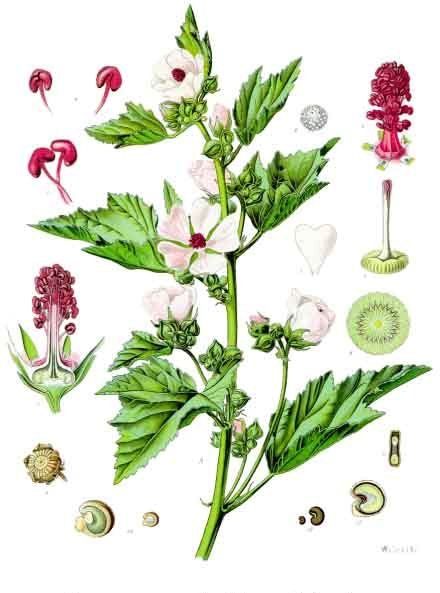 MarshmallowAlthaea officinalis
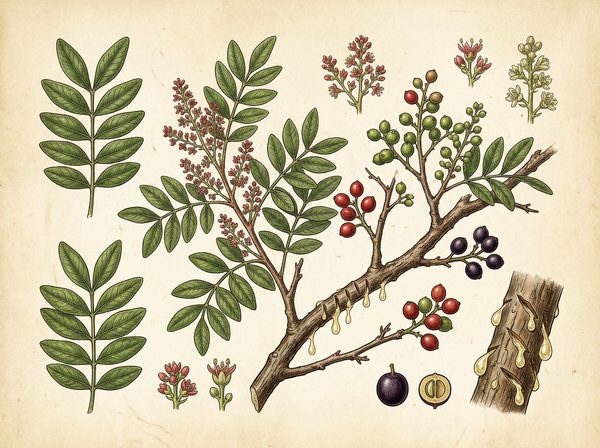 MasticPistacia lentiscus
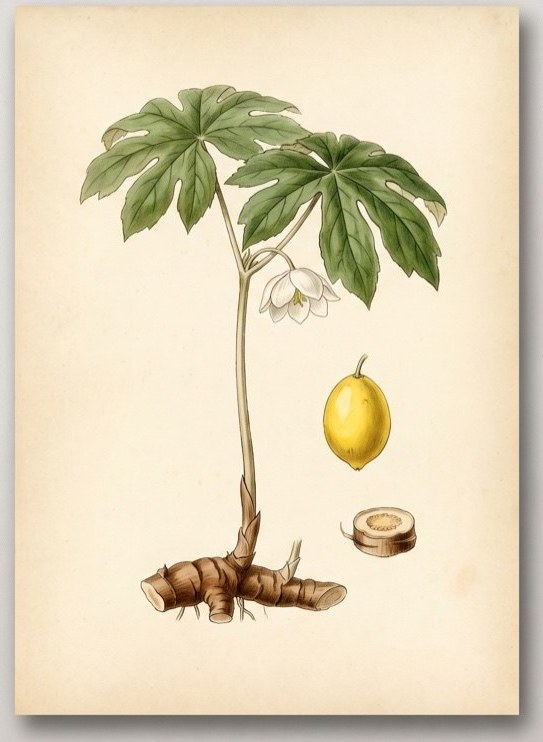 May applePodophyllum peltatum
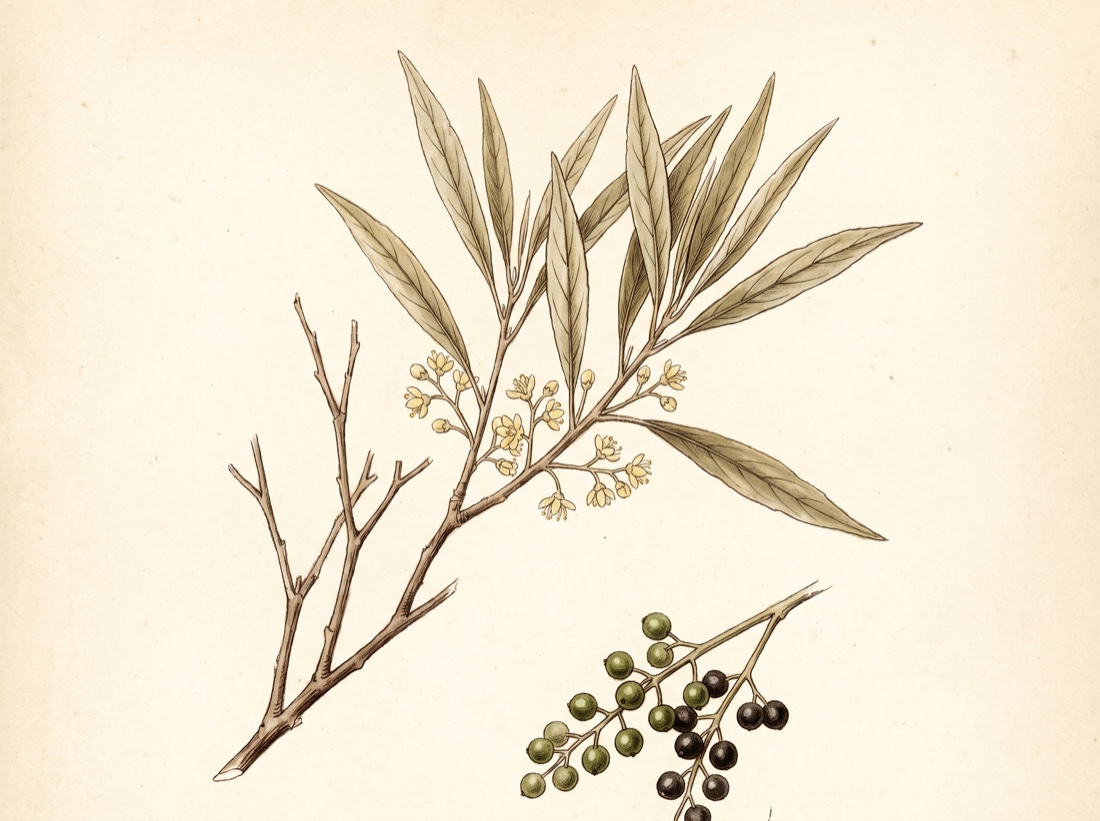 May changLitsea cubeba
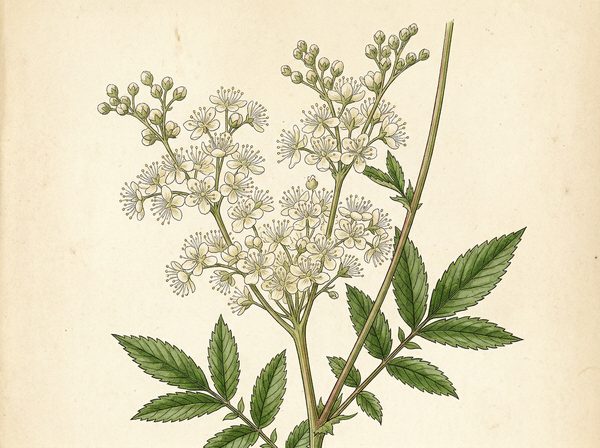 MeadowsweetFilipendula ulmaria
 MedaPolygonatum cirrhifolium
The whole plate is in the library. The compass, Compare, the Sky of eleven hundred plants and the formulary open with an email address and a password, free, with the formula builder and its safety engine. Herbert without limit, his formulating, clients, the handouts and the labels are the paid room.
Open the library, free