Chinese Herbalism
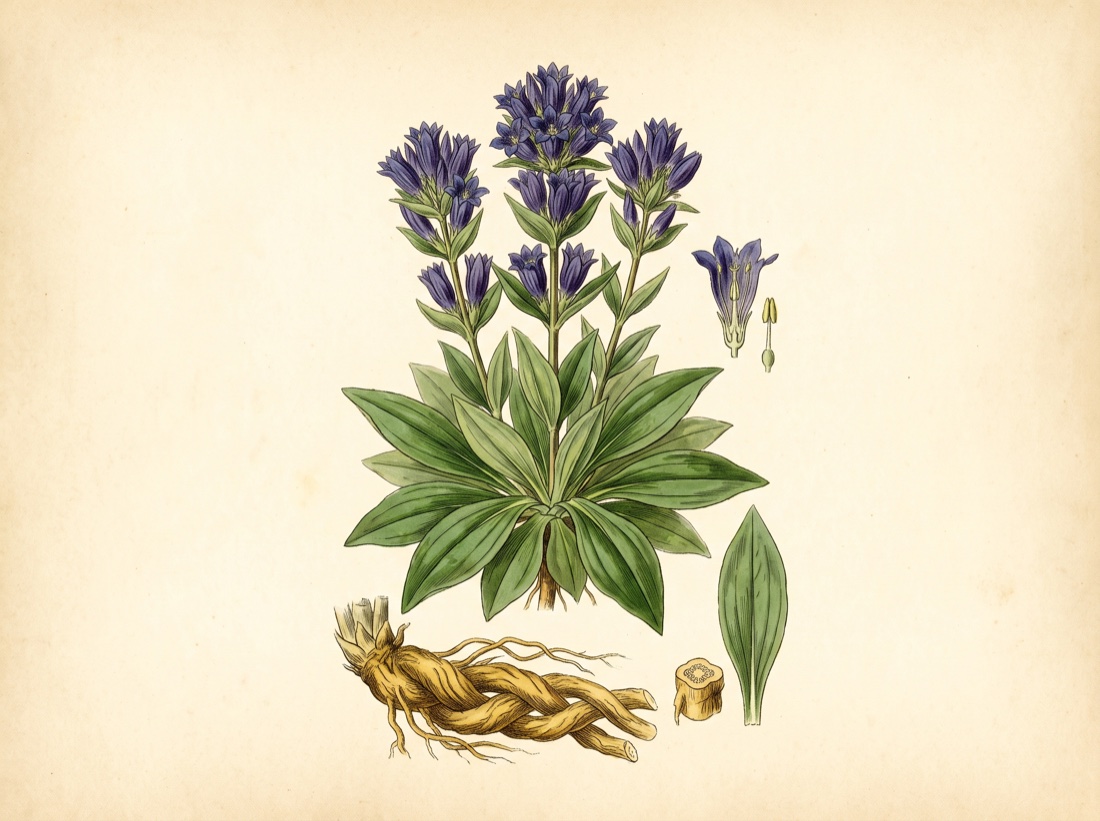
Large-leaf gentian
Gentiana macrophylla
Also known as large gentian root, Chinese gentian, chin-chou, qin jiao, qín jiāo.
Qin jiao is the root of large-leaf gentian and three close relatives from the grasslands and mountain slopes of northwestern and western China, from Shaanxi and Gansu across to Sichuan, Qinghai and Tibet. The stout, twisted, straw-coloured taproot is dug in spring or autumn and dried. Unlike the intensely bitter long dan cao gentian used to purge Liver fire, qin jiao is milder, moister and neutral in temperature, and it belongs with the herbs that dispel wind-dampness. It is one of the few in that group that also clears deficiency heat.

Ask Herbert about Large-leaf gentian. Herbert is the master herbalist inside Bountiful Herbs: he answers from this plate and eleven hundred others, with dosing, pairing and cautions. Your first ten questions are free.
Ask HerbertActions
Indications what the tradition reached for it in
- Rheumatoid and inflammatory joint pain with wandering, aching joints
- Painful obstruction from wind-damp, hot or cold type
- Joint stiffness and cramping of the sinews
- Low back and limb pain that worsens in damp weather
- Hemiplegia, facial paralysis and limb spasm after stroke
- Deficiency heat with afternoon fever and night sweats in chronic illness
- Steaming bone fever in consumptive disease
- Childhood malnutrition with fever and wasting
- Jaundice from damp-heat
- Hepatitis and cholestasis as an assistant herb
- Urticaria and itchy skin from wind
- Constipation accompanying rheumatic pain in a dry patient
Specific indications
Aching joints that migrate from place to place, flare in humid weather and coexist with dryness, thin stools or a slightly depleted constitution that would not tolerate the harsher wind-damp herbs
Chronic low-grade afternoon fever with sweating at night and a thin, rapid pulse in a patient recovering from a long illness, where the heat is from deficiency and the sinews are also stiff
Sudden facial paralysis or limb stiffness after wind-stroke when the pattern mixes wind, damp and blood deficiency
Safety
The record lists 7 contraindications; open the plate in the library to read them in full.
In practice
This is the wind-damp herb to choose when the patient is dry, tense or depleted, because it is described as moist and does not scatter fluids the way angelica pubescens or notopterygium do. It treats painful obstruction of any temperature: with cinnamon twig and fresh ginger for cold-damp aching, with honeysuckle stem and phellodendron for hot, swollen joints.
In Chinese medicine
Temperature: neutral, tending slightly cool. Taste: bitter, acrid. Channels: Stomach, Liver, Gallbladder. Actions: Dispels wind-dampness from the channels and relaxes the sinews; Relieves painful obstruction (bi) whether cold or hot in character; Clears deficiency heat and steaming bone fever with afternoon heat and night sweats; Clears damp-heat and reduces jaundice; Unblocks the channels in hemiplegia and spasm after wind-stroke; Moistens rather than dries, so suits chronic pain in a somewhat depleted patient.
Dosing as the sources wrote it
| Preparation | As written | Metric |
|---|---|---|
| Decoction (pharmacopoeial range) | 3-10 g dried root daily | 3000-10000 mg |
| Granules (5:1 concentrate) | 1-2 g two to three times daily | 1000-2000 mg |
| Tincture (1:5, 40%) | 2-4 mL three times daily | 2-4 mL |
Doses are reproduced from the sources for practitioners and are not a recommendation for any person.
From the sources
Overview. Qin jiao is the root of large-leaf gentian and three close relatives from the grasslands and mountain slopes of northwestern and western China, from Shaanxi and Gansu across to Sichuan, Qinghai and Tibet. The stout, twisted, straw-coloured taproot is dug in spring or autumn and dried. Unlike the intensely bitter long dan cao gentian used to purge Liver fire, qin jiao is milder, moister and neutral in temperature, and it belongs with the herbs that dispel wind-dampness. It is one of the few in that group that also clears deficiency heat.
Clinical Notes. This is the wind-damp herb to choose when the patient is dry, tense or depleted, because it is described as moist and does not scatter fluids the way angelica pubescens or notopterygium do. It treats painful obstruction of any temperature: with cinnamon twig and fresh ginger for cold-damp aching, with honeysuckle stem and phellodendron for hot, swollen joints.
Chinese Medicine Profile. Temperature: neutral, tending slightly cool. Taste: bitter, acrid. Channels: Stomach, Liver, Gallbladder. Actions: Dispels wind-dampness from the channels and relaxes the sinews; Relieves painful obstruction (bi) whether cold or hot in character; Clears deficiency heat and steaming bone fever with afternoon heat and night sweats; Clears damp-heat and reduces jaundice; Unblocks the channels in hemiplegia and spasm after wind-stroke; Moistens rather than dries, so suits chronic pain in a somewhat depleted patient.
In formulas
Large-leaf gentian stands in 44 documented formulas in the library, among them shù záo yin zi, ging gu san, qin jião biê jiǎ sǎn, dà qin jiào tàng, juân bì tāng, sãn bì tāng.
Often paired with
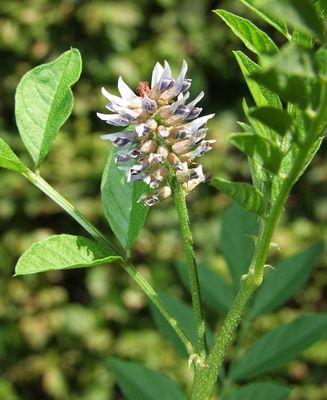 Licorice rootGlycyrrhiza glabra
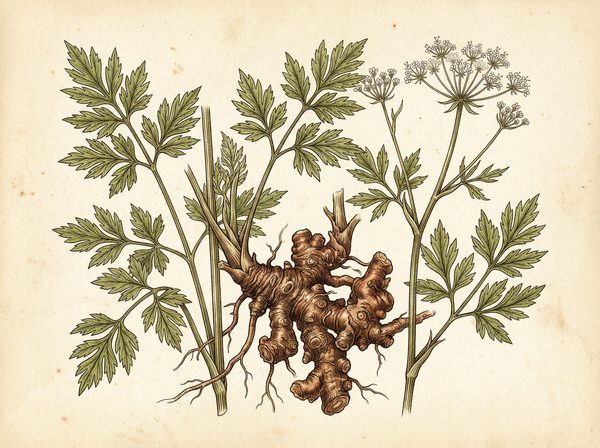 Sichuan Lovage RhizomeLigusticum chuanxiong
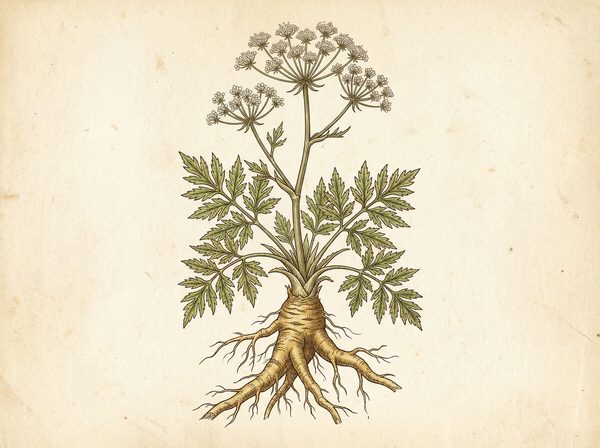 Fang FengSaposhnikovia divaricata
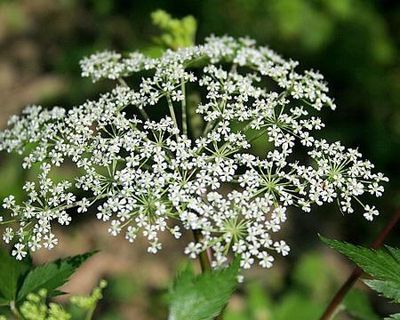 Dong QuaiAngelica sinensis
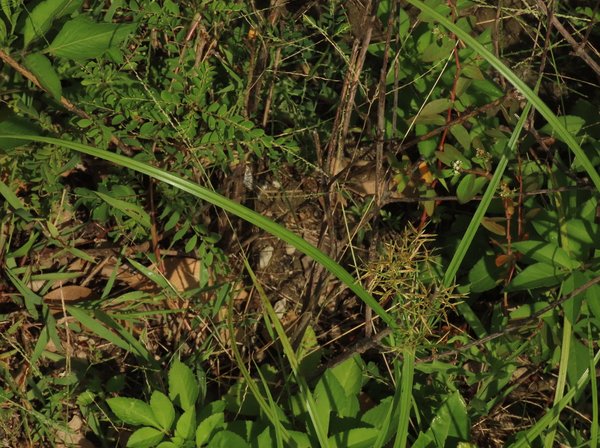 nut grassCyperus rotundus
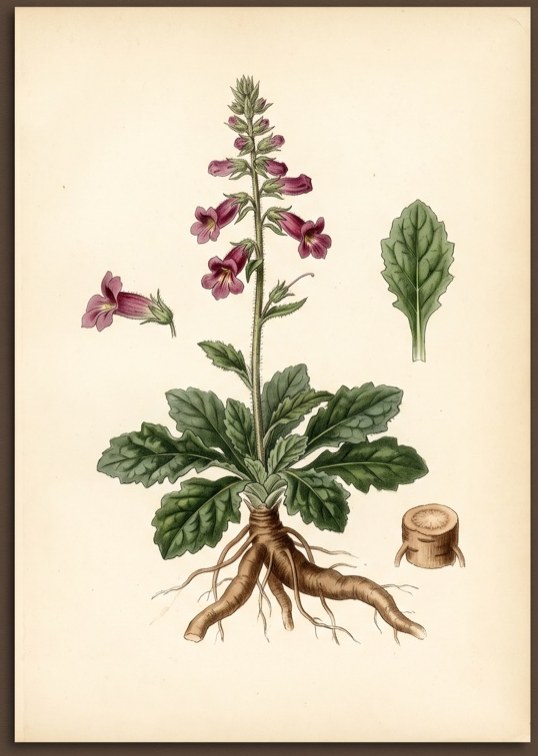 RehmanniaRehmannia glutinosa
Nearby on the shelf
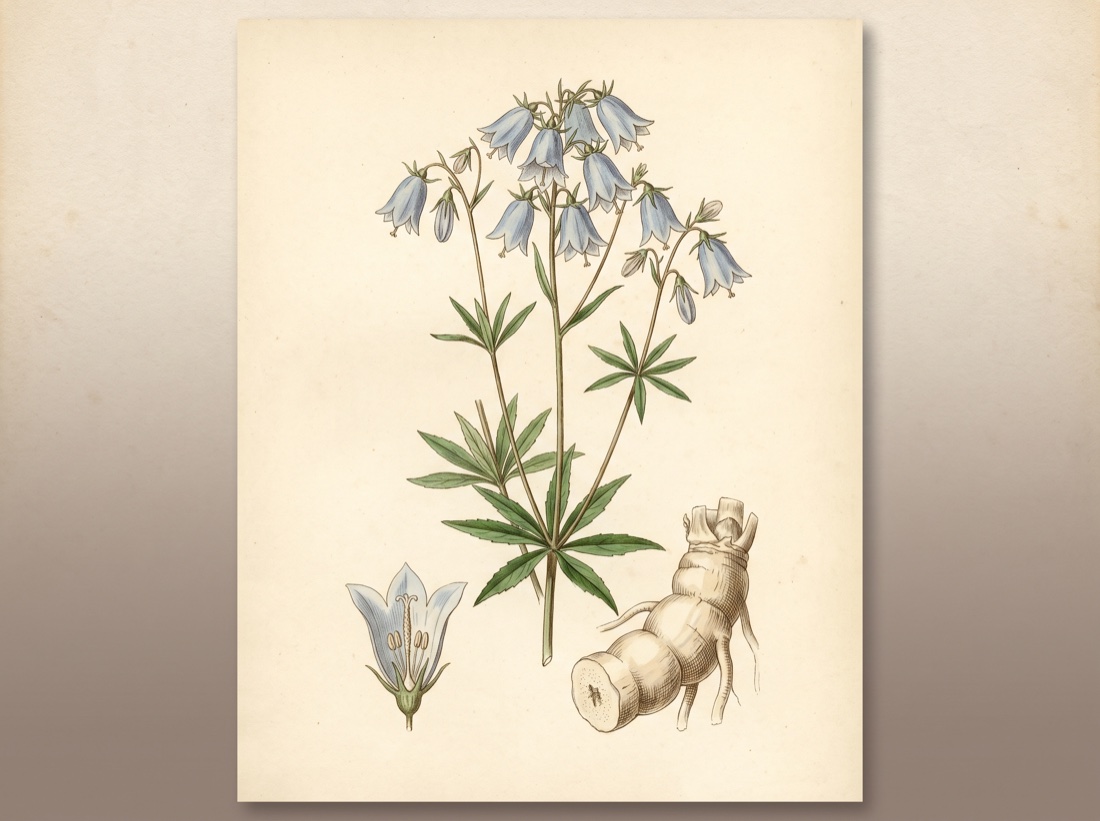 LadybellsAdenophora stricta
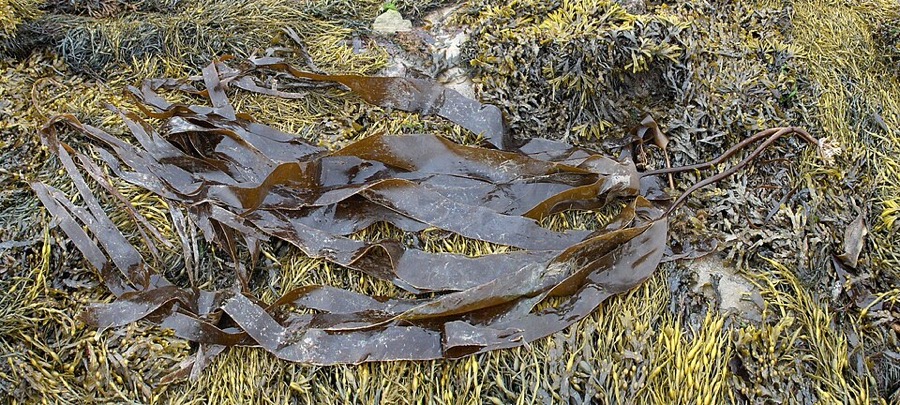 LaminariaLaminaria
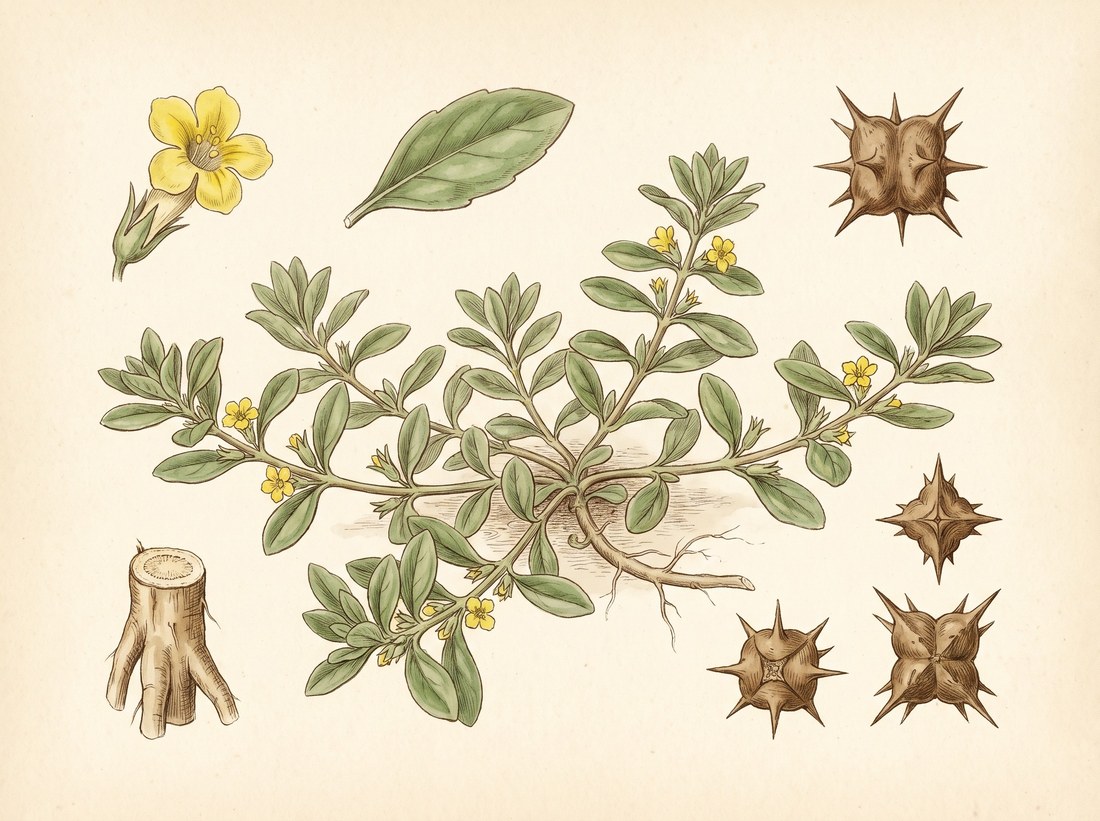 Large caltropsPedalium murex
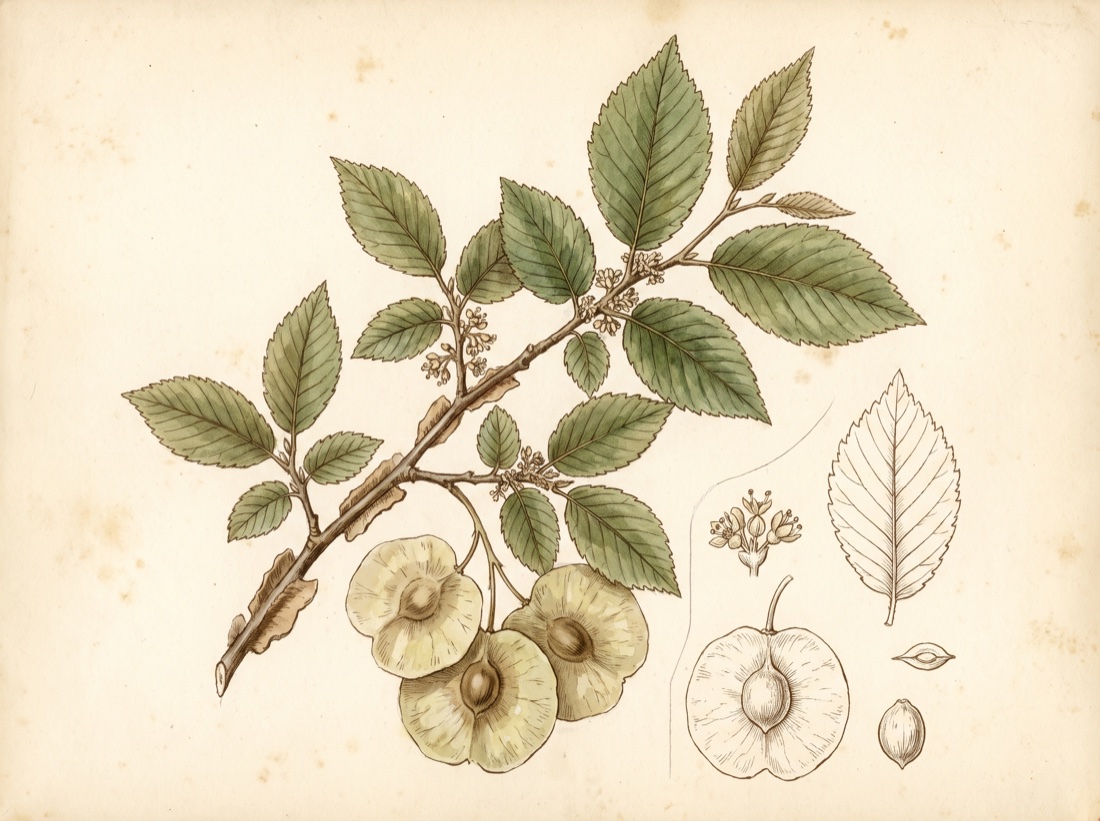 Large-fruited elmUlmus macrocarpa
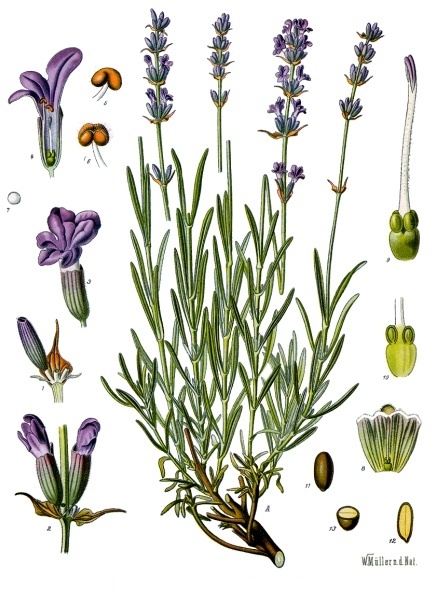 LavenderLavandula spp.
 LeatherwoodDirca
 Lei wanOmphalia lapidescens
 LemonCitrus limon
The whole plate is in the library. The compass, Compare, the Sky of eleven hundred plants and the formulary open with an email address and a password, free, with the formula builder and its safety engine. Herbert without limit, his formulating, clients, the handouts and the labels are the paid room.
Open the library, free