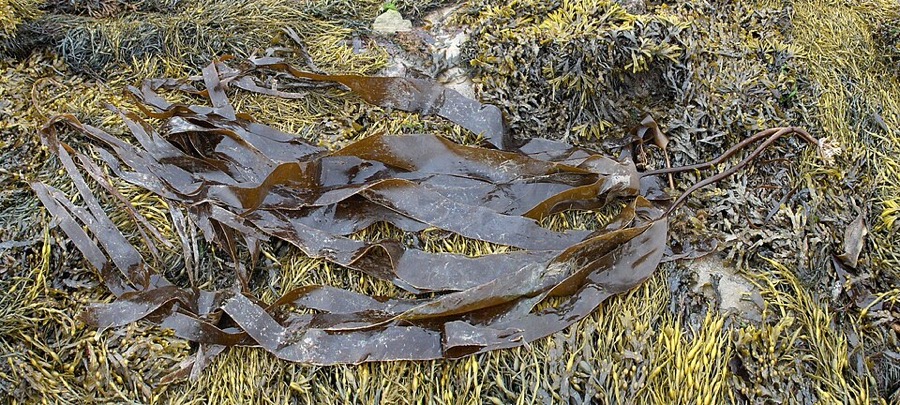
Western Herbalism
Laminaria
Laminaria
Also known as Sea tangles, Sea girdles, Kelp, Tangleweed, Devil's apron.
Laminaria is a genus of large brown kelps growing in cold coastal waters, harvested for their long, tough stipes and mineral-rich fronds. The dried stipe swells markedly on absorbing moisture, a property that made it a mainstay of nineteenth century eclectic practice both as an internal alterative rich in iodine and, more distinctively, as a mechanical tent for gradually dilating the cervix. That mechanical use has carried forward essentially unchanged into modern obstetric and gynecological practice.

Ask Herbert about Laminaria. Herbert is the master herbalist inside Bountiful Herbs: he answers from this plate and eleven hundred others, with dosing, pairing and cautions. Your first ten questions are free.
Ask HerbertActions
Indications what the tradition reached for it in
- Cervical ripening before uterine instrumentation
- Nontoxic goiter from iodine deficiency
- Chronic constipation
- Obesity (historical eclectic use)
- Scrofula and glandular swelling
- Chronic bronchitis with thick mucus
- Rickets and poor mineralization
- Lymphatic congestion
Specific indications
A firm, undilated cervical os requiring slow, gentle mechanical widening before a gynecological or obstetric procedure
A soft, diffuse nontoxic goiter in a person with dietary iodine insufficiency
Safety
Low dose botanical. Used in drop doses in the classical practice; not a plant to dose freely.
Pregnancy: Limited safety data in pregnancy
Breastfeeding: Not for use while breastfeeding
The record lists 6 contraindications; open the plate in the library to read them in full.
In practice
The eclectic physicians valued laminaria chiefly for two very different jobs. Taken internally as a tincture or in small doses of the dried thallus, it served as an alterative and thyroid tonic in the days before iodized salt, useful for the soft, diffuse goiters of straightforward iodine deficiency and for sluggish glandular states more generally.
Dosing as the sources wrote it
| Preparation | As written | Metric |
|---|---|---|
| Laminaria tent | one sterile tent inserted into the cervical os, left in place 4-24 hours before dilation | |
| Dried thallus (historical internal use) | 1-3 g dried thallus daily | 1000-3000 mg |
| Tincture (1:5) | 1-4 mL 1:5 tincture daily | 1-4 mL |
Doses are reproduced from the sources for practitioners and are not a recommendation for any person.
From the sources
Overview. Laminaria is a genus of large brown kelps growing in cold coastal waters, harvested for their long, tough stipes and mineral-rich fronds. The dried stipe swells markedly on absorbing moisture, a property that made it a mainstay of nineteenth century eclectic practice both as an internal alterative rich in iodine and, more distinctively, as a mechanical tent for gradually dilating the cervix. That mechanical use has carried forward essentially unchanged into modern obstetric and gynecological practice.
Clinical Notes. The eclectic physicians valued laminaria chiefly for two very different jobs. Taken internally as a tincture or in small doses of the dried thallus, it served as an alterative and thyroid tonic in the days before iodized salt, useful for the soft, diffuse goiters of straightforward iodine deficiency and for sluggish glandular states more generally.
Drawn from King's American Dispensatory, 18th edition (Felter and Lloyd), and the Bountiful Herbs editorial.
Often paired with
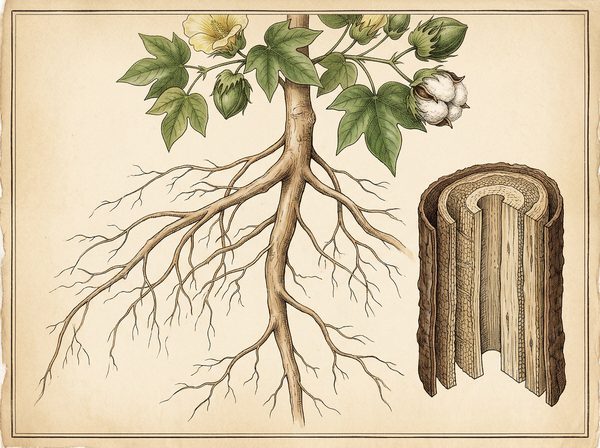 Levant cottonGossypium herbaceum
Nearby on the shelf
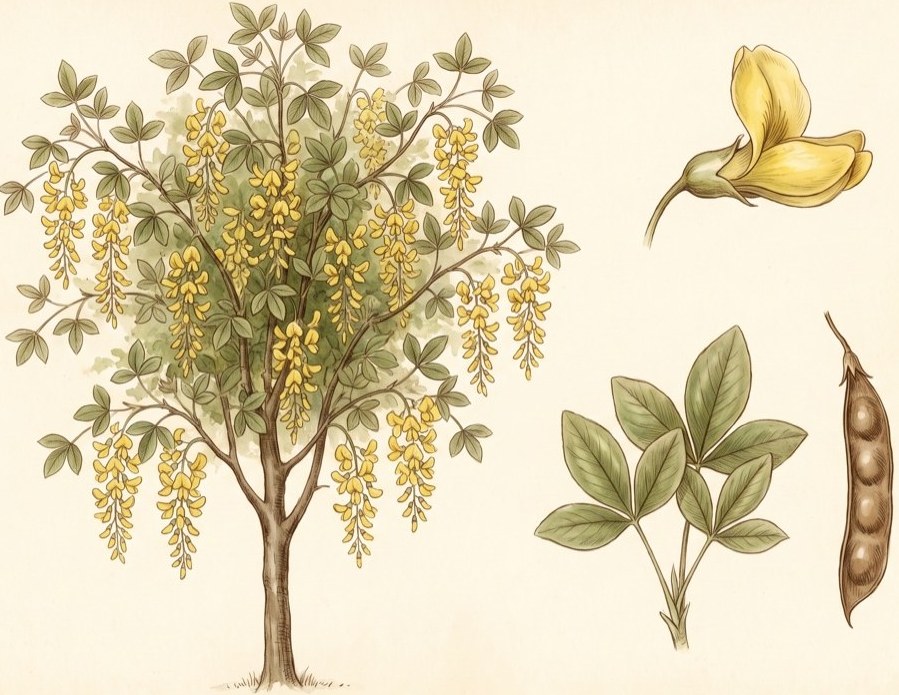 LaburnumLaburnum
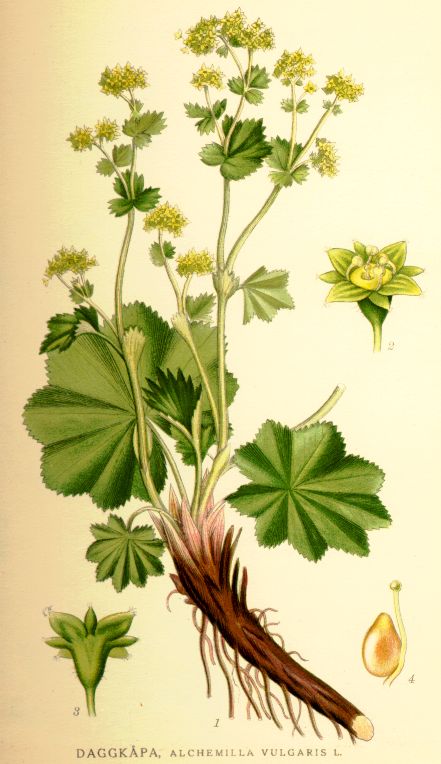 Lady's MantleAlchemilla vulgaris
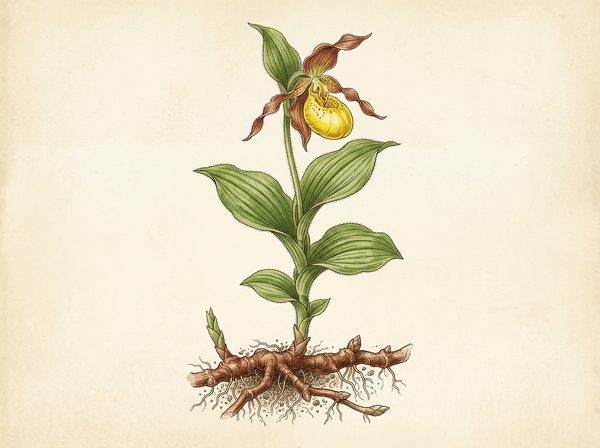 Lady's SlipperCypripedium pubescens
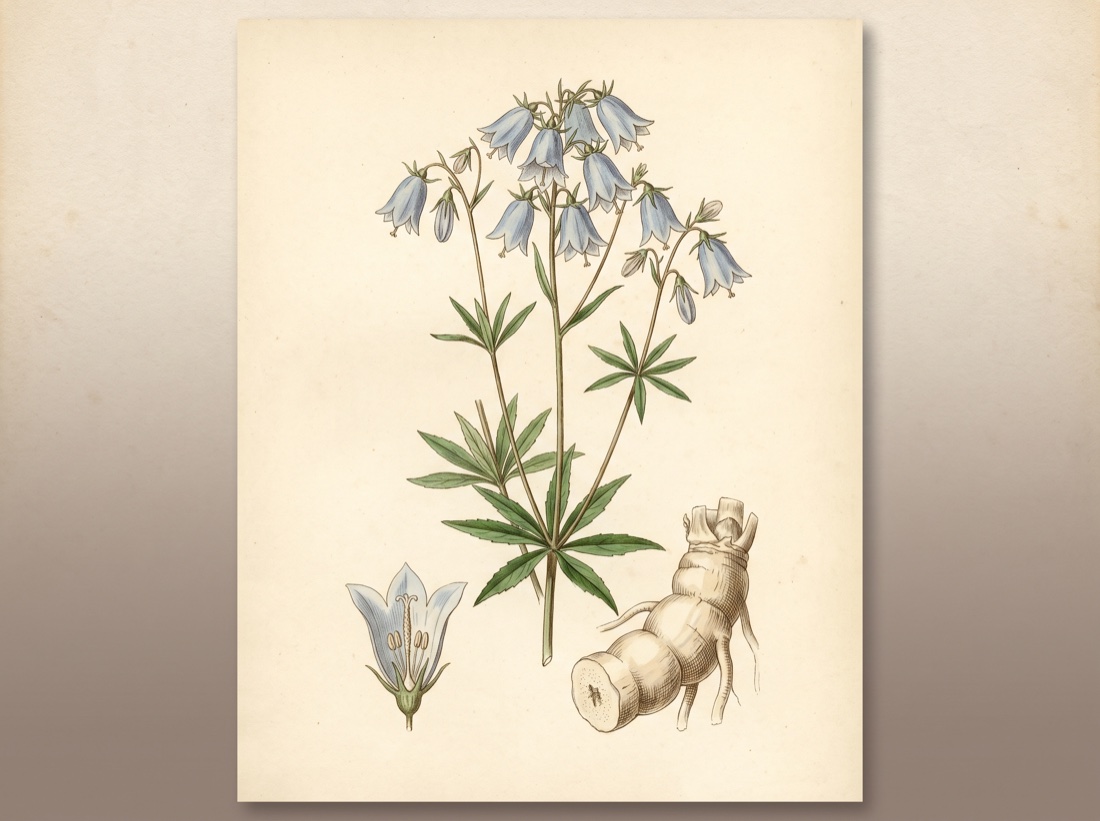 LadybellsAdenophora stricta
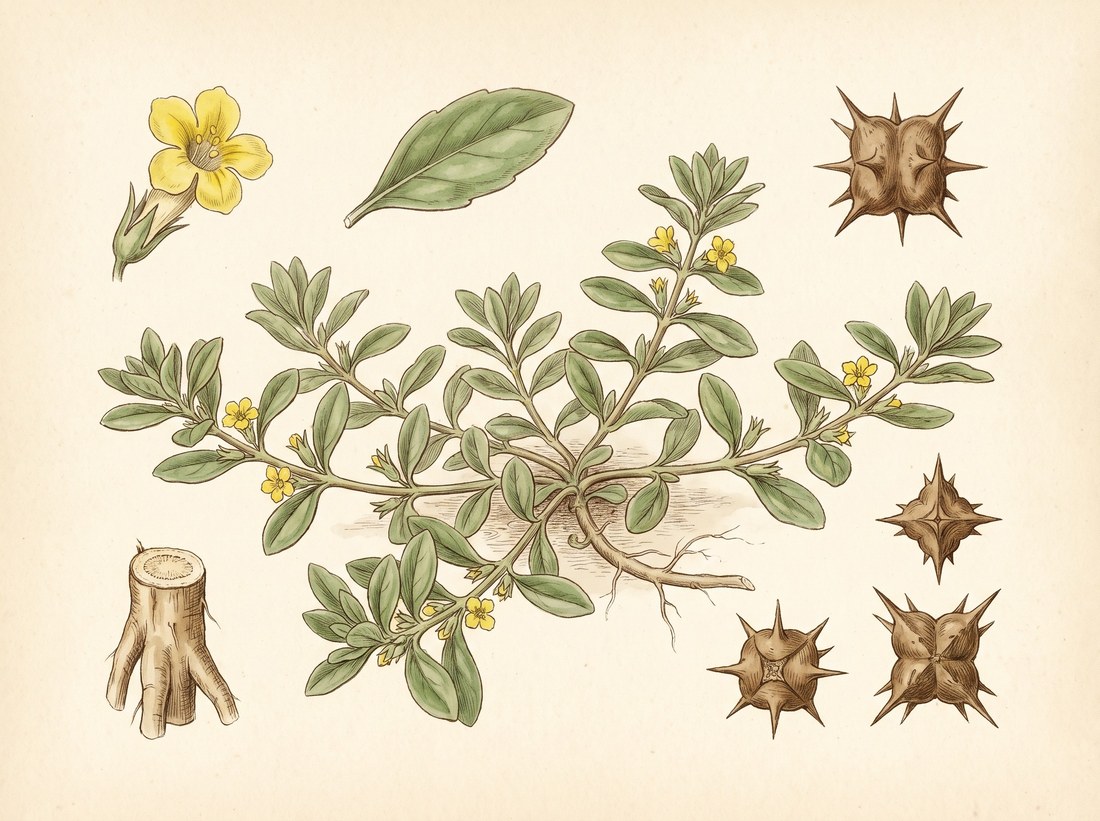 Large caltropsPedalium murex
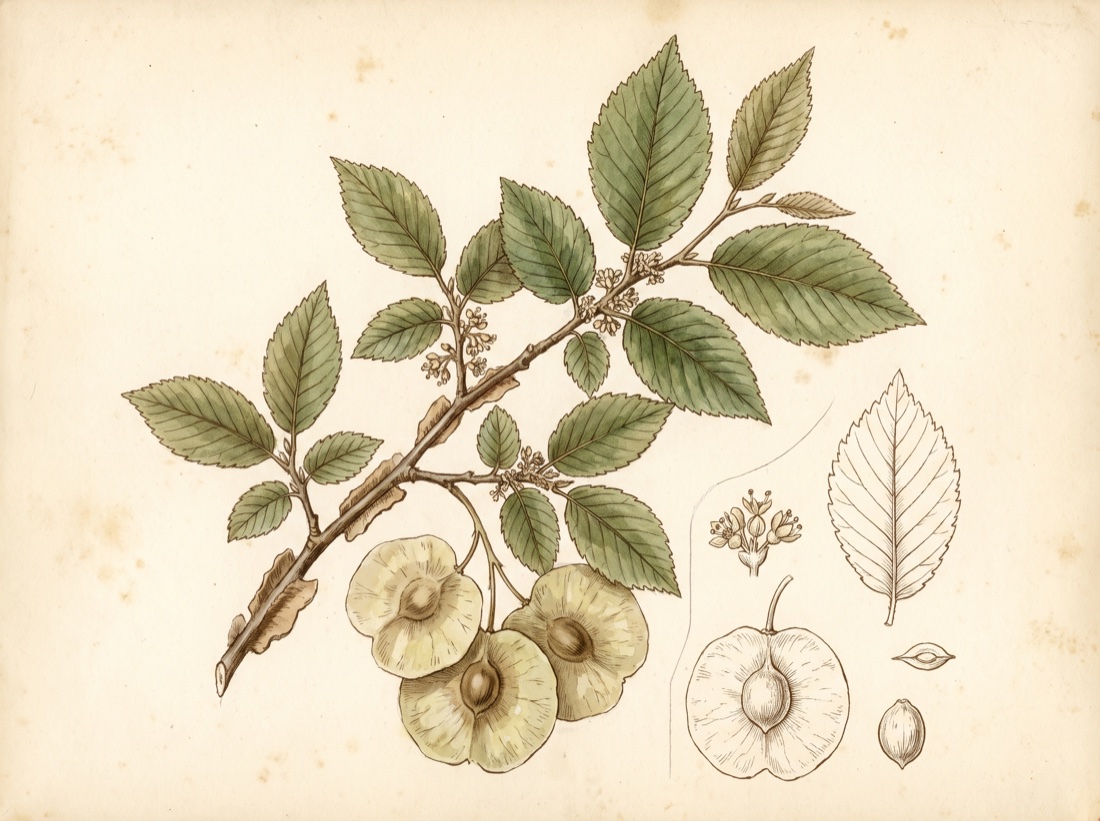 Large-fruited elmUlmus macrocarpa
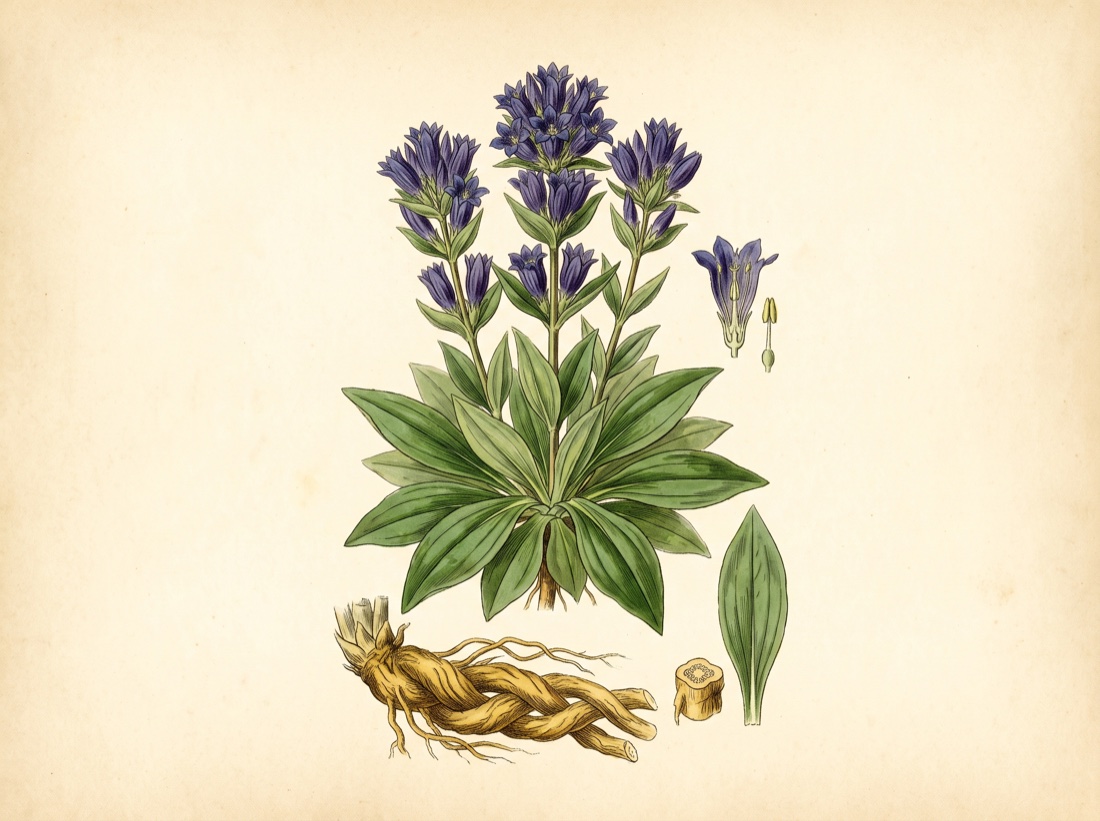 Large-leaf gentianGentiana macrophylla
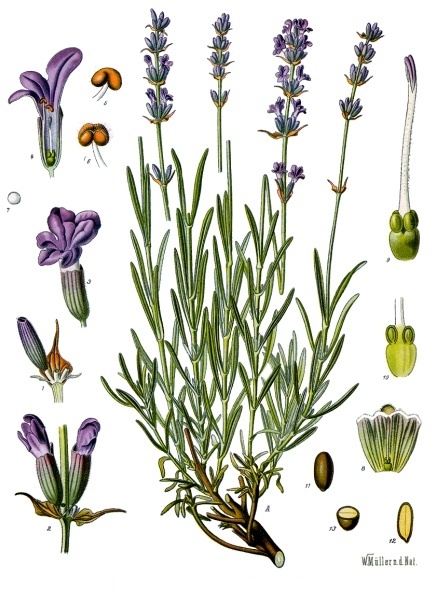 LavenderLavandula spp.
The whole plate is in the library. The compass, Compare, the Sky of eleven hundred plants and the formulary open with an email address and a password, free, with the formula builder and its safety engine. Herbert without limit, his formulating, clients, the handouts and the labels are the paid room.
Open the library, free