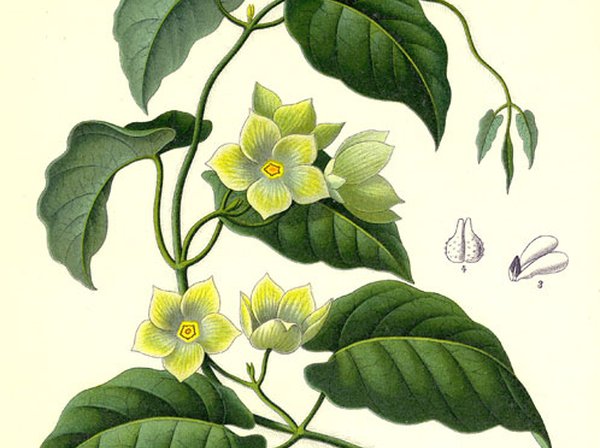
Western Herbalism
Condurango
Marsdenia cundurango
Also known as Cundurango, Eagle Vine, Condor Vine, Condurango (Cundur-angu, vine of Condor), Mata-peroo.
A drug of considerable power, introduced into medicine in 1871 as a cure for syphilis and cancer of the stomach, in both of which it has but an unsustained reputation. It is thought, however, by competent clinicians, to have some retarding effect upon the latter, by its favorable action upon the mucosa.

Ask Herbert about Condurango. Herbert is the master herbalist inside Bountiful Herbs: he answers from this plate and eleven hundred others, with dosing, pairing and cautions. Your first ten questions are free.
Ask HerbertActions
Indications what the tradition reached for it in
- Anorexia and loss of appetite
- Atonic dyspepsia and weak digestion
- Chronic gastritis
- Nausea associated with weak gastric tone
- Gastric pain and discomfort
- Historical palliative use in gastric cancer and chronic gastric ulceration (to ease pain and improve appetite, not curative)
- Convalescent debility with poor appetite
Safety
Breastfeeding: Pregnancy and lactation (limited data - avoid medicinal doses)
The record lists 4 contraindications; open the plate in the library to read them in full.
Dosing as the sources wrote it
| Preparation | As written | Metric |
|---|---|---|
| Dried bark decoction | Dried bark decoction: 2-4 g/day | 2000-4000 mg |
| Tincture (1:5) | Tincture (1:5): 1-3 ml before meals as a bitter | 1-3 mL |
| Dose, one-half to one fluid dram. | 1.85-3.7 mL | |
| Dose, 5 to 30 drops. | 0.1-0.6 mL | |
| It is usually administered in the form of a wine (1/2 to 1 fluidounce), or the fluidextract (5 to 30 drops.); sometimes a decoction (bark, 1/2 ounce to Water, 16 ounces, boiled down to 8 ounces) is given in tablespoonful doses 3 times a day. | ||
| Of condurango a decoction (bark ℥ss to aqua Oj boiled down to Oss.) may be given in tablespoonful doses 3 times a day; fluid extract, 5 to 30 drops. | 0.25-1.5 mL |
Doses are reproduced from the sources for practitioners and are not a recommendation for any person.
From the sources
Action and Therapy. A drug of considerable power, introduced into medicine in 1871 as a cure for syphilis and cancer of the stomach, in both of which it has but an unsustained reputation. It is thought, however, by competent clinicians, to have some retarding effect upon the latter, by its favorable action upon the mucosa.
Therapy. The influence of the agent is exercised directly upon the stomach as a tonic and corrective of perverted action. It is of service in gastric ulcer and in the early stages of cancer of the stomach, for which it was originally lauded as a cure.
primary-actions. Condurango acts primarily as: Bitter digestive tonic, Sialagogue, Appetite stimulant, Gastric secretory stimulant, Anti-inflammatory, Palliative (gastric). Secondary actions include Stimulate digestion and appetite, Promote gastric secretion, Bitter tonic, Ease gastric discomfort.
indications. Condurango is traditionally indicated for: Anorexia and loss of appetite, Atonic dyspepsia and weak digestion, Chronic gastritis, Nausea associated with weak gastric tone, Gastric pain and discomfort, Historical palliative use in gastric cancer and chronic gastric ulceration (to ease pain and improve appetite, not curative), Convalescent debility with poor appetite.
Drawn from King's American Dispensatory, 18th edition (Felter and Lloyd); Ellingwood's American Materia Medica, Therapeutics and Pharmacognosy; Felter's Eclectic Materia Medica, Pharmacology and Therapeutics, and the Bountiful Herbs editorial.
Nearby on the shelf
 Common goldenrodSolidago altissima
 Common gromwellLithospermum officinale
 Common MallowMalva sylvestris
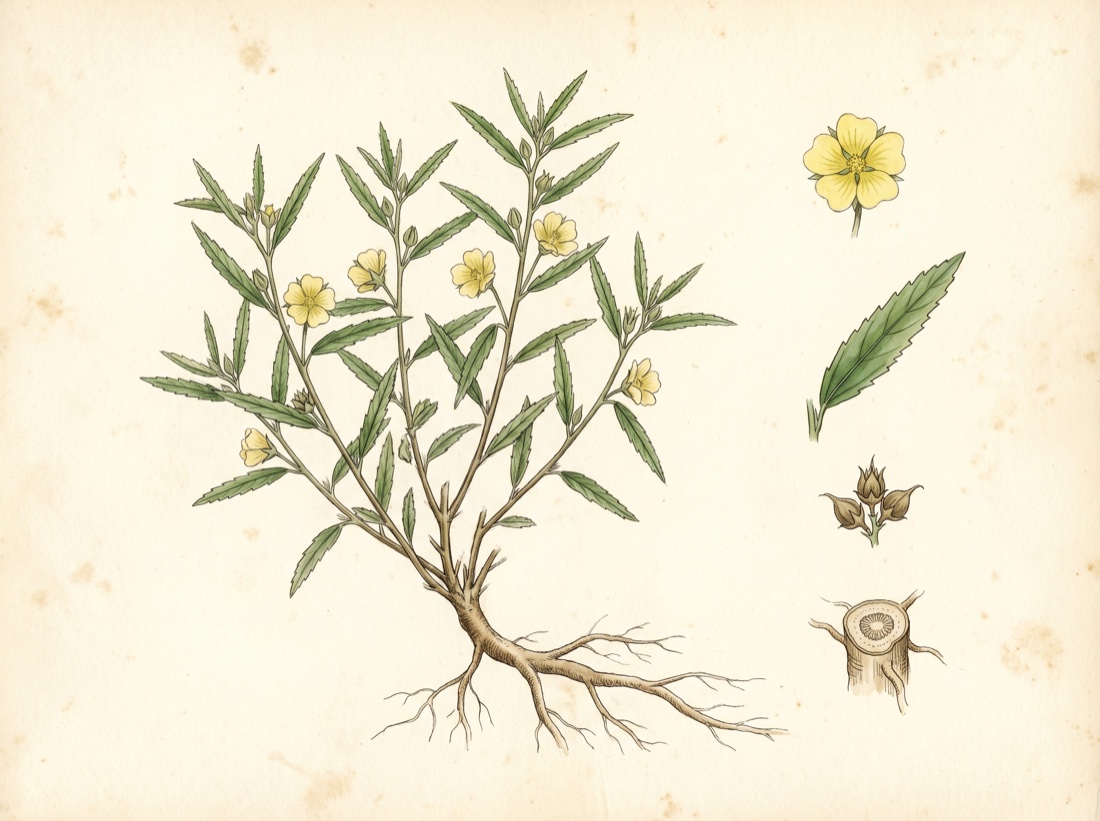 Common wireweedSida acuta
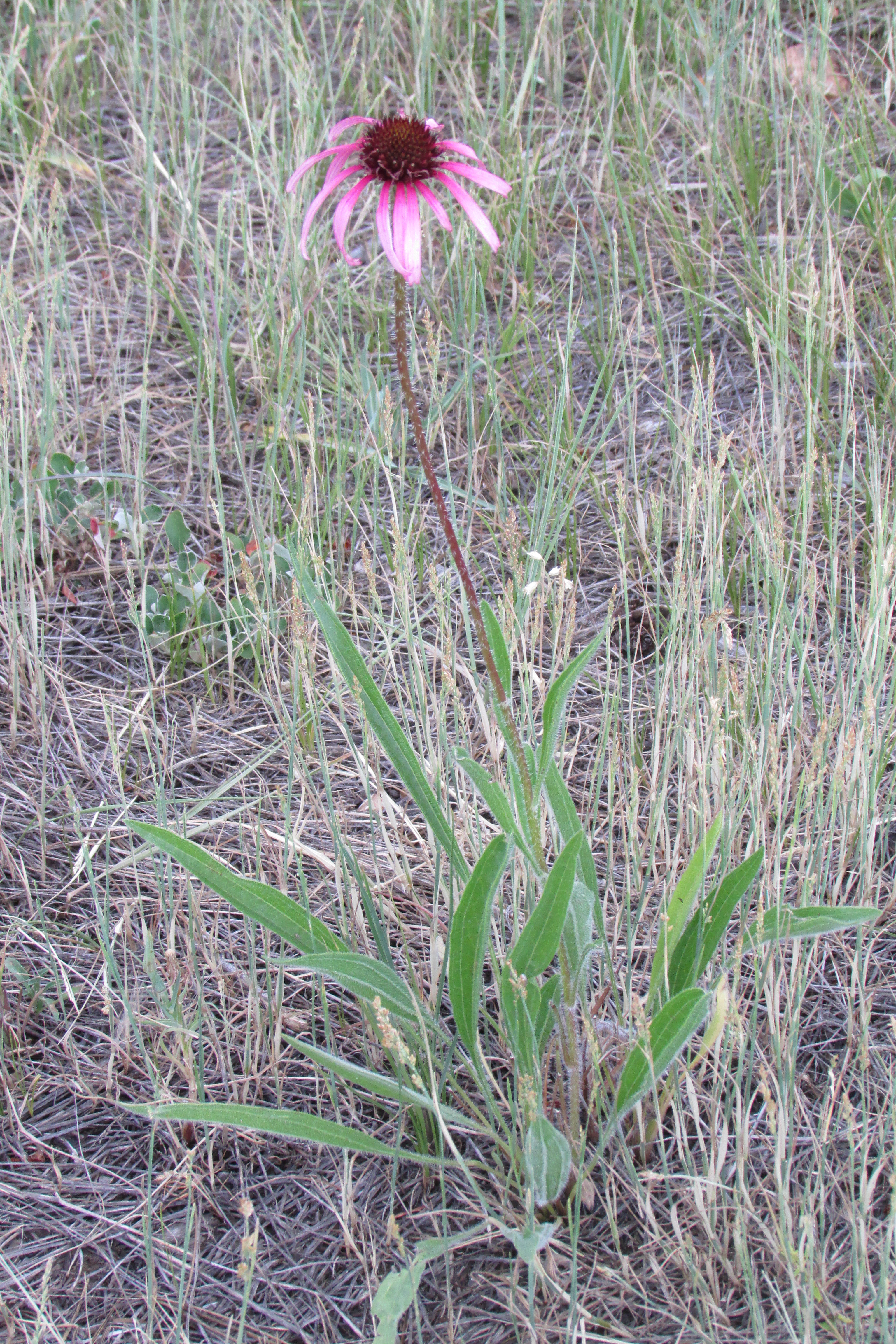 ConeflowerEchinacea angustifolia
 ContrayervaDorstemia contrayerva
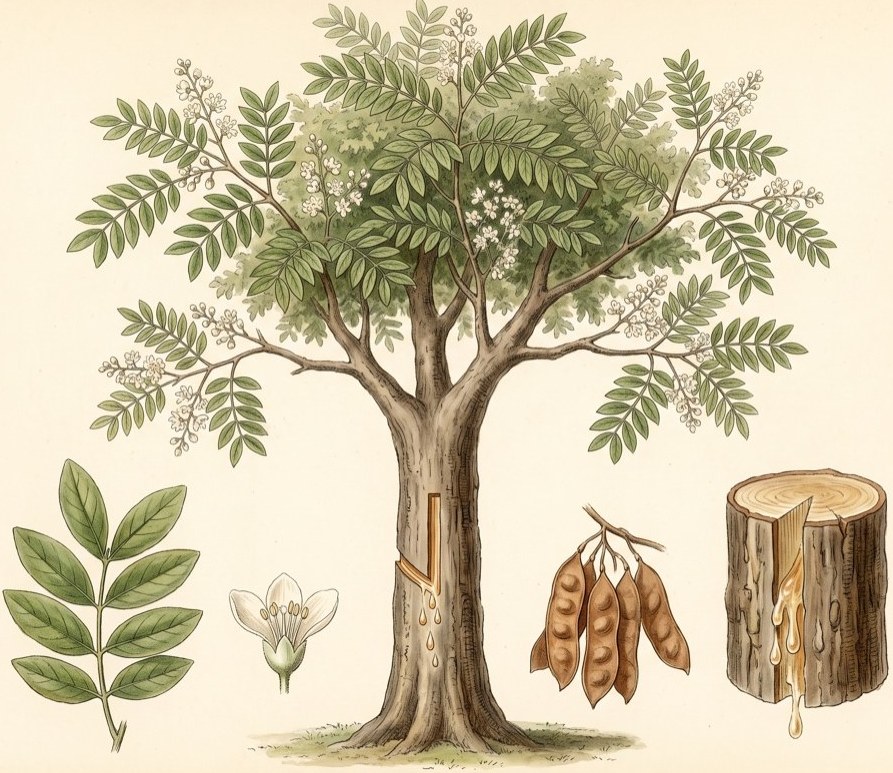 CopaibaCopaifera officinalis
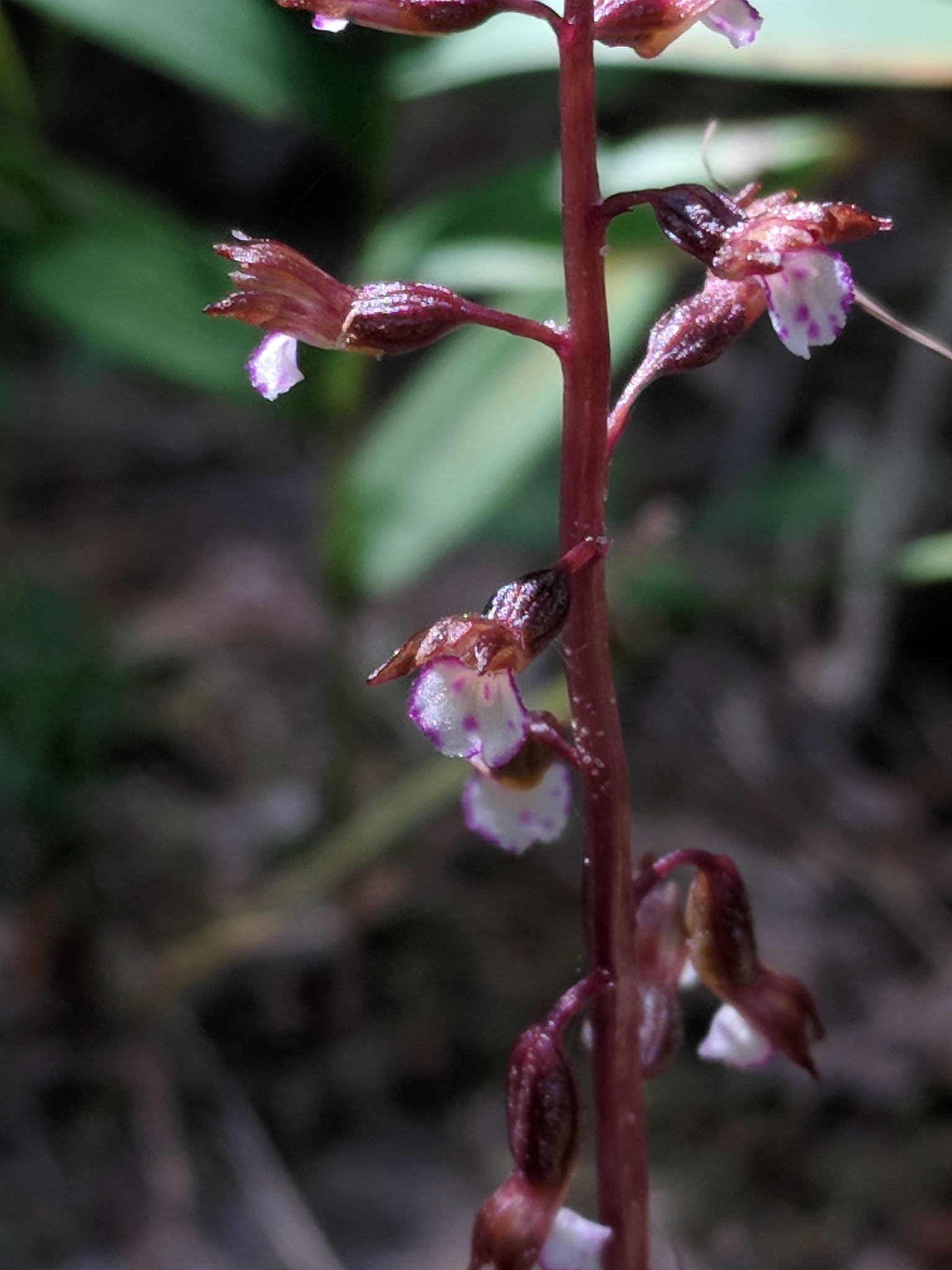 Coral rootCorallorhiza odontorhiza
The whole plate is in the library. The compass, Compare, the Sky of eleven hundred plants and the formulary open with an email address and a password, free, with the formula builder and its safety engine. Herbert without limit, his formulating, clients, the handouts and the labels are the paid room.
Open the library, free