Ayurvedic Herbalism
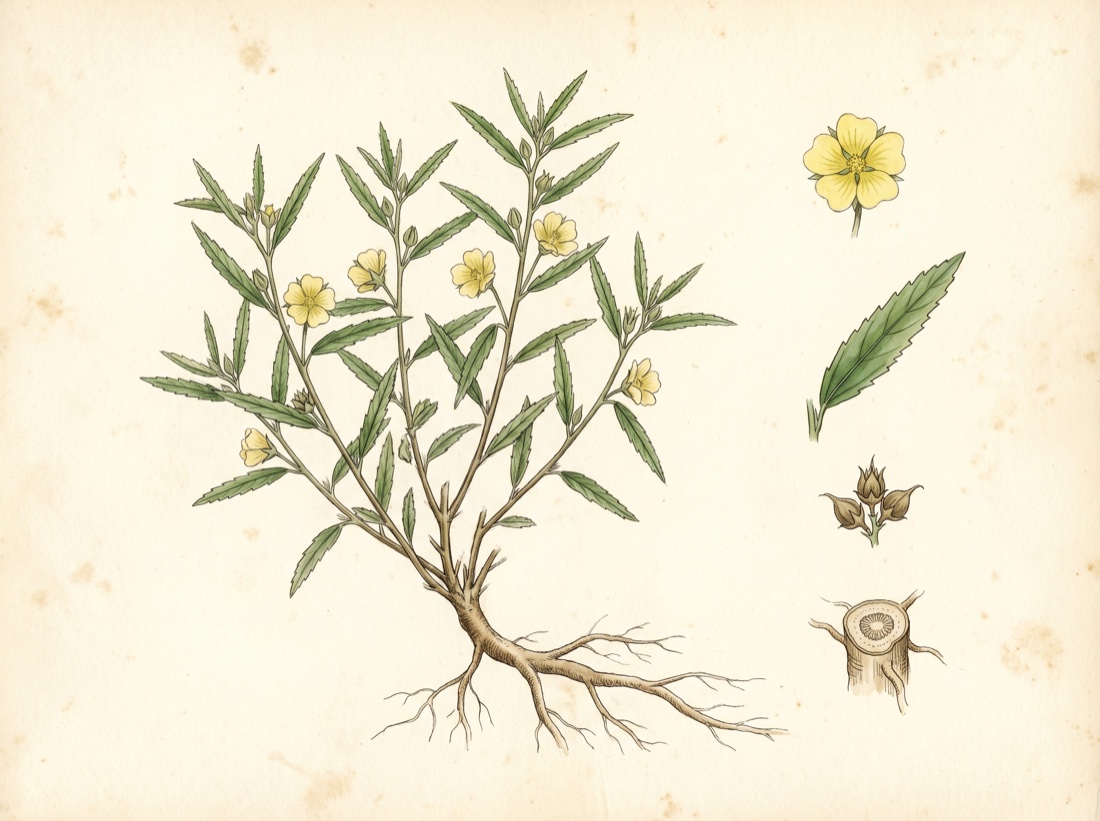
Common wireweed
Sida acuta
Also known as wireweed, spiny-head sida, broomweed, common sida, morning mallow.
Common wireweed is a tough, small, erect shrub of the mallow family found on waste ground and field margins throughout the tropics; probably native to Central America, it is now pantropical. The leaves, root and whole plant are used. In India it stands in for bala (Sida cordifolia) in several regions and is used for fevers, nerve pain, urinary complaints and wounds; in West Africa it is one of the most common household remedies for malaria and fever, and in the Caribbean and Latin America it is used for fevers, diarrhea and as a wash for sores.

Ask Herbert about Common wireweed. Herbert is the master herbalist inside Bountiful Herbs: he answers from this plate and eleven hundred others, with dosing, pairing and cautions. Your first ten questions are free.
Ask HerbertActions
Indications what the tradition reached for it in
- Fever and malaria (traditional, West Africa and India)
- Rheumatic pain and joint inflammation
- Neuralgia and nerve weakness
- Asthma and bronchial congestion (traditional)
- Urinary irritation and burning
- Diarrhea and dysentery (root)
- Wounds, boils and skin ulcers (leaf poultice)
- Headache (traditional)
- Debility and convalescence (root)
- Liver congestion and jaundice (traditional, experimental support)
Specific indications
A wiry, depleted patient with nerve pain and weakness where a gentle, mildly stimulating tonic mallow is wanted and Sida cordifolia is unavailable or unsuitable
Intermittent fever with body aches in a region where the plant is the standard household antimalarial, used as a decoction of the whole plant
Safety
Pregnancy: Avoid: trace ephedrine-type alkaloids and cytotoxic cryptolepine, with no handbook rating; the recorded traditional use as a third-trimester enema in eastern Côte d'Ivoire is an ethnographic observation, not a safety endorsement.
Breastfeeding: No data and no handbook rating; avoid or limit to short courses because of the alkaloid content.
The record lists 8 contraindications; open the plate in the library to read them in full.
In practice
Sida acuta is best understood as a member of the bala family of herbs: cooling, sweet, slightly bitter mallows that nourish and calm the nervous system while gently reducing inflammation. Where Sida cordifolia is the classical choice for weak, aching, vata-type patients, acuta is its coarser cousin, more bitter, more antimicrobial, and with a stronger place in fever and infection.
In Ayurveda
Rasa: madhura, tikta (sweet, bitter). Virya: shita (cooling). Vipaka: madhura (sweet). Dosha: pacifies vata and pitta; used as a regional substitute within the bala group. Karma: balya, brimhana, vatahara, mutrala, vranaropana.
Dosing as the sources wrote it
| Preparation | As written | Metric |
|---|---|---|
| Decoction of whole plant or leaf | 5-10 g dried herb daily | 5000-10000 mg |
| Decoction of root | 3-6 g dried root daily | 3000-6000 mg |
| Tincture (1:5, 40%) | 2-4 mL three times daily | 2-4 mL |
| Poultice | fresh leaves crushed and applied to the wound twice daily |
Doses are reproduced from the sources for practitioners and are not a recommendation for any person.
From the sources
Overview. Common wireweed is a tough, small, erect shrub of the mallow family found on waste ground and field margins throughout the tropics; probably native to Central America, it is now pantropical. The leaves, root and whole plant are used. In India it stands in for bala (Sida cordifolia) in several regions and is used for fevers, nerve pain, urinary complaints and wounds; in West Africa it is one of the most common household remedies for malaria and fever, and in the Caribbean and Latin America it is used for fevers, diarrhea and as a wash for sores.
Clinical Notes. Sida acuta is best understood as a member of the bala family of herbs: cooling, sweet, slightly bitter mallows that nourish and calm the nervous system while gently reducing inflammation. Where Sida cordifolia is the classical choice for weak, aching, vata-type patients, acuta is its coarser cousin, more bitter, more antimicrobial, and with a stronger place in fever and infection.
Ayurvedic Profile. Rasa: madhura, tikta (sweet, bitter). Virya: shita (cooling). Vipaka: madhura (sweet). Dosha: pacifies vata and pitta; used as a regional substitute within the bala group. Karma: balya, brimhana, vatahara, mutrala, vranaropana.
Nearby on the shelf
 ComfreySymphytum officinale
 Common goldenrodSolidago altissima
 Common gromwellLithospermum officinale
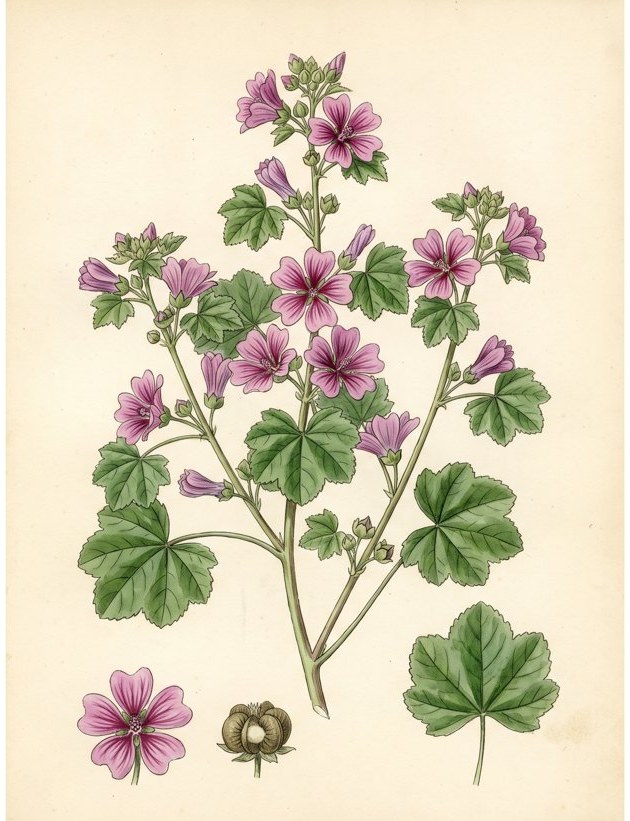 Common MallowMalva sylvestris
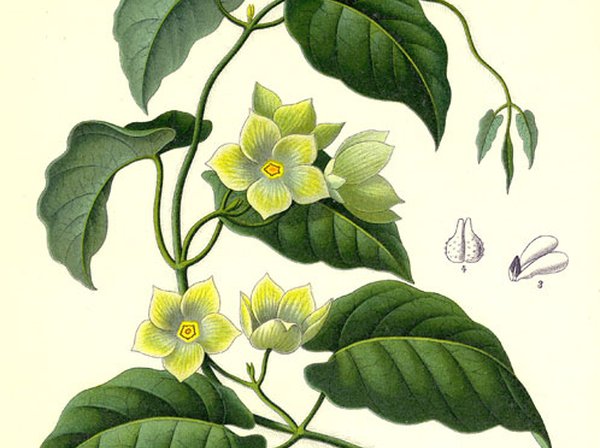 CondurangoMarsdenia cundurango
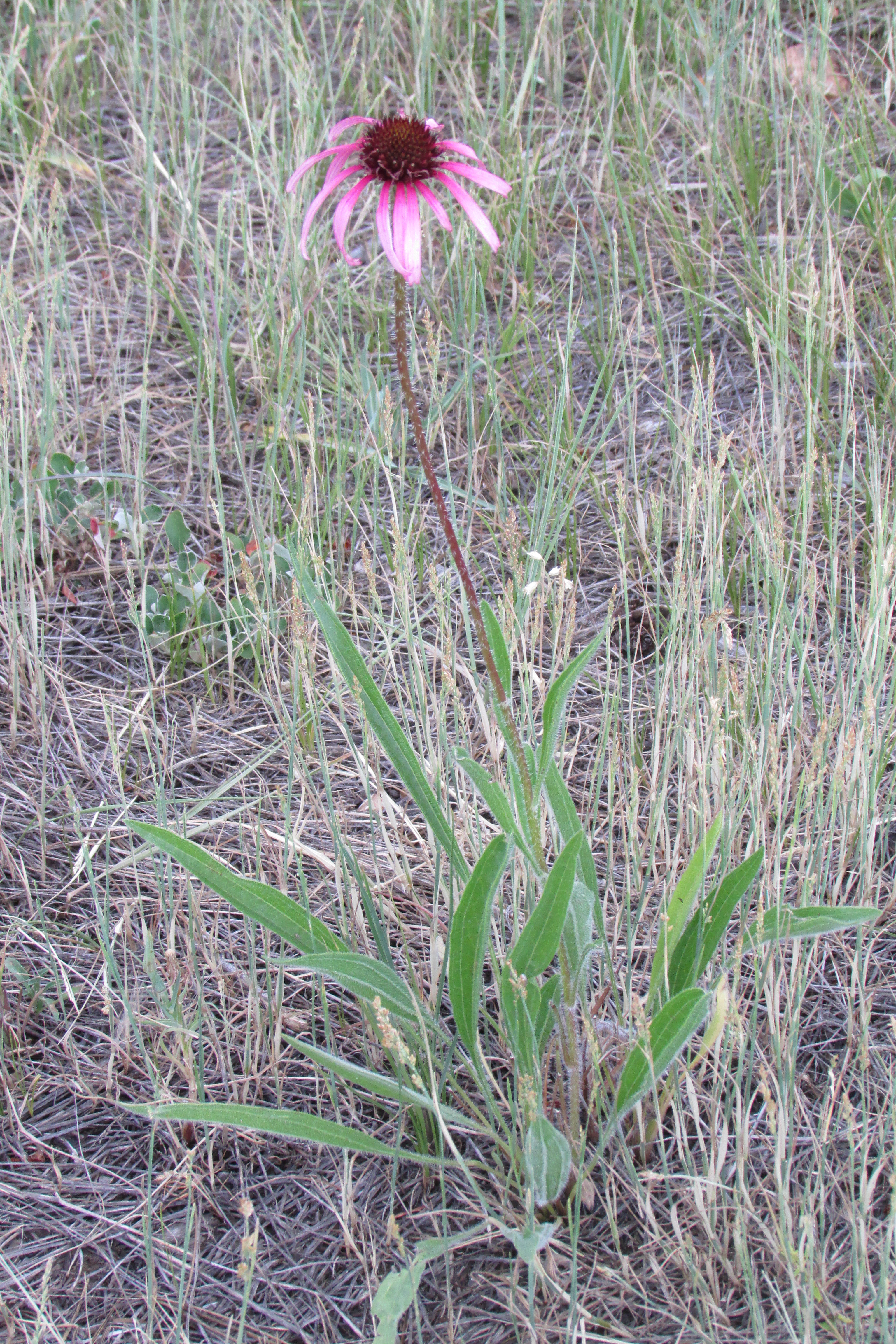 ConeflowerEchinacea angustifolia
 ContrayervaDorstemia contrayerva
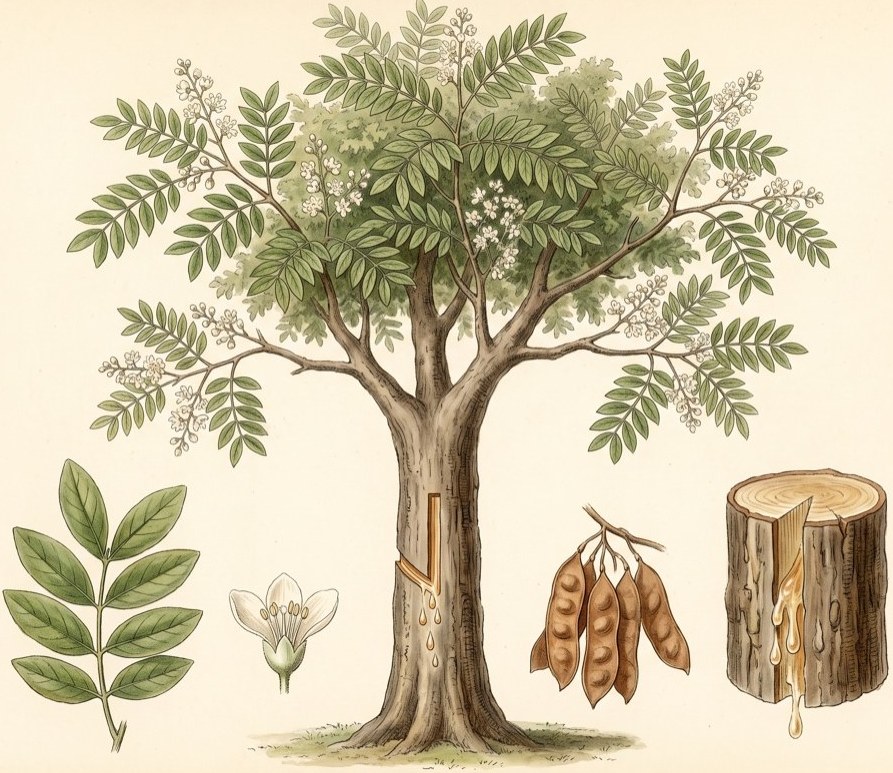 CopaibaCopaifera officinalis
The whole plate is in the library. The compass, Compare, the Sky of eleven hundred plants and the formulary open with an email address and a password, free, with the formula builder and its safety engine. Herbert without limit, his formulating, clients, the handouts and the labels are the paid room.
Open the library, free