Western Herbalism
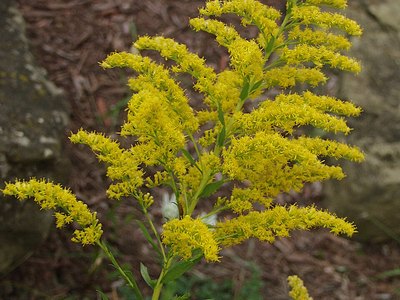
Common goldenrod
Solidago altissima
Also known as Late goldenrod, Tall goldenrod, Common golden-rod.
Solidago altissima is one of the tall, late-flowering goldenrods native to open fields and copses across eastern and central North America, closely related to the European Solidago virgaurea that carries most of the modern clinical literature on the genus. The flowering aerial parts are gathered in late summer for use as an infusion, tincture, or topical wash. In North American physiomedical and eclectic practice it was classed among the mild astringent tonics, valued for toning relaxed or bleeding tissue and for supporting the urinary tract.

Ask Herbert about Common goldenrod. Herbert is the master herbalist inside Bountiful Herbs: he answers from this plate and eleven hundred others, with dosing, pairing and cautions. Your first ten questions are free.
Ask HerbertActions
Indications what the tradition reached for it in
- Cystitis and lower urinary tract irritation
- Urolithiasis, as part of a flushing regimen
- Edema of mild renal origin
- Upper respiratory catarrh
- Allergic rhinitis and hay fever
- Pharyngitis and sore throat
- Indolent or sluggish wounds and ulcers (topical)
- Passive menorrhagia (historical use)
- Leucorrhea (historical use, as a topical wash)
Specific indications
Cystitis with burning, scanty urination where a gentle diuretic and anti-inflammatory flush is wanted rather than a strong stimulating diuretic
Chronic, sluggish ulcers or wounds with poor healing that benefit from a mild astringent and tissue-toning wash
Safety
Pregnancy: Insufficient safety data for concentrated extracts; avoid therapeutic doses in pregnancy and rely on other well-studied urinary herbs instead.
The record lists 3 contraindications; open the plate in the library to read them in full.
In practice
Goldenrod earns its place in a urinary formula more for its gentleness than its power: it is a good choice when a patient needs ongoing diuretic and anti-inflammatory support for the bladder or kidneys without the harshness of stronger urinary antiseptics, and it combines well with uva ursi, corn silk, or cleavers for cystitis, and with hydrangea or gravel root when stones or gravel are a concern.
Dosing as the sources wrote it
| Preparation | As written | Metric |
|---|---|---|
| Infusion | 2-4 g dried aerial parts as an infusion, three times daily | 2000-4000 mg |
| Tincture (1:5, 45%) | 2-4 mL three times daily | 2-4 mL |
| Topical wash | Strong infusion or diluted tincture applied to wounds or ulcers, or used as a douche, twice daily |
Doses are reproduced from the sources for practitioners and are not a recommendation for any person.
From the sources
Overview. Solidago altissima is one of the tall, late-flowering goldenrods native to open fields and copses across eastern and central North America, closely related to the European Solidago virgaurea that carries most of the modern clinical literature on the genus. The flowering aerial parts are gathered in late summer for use as an infusion, tincture, or topical wash. In North American physiomedical and eclectic practice it was classed among the mild astringent tonics, valued for toning relaxed or bleeding tissue and for supporting the urinary tract.
Clinical Notes. Goldenrod earns its place in a urinary formula more for its gentleness than its power: it is a good choice when a patient needs ongoing diuretic and anti-inflammatory support for the bladder or kidneys without the harshness of stronger urinary antiseptics, and it combines well with uva ursi, corn silk, or cleavers for cystitis, and with hydrangea or gravel root when stones or gravel are a concern.
Properties and Uses. The leaves of these two plants, and probably most others of the golden-rods, are quite astringent, with mild tonic properties; and have been used in passive menorrhagia, and other forms of bleeding. Externally, they have been commended for indolent and fungous ulcers, and also as an injection in foul leucorrhea.
Description. Natural Order, Compositae. Of the large genus solidago, this is one of the most abundant. Stem two to four feet high, stiff, rough-hairy. Leaves ovate-lanceolate, nearly sessile, coarsely toothed, feather-veined, thickish and sometimes wrinkled. Flowers in small heads, on panicled racemes, which spread sideways and form a brilliant yellow top to the stem. Abundant through fields and copses. SOLIDAGO RIGIDA is also frequent on sandy soils. Stem three to six feet high, rough or somewhat hoary, stout, very leafy. Leaves thickish, oval, slightly serrated or entire, feather-veined from a strong midrib. Flowers in rather large heads, with seven to ten yellow rays and a distinct disk; in a dense compound corymb.
Drawn from Cook's Physio-Medical Dispensatory, and the Bountiful Herbs editorial.
Nearby on the shelf
 ColocynthCitrullus colocynthis
 ColtsfootTussilago farfara
 ColumbineAquilegia vulgaris
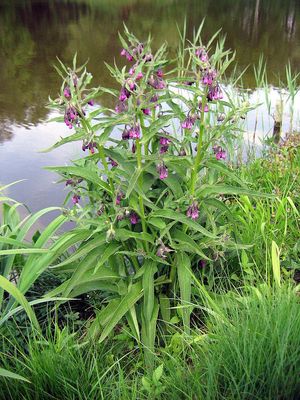 ComfreySymphytum officinale
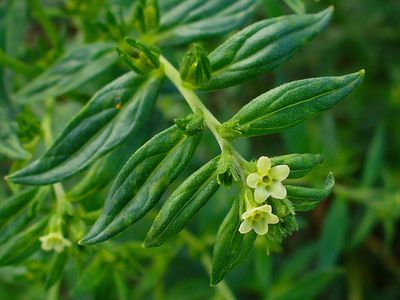 Common gromwellLithospermum officinale
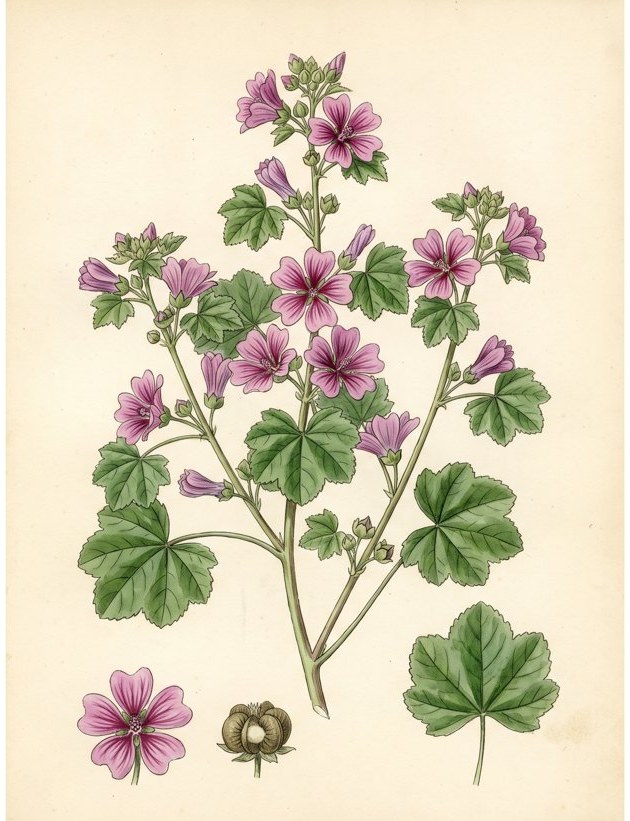 Common MallowMalva sylvestris
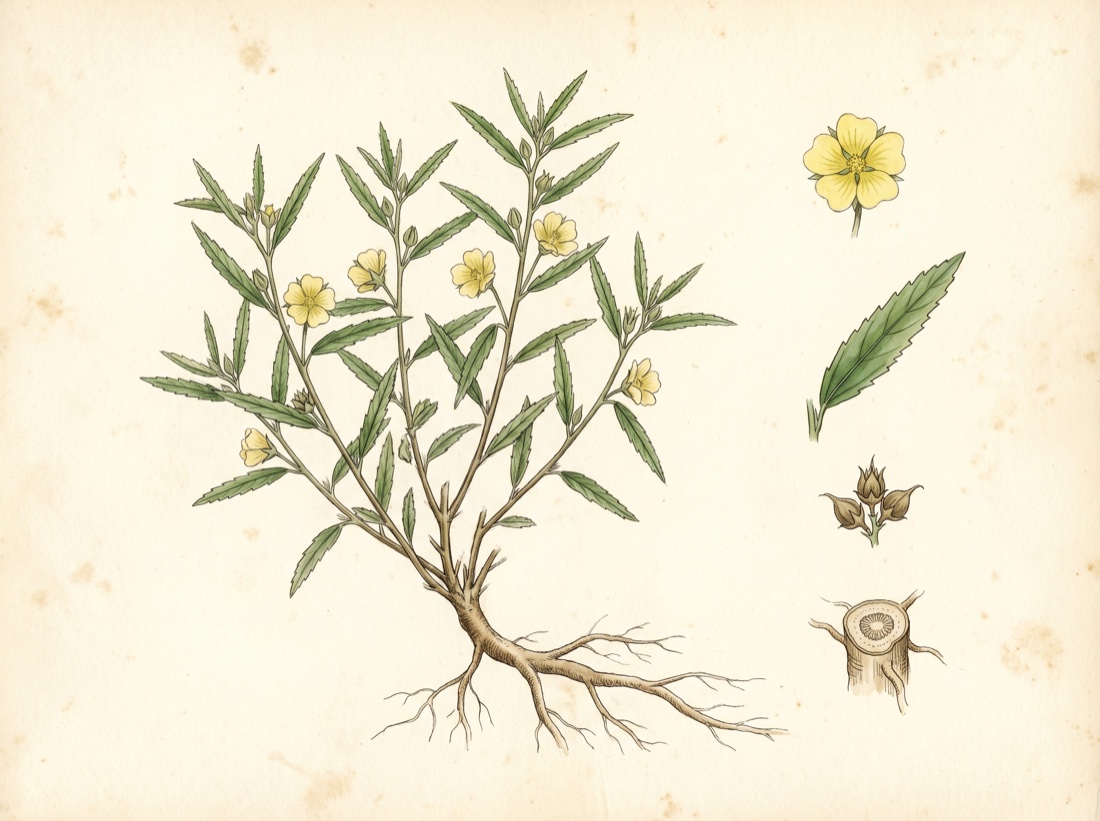 Common wireweedSida acuta
 CondurangoMarsdenia cundurango
The whole plate is in the library. The compass, Compare, the Sky of eleven hundred plants and the formulary open with an email address and a password, free, with the formula builder and its safety engine. Herbert without limit, his formulating, clients, the handouts and the labels are the paid room.
Open the library, free