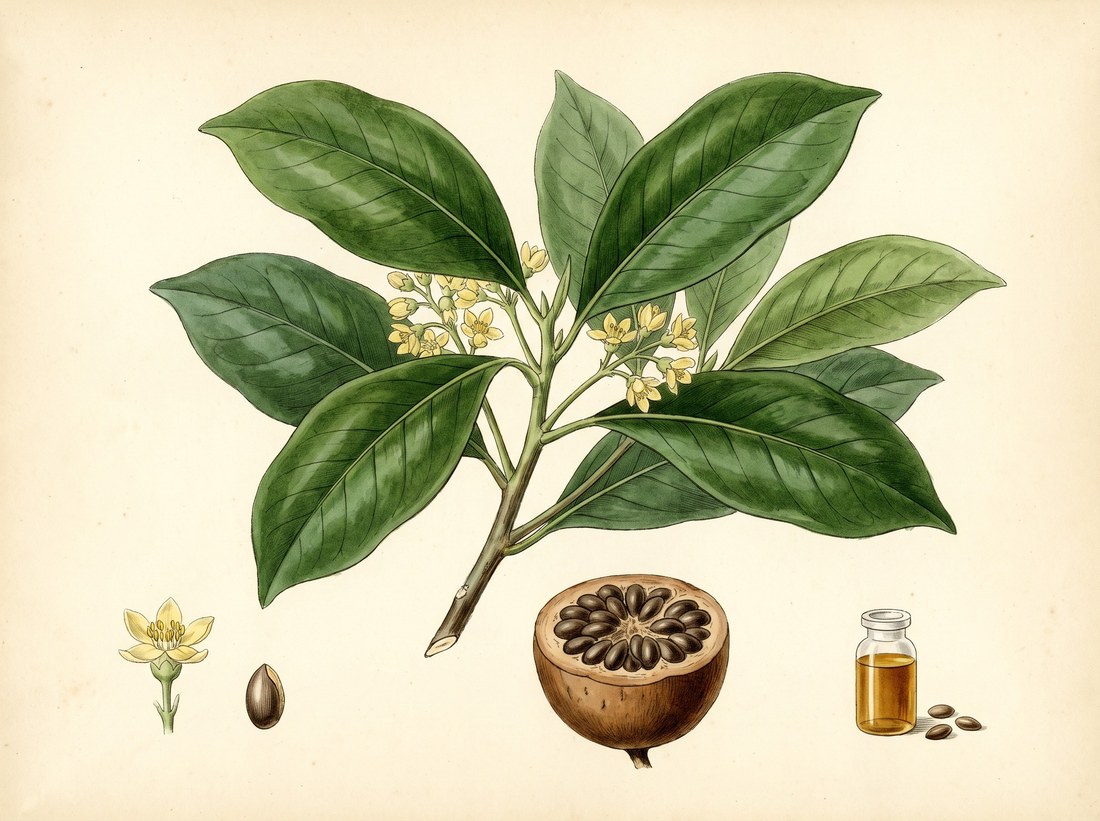
Ayurvedic Herbalism
Chaulmoogra
Hydnocarpus laurifolia
Also known as Indian chaulmoogra, marotti, Tuvaraka, Kushthavairi, Katukapittha.
Hydnocarpus laurifolia, better known by its later names Hydnocarpus pentandrus and Hydnocarpus wightianus, is a medium evergreen tree of the wet forests of the Western Ghats from Maharashtra through Karnataka and Kerala to Tamil Nadu, bearing round woody fruits packed with oily seeds. Ayurveda calls it Tuvaraka and its seed oil is the classical specific for kushtha, the whole family of chronic skin diseases including leprosy; Sushruta devotes a chapter to its use. As chaulmoogra oil it was the only treatment for leprosy in the world until the sulfone drugs arrived in the 1940s.

Ask Herbert about Chaulmoogra. Herbert is the master herbalist inside Bountiful Herbs: he answers from this plate and eleven hundred others, with dosing, pairing and cautions. Your first ten questions are free.
Ask HerbertActions
Indications what the tradition reached for it in
- Psoriasis and chronic scaly dermatoses (topical)
- Chronic eczema with thickening and itching (topical)
- Leprosy (historical, now adjunct to multidrug therapy only)
- Fungal skin infections including tinea (topical)
- Scabies and pediculosis (topical, traditional)
- Chronic nonhealing ulcers and wounds (topical)
- Vitiligo and leukoderma (topical, traditional)
- Obesity and prediabetes (traditional, small internal doses)
- Intestinal worms (traditional)
- Gouty and rheumatic joint pain (oil massage)
Specific indications
Thick, scaly, itching plaques of long standing in a kapha-vata patient, treated with the oil applied after warm bathing
A chronic ulcer with dull edges and scanty discharge that has failed to heal with gentler dressings
Ringworm or other fungal patches on thick skin where simple antifungals have been abandoned too early
The obese, sluggish patient with skin tags, dark thickened skin folds and rising glucose, for whom the tradition prescribes tiny internal doses with Triphala
Safety
Low dose botanical. Used in drop doses in the classical practice; not a plant to dose freely.
Pregnancy: Avoid internal use: the oil is heating, emetic and unstudied, and no published safety class is known to us; topical use on small areas is traditionally accepted.
Breastfeeding: Avoid internal use; topical use away from the breast is acceptable.
The record lists 9 contraindications; open the plate in the library to read them in full.
In practice
The Ayurvedic practitioner uses Tuvaraka taila chiefly on the skin. The oil is warmed and applied to psoriasis, chronic eczema, ringworm, scabies, vitiligo and nonhealing ulcers, alone or cooked with Chakramarda, Bakuchi, Karanja and Nimba, and left on after a warm bath; the seed paste is applied to the same lesions.
In Ayurveda
Rasa: tikta (bitter), katu (pungent), kashaya (astringent). Virya: ushna (heating). Vipaka: katu (pungent). Guna: laghu (light), snigdha (unctuous), tikshna (sharp). Dosha: pacifies kapha and vata; aggravates pitta in excess. Prabhava: kushthaghna: the seed oil is the classical specific for kushtha, the family of chronic skin diseases including leprosy. Karma: kushthaghna (relieves skin disease); krimighna (anthelmintic, antimicrobial); vranaropana (heals wounds and ulcers); kandughna (relieves itching); medohara (reduces fat); pramehahara (corrects urinary and metabolic disorders); chakshushya (benefits the eyes, in the classical rasayana); rasayana (rejuvenative, in Sushruta's Tuvaraka kalpa); vamana (emetic in excess). Classical indications: kushtha (chronic skin diseases including leprosy); mahakushtha (severe skin diseases); krimi (worms and infection); prameha (urinary and metabolic disorders); medoroga (obesity); vrana (ulcers and wounds); kandu (itching); vatarakta (gout and inflammatory arthritis); arsha (hemorrhoids); netraroga (eye disease, classical rasayana claim). The oil expressed from the ripe seeds is the drug, applied to skin lesions alone or cooked with other herbs, and taken internally in drops with warm water or in a decoction of Triphala after purificatory therapy. The seed powder is used in small doses and in pastes. Sushruta describes an elaborate Tuvaraka rasayana in which the oil is taken after sudation and purgation under strict regimen. Classical formulations: Tuvaraka taila, Tuvarakadi taila, Tuvaraka beeja churna, Tuvaraka lepa, Maha marichyadi taila (some versions), Somaraji taila (some versions). Described in: Sushruta Samhita, Ashtanga Hridaya, Bhavaprakasha Nighantu, Dhanvantari Nighantu, Raja Nighantu, Kaiyadeva Nighantu, Ayurvedic Pharmacopoeia of India.
Dosing as the sources wrote it
| Preparation | As written | Metric |
|---|---|---|
| Taila, topical | 2-5 mL seed oil applied to lesions once or twice daily | 2-5 mL |
| Taila, internal | 5-10 drops seed oil daily with warm water or Triphala decoction, short courses only | 0.1-0.2 mL |
| Churna | 250-500 mg powdered seed daily | 250-500 mg |
| Lepa, topical | 5-10 g seed paste applied to lesions | 5000-10000 mg |
Doses are reproduced from the sources for practitioners and are not a recommendation for any person.
From the sources
Overview. Hydnocarpus laurifolia, better known by its later names Hydnocarpus pentandrus and Hydnocarpus wightianus, is a medium evergreen tree of the wet forests of the Western Ghats from Maharashtra through Karnataka and Kerala to Tamil Nadu, bearing round woody fruits packed with oily seeds. Ayurveda calls it Tuvaraka and its seed oil is the classical specific for kushtha, the whole family of chronic skin diseases including leprosy; Sushruta devotes a chapter to its use. As chaulmoogra oil it was the only treatment for leprosy in the world until the sulfone drugs arrived in the 1940s.
Clinical Notes. The Ayurvedic practitioner uses Tuvaraka taila chiefly on the skin. The oil is warmed and applied to psoriasis, chronic eczema, ringworm, scabies, vitiligo and nonhealing ulcers, alone or cooked with Chakramarda, Bakuchi, Karanja and Nimba, and left on after a warm bath; the seed paste is applied to the same lesions.
Ayurvedic Profile. Rasa: tikta (bitter), katu (pungent), kashaya (astringent). Virya: ushna (heating). Vipaka: katu (pungent). Guna: laghu (light), snigdha (unctuous), tikshna (sharp). Dosha: pacifies kapha and vata; aggravates pitta in excess.
In formulas
Chaulmoogra stands in 1 documented formula in the library, among them Tuvaraka Taila.
Often paired with
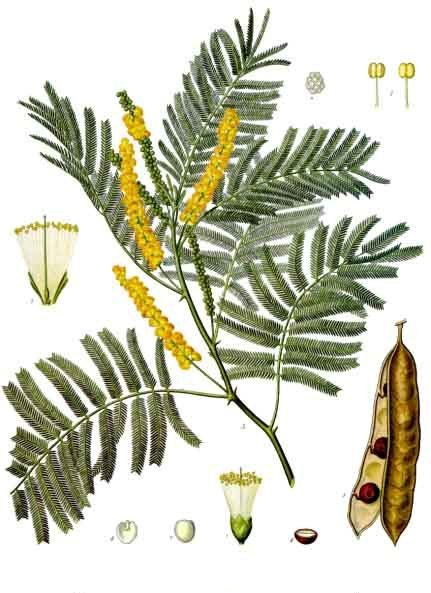 cutch treeAcacia catechu
Nearby on the shelf
 ChaparralLarrea tridentata
 Chaparro AmargosoCastela erecta
 Chaste treeVitex agnus-castus
 ChaulmoograGynocardia
 ChavyaPiper chaba
 Chebulic myrobalanTerminalia chebula
 Cherokee roseRosa laevigata
 Cherry-Laurel LeavesLaurocerasi Folia
The whole plate is in the library. The compass, Compare, the Sky of eleven hundred plants and the formulary open with an email address and a password, free, with the formula builder and its safety engine. Herbert without limit, his formulating, clients, the handouts and the labels are the paid room.
Open the library, free