Ayurvedic Herbalism
Chaksu
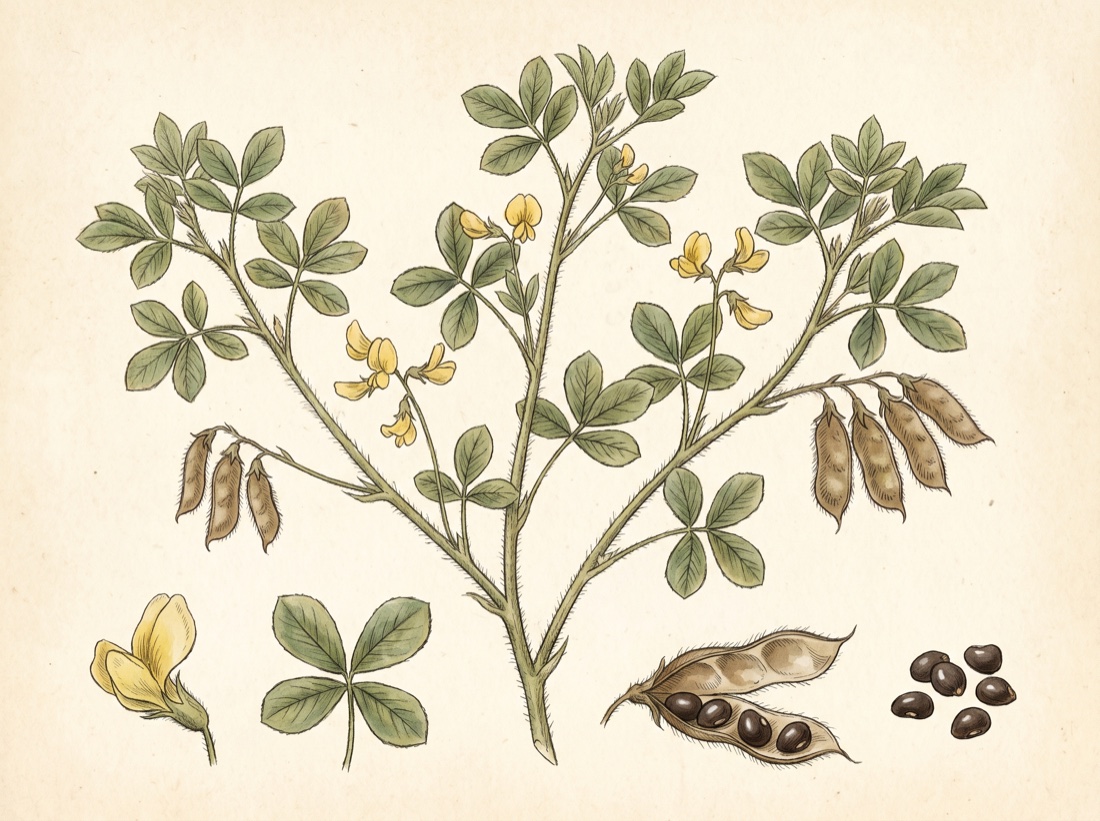
Chamaecrista absus
Also known as pig's senna, pig's ear, tropical sensitive pea, chashushya, jasmeejaz, four-leaved senna, Chakshushya, Aranyakulatthika, Chakshushyaphala.
Chaksu is a small, sticky annual legume of the Indian subcontinent, Africa and Southeast Asia, growing as a weed of fields and waste ground. The hard, dark brown seeds are the medicinal part. In Ayurveda the plant's very name, chakshushya, means beneficial to the eyes, and the seeds have long been ground into collyriums and eye washes, though today they are used at least as often for ringworm, leucoderma and slow-healing skin, and as a bitter, drying seed for kapha-type respiratory catarrh.

Ask Herbert about Chaksu. Herbert is the master herbalist inside Bountiful Herbs: he answers from this plate and eleven hundred others, with dosing, pairing and cautions. Your first ten questions are free.
Ask HerbertActions
Indications what the tradition reached for it in
- Chronic conjunctivitis and irritated, discharging eyes (traditional, topical preparations)
- Ringworm and tinea of the skin
- Leucoderma and other pigmentary skin disorders
- Chronic wounds and ulcers, as a paste
- Bronchitis and productive cough
- Asthma with heavy mucus (traditional)
- Mild hypertension (traditional, weakly supported)
- Skin itching and eczema
- Intestinal worms (traditional)
- Chronic conjunctivitis and watery, irritated eyes (traditional, external and internal)
- Early cataract and age-related decline in vision (traditional adjunct)
- Eyelid inflammation and styes (paste around the eye, not in it)
- Ringworm and fungal skin patches (paste)
- Chronic wounds and ulcers (paste)
- Hypertension (Unani use, preclinical support)
- Bloody diarrhea and bleeding hemorrhoids (traditional)
- Chronic bronchitis with sticky mucus (traditional)
- Pruritic skin eruptions (paste)
- Urinary irritation with frequency (traditional)
Specific indications
Sluggish, chronically inflamed eyes with sticky discharge where a mild astringent, antimicrobial local remedy is wanted
Stubborn ringworm patches or depigmented skin in a kapha-dominant patient who tolerates heating, drying herbs
Safety
Low dose botanical. Used in drop doses in the classical practice; not a plant to dose freely.
Pregnancy: Avoid in pregnancy: antifertility and reproductive toxicity have been reported in animal studies, and the seed has a folk reputation as a contraceptive.
Breastfeeding: Avoid in lactation: no safety data, and the seed alkaloids are pharmacologically active.
The record lists 6 contraindications; open the plate in the library to read them in full.
In practice
This is a minor remedy with a narrow but distinctive niche. Most classical use is external: the seed is powdered and made into a paste with water or ghee for tinea, leucoderma and old ulcers, or a very weak, well-filtered decoction is cooled and used as an eye wash for chronic conjunctivitis.
In Ayurveda
Rasa: katu (pungent), tikta (bitter), kashaya (astringent). Virya: ushna (heating). Vipaka: katu (pungent). Dosha: pacifies kapha and vata; may aggravate pitta in excess.
Dosing as the sources wrote it
| Preparation | As written | Metric |
|---|---|---|
| Seed powder (churna) | 1-3 g powdered seed once or twice daily with honey or warm water | 1000-3000 mg |
| Topical paste | 2-5 g powdered seed mixed with water or ghee applied to affected skin once daily | 2000-5000 mg |
| Eye wash (pharmacy prepared) | 0.5-1 g seed decocted in 250 mL water, cooled and filtered, used externally once daily | 500-1000 mg |
| Churna | 1-3 g powdered seed once or twice daily with honey or ghee | 1000-3000 mg |
| Lepa, periocular | 2-5 g fine seed paste applied to closed eyelids and around the eye | 2000-5000 mg |
| Kalka, topical | 5-10 g seed paste applied to skin lesions | 5000-10000 mg |
Doses are reproduced from the sources for practitioners and are not a recommendation for any person.
From the sources
Overview. Chaksu is a small, sticky annual legume of the Indian subcontinent, Africa and Southeast Asia, growing as a weed of fields and waste ground. The hard, dark brown seeds are the medicinal part. In Ayurveda the plant's very name, chakshushya, means beneficial to the eyes, and the seeds have long been ground into collyriums and eye washes, though today they are used at least as often for ringworm, leucoderma and slow-healing skin, and as a bitter, drying seed for kapha-type respiratory catarrh.
Overview. Chamaecrista absus, long known as Cassia absus, is a small erect annual herb of the pea family with sticky hairy stems, four-leaflet leaves and small yellow flowers, growing as a weed of fallow fields, roadsides and open scrub across the plains of India, tropical Africa and Southeast Asia during the rains.
Clinical Notes. This is a minor remedy with a narrow but distinctive niche. Most classical use is external: the seed is powdered and made into a paste with water or ghee for tinea, leucoderma and old ulcers, or a very weak, well-filtered decoction is cooled and used as an eye wash for chronic conjunctivitis.
Clinical Notes. The Ayurvedic and Unani use of Chakshushya is centered on the eye. The seed is powdered finely and given in small doses with honey or ghee for netraroga and timira, and the seed ground with rose water or ghee is applied to the closed eyelids and around the orbit for conjunctivitis, watering and inflammation of the lids; traditional collyria (anjana) include the seed alongside Triphala and other eye herbs, a practice best left to those trained in it because the seed is irritant and the alkaloids are active.
Nearby on the shelf
 Ceylon ironwoodMesua ferrea
 Ceylon leadwortPlumbago zeylanica
 ChagaInonotus obliquus
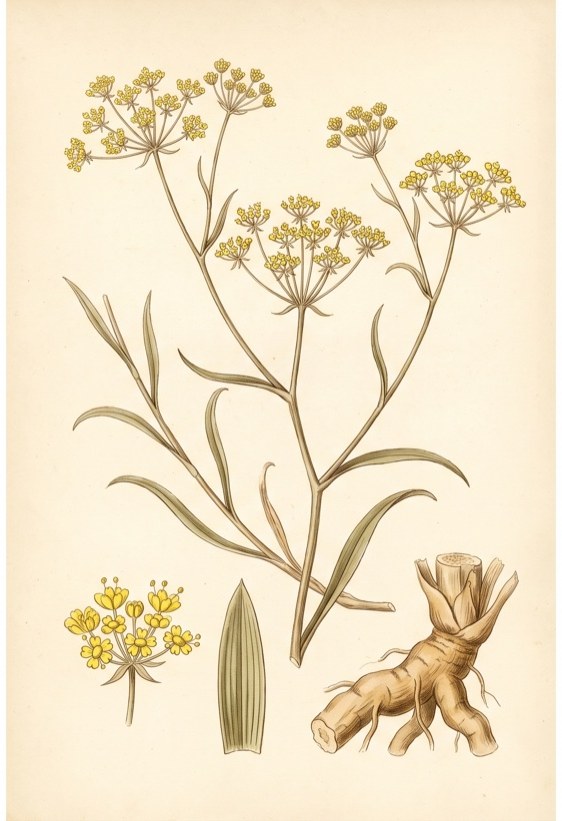 Chai HuBupleurum falcatum
 ChamomileChamaemelum nobile
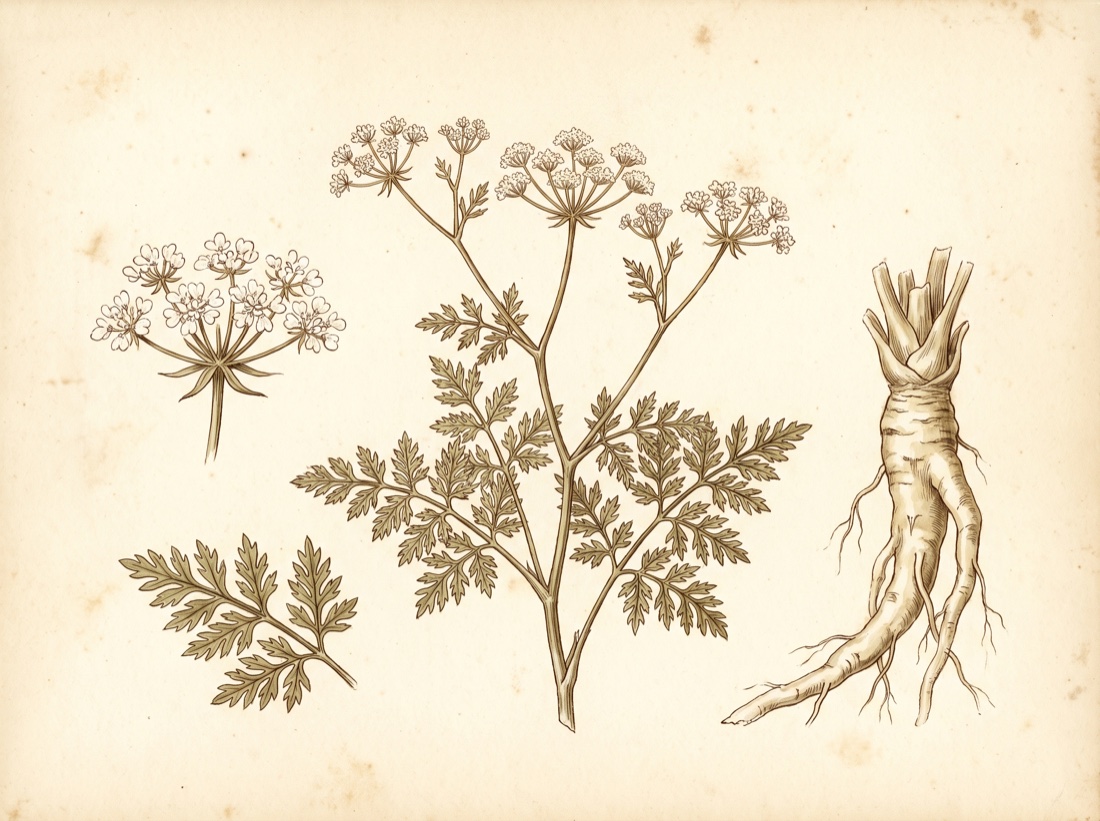 ChangiumChangium smyrnioides
 ChaparralLarrea tridentata
 Chaparro AmargosoCastela erecta
The whole plate is in the library. The compass, Compare, the Sky of eleven hundred plants and the formulary open with an email address and a password, free, with the formula builder and its safety engine. Herbert without limit, his formulating, clients, the handouts and the labels are the paid room.
Open the library, free