Western Herbalism
Buckthorn
Rhamnus cathartica
Also known as Common buckthorn, Purging buckthorn, European buckthorn.
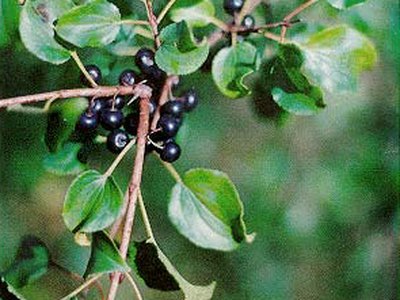
Rhamnus cathartica is a small deciduous shrub or tree native to Europe and western Asia, now naturalized and often invasive in North America. The ripe, dried or fermented berries were the part used, chiefly prepared as a syrup for their strong purgative effect. It held a place in nineteenth century Eclectic and regular medicine as a reliable, if harsh, cathartic, particularly favored for children in the small doses described in the National Formulary, though it has been largely displaced by gentler and better standardized anthraquinone laxatives such as senna and cascara.

Ask Herbert about Buckthorn. Herbert is the master herbalist inside Bountiful Herbs: he answers from this plate and eleven hundred others, with dosing, pairing and cautions. Your first ten questions are free.
Ask HerbertActions
Indications what the tradition reached for it in
- Constipation, occasional
- Sluggish bowel
- Constipation in children (historical, low dose)
- Bowel evacuation before minor procedures (historical use)
- Torpid liver with constipation (historical use)
- Habitual constipation unresponsive to dietary measures (historical use)
Specific indications
Obstinate constipation where gentler laxatives have failed, historically dosed as a syrup for children
Chronic sluggish bowel with a sense of fullness relieved by a strong hydragogue purge
Safety
Low dose botanical. Used in drop doses in the classical practice; not a plant to dose freely.
Pregnancy: Limited safety data in pregnancy
Breastfeeding: Not for use while breastfeeding
The record lists 5 contraindications; open the plate in the library to read them in full.
In practice
Buckthorn berries were traditionally prepared as a fermented syrup rather than given as raw fruit, since the fresh berries are considered too harsh and can cause severe griping and vomiting if used unprepared. The syrup was dosed cautiously, historically around one fluid drachm (roughly 4 mL) for children, reflecting the plant's reputation as a strong hydragogue purgative best used sparingly and briefly rather than for ongoing bowel management. In modern practice this herb has been essentially superseded by cascara sagrada and senna, which offer more predictable anthraquinone content and a gentler action. Where buckthorn is used at all today it tends to be in historical reconstructions or in very limited traditional formulas, and practitioners should not consider it a first line laxative given the availability of safer, standardized alternatives.
Dosing as the sources wrote it
| Preparation | As written | Metric |
|---|---|---|
| Fermented syrup (historical, Nat. Form.) | 4-8 mL (1-2 fluid drachms) once daily as needed, adults | 4-8 mL |
| Fermented syrup, pediatric (historical) | 1-4 mL once daily as needed, children | 1-4 mL |
| It was amorphous, soluble in caustic alkali with deep-purplish-red color, reprecipitated by acids, soluble in diluted and strong alcohol, insoluble in chloroform and ether, nearly so in water, and possessing strongly laxative properties in 3-grain doses. | ||
| Scudder suggests a trial of small doses of a tincture (berries, ℥viii, to alcohol, 76 per cent, Oj) as a stimulant to the vegetative processes, for its influence on the digestive tract, and in diseases of the nose, throat, and lungs. | ||
| syrup | Dose of the syrup, from ½ to 1 fluid ounce. | 14.79-29.57 mL |
| tincture | Dose of the tincture, 2 to 30 drops, well diluted with water. | 0.1-1.5 mL |
Doses are reproduced from the sources for practitioners and are not a recommendation for any person.
From the sources
Overview. Rhamnus cathartica is a small deciduous shrub or tree native to Europe and western Asia, now naturalized and often invasive in North America. The ripe, dried or fermented berries were the part used, chiefly prepared as a syrup for their strong purgative effect. It held a place in nineteenth century Eclectic and regular medicine as a reliable, if harsh, cathartic, particularly favored for children in the small doses described in the National Formulary, though it has been largely displaced by gentler and better standardized anthraquinone laxatives such as senna and cascara.
Clinical Notes. Buckthorn berries were traditionally prepared as a fermented syrup rather than given as raw fruit, since the fresh berries are considered too harsh and can cause severe griping and vomiting if used unprepared.
Properties and Uses. The berries are used in medicine, their juice being the officinal part. This juice, when expressed, is of a dark green color and a bitter taste; which is reddened by the acids, and by the alkalies is lightened into a color known by painters as sap-green.
Description. Natural Order, Rhamnaceae. A shrub six to eight feet high, common in Europe, and found in limited quantities through the Middle and New England States, and now cultivated for hedges. Leaves ovate, minutely serrate, in clusters. Flowers dioecious, small, greenish; calyx, petals, and stamens, each, four; petals like small scales. Fruit a black, berrylike, shining drupe, with four seed-like nutlets. Branches numerous, armed with thorns.
Drawn from Cook's Physio-Medical Dispensatory; King's American Dispensatory, 18th edition (Felter and Lloyd), and the Bountiful Herbs editorial.
Often paired with
 Cascara sagradaFrangula purshiana
 Alder BuckthornFrangula alnus
 CoffeeCoffea arabica
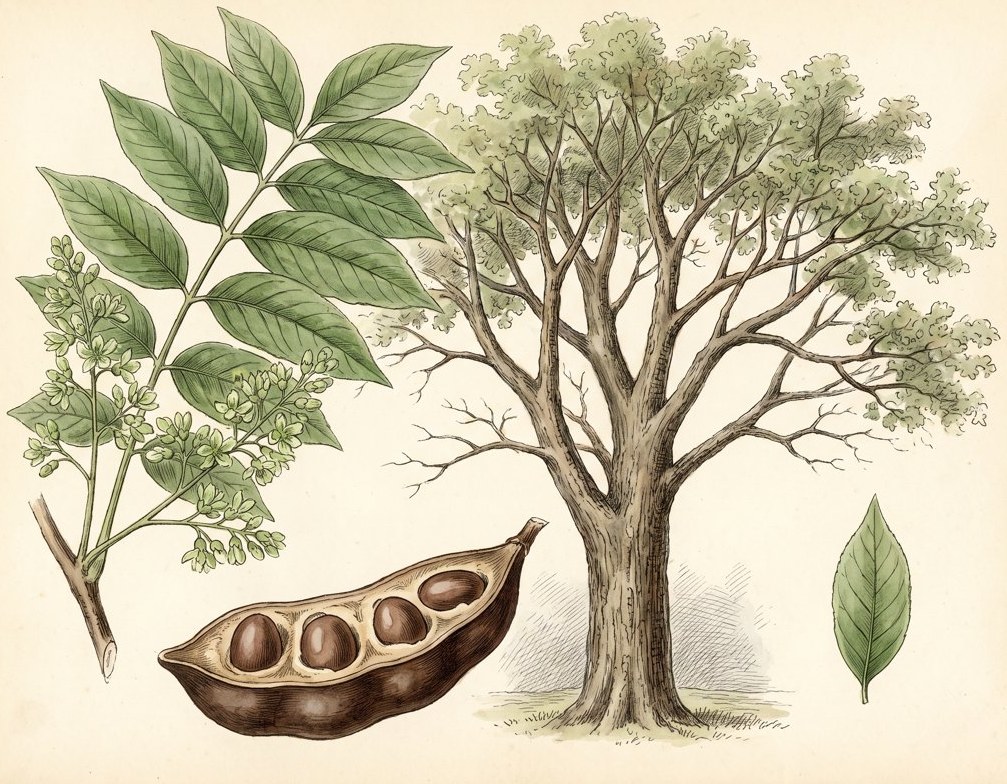 Kentucky coffee treeGymnocladus canadensis
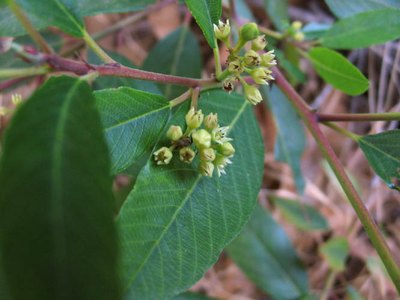 California buckthornRhamnus Californica
Nearby on the shelf
 Broom snakeweedGutierrezia sarothrae
 Brown's peonyPaeonia brownii
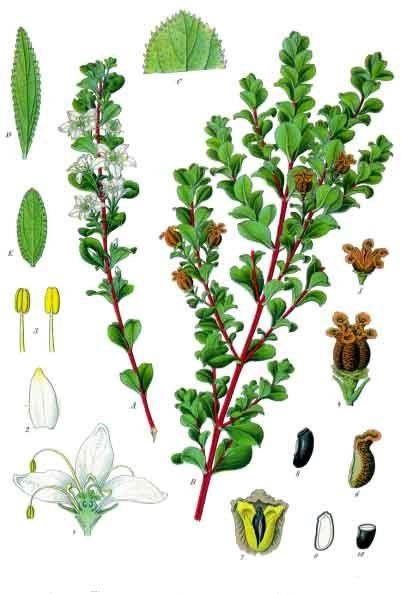 BuchuAgathosma betulina
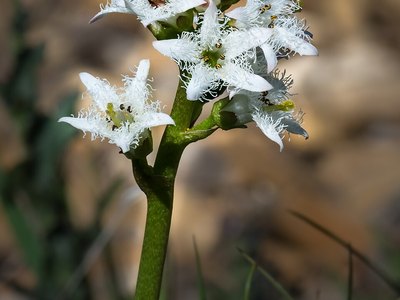 BuckbeanMenyanthes trifoliata
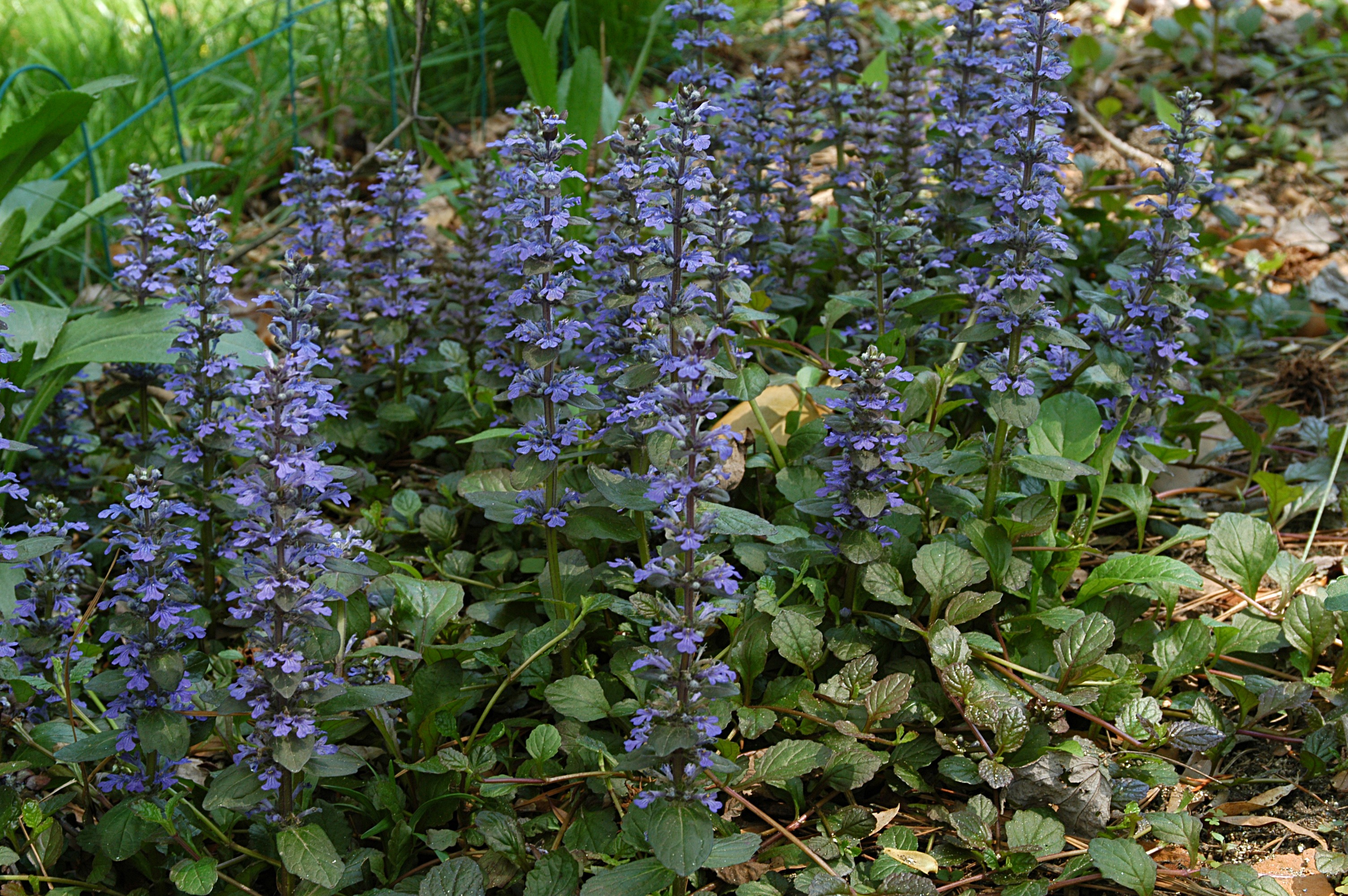 BugleAjuga reptans
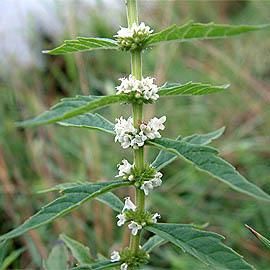 BugleweedLycopus virginicus
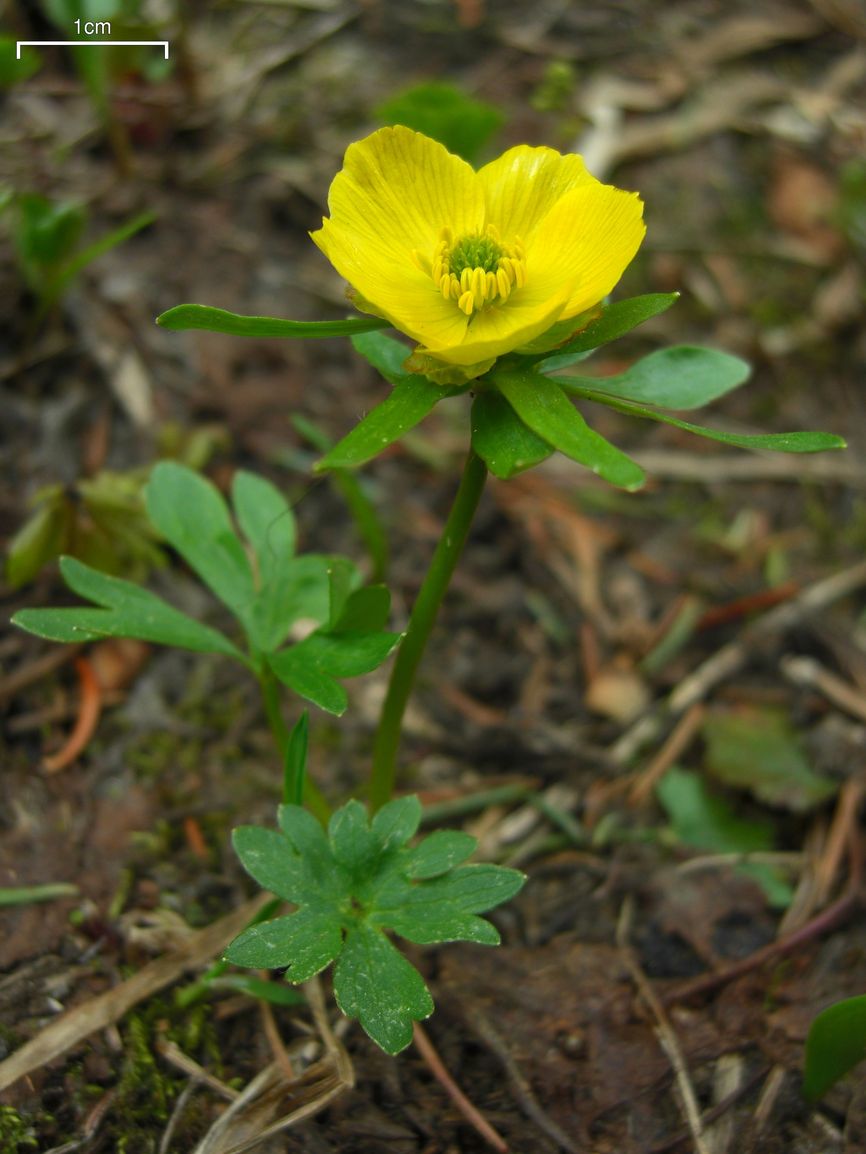 Bulbous buttercupRanunculus bulbosus
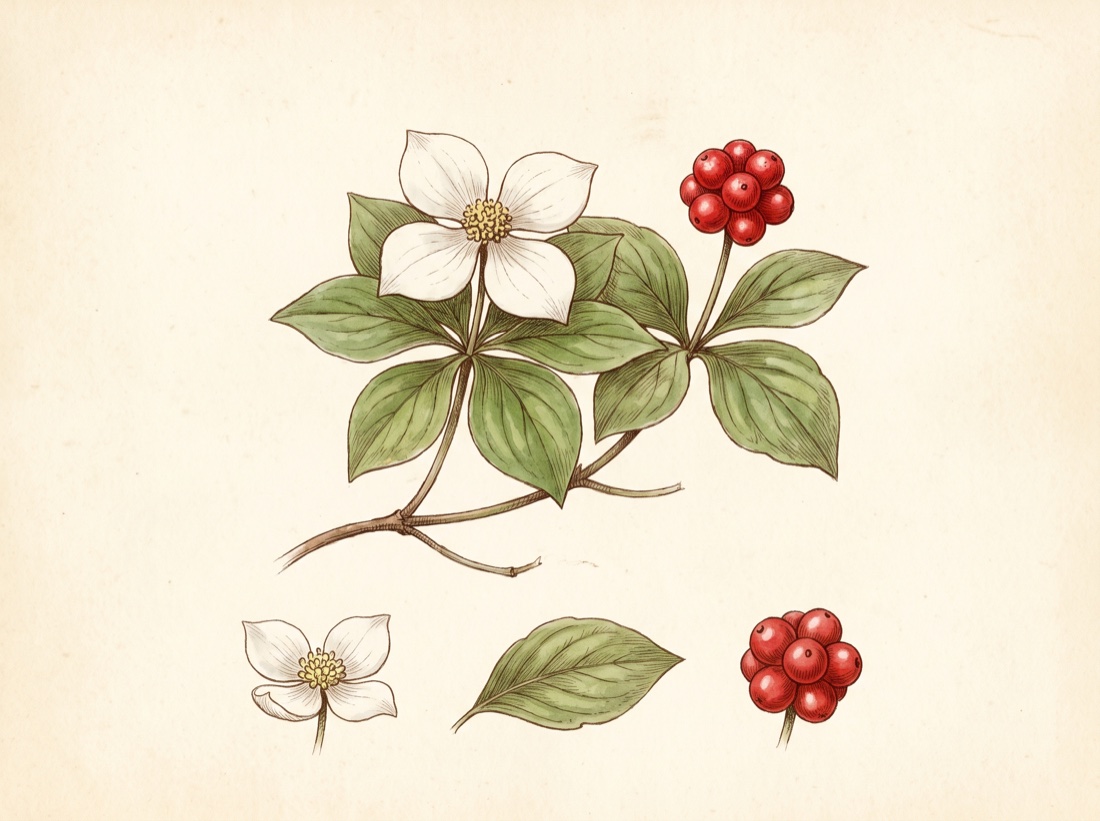 BunchberryCornus canadensis
The whole plate is in the library. The compass, Compare, the Sky of eleven hundred plants and the formulary open with an email address and a password, free, with the formula builder and its safety engine. Herbert without limit, his formulating, clients, the handouts and the labels are the paid room.
Open the library, free