Western Herbalism
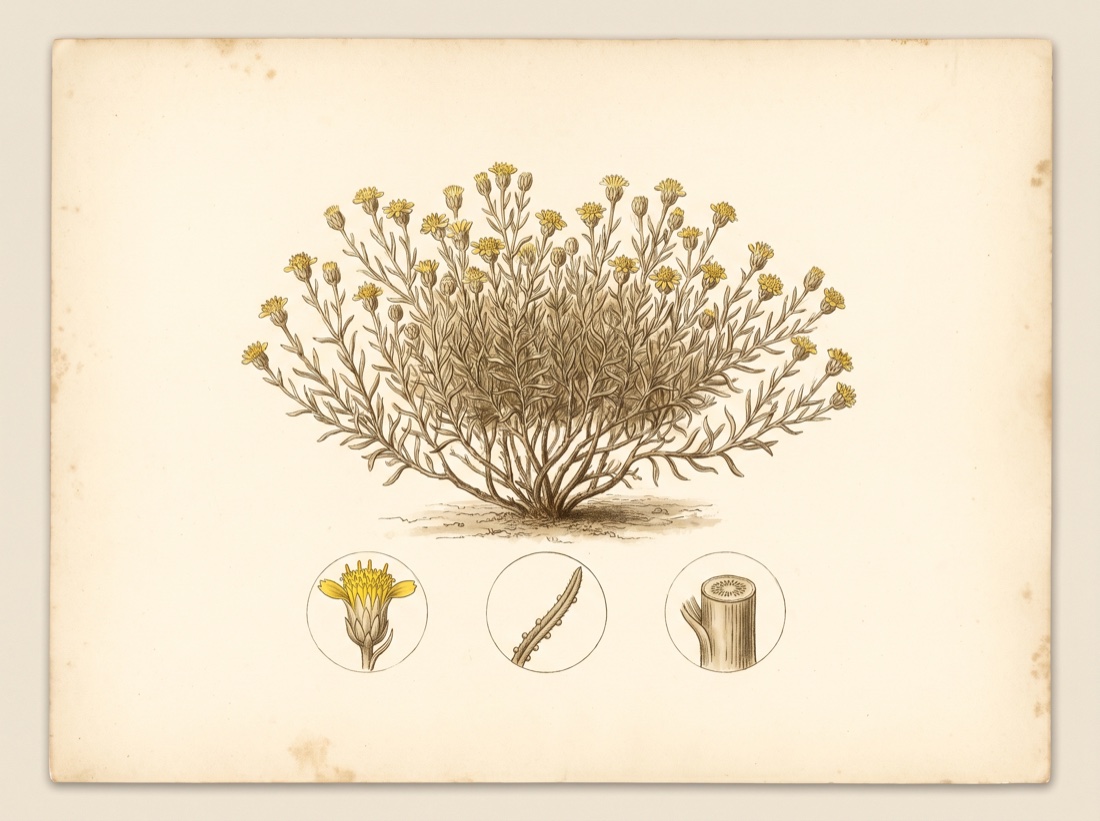
Broom snakeweed
Gutierrezia sarothrae
Also known as snakeweed, matchweed, matchbrush, broomweed, turpentine weed, kindlingweed.
Broom snakeweed is a small, resinous, many-stemmed shrub with bright yellow autumn flowers that covers overgrazed rangeland across the western United States and northern Mexico, from the plains to the Great Basin and the Sonoran and Chihuahuan deserts. The flowering aerial parts are the medicinal portion. It is a staple of Southwestern Hispanic and Native American folk medicine, used chiefly as a hot bath or fomentation for aching joints and muscles, and it is equally well known to ranchers as a plant that poisons and aborts livestock.

Ask Herbert about Broom snakeweed. Herbert is the master herbalist inside Bountiful Herbs: he answers from this plate and eleven hundred others, with dosing, pairing and cautions. Your first ten questions are free.
Ask HerbertActions
Indications what the tradition reached for it in
- Arthritic and rheumatic joint pain (bath, fomentation, liniment)
- Sore, stiff muscles after exertion (bath)
- Sprains, strains and bruises (fomentation)
- Insect bites and stings (poultice)
- Snakebite (historical first aid, not a substitute for antivenom)
- Colds with chills and body aches (small doses of hot tea, traditional)
- Delayed menses (traditional, not recommended)
- Skin sores and minor infections (wash)
- Postpartum soreness (traditional sitz bath)
Specific indications
Cold, stiff, aching joints in an older person that ease with heat, where a hot herbal bath or fomentation of the flowering tops brings relief
Sore muscles and bruising after hard physical work, treated with a strong topical infusion rather than anything taken by mouth
Safety
Low dose botanical. Used in drop doses in the classical practice; not a plant to dose freely.
The record lists 9 contraindications; open the plate in the library to read them in full.
In practice
This is primarily an external remedy, and that is how it should be used. A strong infusion of the flowering tops added to a hot bath, or applied as a fomentation, is the traditional Southwestern treatment for arthritic joints, rheumatic aches, sore muscles and sprains, and a poultice of the bruised plant is applied to insect bites and stings.
Dosing as the sources wrote it
| Preparation | As written | Metric |
|---|---|---|
| Topical bath or fomentation | 30-60 g dried flowering tops per liter water added to a bath or applied as a hot compress once or twice daily | 30000-60000 mg |
| Liniment (external) | 1:5 tincture applied to joints two to three times daily | |
| Infusion (internal, low dose, short course, not recommended) | 1-2 g dried herb per cup once or twice daily for no more than 3 days | 1000-2000 mg |
| Tincture (1:5, 50%), internal, low dose, short course | 0.5-1 mL up to three times daily for no more than 3 days | 0.5-1 mL |
Doses are reproduced from the sources for practitioners and are not a recommendation for any person.
From the sources
Overview. Broom snakeweed is a small, resinous, many-stemmed shrub with bright yellow autumn flowers that covers overgrazed rangeland across the western United States and northern Mexico, from the plains to the Great Basin and the Sonoran and Chihuahuan deserts. The flowering aerial parts are the medicinal portion. It is a staple of Southwestern Hispanic and Native American folk medicine, used chiefly as a hot bath or fomentation for aching joints and muscles, and it is equally well known to ranchers as a plant that poisons and aborts livestock.
Clinical Notes. This is primarily an external remedy, and that is how it should be used. A strong infusion of the flowering tops added to a hot bath, or applied as a fomentation, is the traditional Southwestern treatment for arthritic joints, rheumatic aches, sore muscles and sprains, and a poultice of the bruised plant is applied to insect bites and stings.
Nearby on the shelf
 BrahmadandiTricholepis glaberrima
 BrahmiBacopa monnieri
 Bristly luffaLuffa echinata
 Brome grassBromus ciliatus
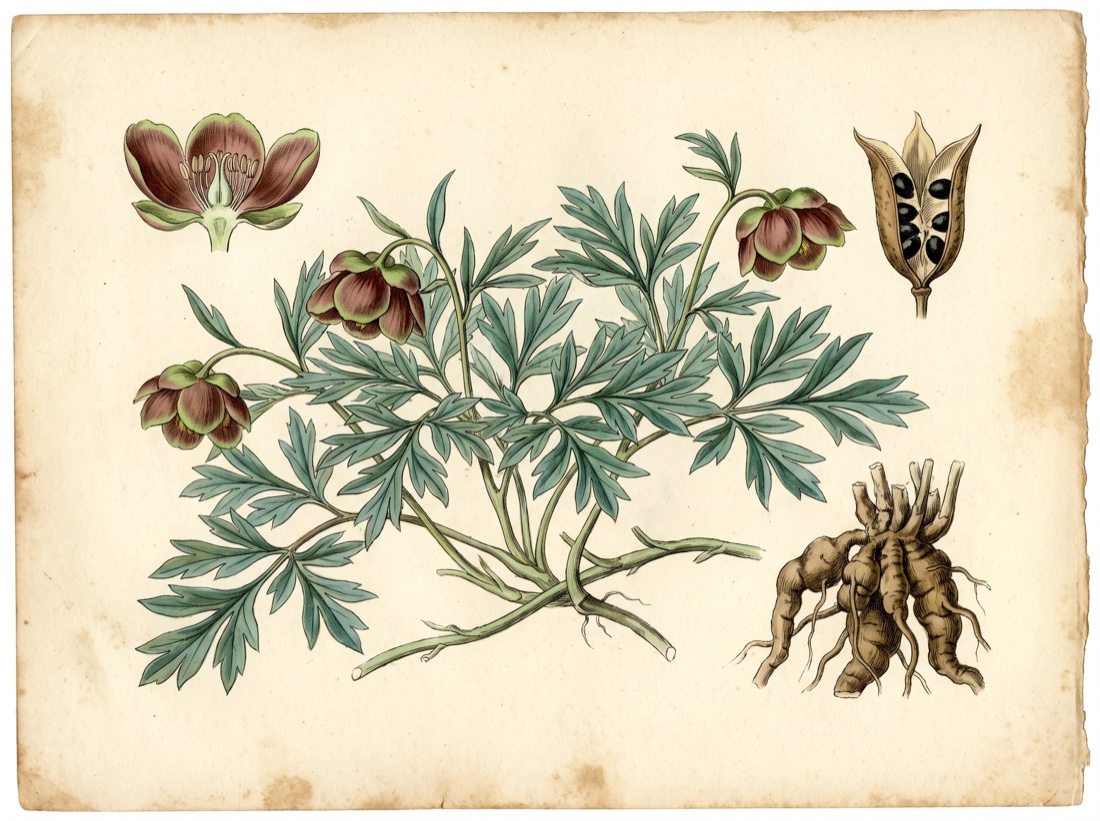 Brown's peonyPaeonia brownii
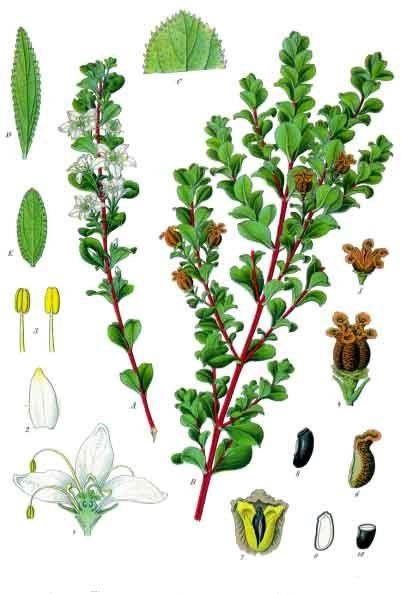 BuchuAgathosma betulina
 BuckbeanMenyanthes trifoliata
 BuckthornRhamnus cathartica
The whole plate is in the library. The compass, Compare, the Sky of eleven hundred plants and the formulary open with an email address and a password, free, with the formula builder and its safety engine. Herbert without limit, his formulating, clients, the handouts and the labels are the paid room.
Open the library, free