Western Herbalism
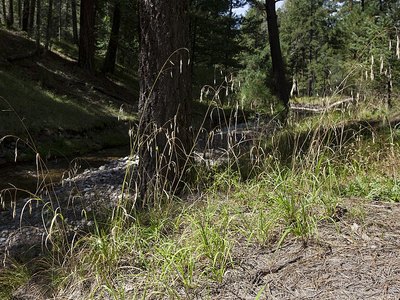
Brome grass
Bromus ciliatus
The leaves are an efficient relaxant purgative, acting mildly, yet rather promptly, and securing the evacuation of the gall-ducts and mucous lubrication of the bowels. They are slightly stimulant, but not griping. They also influence the uterus and promote expectoration. The taste is that of a faint and rather pleasant bitter. Used by infusing an ounce in a pint of hot water, of which two fluid ounces may be given every two hours till they act, for cathartic purposes; or one fluid ounce every four hours for tardy menstruation. Medical Herbalism journal and medherb.com The Physiomedical Dispensatory by William Cook, M.D., 1869

Ask Herbert about Brome grass. Herbert is the master herbalist inside Bountiful Herbs: he answers from this plate and eleven hundred others, with dosing, pairing and cautions. Your first ten questions are free.
Ask HerbertSafety
No toxicity, pregnancy or breastfeeding flag is recorded for this plant. That is the record speaking, not a promise; the library carries the full safety section.
From the sources
Properties and Uses. The leaves are an efficient relaxant purgative, acting mildly, yet rather promptly, and securing the evacuation of the gall-ducts and mucous lubrication of the bowels. They are slightly stimulant, but not griping. They also influence the uterus and promote expectoration. The taste is that of a faint and rather pleasant bitter. Used by infusing an ounce in a pint of hot water, of which two fluid ounces may be given every two hours till they act, for cathartic purposes; or one fluid ounce every four hours for tardy menstruation. Medical Herbalism journal and medherb.com The Physiomedical Dispensatory by William Cook, M.D., 1869
Description. Natural Order, Gramineae. Genus BROMUS: I. “ Spikelets many-flowered; glumes unequal; lower paleae round from below its two-cleft lip; upper paleae adhering to the groove of the linear grain; stamens three. Coarse grasses with large and drooping spikelets. B.CILIATUS: Culm three to four feet high, with large leaves, somewhat hairy. Panicle compound, very loose, long branches at length divergent and drooping; awn half to three-fourths the length of the flowers; lower paleae silky. Common along river banks and moist woodlands.” (Gray.) The cheat or chess so troublesome to farmers, is in this genus.
Drawn from Cook's Physio-Medical Dispensatory, and the Bountiful Herbs editorial.
Nearby on the shelf
 Bracken FernPteridium aquilinum
 BrahmadandiTricholepis glaberrima
 BrahmiBacopa monnieri
 Bristly luffaLuffa echinata
 Broom snakeweedGutierrezia sarothrae
 Brown's peonyPaeonia brownii
 BuchuAgathosma betulina
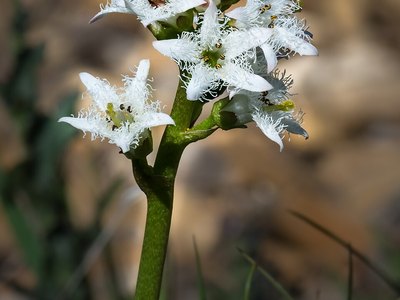 BuckbeanMenyanthes trifoliata
The whole plate is in the library. The compass, Compare, the Sky of eleven hundred plants and the formulary open with an email address and a password, free, with the formula builder and its safety engine. Herbert without limit, his formulating, clients, the handouts and the labels are the paid room.
Open the library, free