Western Herbalism
Aesculus
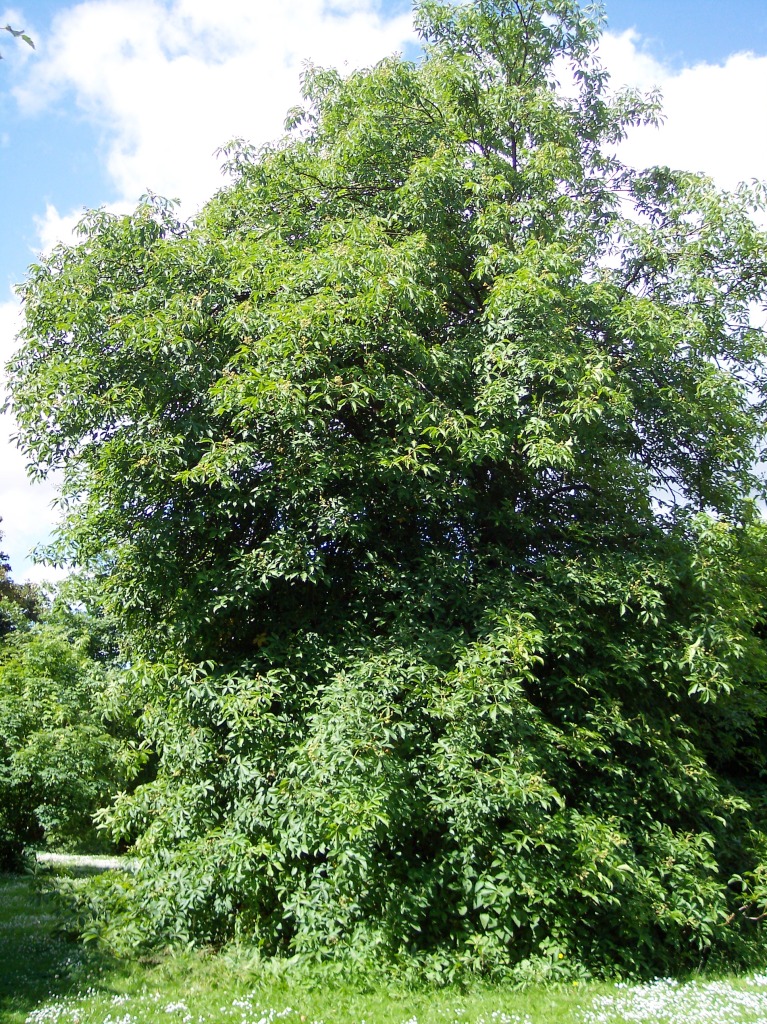
Aesculus glabra
Also known as Buckeye, Ohio Buckeye, Fetid buckeye, Smooth buckeye, American buckeye.
Aesculus glabra, the Ohio buckeye, is a medium sized tree of the eastern and central United States whose seeds and bark were used by nineteenth century Eclectic physicians much as horse chestnut (Aesculus hippocastanum) is used today. The seed, bark, and occasionally leaf were the parts employed, the bark as a bitter astringent febrifuge and the seed for its action on the venous system. Modern herbal use of this genus for venous complaints rests almost entirely on standardized horse chestnut seed extract, with Ohio buckeye itself now rarely commercialized, though its chemistry and traditional applications closely parallel its European relative.

Ask Herbert about Aesculus. Herbert is the master herbalist inside Bountiful Herbs: he answers from this plate and eleven hundred others, with dosing, pairing and cautions. Your first ten questions are free.
Ask HerbertActions
Indications what the tradition reached for it in
- Chronic venous insufficiency
- Varicose veins
- Hemorrhoids
- Leg heaviness and edema
- Venous stasis with aching legs
- Rheumatic and neuralgic pain (topical)
- Bruising and minor venous congestion
- Intermittent fever (historical, largely obsolete)
Specific indications
Varicose veins with a tendency to itch, throb, or swell toward evening
Safety
Low dose botanical. Used in drop doses in the classical practice; not a plant to dose freely.
Pregnancy: Avoid in pregnancy: insufficient safety data and a coumarin-related constituent (aesculin) raise a theoretical bleeding and uterine stimulant concern.
Breastfeeding: Avoid during lactation due to lack of safety data on transfer into milk.
Dosing as the sources wrote it
| Preparation | As written | Metric |
|---|---|---|
| Specific Aesculus | Dose, from one-tenth of a minim to five minims. | 0.06-0.31 mL |
| specific aesculus glabra | The dose of specific aesculus glabra is from 1 to 5 drops. | 0.02-0.1 mL |
| Scudder (specific medication ... low-dose theory) | Dose, two to four drops, in mater | 0.04-0.08 mL |
| Standardized seed extract (aescin basis, extrapolated from A. hippocastanum practice) | 250-312 mg extract standardized to 16-20% aescin twice daily | 250-312 mg |
| Bark decoction (historical Eclectic use) | 1-2 g dried bark three times daily | 1000-2000 mg |
| Topical oil or extract | Apply thin layer to affected area two to three times daily |
Doses are reproduced from the sources for practitioners and are not a recommendation for any person.
From the sources
Overview. Aesculus glabra, the Ohio buckeye, is a medium sized tree of the eastern and central United States whose seeds and bark were used by nineteenth century Eclectic physicians much as horse chestnut (Aesculus hippocastanum) is used today. The seed, bark, and occasionally leaf were the parts employed, the bark as a bitter astringent febrifuge and the seed for its action on the venous system. Modern herbal use of this genus for venous complaints rests almost entirely on standardized horse chestnut seed extract, with Ohio buckeye itself now rarely commercialized, though its chemistry and traditional applications closely parallel its European relative.
Clinical Notes. In practice today, when a clinician reaches for buckeye it is almost always in the form of a standardized horse chestnut seed extract rather than raw Ohio buckeye material, because the crude seed is unpalatable and unsafe without processing.
Therapy. Aesculus Glabra is a narcotic, but actively stimulates the nervous system somewhat like nux vomica. It has a special influence on the capillary circulation of the rectum, and on the pelvic and portal circulations and overcomes constipation and congestion associated with hemorrhoids, and aids in the absorption of the coagulated blood in hemorrhoidal tumors where a surgical operation is not deemed advisable.
Action, Medical Uses, and Dosage. Undoubtedly horse-chestnut acts upon the human system very much after the manner of buckeye (Aesculus glabra). By some, however, its power over the circulation is thought to be more pronounced, particularly its control over the portal vessels.
Drawn from Scudder's Specific Medication and Specific Medicines; King's American Dispensatory, 18th edition (Felter and Lloyd); Ellingwood's American Materia Medica, Therapeutics and Pharmacognosy, and the Bountiful Herbs editorial.
Nearby on the shelf
 AcaciaAcacia
 Acanthopanax root barkEleutherococcus gracilistylus
 Adder's TongueErythronium
 African basilOcimum gratissimum
 African serpentwoodRauvolfia vomitoria
 AgarwoodAquilaria sinensis
 AgatiSesbania grandiflora
The whole plate is in the library. The compass, Compare, the Sky of eleven hundred plants and the formulary open with an email address and a password, free, with the formula builder and its safety engine. Herbert without limit, his formulating, clients, the handouts and the labels are the paid room.
Open the library, free