Western Herbalism
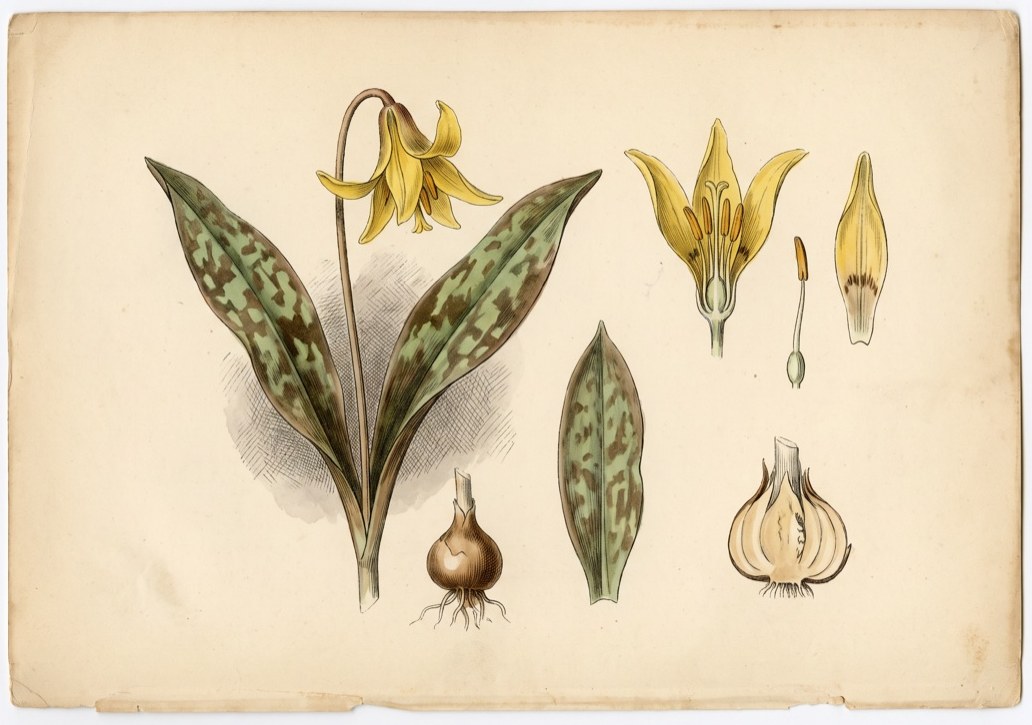
Adder's Tongue
Erythronium
Also known as Dog's-tooth violet, Fellow snowdrop, Rattlesnake violet, Yellow erythronium, Trout lily.
Erythronium americanum, commonly called adder's tongue or trout lily for its mottled, snake-skin patterned leaves, is a small spring ephemeral of eastern North American woodlands. The fresh corm and leaves were the parts used by nineteenth century American eclectic physicians, who valued the plant chiefly as a topical application for scrofulous and indolent sores and, in larger fresh doses, as an emetic. It has no established place in modern herbal practice and is used today only rarely, mostly by practitioners working in the eclectic tradition.

Ask Herbert about Adder's Tongue. Herbert is the master herbalist inside Bountiful Herbs: he answers from this plate and eleven hundred others, with dosing, pairing and cautions. Your first ten questions are free.
Ask HerbertActions
Indications what the tradition reached for it in
- Scrofulous swellings
- Indolent ulcers
- Skin eruptions and abscesses
- Chronic hiccough (historical use)
- Glandular swellings
- Bruises and minor wounds
- Gout (topical, historical)
- Dyspepsia with nausea (as emetic dose)
Specific indications
Indolent, poorly healing ulcers with hardened, swollen surrounding tissue, treated with a poultice of the bruised fresh leaves
Scrofulous glandular swellings in a person with a chronically weak, lymphatic constitution
Safety
Low dose botanical. Used in drop doses in the classical practice; not a plant to dose freely.
Pregnancy: Avoid in pregnancy: traditional emetic action and lack of modern safety data make it unsuitable.
Breastfeeding: Avoid in lactation: no safety data exist and internal use is not advisable.
The record lists 5 contraindications; open the plate in the library to read them in full.
In practice
In eclectic practice the bruised fresh leaves or corm were most often made into a poultice or infused in cold water and applied directly to indolent ulcers, scrofulous glandular swellings, and stubborn skin eruptions, the idea being that the cooling, mucilaginous plant would soften indurated tissue and encourage the ulcer to clean and heal.
Dosing as the sources wrote it
| Preparation | As written | Metric |
|---|---|---|
| Fresh plant poultice | bruised fresh leaves or corm applied topically to affected area, changed daily | |
| Fresh plant infusion (emetic dose, historical) | small cupful of cold infusion taken orally, repeated cautiously as historically described | |
| nutritive when dried. The fresh roots and leaves, simmered in milk, or the fresh leaves, bruised and applied as a poultice to scrofulous ulcers or tumors, together with a free internal use of an infusion of them, is highly recommended as a remedy for scrofula. The expressed juice of the plant, infused in cider, is reputed useful in dropsy, and for relieving hiccough, vomiting, and hematemesis. Twenty-five grains of the fresh root, or 40 of the recently dried root, will operate as an emetic, though this result is sometimes uncertain. |
Doses are reproduced from the sources for practitioners and are not a recommendation for any person.
From the sources
Overview. Erythronium americanum, commonly called adder's tongue or trout lily for its mottled, snake-skin patterned leaves, is a small spring ephemeral of eastern North American woodlands. The fresh corm and leaves were the parts used by nineteenth century American eclectic physicians, who valued the plant chiefly as a topical application for scrofulous and indolent sores and, in larger fresh doses, as an emetic. It has no established place in modern herbal practice and is used today only rarely, mostly by practitioners working in the eclectic tradition.
Clinical Notes. In eclectic practice the bruised fresh leaves or corm were most often made into a poultice or infused in cold water and applied directly to indolent ulcers, scrofulous glandular swellings, and stubborn skin eruptions, the idea being that the cooling, mucilaginous plant would soften indurated tissue and encourage the ulcer to clean and heal.
Conservation. Erythronium americanum is a slow-growing woodland spring ephemeral that can take several years to reach flowering size from seed, so wild populations should not be harvested heavily; use cultivated material where possible.
Drawn from King's American Dispensatory, 18th edition (Felter and Lloyd), and the Bountiful Herbs editorial.
Nearby on the shelf
 AcaciaAcacia
 Acanthopanax root barkEleutherococcus gracilistylus
 AesculusAesculus glabra
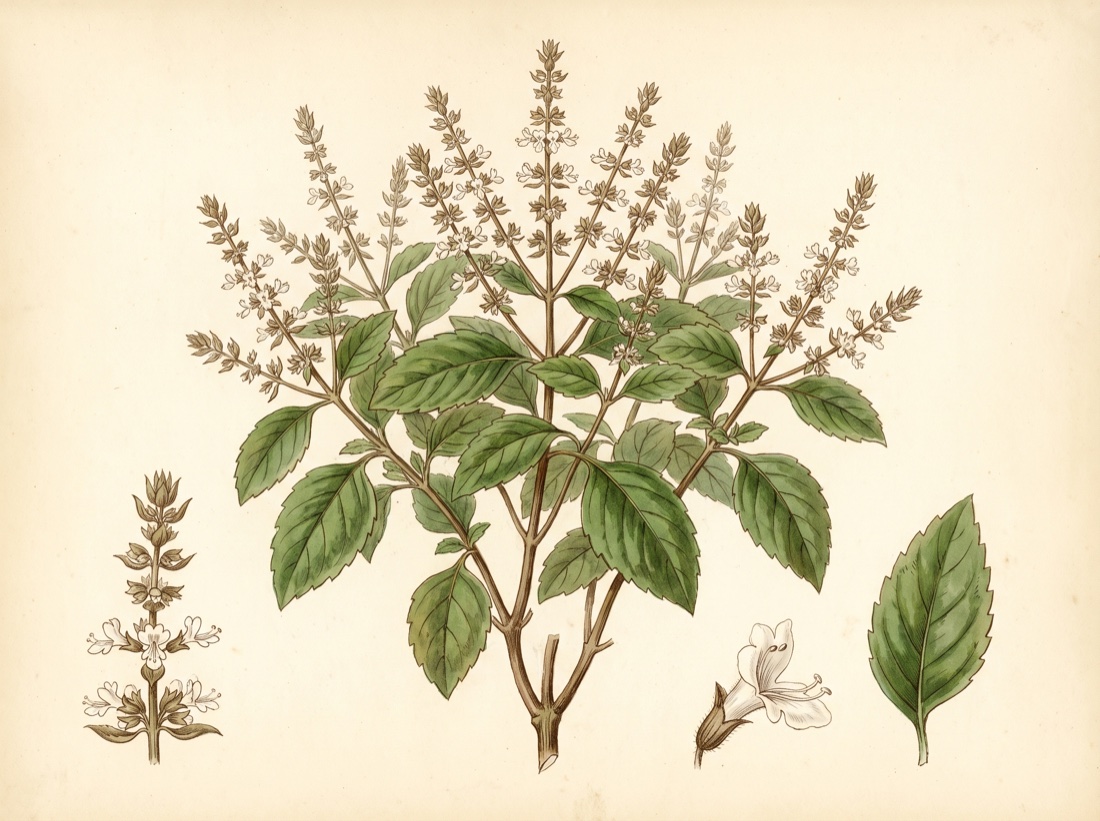 African basilOcimum gratissimum
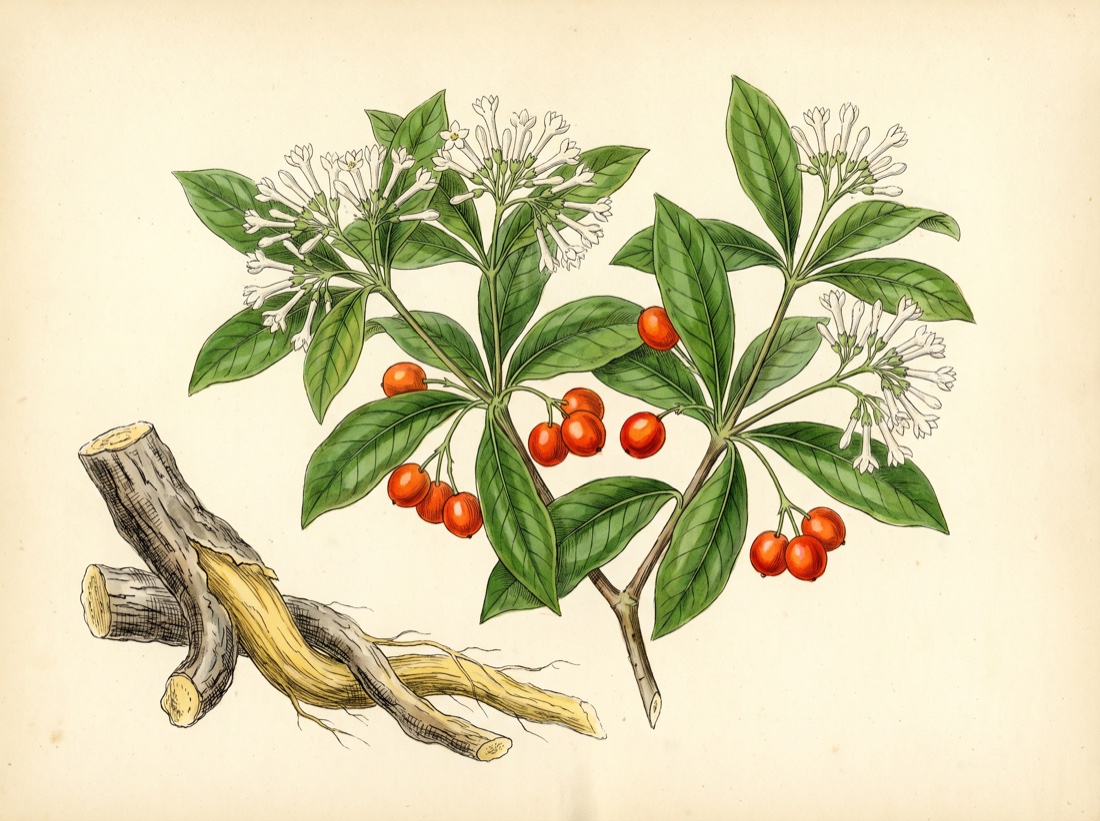 African serpentwoodRauvolfia vomitoria
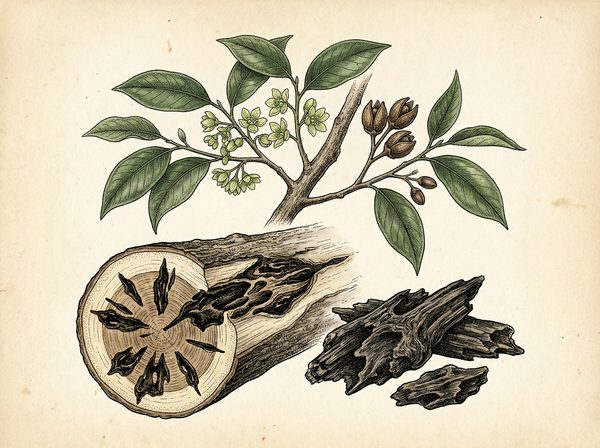 AgarwoodAquilaria sinensis
The whole plate is in the library. The compass, Compare, the Sky of eleven hundred plants and the formulary open with an email address and a password, free, with the formula builder and its safety engine. Herbert without limit, his formulating, clients, the handouts and the labels are the paid room.
Open the library, free