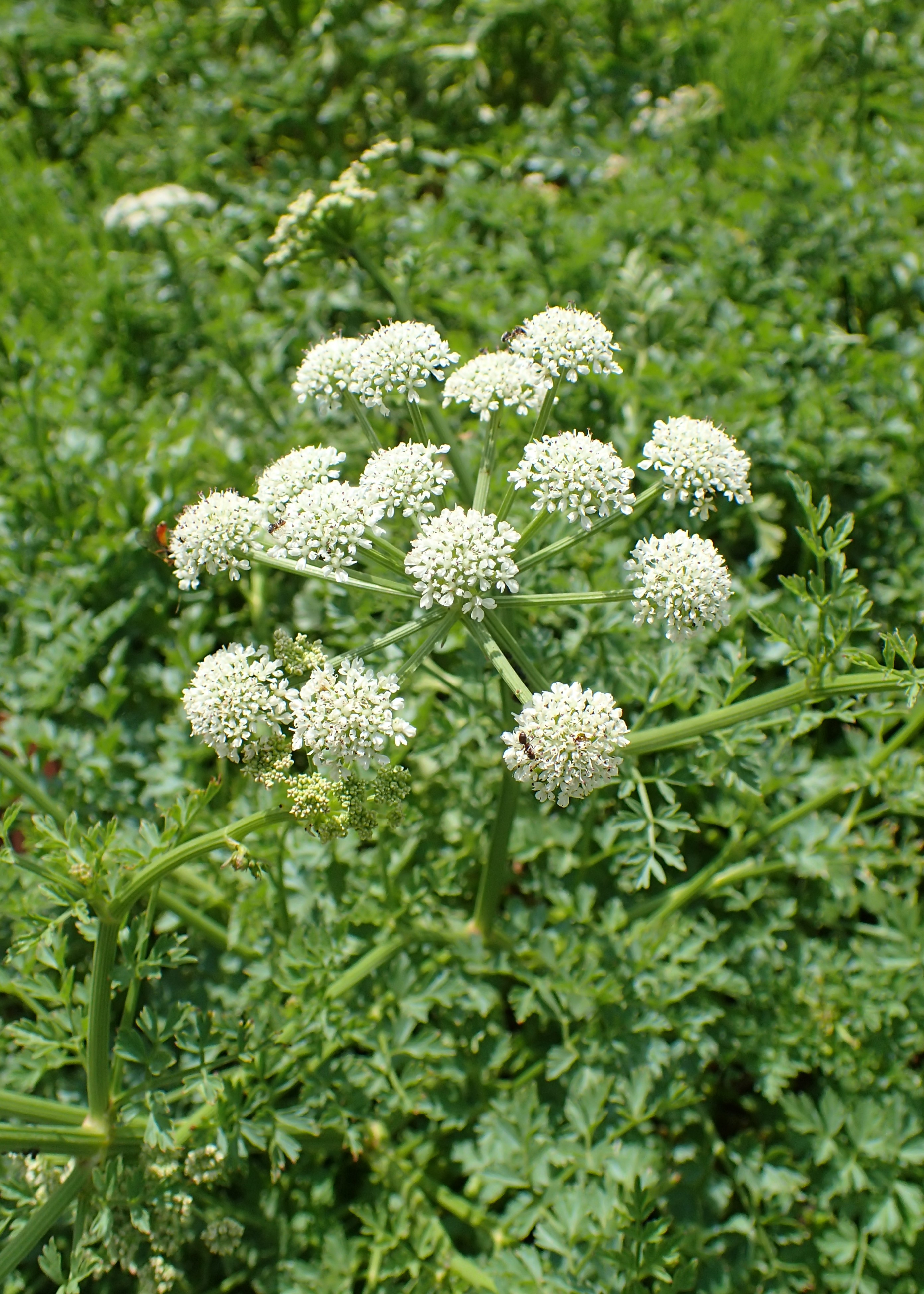
Western Herbalism
Water fennel
Phellandrium
Also known as Fine-leaved water dropwort, Fine-leaved water hemlock, Water dropwort, Horse bane.
Phellandrium is an old pharmaceutical name for the fruit of the fine-leaved water dropwort, a marsh and ditch-side umbellifer of Europe and temperate Asia now classified as Oenanthe aquatica. Nineteenth-century eclectic and regular physicians used the dried ripe fruit, distinct from the far more dangerous roots and fresh green parts of the plant, as a stimulating expectorant in chronic chest complaints, most notably pulmonary tuberculosis. The whole genus Oenanthe contains other species that are among the most acutely poisonous plants in the temperate flora, and this relationship shaped how cautiously the seed preparation was dosed even in its heyday.

Ask Herbert about Water fennel. Herbert is the master herbalist inside Bountiful Herbs: he answers from this plate and eleven hundred others, with dosing, pairing and cautions. Your first ten questions are free.
Ask HerbertActions
Indications what the tradition reached for it in
- Chronic bronchitis with copious secretion
- Pulmonary tuberculosis (historical adjunct)
- Chronic cough in debilitated patients
- Dyspepsia with flatulence
- Amenorrhea (historical use)
- Chronic skin disease (historical, obsolete)
- Edema and scanty urination (historical)
- Whooping cough (historical)
Specific indications
Chronic, loose cough with profuse thin mucus in a weak, wasting patient, as used historically in phthisis
Bronchitis in the elderly or debilitated with poor expectoration
Safety
Recognised toxicity. This plant carries a toxicity flag in the record; it is for trained practitioners only.
Low dose botanical. Used in drop doses in the classical practice; not a plant to dose freely.
Pregnancy: Avoid entirely: the genus contains potent toxins and there is no modern safety data, so use in pregnancy cannot be justified.
Breastfeeding: Avoid entirely: no safety data exist and closely related species are frankly poisonous.
The record lists 5 contraindications; open the plate in the library to read them in full.
In practice
Historically, Phellandrium fruit was reserved for long-standing, debilitating chest disease where a stimulating, slightly warming expectorant action was wanted rather than a simple demulcent. It was given as a fluid extract or tincture in small, carefully titrated doses, often combined with other pectorals and tonics for consumptive patients, and was thought to improve appetite and digestion in the process, which fits its carminative reputation in dyspepsia with gas and discomfort.
Dosing as the sources wrote it
| Preparation | As written | Metric |
|---|---|---|
| Fluid extract (historical, not recommended for modern use) | 0.1-0.3 mL of a standardized fruit fluid extract, historical eclectic dosing, three times daily | 0.1-0.3 mL |
| Tincture (historical, not recommended for modern use) | 0.5-1 mL of a 1:5 fruit tincture, historical eclectic dosing, three times daily | 0.5-1 mL |
| They are given in powder, commencing with 4 or 5 grains, every 1 or 2 hours throughout the day, cautiously increasing the dose to 8 or 10 grains. | 324-648 mg | |
| Two parts each of powdered gum Arabic and sugar of milk may be mixed with 1 part of the powdered seeds, and divided into doses of 25 grains each, which may be repeated every 2 or 3 hours. | ||
| The dose is from ½ to 1 fluid drachm. | 1.85-3.7 mL | |
| The dose is from 3 to 5 grains, in pill. | 194-324 mg |
Doses are reproduced from the sources for practitioners and are not a recommendation for any person.
From the sources
Overview. Phellandrium is an old pharmaceutical name for the fruit of the fine-leaved water dropwort, a marsh and ditch-side umbellifer of Europe and temperate Asia now classified as Oenanthe aquatica. Nineteenth-century eclectic and regular physicians used the dried ripe fruit, distinct from the far more dangerous roots and fresh green parts of the plant, as a stimulating expectorant in chronic chest complaints, most notably pulmonary tuberculosis. The whole genus Oenanthe contains other species that are among the most acutely poisonous plants in the temperate flora, and this relationship shaped how cautiously the seed preparation was dosed even in its heyday.
Clinical Notes. Historically, Phellandrium fruit was reserved for long-standing, debilitating chest disease where a stimulating, slightly warming expectorant action was wanted rather than a simple demulcent. It was given as a fluid extract or tincture in small, carefully titrated doses, often combined with other pectorals and tonics for consumptive patients, and was thought to improve appetite and digestion in the process, which fits its carminative reputation in dyspepsia with gas and discomfort.
Drawn from King's American Dispensatory, 18th edition (Felter and Lloyd), and the Bountiful Herbs editorial.
Nearby on the shelf
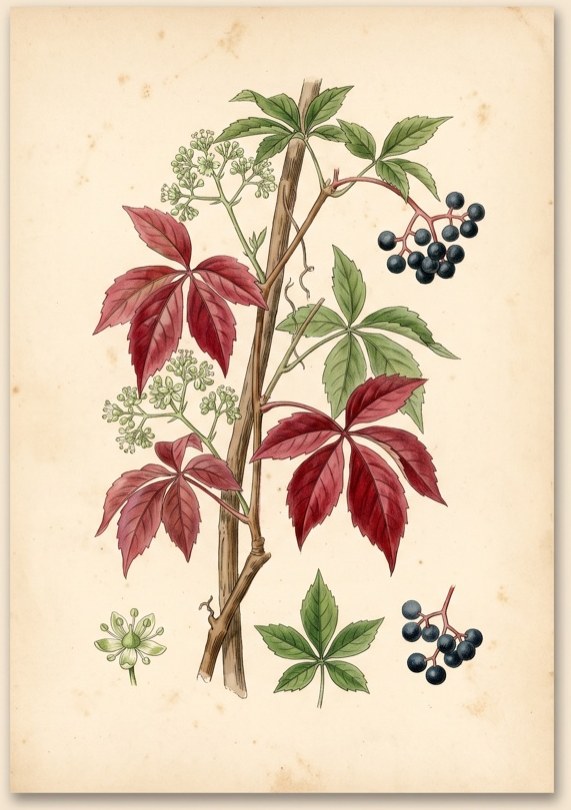 Virginia creeperAmpelosis quinquefolia
 Wafer ashPtelea trifoliata
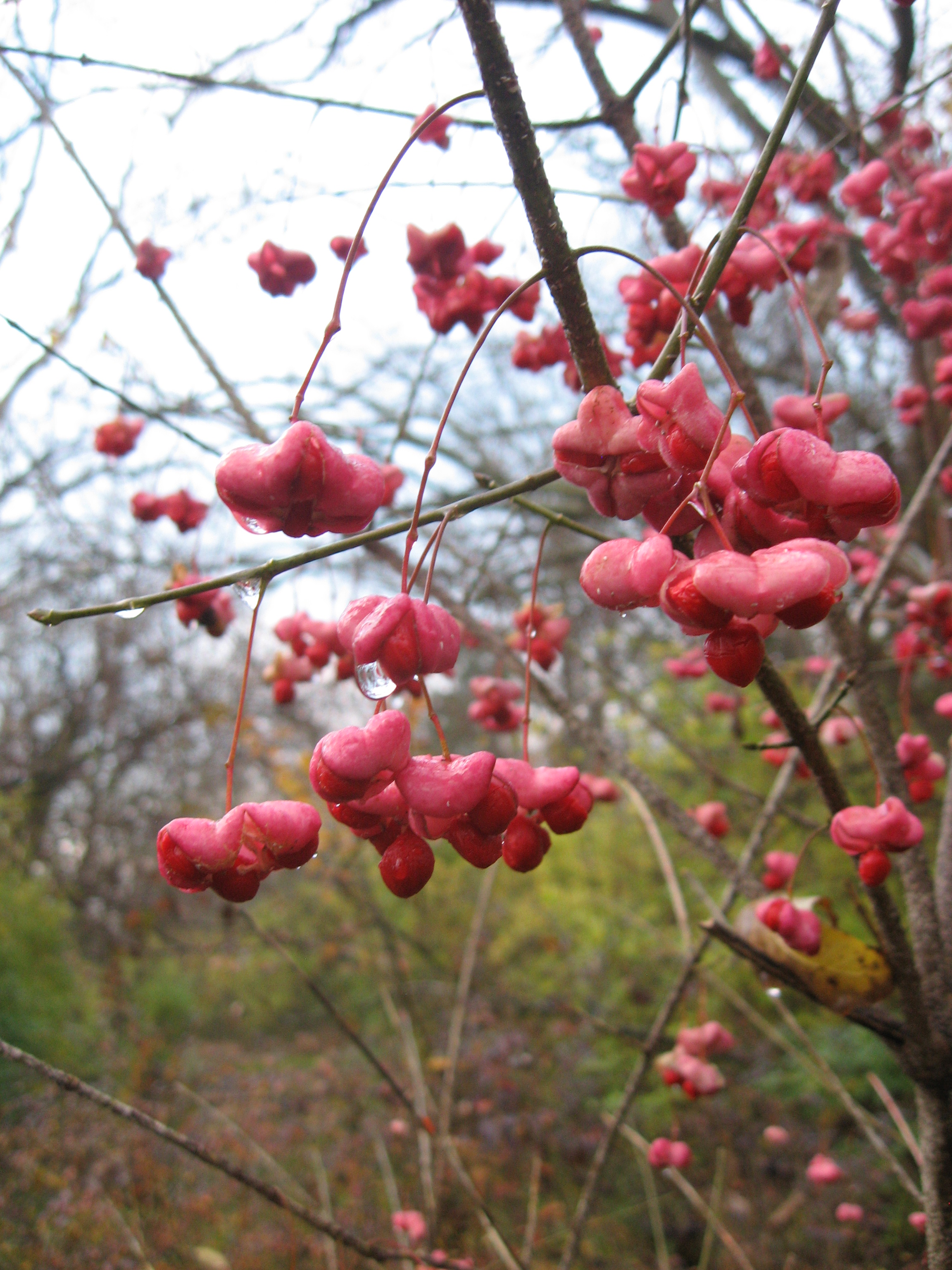 WahooEuonymus atropurpureus
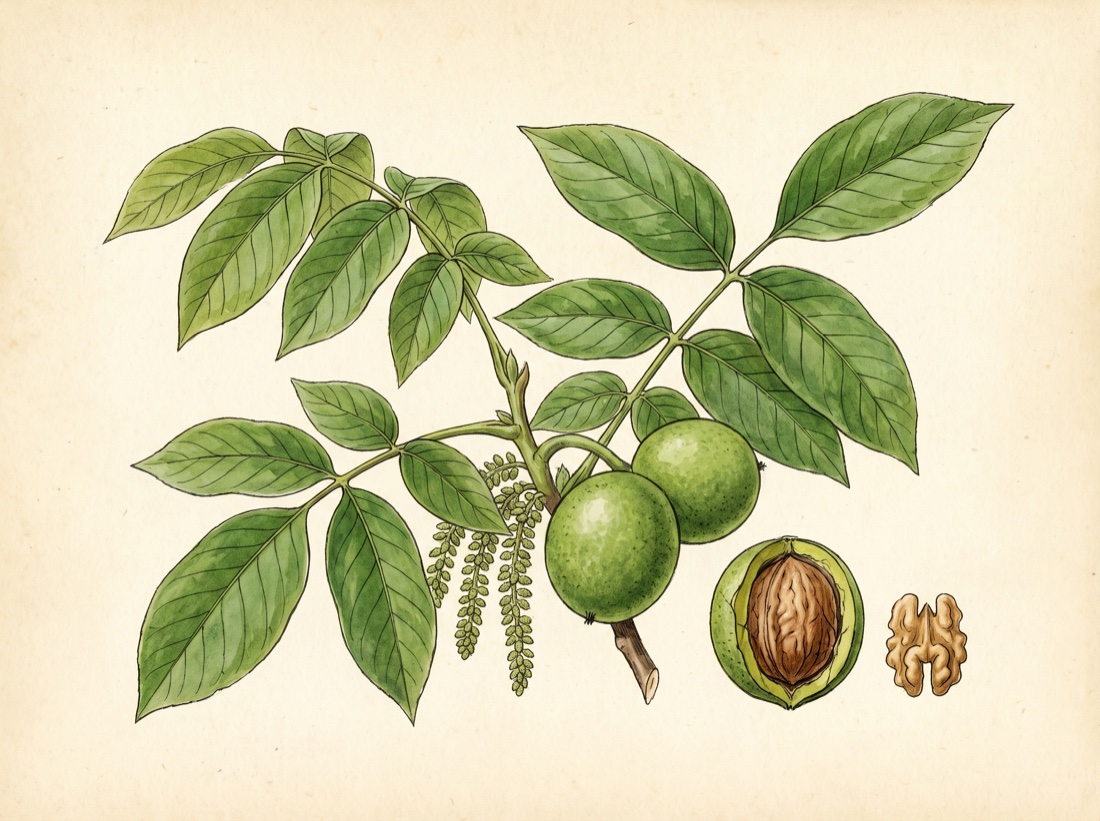 WalnutJuglans regia
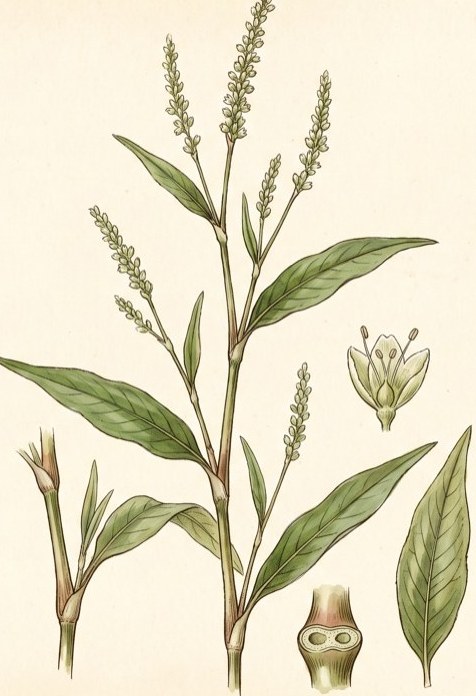 Water pepperPolygonum punctatum
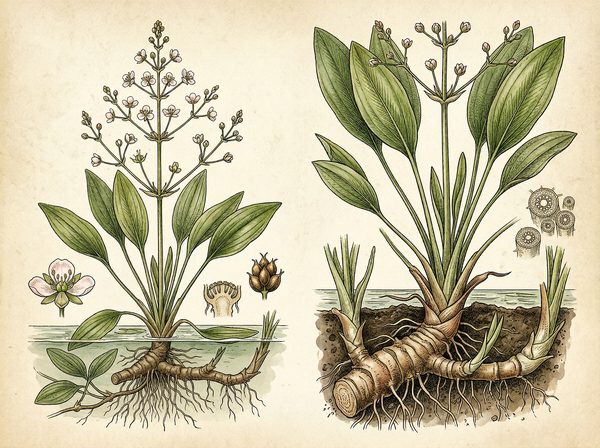 Water PlantainAlisma plantago-aquatica
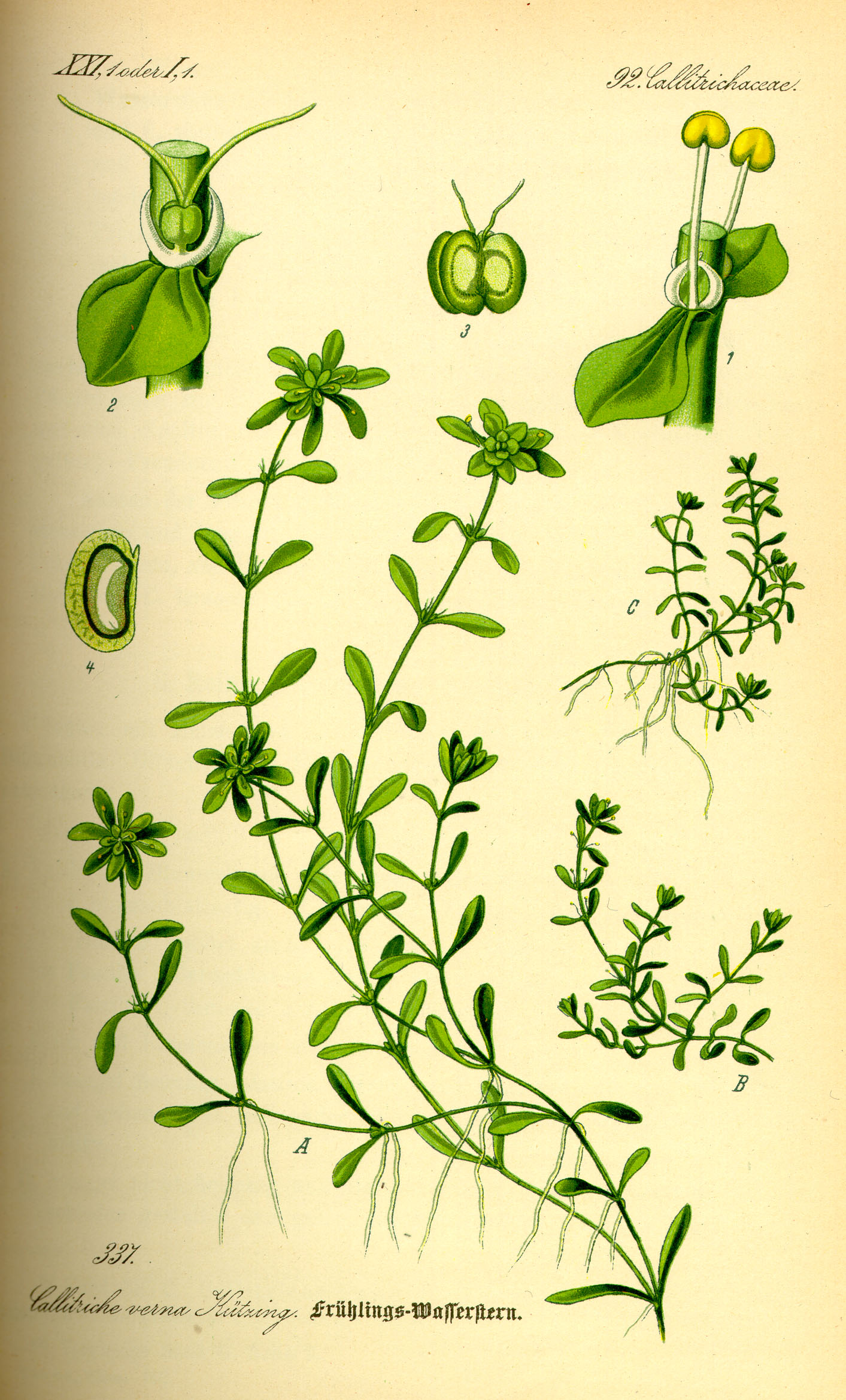 Water-StarwortCallitriche
 WatercressNasturtium officinale
The whole plate is in the library. The compass, Compare, the Sky of eleven hundred plants and the formulary open with an email address and a password, free, with the formula builder and its safety engine. Herbert without limit, his formulating, clients, the handouts and the labels are the paid room.
Open the library, free