Western Herbalism
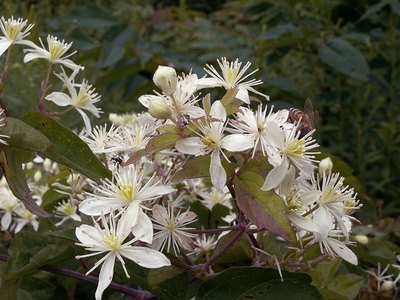
Virgin's bower
Clematis virginiana
Also known as devil's darning needles, old man's beard, woodbine, traveler's joy (regional, shared with related species), Ladies' bower, Love vine, Traveler's ivy.
Clematis virginiana, virgin's bower, is a native North American climbing vine of the buttercup family found across woodland edges and thickets of the eastern and central United States and Canada. The fresh leaf and flowering vine were used by nineteenth century Eclectic physicians, most notably in Scudder's Specific Medication system, as an alterative and topical rubefacient. It never achieved wide or well-documented clinical use and Scudder himself noted it as an agent deserving further study rather than one with an established record.

Ask Herbert about Virgin's bower. Herbert is the master herbalist inside Bountiful Herbs: he answers from this plate and eleven hundred others, with dosing, pairing and cautions. Your first ten questions are free.
Ask HerbertActions
Indications what the tradition reached for it in
- Chronic skin eruptions
- Syphilitic skin lesions (historical alterative use)
- Neuralgia
- Rheumatic and muscular pain
- Chronic recurring headache
- Localized nerve pain requiring counter-irritation
- Scrofulous skin conditions (historical)
- Sluggish chronic complaints attributed to disordered nervous tone
Specific indications
Persistent, low-grade nerve pain or neuralgia that responds to a local counter-irritant rubefacient application
Chronic, obstinate skin disease of a torpid, unresolving character where an alterative was historically indicated
Safety
Low dose botanical. Used in drop doses in the classical practice; not a plant to dose freely.
Pregnancy: Avoid in pregnancy: irritant Ranunculaceae constituents and absence of any modern safety data make internal use inappropriate.
Breastfeeding: Avoid in lactation: no safety data exist and the plant's irritant chemistry warrants caution.
The record lists 5 contraindications; open the plate in the library to read them in full.
In practice
This is a thinly documented remedy even within its own tradition. Scudder's note that virgin's bower 'has not been studied, though it deserves investigation' remains essentially true today: there is no meaningful modern clinical literature on internal use, and practitioners who still reach for it do so almost entirely as a topical rubefacient for localized neuralgic or rheumatic pain, applying the fresh bruised leaf or a dilute tincture externally and watching carefully for blistering, since the plant shares the acrid, vesicant protoanemonin principle common to fresh Ranunculaceae.
Dosing as the sources wrote it
| Preparation | As written | Metric |
|---|---|---|
| Fresh leaf tincture (Scudder's Specific Medication proportion, historical) | 0.3-0.6 mL (5-10 drops) of a 1:12 fresh leaf tincture, taken only under the low-dose Specific Medication approach | 0.3-0.6 mL |
| Topical rubefacient application | Fresh bruised leaf or dilute tincture applied externally to the affected area, briefly, and removed at the first sign of blistering | |
| The extract, in doses of 1 or 2 grains, is recommended for osteocopic pains. | 130-130 mg | |
| Clematis virginiana has been highly spoken of as a nervine in uterine diseases. Place 2 drachms of the dried leaf into a cup filled with hot water, cover it, and allow it to stand until the liquid is cool enough to drink | 7776 mg | |
| Dose, 1/10 to 5 drops, well diluted. | 0-0.1 mL | |
| A Homoeopathic tincture may be used in the proportion of 10 to 15 drops to 4 fluid ounces of water, the dose of which is a teaspoonful several times a day. | 0.5-0.75 mL |
Doses are reproduced from the sources for practitioners and are not a recommendation for any person.
From the sources
Overview. Clematis virginiana, virgin's bower, is a native North American climbing vine of the buttercup family found across woodland edges and thickets of the eastern and central United States and Canada. The fresh leaf and flowering vine were used by nineteenth century Eclectic physicians, most notably in Scudder's Specific Medication system, as an alterative and topical rubefacient. It never achieved wide or well-documented clinical use and Scudder himself noted it as an agent deserving further study rather than one with an established record.
Clinical Notes. This is a thinly documented remedy even within its own tradition. Scudder's note that virgin's bower 'has not been studied, though it deserves investigation' remains essentially true today: there is no meaningful modern clinical literature on internal use, and practitioners who still reach for it do so almost entirely as a topical rubefacient for localized neuralgic or rheumatic pain, applying the fresh bruised leaf or a dilute tincture externally and watching carefully for blistering, since the plant shares the acrid, vesicant protoanemonin principle common to fresh Ranunculaceae.
Specific indications and reasoning. (VIRGIN's BOWEB.) This agent has not been studied, though it deserves investigation. Prepare a tincture from the recent leaves, in the proportion of 5viij. to Alcohol 76° Oj., using pressure. Dose, gtts.
Drawn from Scudder's Specific Medication and Specific Medicines; King's American Dispensatory, 18th edition (Felter and Lloyd), and the Bountiful Herbs editorial.
In formulas
Virgin's bower stands in 11 documented formulas in the library, among them shàng zhông xia tòng yòng tòng fêng wán, hi tóng pí tāng.
Often paired with
 Licorice rootGlycyrrhiza glabra
 PoriaWolfiporia extensa
 Sichuan Lovage RhizomeLigusticum chuanxiong
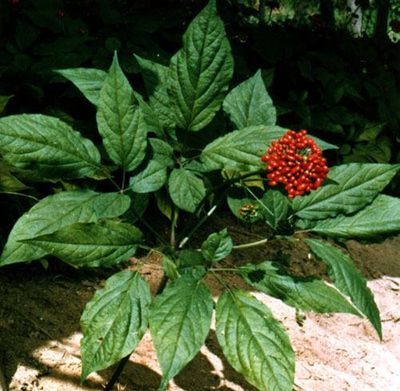 GinsengPanax ginseng
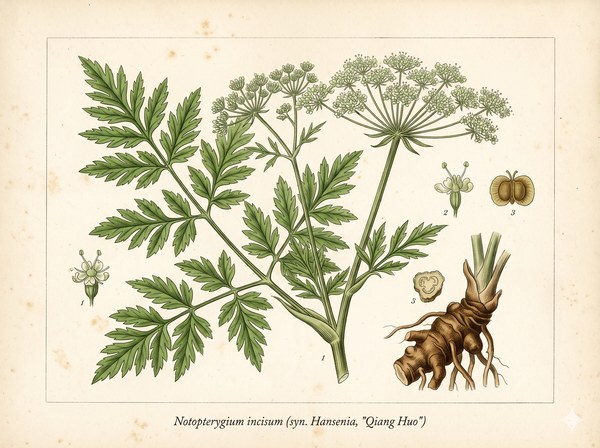 Qiang HuoNotopterygium incisum
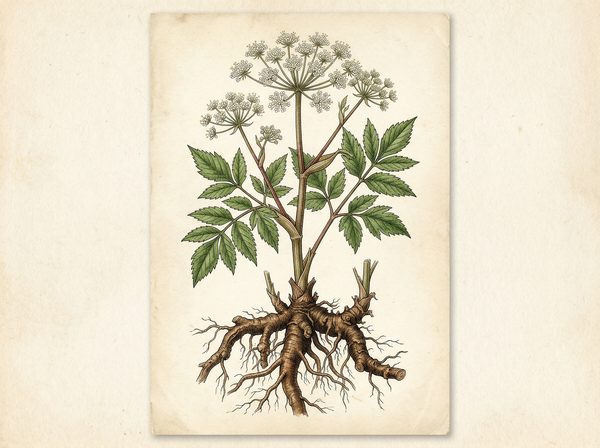 Du HuoAngelica pubescens
Nearby on the shelf
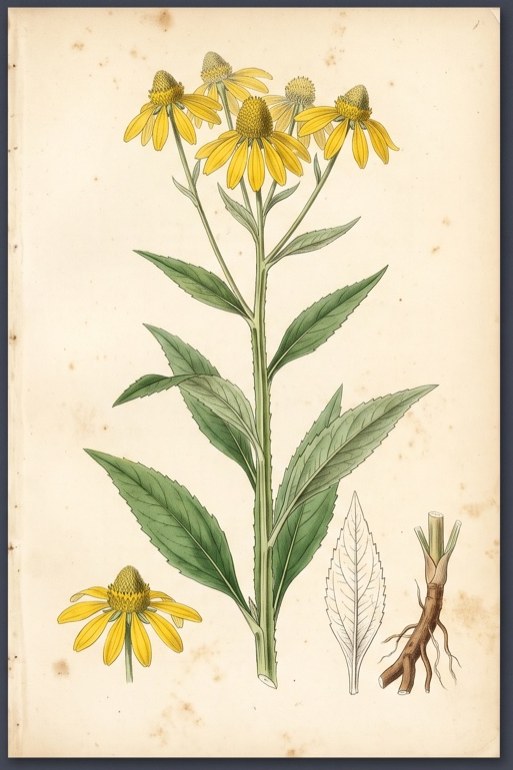 VerbesinaVerbesina
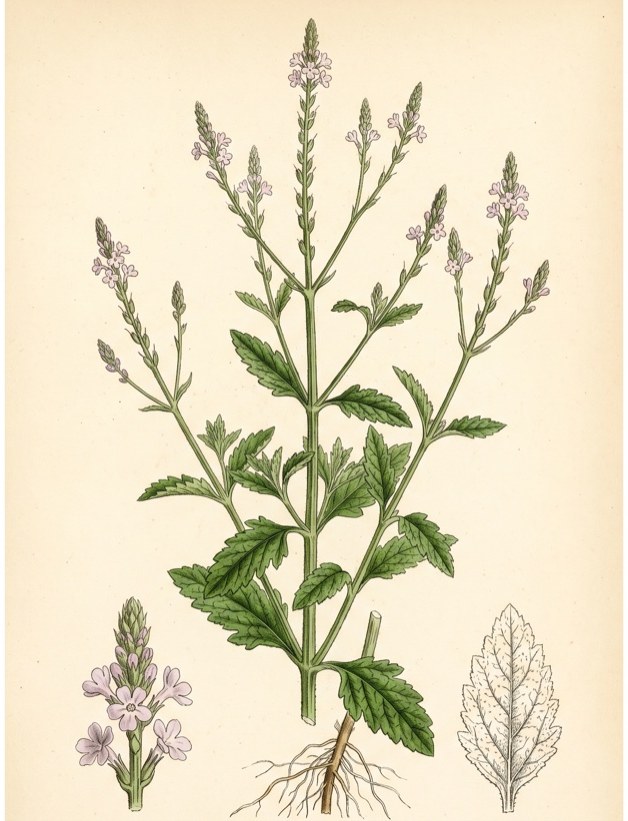 VervainVerbena officinalis
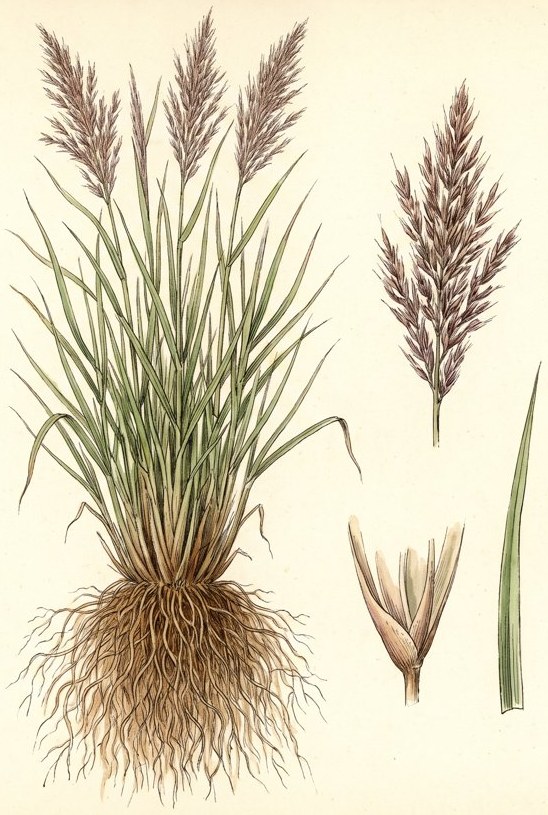 VetiverChrysopogon zizanioides
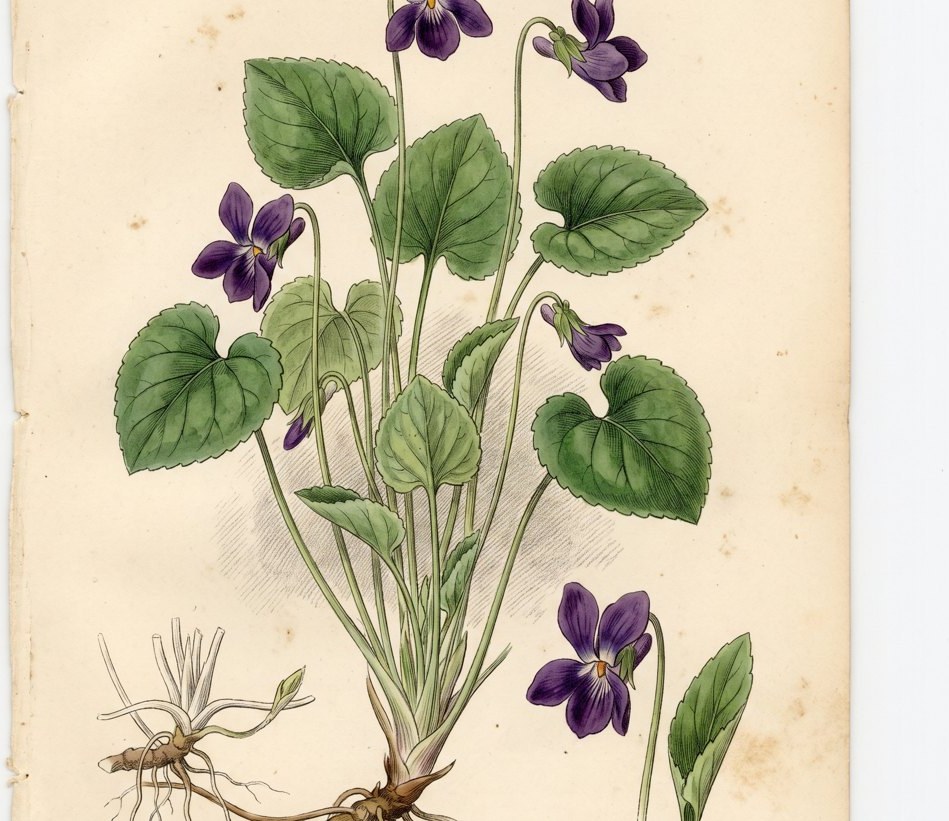 VioletViola
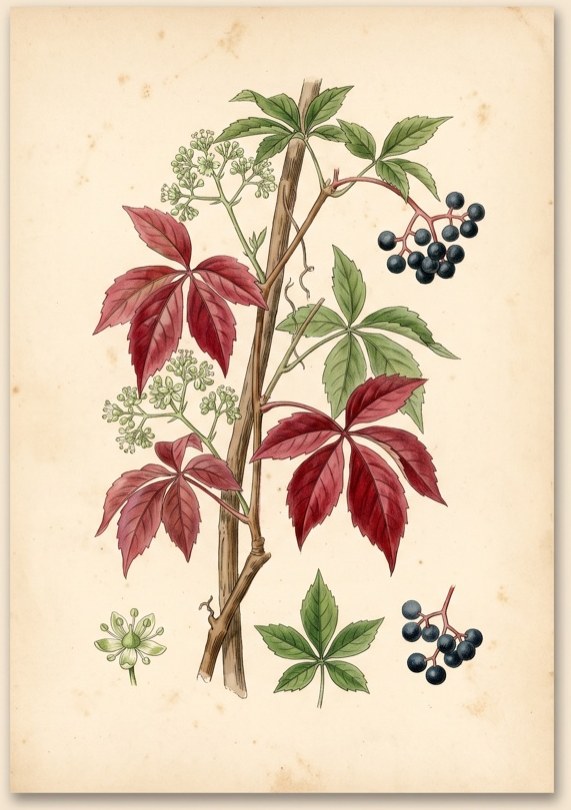 Virginia creeperAmpelosis quinquefolia
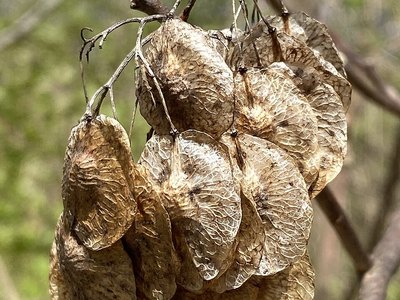 Wafer ashPtelea trifoliata
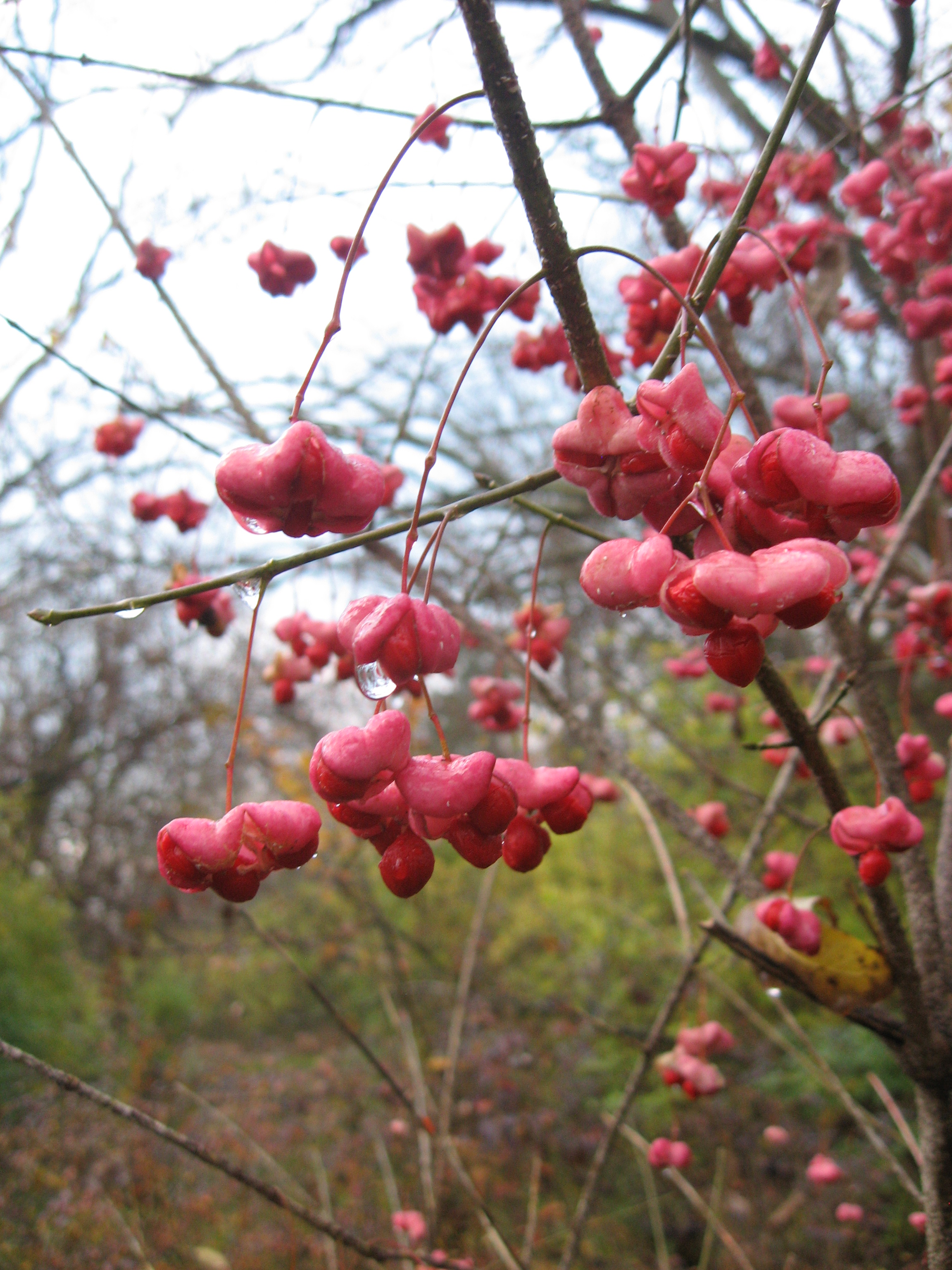 WahooEuonymus atropurpureus
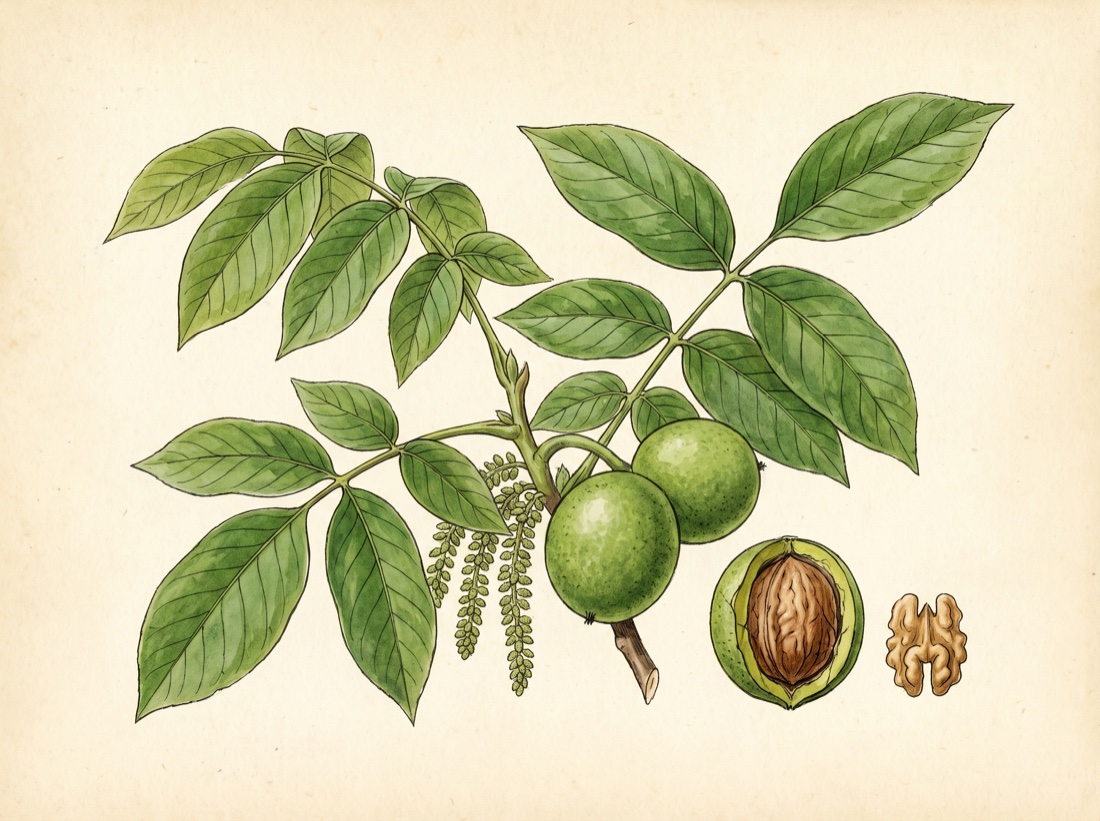 WalnutJuglans regia
The whole plate is in the library. The compass, Compare, the Sky of eleven hundred plants and the formulary open with an email address and a password, free, with the formula builder and its safety engine. Herbert without limit, his formulating, clients, the handouts and the labels are the paid room.
Open the library, free