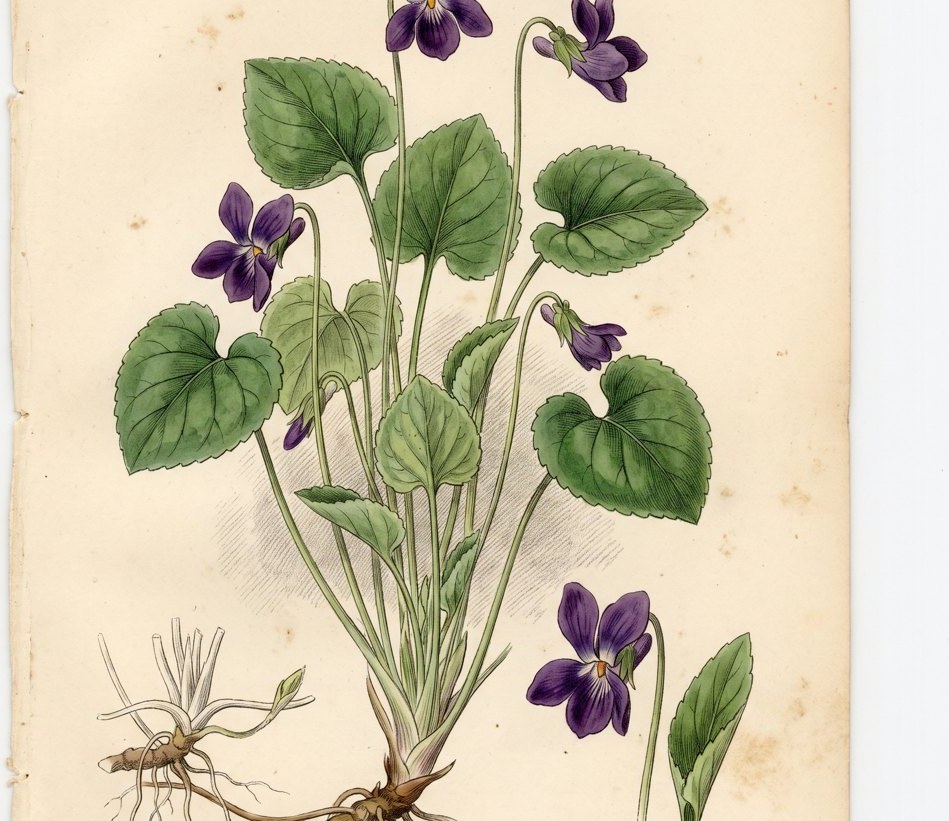
Western Herbalism
Violet
Viola
Also known as Blue violet, Bird's-foot violet, Sweet violet, Sweet-scented violet, Common blue violet, Wood violet, (1) Blue violet, Bird's-foot violet; (2) Sweet violet.
Viola is a large genus of small, low-growing perennials found across temperate regions of the world, with the fragrant European sweet violet (Viola odorata) and the North American blue violets (Viola sororia, Viola pedata) both entering herbal use for very similar purposes. The heart-shaped leaves and delicate flowers are the parts most commonly gathered, used fresh or dried. Violet held a steady place in eclectic and folk medicine of the nineteenth and early twentieth centuries as a soothing expectorant, a gentle alterative for the skin and lymphatics, and a mild remedy for children's coughs and constipation.

Ask Herbert about Violet. Herbert is the master herbalist inside Bountiful Herbs: he answers from this plate and eleven hundred others, with dosing, pairing and cautions. Your first ten questions are free.
Ask HerbertActions
Indications what the tradition reached for it in
- Bronchitis with thick, tenacious mucus
- Whooping cough (historical use)
- Chronic catarrh of the respiratory tract
- Sore throat
- Eczema and other chronic dry or hot skin eruptions
- Swollen or tender lymph nodes
- Mastitis or fibrocystic breast tenderness
- Mild constipation, especially in children
- Minor skin ulcers or slow-healing wounds (topical)
- Cough with a sensation of chest tightness and irritation
Specific indications
A hot, dry, irritated cough with thick mucus that is difficult to raise
Swollen, tender lymph glands or lumpy, tender breast tissue calling for a gentle lymphatic alterative
Safety
Low dose botanical. Used in drop doses in the classical practice; not a plant to dose freely.
Pregnancy: Caution. Use with care in pregnancy (our record's flag)
Pregnancy, our record: No specific concerns are documented for ordinary dietary or infusion use of the leaf and flower, but formal safety data in pregnancy are lacking, so cautious, informed use is advised.
Breastfeeding, our record: No specific concerns are documented; violet has traditionally been used around lactation without reported problems, but modern safety data are limited.
The record lists 2 contraindications; open the plate in the library to read them in full.
In practice
Violet leaf and flower make a pleasant, mild-tasting infusion that practitioners reach for when a cough is hot, dry, and unproductive, or when thick mucus needs coaxing loose without harsh stimulation.
Dosing as the sources wrote it
| Preparation | As written | Metric |
|---|---|---|
| Infusion (dried leaf and flower) | 2-4 g dried herb three times daily | 2000-4000 mg |
| Tincture (1:5, 40%) | 2-4 mL three times daily | 2-4 mL |
| Fresh leaf poultice | applied topically as needed to minor skin lesions | |
| Action, Medical Uses, and Dosage: The flowers and seeds of V. odorata act as laxatives in doses of 3 or 4 drachms, rubbed up with sugar and water; the root in ½ or 1-drachm doses is emeto-cathartic, but it is uncertain in its action. | ||
| The roots of these plants are bitterish and slightly acrid, and in doses of from 8 to 10 grains are tonic; from 25 to 30 grains, purgative; and from 40 to 60 grains, emetic. | ||
| From 5 to 10 drops of a strong tincture may be added to 4 fluid ounces of water, the dose of the mixture being a teaspoonful every 4 hours. |
Doses are reproduced from the sources for practitioners and are not a recommendation for any person.
From the sources
Overview. Viola is a large genus of small, low-growing perennials found across temperate regions of the world, with the fragrant European sweet violet (Viola odorata) and the North American blue violets (Viola sororia, Viola pedata) both entering herbal use for very similar purposes. The heart-shaped leaves and delicate flowers are the parts most commonly gathered, used fresh or dried. Violet held a steady place in eclectic and folk medicine of the nineteenth and early twentieth centuries as a soothing expectorant, a gentle alterative for the skin and lymphatics, and a mild remedy for children's coughs and constipation.
Clinical Notes. Violet leaf and flower make a pleasant, mild-tasting infusion that practitioners reach for when a cough is hot, dry, and unproductive, or when thick mucus needs coaxing loose without harsh stimulation.
Action, Medical Uses, and Dosage. The flowers and seeds of V. odorata act as laxatives in doses of 3 or 4 drachms, rubbed up with sugar and water; the root in ½ or 1-drachm doses is emeto-cathartic, but it is uncertain in its action. The odorous emanations from the flowers have caused faintness and giddiness, and in one case were supposed to have brought on apoplexy.
History and Description. The Blue violet is common to the United States, growing from Maine to Florida, and west to Missouri, in dry woods and pastures, and sandy places, flowering in May and June. Occasionally a second flowering occurs in August and September.
Drawn from King's American Dispensatory, 18th edition (Felter and Lloyd), and the Bountiful Herbs editorial.
In formulas
Violet stands in 7 documented formulas in the library, among them xiè gân tāng.
Nearby on the shelf
 Verbena triphylla L'HerAloysia triphylla
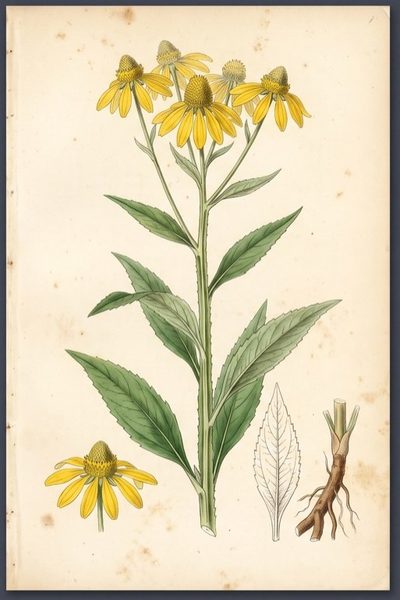 VerbesinaVerbesina virginica
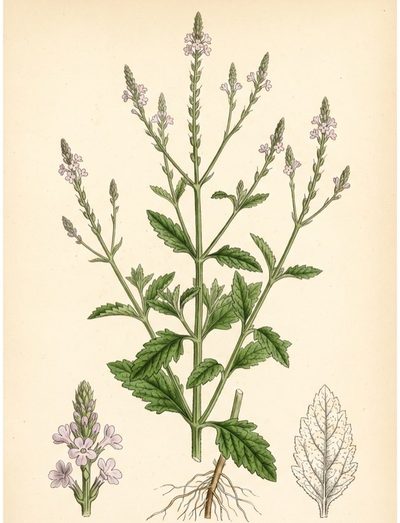 VervainVerbena officinalis
 VetiverChrysopogon zizanioides
 Virgin's bowerClematis virginiana
 Virginia creeperAmpelosis quinquefolia
 Wafer ashPtelea trifoliata
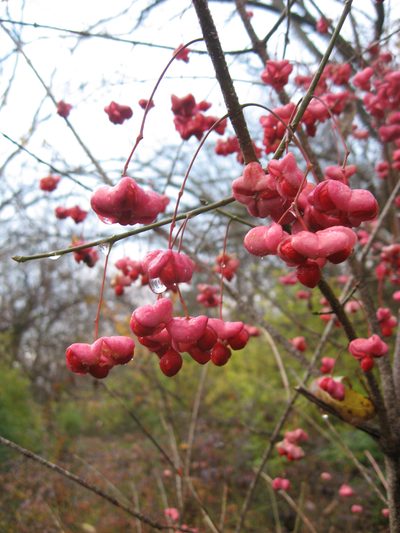 WahooEuonymus atropurpureus
The whole plate is in the library. The compass, Compare, the Sky of eleven hundred plants and the formulary open with an email address and a password, free, with the formula builder and its safety engine. Herbert in full, his formulating, clients, the handouts and the labels are the paid room.
Open the library, free