Western Herbalism
Verbesina
Verbesina
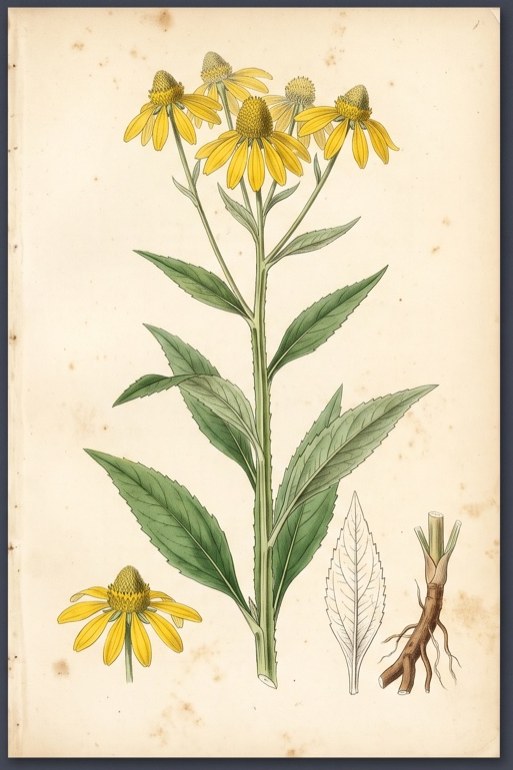
Also known as Crown beard, Gravel weed, Frostweed, Iceweed, White crownbeard.
Verbesina virginica, commonly called frostweed, crown beard or gravel weed, is a tall perennial composite native to the southeastern and south-central United States, named for the delicate ice ribbons that extrude from its split stems in early frost. The dried aerial parts and root were used by nineteenth century American Eclectic physicians, who valued the plant chiefly as a bitter tonic and as a folk remedy for urinary gravel, a use reflected directly in its common name. It never entered mainstream European or official pharmacopeial use and remains a minor, regionally known remedy today.

Ask Herbert about Verbesina. Herbert is the master herbalist inside Bountiful Herbs: he answers from this plate and eleven hundred others, with dosing, pairing and cautions. Your first ten questions are free.
Ask HerbertActions
Indications what the tradition reached for it in
- Urinary gravel and calculi
- Atonic dyspepsia
- Chronic catarrh of the bladder
- Debility during convalescence
- Poor appetite
- Amenorrhea (traditional use)
- Low-grade urinary irritation
- Sluggish digestion with bitter deficiency picture
Specific indications
Dull, dragging ache in the back and loins with gravelly sediment in the urine
Weak, atonic digestion in a convalescent patient who needs a simple bitter before meals
Safety
Low dose botanical. Used in drop doses in the classical practice; not a plant to dose freely.
Pregnancy: Avoid in pregnancy: traditional sources describe emmenagogue activity and there is no modern safety data to support use.
Breastfeeding: Use with care while breastfeeding
The record lists 5 contraindications; open the plate in the library to read them in full.
In practice
Eclectic writers reached for this plant mainly in patients with a history of passing gravel or fine urinary sediment, usually alongside a dull low back ache, prescribing it as a simple infusion or tincture taken over weeks rather than as an acute remedy.
Dosing as the sources wrote it
| Preparation | As written | Metric |
|---|---|---|
| Infusion of dried aerial parts | 2-4 g dried herb as an infusion once or twice daily | 2000-4000 mg |
| Tincture (1:5, 45%) | 1-3 mL three times daily | 1-3 mL |
| Action, Medical Uses, and Dosage: This article was introduced into our materia medica in 1880. According to Dr. J. C. Kendrick, of Texas, who has made extensive use of it in his practice, a strong decoction proves a certain diuretic | 3888 mg |
Doses are reproduced from the sources for practitioners and are not a recommendation for any person.
From the sources
Overview. Verbesina virginica, commonly called frostweed, crown beard or gravel weed, is a tall perennial composite native to the southeastern and south-central United States, named for the delicate ice ribbons that extrude from its split stems in early frost. The dried aerial parts and root were used by nineteenth century American Eclectic physicians, who valued the plant chiefly as a bitter tonic and as a folk remedy for urinary gravel, a use reflected directly in its common name. It never entered mainstream European or official pharmacopeial use and remains a minor, regionally known remedy today.
Clinical Notes. Eclectic writers reached for this plant mainly in patients with a history of passing gravel or fine urinary sediment, usually alongside a dull low back ache, prescribing it as a simple infusion or tincture taken over weeks rather than as an acute remedy.
Drawn from King's American Dispensatory, 18th edition (Felter and Lloyd), and the Bountiful Herbs editorial.
Nearby on the shelf
 Velvet BeanMucuna pruriens
 Veratrum AlbumWhite Hellebore
 Verbascum densiflorumVerbascum densiflorum
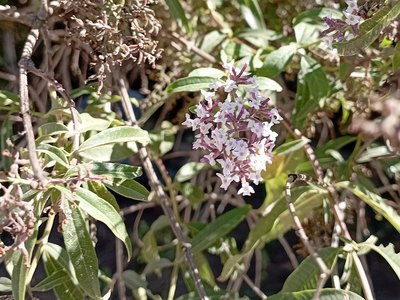 Verbena triphylla L'HerAloysia triphylla
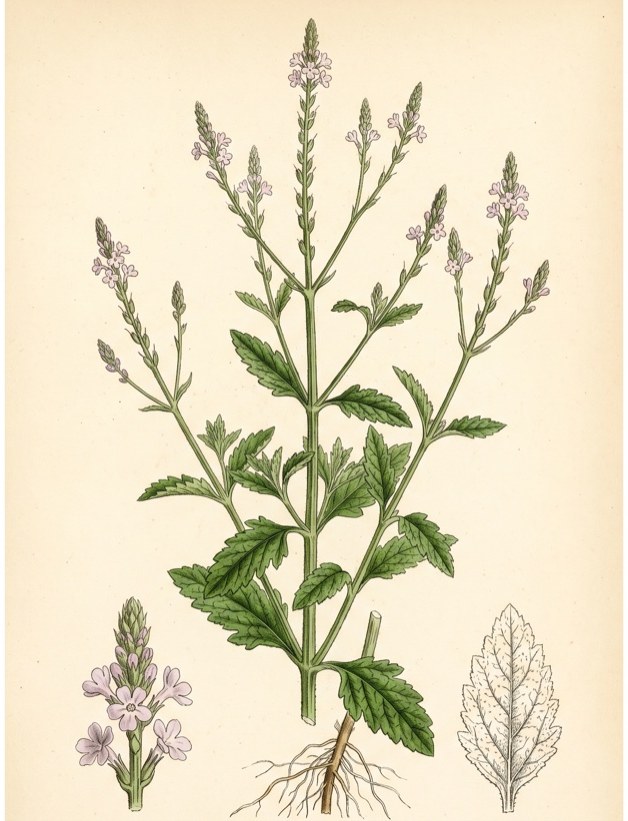 VervainVerbena officinalis
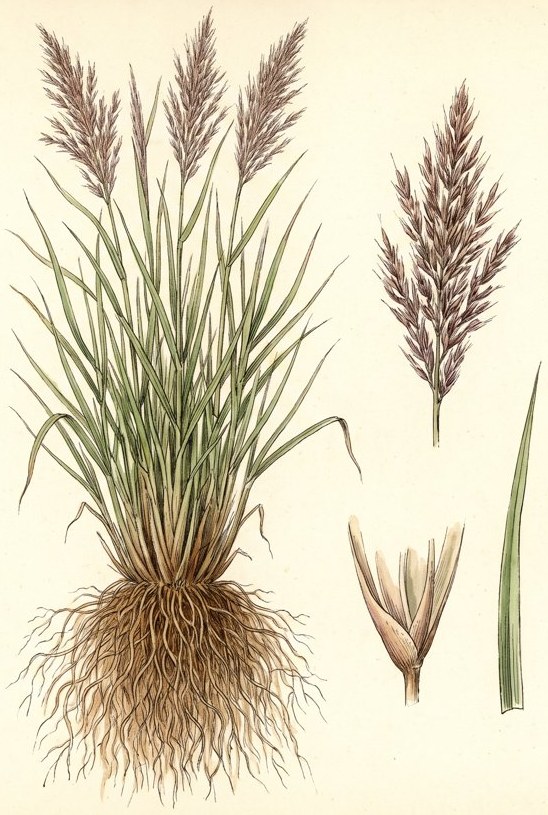 VetiverChrysopogon zizanioides
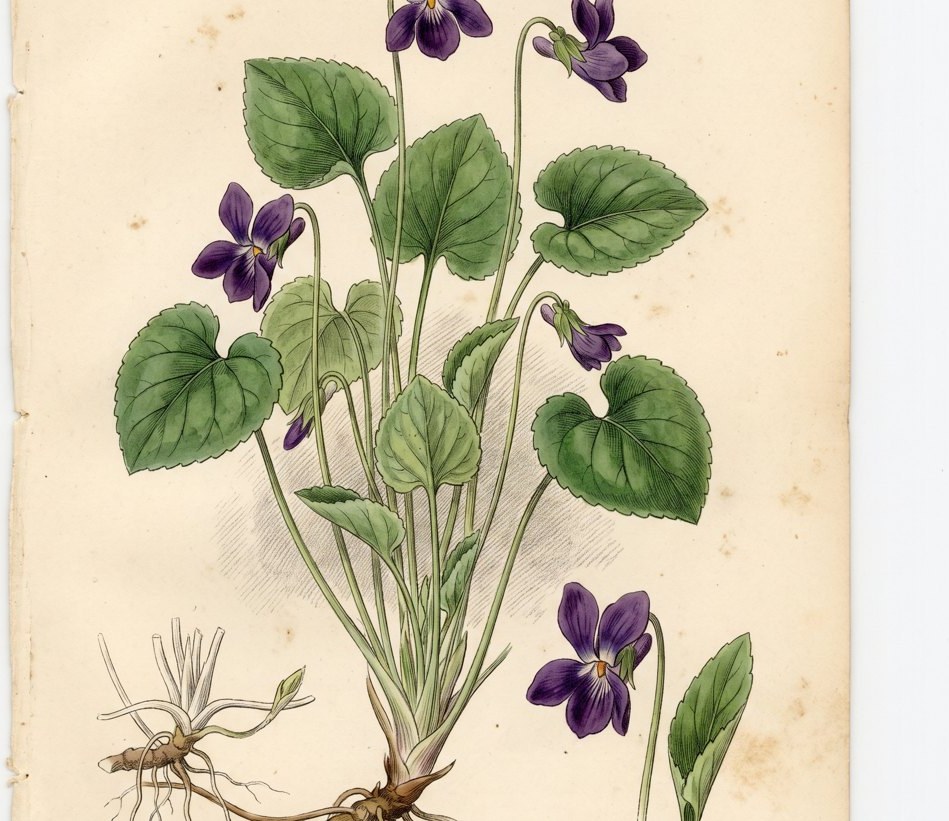 VioletViola
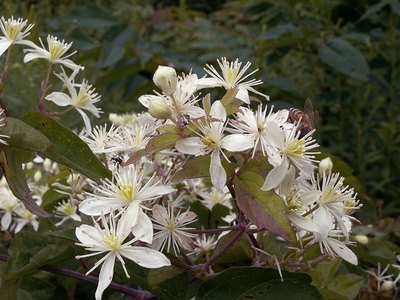 Virgin's bowerClematis virginiana
The whole plate is in the library. The compass, Compare, the Sky of eleven hundred plants and the formulary open with an email address and a password, free, with the formula builder and its safety engine. Herbert without limit, his formulating, clients, the handouts and the labels are the paid room.
Open the library, free