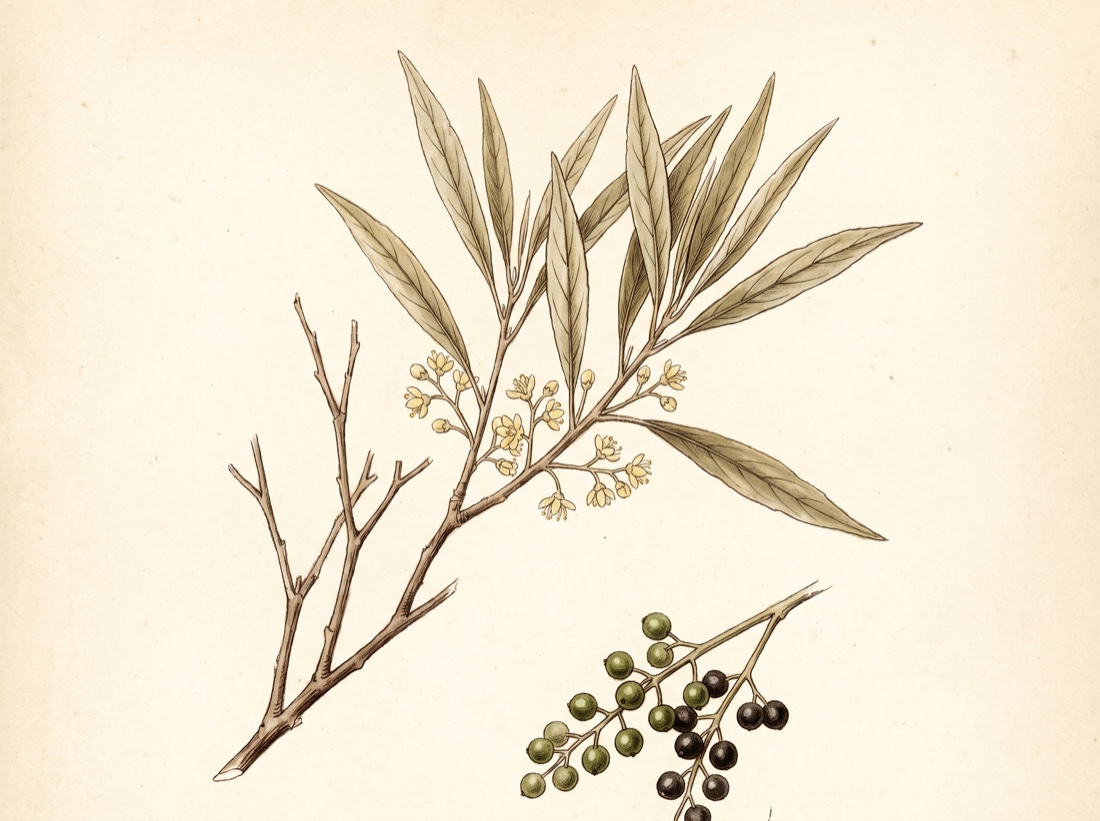
Chinese Herbalism
May chang
Litsea cubeba
Also known as mountain pepper, aromatic litsea, cubeb litsea, Chinese cubeb, mountain spicy tree, bi cheng qie (fruit), shan cang zi (fruit), bì chéng qié, shān cāng zǐ, shān jī jiāo.
Litsea cubeba is a small aromatic tree of the laurel family, common on hillsides and forest margins from southern China through Taiwan, Indochina, and the eastern Himalaya. Its small peppercorn-like fruits smell strongly of lemon and yield may chang oil, one of the world's main natural sources of citral. In Chinese medicine the dried fruit is bi cheng qie, a warm pungent herb for cold pain in the stomach and lower abdomen, and the root, dou chi jiang, is a folk remedy for rheumatism. The name bi cheng qie originally belonged to cubeb pepper; Litsea is the accepted source in China today.

Ask Herbert about May chang. Herbert is the master herbalist inside Bountiful Herbs: he answers from this plate and eleven hundred others, with dosing, pairing and cautions. Your first ten questions are free.
Ask HerbertActions
Indications what the tradition reached for it in
- Cold pain in the epigastrium and abdomen, eased by warmth and pressure
- Vomiting, hiccup, or belching from a cold Stomach
- Poor appetite and bloating in a cold, sluggish digestion
- Cold-type hernia or testicular pain dragging into the lower abdomen
- Cloudy, difficult, or dribbling urination from cold in the lower burner
- Cold-damp diarrhea with abdominal pain
- Cold rheumatic joint pain and stiffness (root)
- Bruises and sprains (root or leaf, external)
- Headache and chills from wind-cold (root, folk use)
- Fungal and bacterial skin infections (diluted essential oil, topical)
Specific indications
Dull cold epigastric pain with nausea and hiccup that improves with a hot drink and a warm hand on the abdomen, in a patient with a pale wet tongue
Cold, dragging testicular or groin pain with cloudy urine, where the lower burner needs warming rather than clearing
Safety
The record lists 7 contraindications; open the plate in the library to read them in full.
In practice
Bi cheng qie is a small-dose warming herb in the same family of uses as evodia, clove, and lesser galangal. It shines for cold Stomach pain with nausea, hiccup, or belching: 1 to 3 g decocted with ginger, lesser galangal, and aucklandia, or ground and taken in capsules.
In Chinese medicine
Temperature: warm. Taste: acrid. Channels: Spleen, Stomach, Kidney, Bladder. Actions: Warms the middle burner and relieves cold pain in the stomach and abdomen; Moves qi downward to stop vomiting, hiccup, and belching from Stomach cold; Warms the Kidney and Bladder to relieve cold hernia pain and cloudy, difficult urination; Root: dispels wind-damp and cold from the joints and eases pain from injury.
Dosing as the sources wrote it
| Preparation | As written | Metric |
|---|---|---|
| Decoction (fruit, added late) | 1-3 g dried fruit daily in decoction | 1000-3000 mg |
| Powder or capsules (fruit) | 0.5-1 g dried fruit powder two to three times daily | 500-1000 mg |
| Decoction (root, dou chi jiang) | 15-30 g dried root daily in decoction | 15000-30000 mg |
| Essential oil, topical | 1 percent or less in a carrier oil applied to affected skin once or twice daily |
Doses are reproduced from the sources for practitioners and are not a recommendation for any person.
From the sources
Overview. Litsea cubeba is a small aromatic tree of the laurel family, common on hillsides and forest margins from southern China through Taiwan, Indochina, and the eastern Himalaya. Its small peppercorn-like fruits smell strongly of lemon and yield may chang oil, one of the world's main natural sources of citral. In Chinese medicine the dried fruit is bi cheng qie, a warm pungent herb for cold pain in the stomach and lower abdomen, and the root, dou chi jiang, is a folk remedy for rheumatism. The name bi cheng qie originally belonged to cubeb pepper; Litsea is the accepted source in China today.
Clinical Notes. Bi cheng qie is a small-dose warming herb in the same family of uses as evodia, clove, and lesser galangal. It shines for cold Stomach pain with nausea, hiccup, or belching: 1 to 3 g decocted with ginger, lesser galangal, and aucklandia, or ground and taken in capsules.
Chinese Medicine Profile. Temperature: warm. Taste: acrid. Channels: Spleen, Stomach, Kidney, Bladder. Actions: Warms the middle burner and relieves cold pain in the stomach and abdomen; Moves qi downward to stop vomiting, hiccup, and belching from Stomach cold; Warms the Kidney and Bladder to relieve cold hernia pain and cloudy, difficult urination; Root: dispels wind-damp and cold from the joints and eases pain from injury.
Nearby on the shelf
 MarshmallowAlthaea officinalis
 MasticPistacia lentiscus
 MaticoArtanthe elongata
 May applePodophyllum peltatum
 MeadowsweetFilipendula ulmaria
 MedaPolygonatum cirrhifolium
 Mediterranean CypressCupressus sempervirens
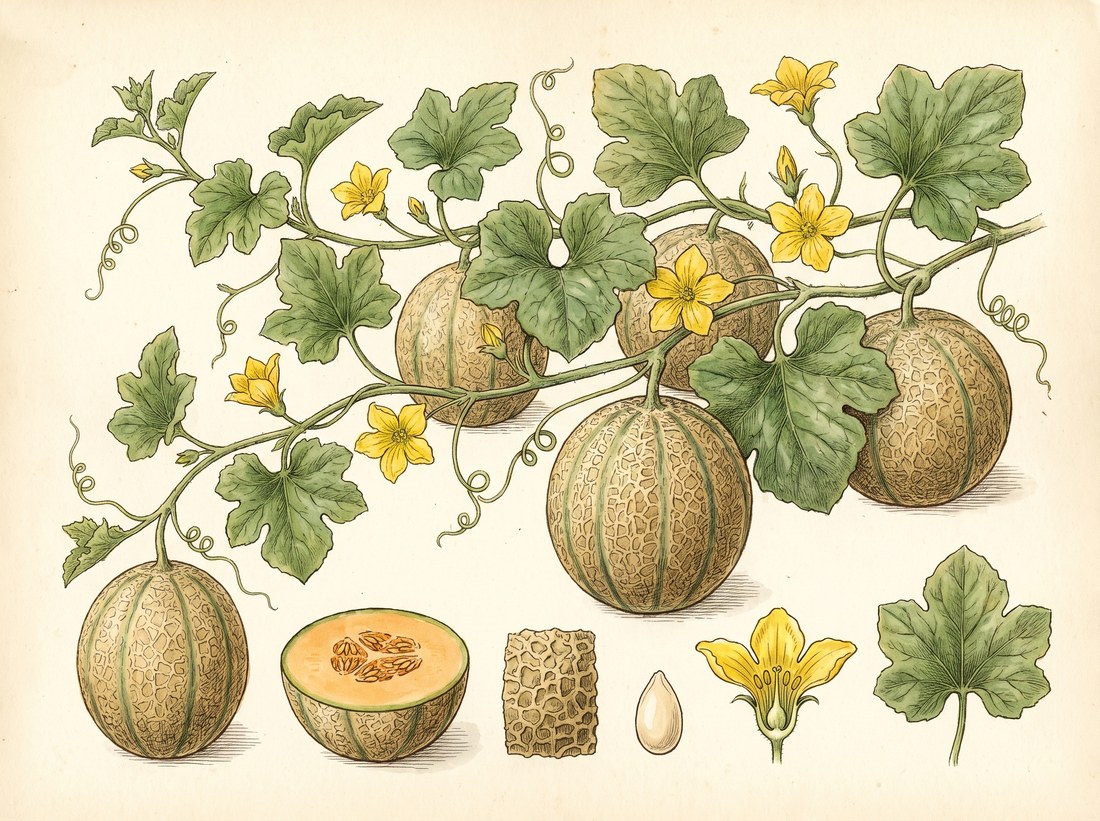 MelonCucumis melo
The whole plate is in the library. The compass, Compare, the Sky of eleven hundred plants and the formulary open with an email address and a password, free, with the formula builder and its safety engine. Herbert without limit, his formulating, clients, the handouts and the labels are the paid room.
Open the library, free