Western Herbalism
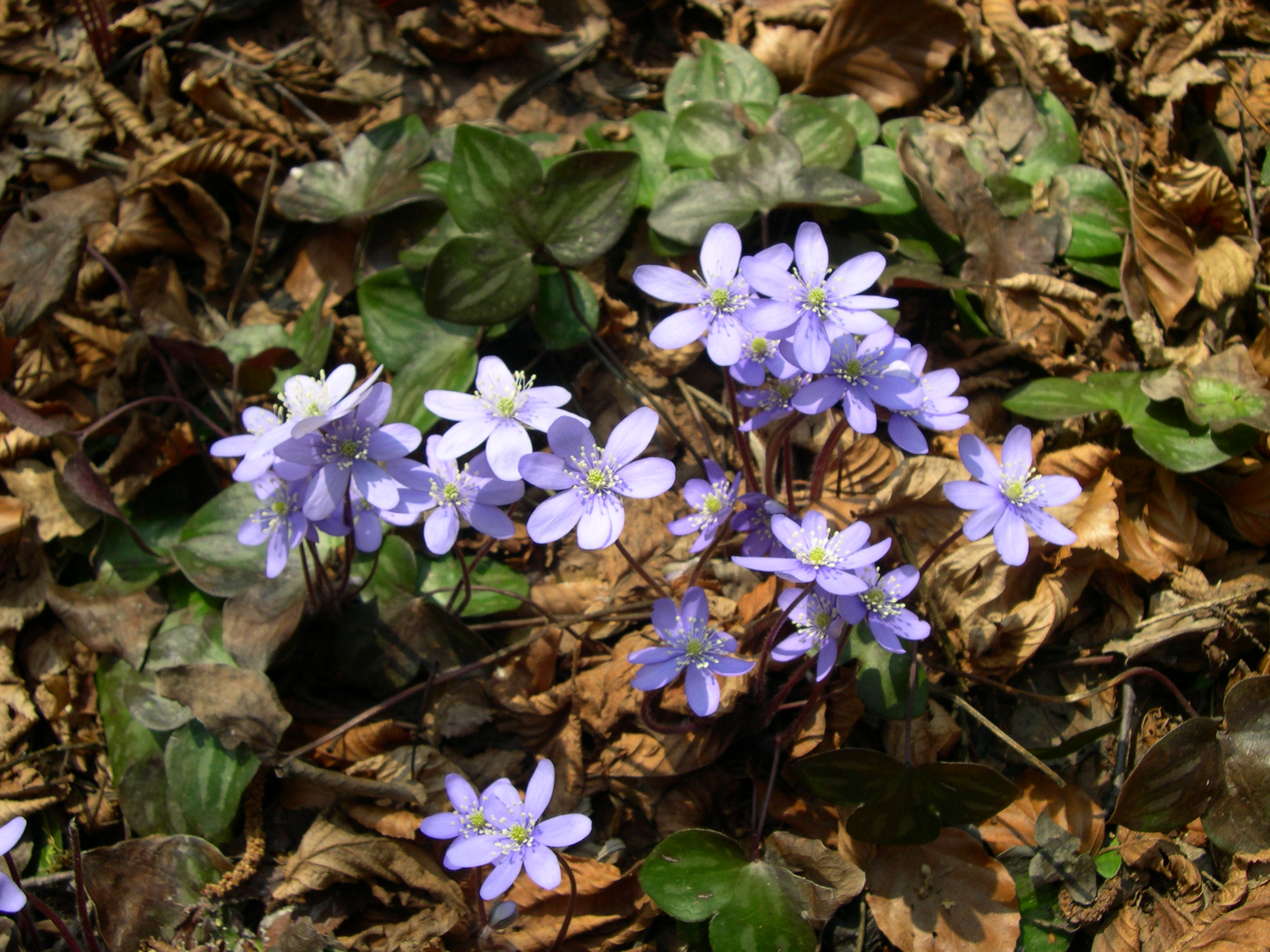
Liverleaf
Hepatica
Also known as Liverwort, Noble liverwort, American liverleaf, Kidney liverleaf, Heart liverleaf, Hepatica, Kidney Liverleaf (A, Kidney liverleaf (A. Hep.).
Hepatica is a small, early-flowering woodland perennial native to rich deciduous forests of Europe and North America, its trilobed or acutely lobed leaves resembling the shape of the liver, which gave rise to its name and to a long history of use under the doctrine of signatures. The dried leaf is the part used. It found a modest place in nineteenth century American eclectic and physiomedical practice as a gentle, unassuming remedy for irritated mucous membranes, valued precisely for its mildness rather than for any dramatic effect.

Ask Herbert about Liverleaf. Herbert is the master herbalist inside Bountiful Herbs: he answers from this plate and eleven hundred others, with dosing, pairing and cautions. Your first ten questions are free.
Ask HerbertActions
Indications what the tradition reached for it in
- Subacute bronchitis with free secretion
- Cough with blood-streaked mucus
- Catarrhal states of the respiratory tract
- Mild gastrointestinal catarrh
- Dyspepsia with mucous irritation
- Diarrhea with mucosal irritation
- Sore throat and mild pharyngitis
- General mucosal irritability where stronger agents would aggravate
Specific indications
Bronchial irritation with abundant thin secretion and cough productive of blood-streaked mucus
Subacute or lingering catarrhal states of chest or gut where more stimulating or heating remedies would aggravate the irritation
Irritation and hypersecretion of mucous membranes.
Safety
Low dose botanical. Used in drop doses in the classical practice; not a plant to dose freely.
Pregnancy: Avoid in pregnancy as a general precaution given the mucosal-irritant protoanemonin content common to fresh Ranunculaceae plants and the lack of modern safety data.
Breastfeeding: Avoid in lactation due to the absence of safety data and shared family caution regarding protoanemonin content.
The record lists 5 contraindications; open the plate in the library to read them in full.
In practice
Hepatica was regarded by the eclectic physicians as one of the quiet, negative remedies: useful in exactly those cases where a more active astringent or expectorant would irritate an already inflamed or bleeding mucosa.
Dosing as the sources wrote it
| Preparation | As written | Metric |
|---|---|---|
| Infusion, dried leaf | 1-4 g dried leaf as infusion, up to three times daily | 1000-4000 mg |
| Tincture (1:5, 25%) | 2-4 mL three times daily | 2-4 mL |
| Dose, 5 to 60 grains. | 324-3888 mg | |
| Dose, 1 to 60 drops. | 0.02-1.2 mL |
Doses are reproduced from the sources for practitioners and are not a recommendation for any person.
From the sources
Overview. Hepatica is a small, early-flowering woodland perennial native to rich deciduous forests of Europe and North America, its trilobed or acutely lobed leaves resembling the shape of the liver, which gave rise to its name and to a long history of use under the doctrine of signatures. The dried leaf is the part used. It found a modest place in nineteenth century American eclectic and physiomedical practice as a gentle, unassuming remedy for irritated mucous membranes, valued precisely for its mildness rather than for any dramatic effect.
Clinical Notes. Hepatica was regarded by the eclectic physicians as one of the quiet, negative remedies: useful in exactly those cases where a more active astringent or expectorant would irritate an already inflamed or bleeding mucosa.
Action and Therapy. A mild, mucilaginous astringent, used sometimes to allay bronchial irritation, with free secretion and similar conditions of the gastro-intestinal tract. It may be exhibited when there is subacute or acute inflammation, and in cough with expectoration of bloody mucus. It is one of the negative medicines that occasionally meets special conditions when more energetic agents, seemingly indicated, would aggravate. It came into use under mistaken identity for another plant and acquired a great reputation for virtues it did not possess. The infusion may be given liberally.
Conservation. Hepatica nobilis is slow-growing and long-lived in undisturbed woodland habitat, so wild harvesting should be conservative and cultivated or sustainably wildcrafted sources preferred where possible.
Drawn from King's American Dispensatory, 18th edition (Felter and Lloyd); Felter's Eclectic Materia Medica, Pharmacology and Therapeutics, and the Bountiful Herbs editorial.
Nearby on the shelf
 Lion's ManeHericium erinaceus
 LippiaLippia mexicana
 Liquidambar styracifluaLiquidambar styraciflua
 Little ironweedVernonia cinerea
 LiverwortHepatica triloba
 Lodh treeSymplocos racemosa
 LogwoodHaematoxylon campechianum
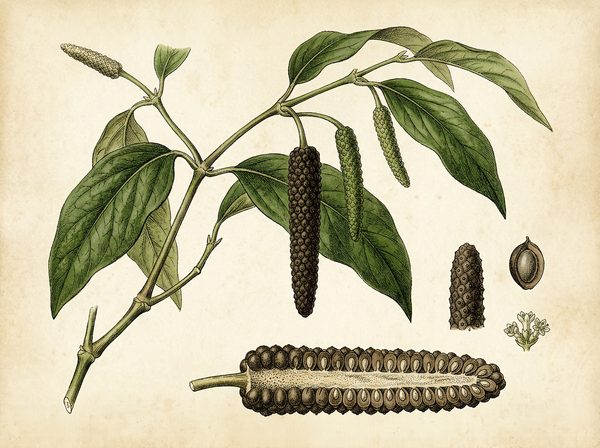 Long pepperPiper longum
The whole plate is in the library. The compass, Compare, the Sky of eleven hundred plants and the formulary open with an email address and a password, free, with the formula builder and its safety engine. Herbert without limit, his formulating, clients, the handouts and the labels are the paid room.
Open the library, free