Ayurvedic Herbalism
Little ironweed
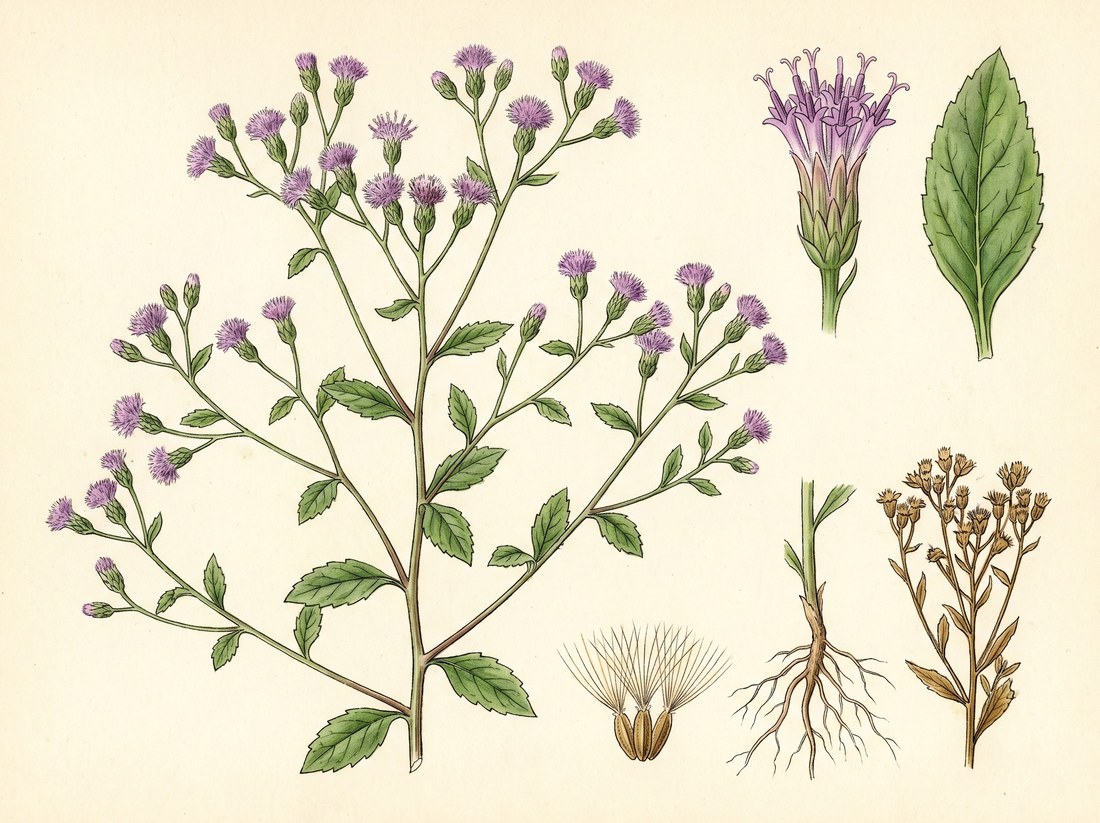
Vernonia cinerea
Also known as ash colored fleabane, purple fleabane, sahadevi, Sahadevi, Dandotpala, Uttamakanyaka.
Vernonia cinerea, now placed by botanists in the genus Cyanthillium, is a small, slender annual weed of the daisy family with tiny purple flower heads, found in every field, roadside and garden across India, southeast Asia, Africa and the tropics generally. Ayurveda calls it Sahadevi and uses the whole plant, root and seed as a bitter, warming herb for fever, worms, swelling, skin disease and urinary complaints; folk tradition adds uses for infertility, conjunctivitis and snake bite. In Thailand it has become a recognized traditional aid to stopping smoking, and that use has now been tested in randomized trials.

Ask Herbert about Little ironweed. Herbert is the master herbalist inside Bountiful Herbs: he answers from this plate and eleven hundred others, with dosing, pairing and cautions. Your first ten questions are free.
Ask HerbertActions
Indications what the tradition reached for it in
- Intermittent and low grade fever with sweating
- Malaria as an adjunct in the tradition (not a substitute for treatment)
- Intestinal worms in children (seed)
- Edema and swollen legs of filarial or renal origin (traditional)
- Chronic skin eruptions, eczema and ringworm (internal and topical)
- Painful urination and cystitis
- Conjunctivitis (leaf juice wash, traditional)
- Tobacco dependence and craving (Thai traditional and trial use)
- Gingivitis and oral inflammation in smokers (lozenge)
- Diarrhea with fever
- Female infertility (folk use, unproven)
Specific indications
A recurring low fever with chills and sweats in a damp climate, in a patient who is sluggish, heavy and prone to worms and skin eruptions
The smoker trying to quit who wants an herbal aid that dulls the taste of tobacco and makes the tongue tingle, taken as tea through the day
Weeping eczema or ringworm with itching and low grade infection in a kapha type patient, treated inside and out
A child with a swollen belly, poor appetite, itching around the anus and intermittent fever where worms are suspected
Safety
The record lists 7 contraindications; open the plate in the library to read them in full.
In practice
Sahadevi is a humble plant with a wide reputation in the villages. The Ayurvedic physician uses the fresh juice or decoction of the whole plant for fever, especially the intermittent fevers of the rainy season and malaria, for edema and for burning urination; the seed powder with honey for worms and for skin disease; and the leaf paste on wounds, piles and inflamed eyes.
In Ayurveda
Rasa: tikta (bitter), katu (pungent), kashaya (astringent). Virya: ushna (heating). Vipaka: katu (pungent). Guna: laghu (light), ruksha (dry). Dosha: pacifies kapha and vata; may aggravate pitta in excess. Karma: jvarahara (reduces fever); krimighna (anthelmintic); shothahara (reduces swelling); vishaghna (counteracts poison); mutrala (diuretic); svedajanana (induces sweating); kushthaghna (relieves skin disease); vedanasthapana (relieves pain); vranaropana (heals wounds); grahi (absorbent, checks diarrhea); garbhasthapana (supports conception, folk). Classical indications: jvara (fever, including intermittent and malarial fever); krimi (intestinal worms); shotha (edema and swelling); kushtha (skin disease); mutrakricchra (dysuria); atisara (diarrhea); shlipada (filariasis); vrana (wounds); netraroga (conjunctivitis, as a wash); vandhyatva (infertility, folk); visha (poisoning and bites). The whole flowering plant is used fresh as swarasa or dried as churna and kwatha; the root is decocted for fever and diarrhea, the seeds are given as an anthelmintic and for skin disease, and the leaves are made into paste for wounds, piles and conjunctivitis. In modern Thai practice the dried herb is made into tea and lozenges. Classical formulations: Sahadevi swarasa, Sahadevi kwatha, Sahadevi beeja churna, Component of some jvarahara and krimighna compound powders. Described in: Charaka Samhita, Sushruta Samhita, Bhavaprakasha Nighantu, Dhanvantari Nighantu, Raja Nighantu, Kaiyadeva Nighantu, Ayurvedic Pharmacopoeia of India.
Dosing as the sources wrote it
| Preparation | As written | Metric |
|---|---|---|
| Swarasa | 10-20 mL fresh whole plant juice twice daily | 10-20 mL |
| Kwatha | 50-100 mL decoction twice daily | 50-100 mL |
| Churna (whole plant or seed) | 1-3 g powder twice daily with honey or warm water | 1000-3000 mg |
| Tea for smoking cessation | 3 g dried herb infused in 150-200 mL hot water, three times daily for 8-12 weeks | 3000 mg |
| Kalka, topical | 5-10 g leaf paste applied to wounds, piles or skin lesions | 5000-10000 mg |
Doses are reproduced from the sources for practitioners and are not a recommendation for any person.
From the sources
Overview. Vernonia cinerea, now placed by botanists in the genus Cyanthillium, is a small, slender annual weed of the daisy family with tiny purple flower heads, found in every field, roadside and garden across India, southeast Asia, Africa and the tropics generally. Ayurveda calls it Sahadevi and uses the whole plant, root and seed as a bitter, warming herb for fever, worms, swelling, skin disease and urinary complaints; folk tradition adds uses for infertility, conjunctivitis and snake bite. In Thailand it has become a recognized traditional aid to stopping smoking, and that use has now been tested in randomized trials.
Clinical Notes. Sahadevi is a humble plant with a wide reputation in the villages. The Ayurvedic physician uses the fresh juice or decoction of the whole plant for fever, especially the intermittent fevers of the rainy season and malaria, for edema and for burning urination; the seed powder with honey for worms and for skin disease; and the leaf paste on wounds, piles and inflamed eyes.
Ayurvedic Profile. Rasa: tikta (bitter), katu (pungent), kashaya (astringent). Virya: ushna (heating). Vipaka: katu (pungent). Guna: laghu (light), ruksha (dry). Dosha: pacifies kapha and vata; may aggravate pitta in excess.
Nearby on the shelf
 Lime flowerTilia spp.
 Lion's ManeHericium erinaceus
 LippiaLippia mexicana
 Liquidambar styracifluaLiquidambar styraciflua
 LiverleafHepatica
 LiverwortHepatica triloba
 Lodh treeSymplocos racemosa
 LogwoodHaematoxylon campechianum
The whole plate is in the library. The compass, Compare, the Sky of eleven hundred plants and the formulary open with an email address and a password, free, with the formula builder and its safety engine. Herbert without limit, his formulating, clients, the handouts and the labels are the paid room.
Open the library, free