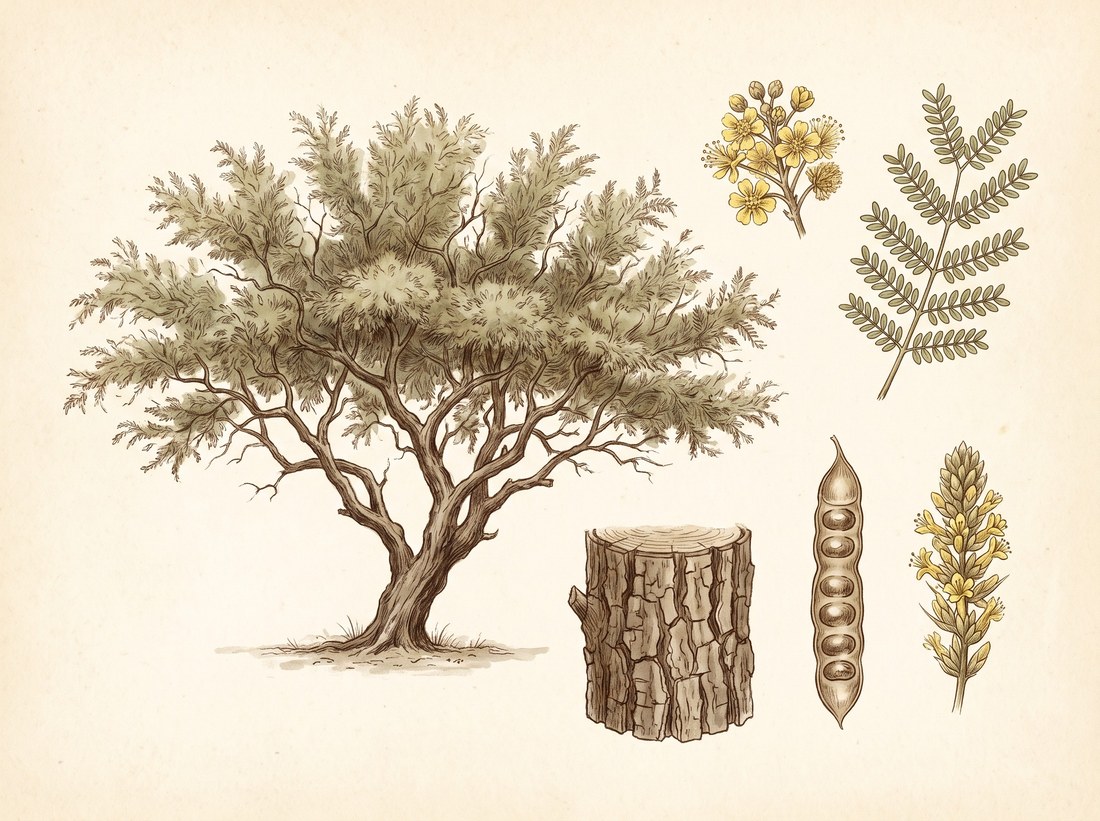
Ayurvedic Herbalism
Khejri
Prosopis cineraria
Also known as jand, ghaf, shami tree, spunge tree, Shami, Shamivriksha, Tunga.
Prosopis cineraria is the khejri, a thorny, deep rooted tree of the Thar desert and the arid plains of Rajasthan, Gujarat, Punjab and Haryana, reaching into Arabia and Iran, where it survives drought that kills everything else and is revered as the state tree of Rajasthan. Ayurveda knows it as Shami, a cooling astringent bark for diarrhea, bleeding, piles and skin disease, and the desert kitchen knows its pods as sangri, a staple vegetable. It is a plant of regional practice more than of the great classical formulas, and its sacred standing in Rajasthan is as old as its medicine.

Ask Herbert about Khejri. Herbert is the master herbalist inside Bountiful Herbs: he answers from this plate and eleven hundred others, with dosing, pairing and cautions. Your first ten questions are free.
Ask HerbertActions
Indications what the tradition reached for it in
- Chronic diarrhea and dysentery
- Bleeding hemorrhoids
- Minor bleeding and bruising (topical and internal)
- Chronic skin disease with itching and discharge (topical)
- Slow healing wounds and boils (poultice)
- Scorpion sting and insect bites (bark paste, first aid)
- Chronic bronchitis with loose cough (traditional)
- Leukoderma (topical, traditional)
- Convalescent undernutrition (pods as food)
- Dyslipidemia (pod, adjunct, traditional and animal data)
- Dizziness and weakness in hot weather (flower drink, folk)
Specific indications
Chronic loose stools with mucus and occasional blood in a hot, thin desert dweller for whom the local bark decoction is the first remedy
Bleeding piles with itching where a cooling astringent bark wash and internal decoction are wanted
Itchy, weeping skin eruptions and boils in a kapha pitta patient, treated with the leaf poultice and bark wash
The undernourished patient in a hot dry climate who needs a light, protein rich vegetable food rather than heavy tonics
Safety
The record lists 8 contraindications; open the plate in the library to read them in full.
In practice
Shami is a regional astringent of the western desert, used as villagers use oak or witch hazel elsewhere. The bark is decocted for diarrhea, dysentery and bleeding piles and taken with buttermilk or rice water; the same decoction serves as a wash for ulcers, itchy eruptions and leukoderma patches, and the bark ground with water is smeared on scorpion stings and insect bites while help is sought.
In Ayurveda
Rasa: kashaya (astringent), tikta (bitter), madhura (sweet). Virya: sheeta (cooling). Vipaka: katu (pungent). Guna: laghu (light), ruksha (dry). Dosha: pacifies kapha and pitta; may aggravate vata in excess. Prabhava: keshahantri, the hair remover: the classical texts note that its fruit taken in quantity causes hair to fall, a warning rather than a use. Karma: sangrahi (binds and absorbs, antidiarrheal); raktastambhana (checks bleeding); kushthaghna (useful in skin disease); krimighna (anthelmintic); vranaropana (heals wounds); shothahara (reduces swelling); kasahara (relieves cough); brimhana (nourishing, pods as food); kaphapittahara (pacifies kapha and pitta); vishaghna (counters poison, bark on bites). Classical indications: atisara (diarrhea); pravahika (dysentery); arsha (hemorrhoids); raktapitta (bleeding disorders); kushtha (skin disease including leprosy); krimi (worms); kasa and shvasa (cough and dyspnea); vrana (wounds); visha (poisoning, bites and stings); shvitra (leukoderma); bhrama (dizziness); garbhasrava (threatened miscarriage, bark as astringent). The stem bark is the medicinal part, given as kwatha and churna for diarrhea, dysentery, piles and bleeding, and as a paste or wash for skin disease, wounds and scorpion sting; the young pods, sangri, are a staple vegetable of the desert and a nourishing food in convalescence; the leaves are made into a poultice for boils and eye complaints, and the flowers are mixed with sugar as a cooling drink against miscarriage in folk use. Classical formulations: Shami twak kwatha, Shami twak churna, Shami patra kalka, Shamyadi lepa (regional), Sangri as pathya (dietary) food. Described in: Charaka Samhita, Sushruta Samhita, Bhavaprakasha Nighantu, Dhanvantari Nighantu, Raja Nighantu, Kaiyadeva Nighantu.
Dosing as the sources wrote it
| Preparation | As written | Metric |
|---|---|---|
| Kwatha (bark) | 50-100 mL bark decoction twice daily | 50-100 mL |
| Churna (bark) | 3-6 g bark powder twice daily with buttermilk or rice water | 3000-6000 mg |
| Kalka, topical | 5-10 g bark or leaf paste applied to wounds, boils or stings | 5000-10000 mg |
| Kwatha, topical | 100-200 mL bark decoction as a wash for skin lesions or piles | 100-200 mL |
| Pods as food | 20-50 g dried pods cooked daily as a vegetable | 20000-50000 mg |
Doses are reproduced from the sources for practitioners and are not a recommendation for any person.
From the sources
Overview. Prosopis cineraria is the khejri, a thorny, deep rooted tree of the Thar desert and the arid plains of Rajasthan, Gujarat, Punjab and Haryana, reaching into Arabia and Iran, where it survives drought that kills everything else and is revered as the state tree of Rajasthan. Ayurveda knows it as Shami, a cooling astringent bark for diarrhea, bleeding, piles and skin disease, and the desert kitchen knows its pods as sangri, a staple vegetable. It is a plant of regional practice more than of the great classical formulas, and its sacred standing in Rajasthan is as old as its medicine.
Clinical Notes. Shami is a regional astringent of the western desert, used as villagers use oak or witch hazel elsewhere. The bark is decocted for diarrhea, dysentery and bleeding piles and taken with buttermilk or rice water; the same decoction serves as a wash for ulcers, itchy eruptions and leukoderma patches, and the bark ground with water is smeared on scorpion stings and insect bites while help is sought.
Ayurvedic Profile. Rasa: kashaya (astringent), tikta (bitter), madhura (sweet). Virya: sheeta (cooling). Vipaka: katu (pungent). Guna: laghu (light), ruksha (dry). Dosha: pacifies kapha and pitta; may aggravate vata in excess.
Conservation. The khejri is protected by custom and law in Rajasthan and is declining in parts of its range from groundwater loss and dieback; take bark only from pruned branches and prefer pods, which are a sustainable harvest.
Nearby on the shelf
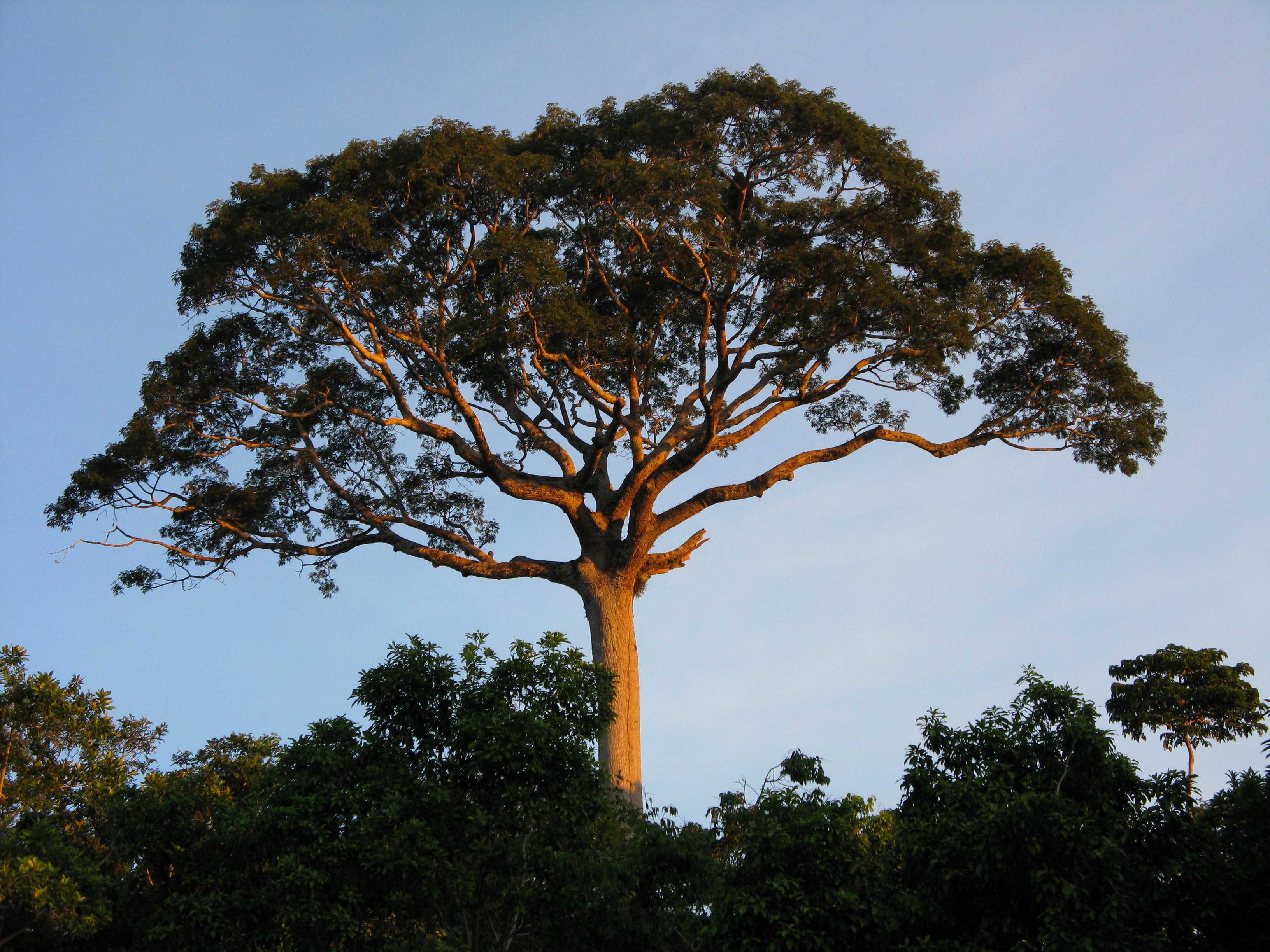 KapokCeiba pentandra
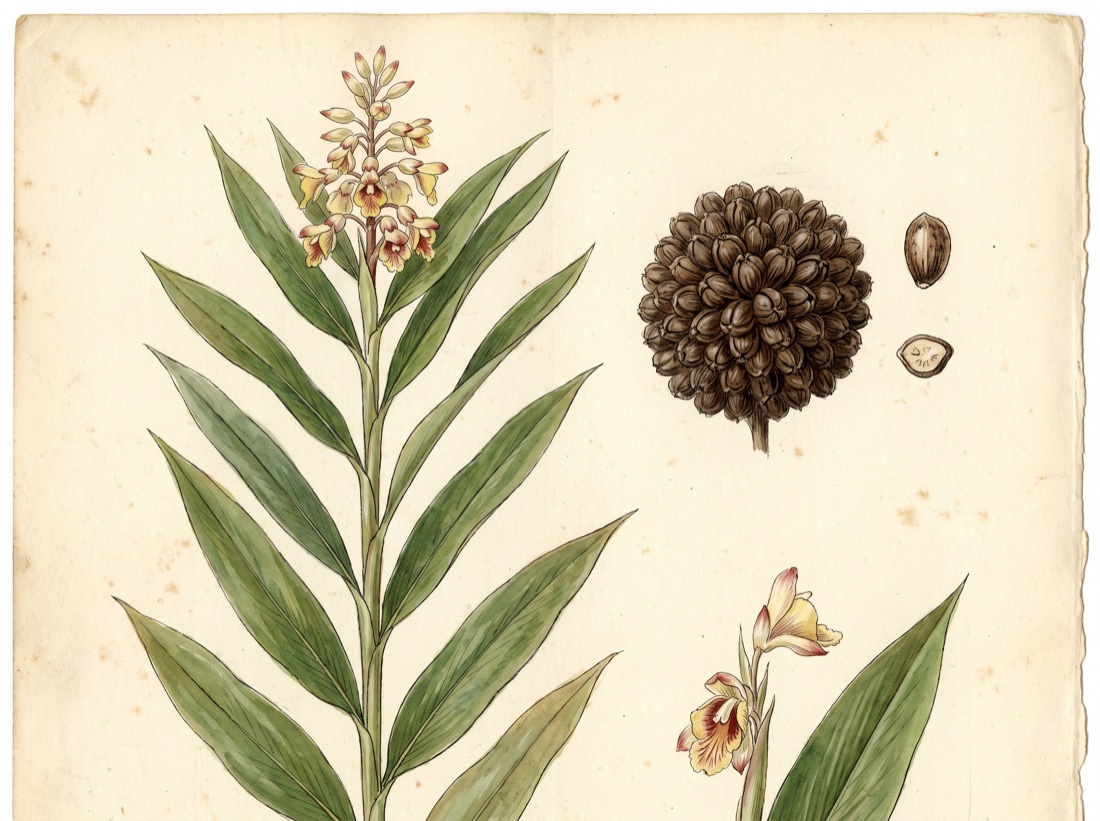 Katsumada galangalAlpinia katsumadai
 Kava kavaPiper methysticum
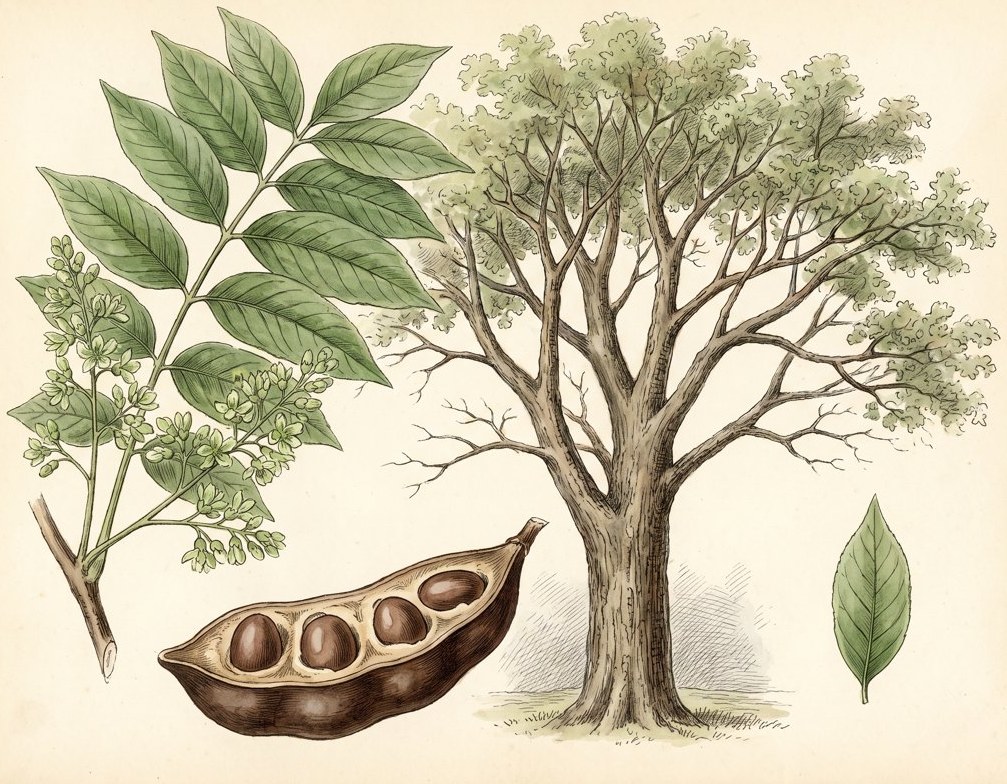 Kentucky coffee treeGymnocladus canadensis
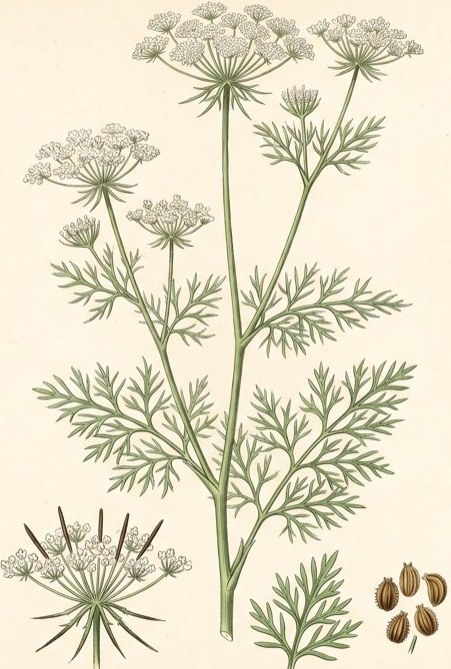 KhellaAmmi visnaga
 KinoPterocarpus marsupium
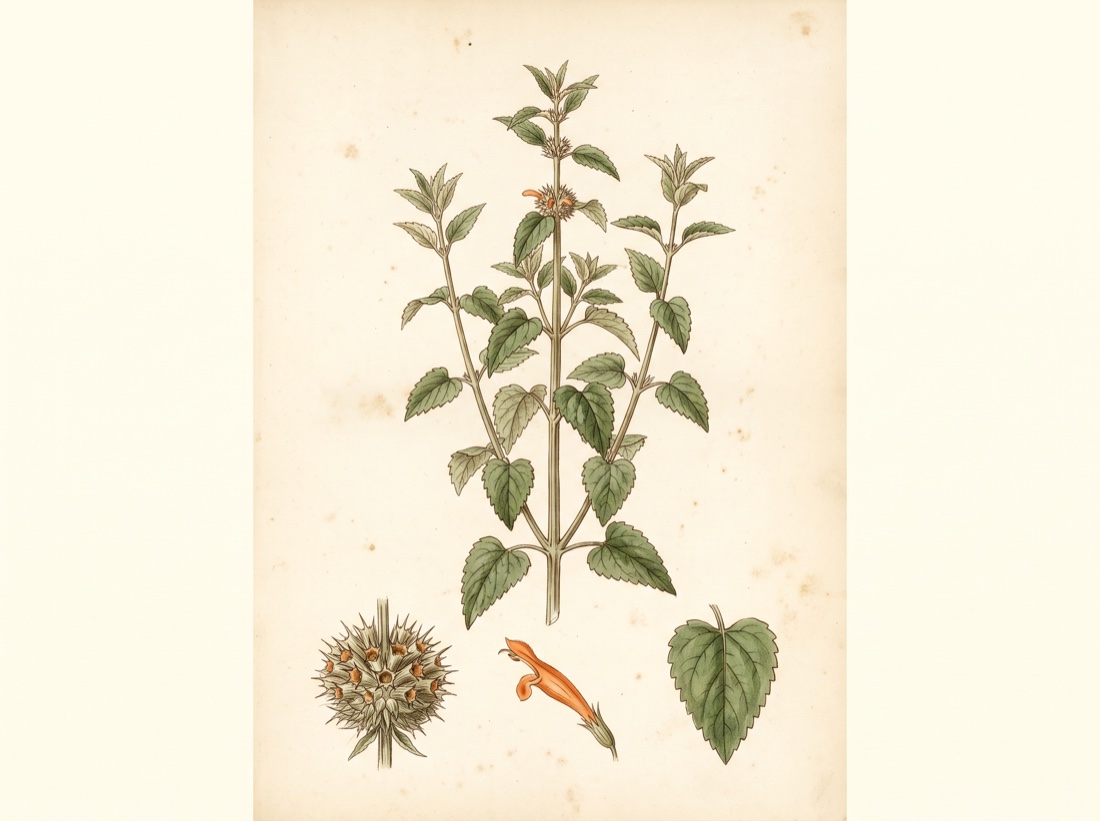 Klip daggaLeonotis nepetifolia
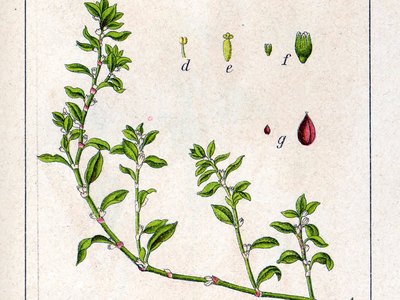 KnotgrassPolygonum aviculare
The whole plate is in the library. The compass, Compare, the Sky of eleven hundred plants and the formulary open with an email address and a password, free, with the formula builder and its safety engine. Herbert without limit, his formulating, clients, the handouts and the labels are the paid room.
Open the library, free