Western Herbalism
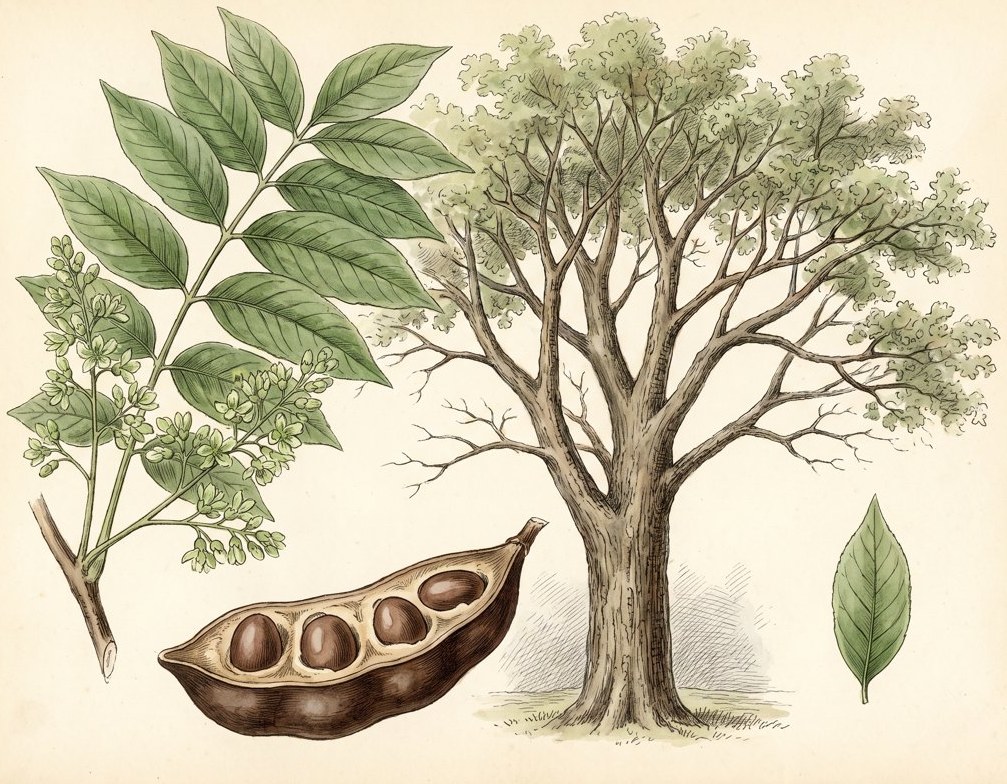
Kentucky coffee tree
Gymnocladus canadensis
Also known as American Coffee-Nut, American coffee-bean tree, Coffee tree, Kentucky mahogany.
The tincture of the pulp and pods, and in some instances of the bark also, has been used with benefit in intermittent fever. More recently it has been tried, and with advantage, in cases of abnormal states of the nervous centers, as indicated, among other symptoms, by impaired sense of touch and vision, numbness, dull headache, apathy, and formication.

Ask Herbert about Kentucky coffee tree. Herbert is the master herbalist inside Bountiful Herbs: he answers from this plate and eleven hundred others, with dosing, pairing and cautions. Your first ten questions are free.
Ask HerbertSafety
Recognised toxicity. This plant carries a toxicity flag in the record; it is for trained practitioners only.
Pregnancy: Not safe. Do not use in pregnancy. US agricultural and extension poisonous plant references list the seeds, pod pulp and leaves as poisonous, reportedly through the alkaloid cytisine.
Breastfeeding: Not safe. Do not use while breastfeeding. US agricultural and extension poisonous plant references list the plant as poisonous, and no data exist on transfer into breast milk.
Dosing as the sources wrote it
| Preparation | As written |
|---|---|
| One fluid drachm of this is to be added to 3 fluid ounces of water, of which the dose is a teaspoonful, to be repeated every 3 or 4 hours. |
Doses are reproduced from the sources for practitioners and are not a recommendation for any person.
From the sources
Action, Medical Uses, and Dosage. The tincture of the pulp and pods, and in some instances of the bark also, has been used with benefit in intermittent fever. More recently it has been tried, and with advantage, in cases of abnormal states of the nervous centers, as indicated, among other symptoms, by impaired sense of touch and vision, numbness, dull headache, apathy, and formication.
History and Chemical Composition. This tree is indigenous to the United States, and is found growing in rich woods and along rivers and lakes in western New York, Ohio, Indiana, Kentucky, etc. It is known by several names, as Coffee tree, Kentucky coffee tree.
Specific indications and reasoning. dried, and especially when gathered at the wrong season and kept in stock. If some of our manufacturers will get the bark of the cotton-root before the boll opens, and will prepare a tincture from it whilst fresh, we will probably find it possessing marked medicinal properties.
Specific indications and reasoning. (AMERICAN COFFEE TREE.) This agent has been but little used in medicine, yet if we are to judge from its common use as a fly poison, it possesses active properties that may be made available. For experiment, a tineture may be made of the bark, beans, or pulp of the seed-pod; the last being regarded as the most active.
Drawn from Scudder's Specific Medication and Specific Medicines; King's American Dispensatory, 18th edition (Felter and Lloyd), and the Bountiful Herbs editorial.
Nearby on the shelf
 KansuiEuphorbia kansui
 KapokCeiba pentandra
 Katsumada galangalAlpinia katsumadai
 Kava kavaPiper methysticum
 KhejriProsopis cineraria
 KhellaAmmi visnaga
 KinoPterocarpus marsupium
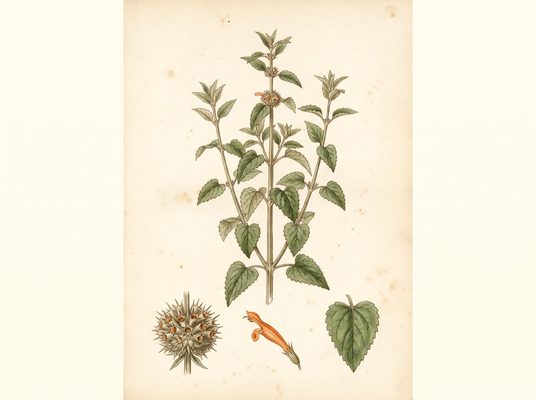 Klip daggaLeonotis nepetifolia
The whole plate is in the library. The compass, Compare, the Sky of eleven hundred plants and the formulary open with an email address and a password, free, with the formula builder and its safety engine. Herbert in full, his formulating, clients, the handouts and the labels are the paid room.
Open the library, free