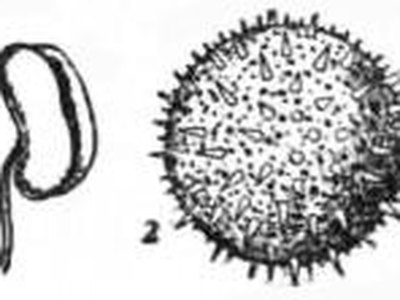
Western Herbalism
Hollyhock
Althea rosea
Also known as common hollyhock.
Hollyhock is the tall, large-flowered garden mallow long cultivated as an ornamental but also used medicinally much as its close relative marsh mallow. The flowers, and to a lesser extent the leaves and root, are rich in mucilage and were employed by physiomedical and eclectic practitioners as a gentle demulcent for irritated mucous membranes of the throat, chest, gut, and urinary tract. It is native to parts of Asia and Europe and is now grown worldwide as a garden plant, with the dried flowers gathered for infusions and syrups.

Ask Herbert about Hollyhock. Herbert is the master herbalist inside Bountiful Herbs: he answers from this plate and eleven hundred others, with dosing, pairing and cautions. Your first ten questions are free.
Ask HerbertActions
Indications what the tradition reached for it in
- Dry irritated cough
- Sore throat
- Mild gastritis
- Mouth ulcers
- Irritable bladder with scanty burning urine
- Dry irritated skin
- Minor wounds and abrasions
- Bronchial catarrh with dry unproductive cough
Specific indications
Dry, tickling cough with scant, sticky expectoration, worse for dry air
Burning, scalding urination with a sense of bladder irritation rather than infection
Safety
The record lists 1 contraindication; open the plate in the library to read them in full.
In practice
Hollyhock is reached for much as marsh mallow is reached for, as a soothing, mucilage-rich demulcent for dry, irritated tissues rather than as a strongly active remedy. The classic physiomedical preparation was a simple cold or lukewarm infusion of the dried flowers, used freely for dry coughs, sore throats, and to soothe an irritable bladder or gut.
Dosing as the sources wrote it
| Preparation | As written | Metric |
|---|---|---|
| Cold infusion of dried flowers | 5-10 g dried flowers steeped in 500 mL cool to lukewarm water for several hours, drunk freely through the day | 5000-10000 mg |
| Tincture (1:5, 25%) | 2-4 mL three times daily | 2-4 mL |
| Given in doses of five to fifteen grains every three or four hours, it has been used to check passive hemorrhages, and chronic dysentery and diarrhea | 324-972 mg | |
| In doses of from forty to sixty grains every fifteen minutes, it is an emetic, and has been highly valued for this purpose in croup | 2592-3888 mg |
Doses are reproduced from the sources for practitioners and are not a recommendation for any person.
From the sources
Overview. Hollyhock is the tall, large-flowered garden mallow long cultivated as an ornamental but also used medicinally much as its close relative marsh mallow. The flowers, and to a lesser extent the leaves and root, are rich in mucilage and were employed by physiomedical and eclectic practitioners as a gentle demulcent for irritated mucous membranes of the throat, chest, gut, and urinary tract. It is native to parts of Asia and Europe and is now grown worldwide as a garden plant, with the dried flowers gathered for infusions and syrups.
Clinical Notes. Hollyhock is reached for much as marsh mallow is reached for, as a soothing, mucilage-rich demulcent for dry, irritated tissues rather than as a strongly active remedy. The classic physiomedical preparation was a simple cold or lukewarm infusion of the dried flowers, used freely for dry coughs, sore throats, and to soothe an irritable bladder or gut.
Properties and Uses. The flowers are demulcent; and also yield a slightly tonic property of a somewhat nauseating taste, that acts mostly upon the renal organs. The mucilaginous qualities are best extracted by tepid water; and make a good drink for irritable coughs, and irritated stomach, bowels, bladder, and urethra. The tonic and diuretic properties are best extracted by water at nearly a boiling temperature. I have found them of considerable service in the treatment of irritable forms of spermatorrhea, and chronic sensitiveness of the prostate, neck of the bladder, and urethra. The roots are said to be similar to the flowers.
Properties and Uses. This is a pure, and among the least, irritating of the metallic astringents. Given in doses of five to fifteen grains every three or four hours, it has been used to check passive hemorrhages, and chronic dysentery and diarrhea.
Drawn from Cook's Physio-Medical Dispensatory, and the Bountiful Herbs editorial.
Nearby on the shelf
 Himalayan silver firAbies webbiana
 Himalayan white lilyLilium polyphyllum
 Himalayan wild cherryPrunus cerasoides
 Hoary PeaTephrosia
 Holy basilOcimum tenuiflorum
 Honduras barkCascara Amarga
 HoneysuckleLonicera japonica
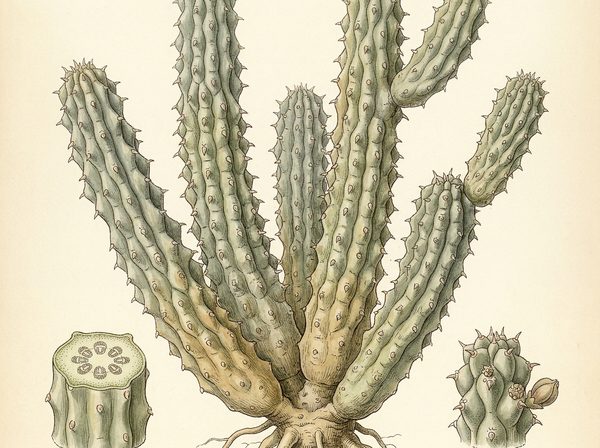 HoodiaHoodia gordonii
The whole plate is in the library. The compass, Compare, the Sky of eleven hundred plants and the formulary open with an email address and a password, free, with the formula builder and its safety engine. Herbert without limit, his formulating, clients, the handouts and the labels are the paid room.
Open the library, free