Western Herbalism
Cyclamen
Cyclamen
Also known as Sow-bread, Hog's-bread, Sowbread.
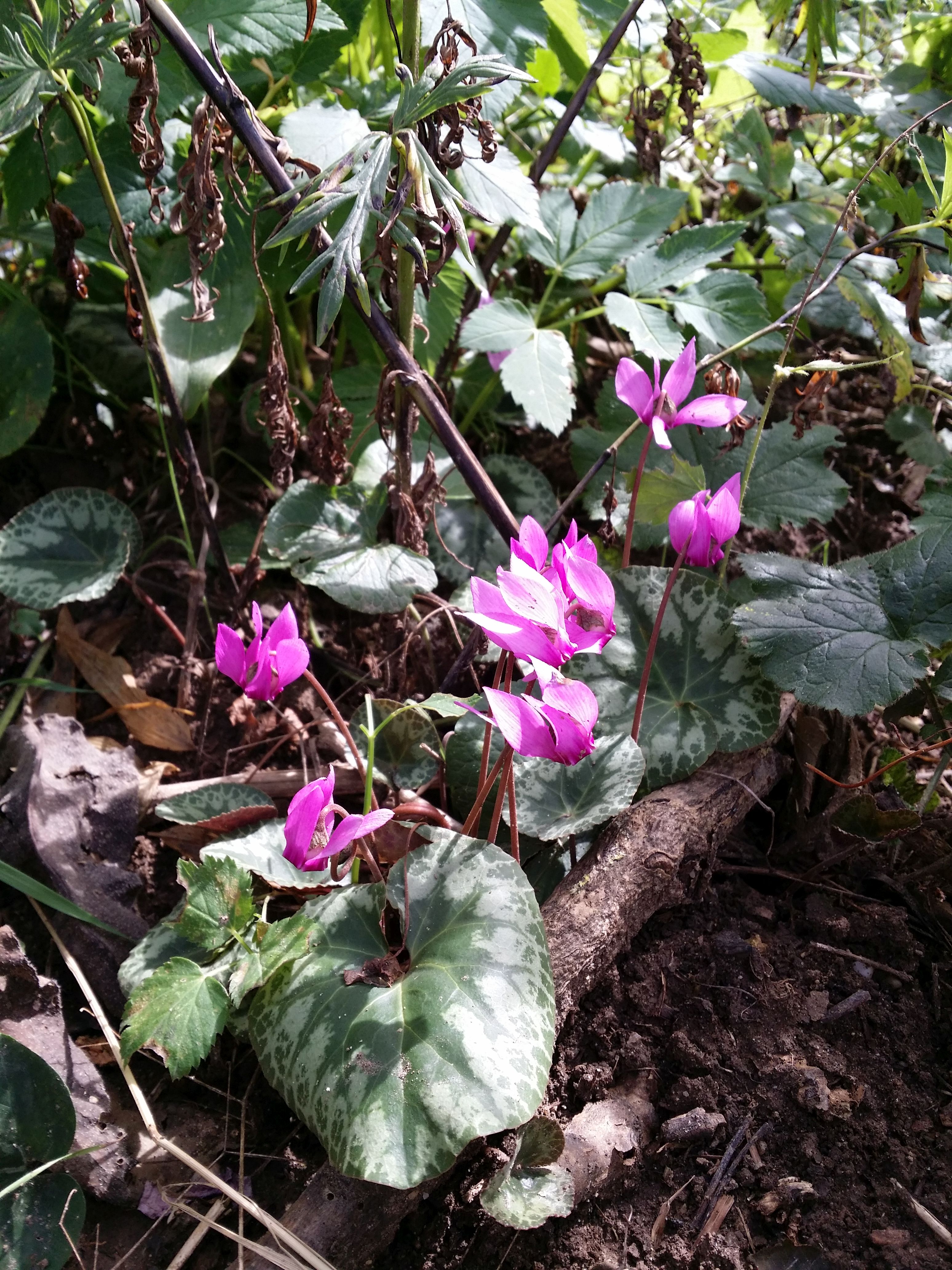
Cyclamen is a genus of small tuberous perennial herbs in the primrose family, native to woodland and rocky ground across the Mediterranean basin and parts of central Europe and western Asia. The corm, sometimes called sowbread because wild pigs root it up and eat it, was the part used medicinally. Eclectic and older European physicians employed the fresh corm or its expressed juice as a violent purgative and emmenagogue, and the dried powdered corm was used as an errhine snuff for sinus complaints, but the plant has fallen almost entirely out of use because of its narrow margin of safety.

Ask Herbert about Cyclamen. Herbert is the master herbalist inside Bountiful Herbs: he answers from this plate and eleven hundred others, with dosing, pairing and cautions. Your first ten questions are free.
Ask HerbertActions
Indications what the tradition reached for it in
- Severe constipation unresponsive to gentler measures (historical)
- Amenorrhea (historical emmenagogue use)
- Intestinal worms (historical vermifuge use)
- Chronic sinus congestion treated with dried powdered root as a snuff (historical errhine use)
- Skin eruptions and boils treated topically with the fresh juice (historical)
- Ringworm and other fungal skin complaints (historical topical use)
- Retained placenta or delayed labor, historically induced with cyclamen preparations (dangerous and obsolete)
- Enlarged spleen (old eclectic indication, unsubstantiated)
Specific indications
Obstinate, torpid bowel unresponsive to milder cathartics, historically treated with a small dose of the fresh root juice
Chronic thick nasal or sinus discharge historically relieved by insufflating powdered corm as a snuff
Safety
Recognised toxicity. This plant carries a toxicity flag in the record; it is for trained practitioners only.
Low dose botanical. Used in drop doses in the classical practice; not a plant to dose freely.
Pregnancy: Absolutely avoid: cyclamen has a strong historical reputation as an abortifacient and its saponin content makes any use in pregnancy unsafe.
Breastfeeding: Avoid: no safety data exist and the plant's known irritant toxicity makes it unsuitable during lactation.
The record lists 7 contraindications; open the plate in the library to read them in full.
In practice
Cyclamen belongs to a category of historical remedies that illustrate why so much of nineteenth century materia medica was abandoned as gentler and more reliable alternatives became available. The fresh corm and its juice were considered a heroic purgative, reserved by eclectic physicians for cases where milder cathartics had failed, and were used cautiously in very small doses because larger amounts produced violent vomiting, bloody diarrhea, and collapse.
Dosing as the sources wrote it
| Preparation | As written | Metric |
|---|---|---|
| Historical fresh corm juice (obsolete, not recommended) | not used in modern practice; historical texts describe drop doses of expressed juice as a drastic purgative | |
| Historical powdered corm as errhine snuff (obsolete, not recommended) | not used in modern practice; historical texts describe a pinch of dried powdered corm insufflated into the nostril | |
| powder | Dose of powder, 5 grains, of decoction (ʒi to ʒiii, in aqua Oj), 1 to 4 fluid drachms. | 324 mg |
Doses are reproduced from the sources for practitioners and are not a recommendation for any person.
From the sources
Overview. Cyclamen is a genus of small tuberous perennial herbs in the primrose family, native to woodland and rocky ground across the Mediterranean basin and parts of central Europe and western Asia. The corm, sometimes called sowbread because wild pigs root it up and eat it, was the part used medicinally. Eclectic and older European physicians employed the fresh corm or its expressed juice as a violent purgative and emmenagogue, and the dried powdered corm was used as an errhine snuff for sinus complaints, but the plant has fallen almost entirely out of use because of its narrow margin of safety.
Clinical Notes. Cyclamen belongs to a category of historical remedies that illustrate why so much of nineteenth century materia medica was abandoned as gentler and more reliable alternatives became available. The fresh corm and its juice were considered a heroic purgative, reserved by eclectic physicians for cases where milder cathartics had failed, and were used cautiously in very small doses because larger amounts produced violent vomiting, bloody diarrhea, and collapse.
Conservation. Some wild Cyclamen species, notably Cyclamen hederifolium and Cyclamen coum populations in parts of their native range, have historically been subject to over-collection for the horticultural trade and are protected under CITES Appendix II as a genus.
Drawn from King's American Dispensatory, 18th edition (Felter and Lloyd), and the Bountiful Herbs editorial.
Nearby on the shelf
 Curly dockRumex crispus
 CurrantRibes
 Currier's SumachCoriaria
 Cutch treeAcacia catechu
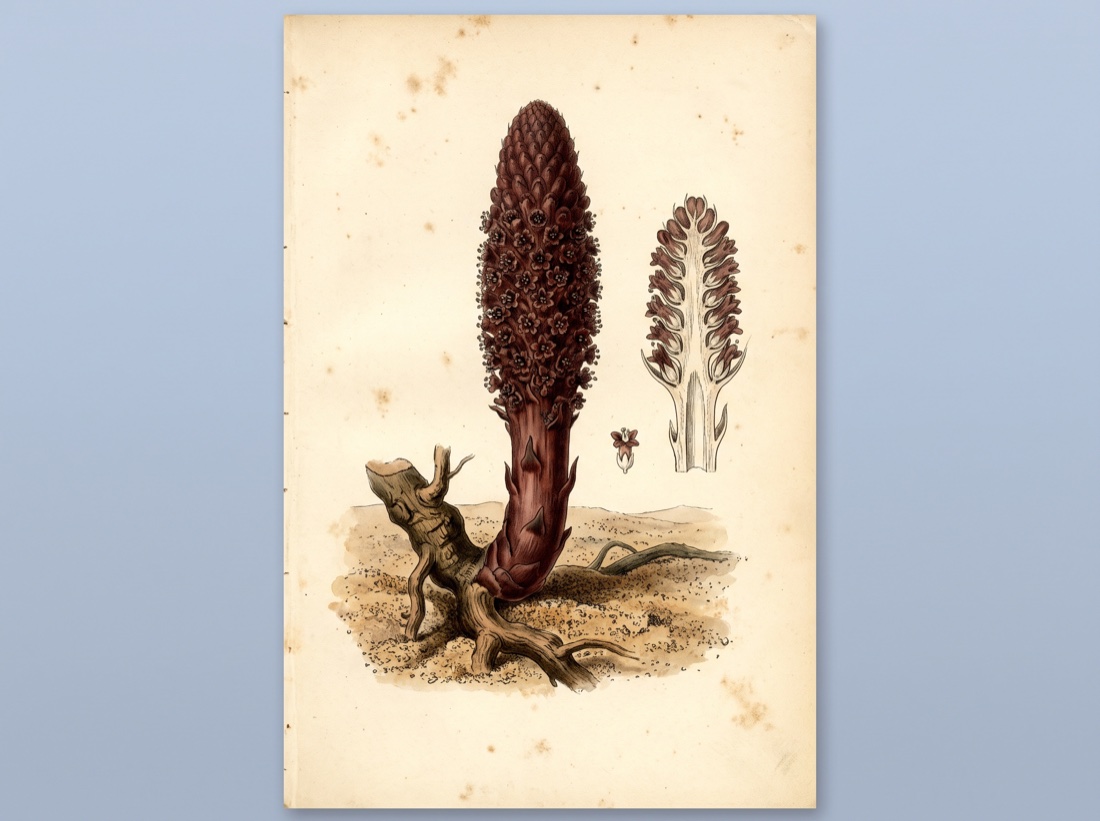 CynomoriumCynomorium songaricum
 DaffodilNarcissus
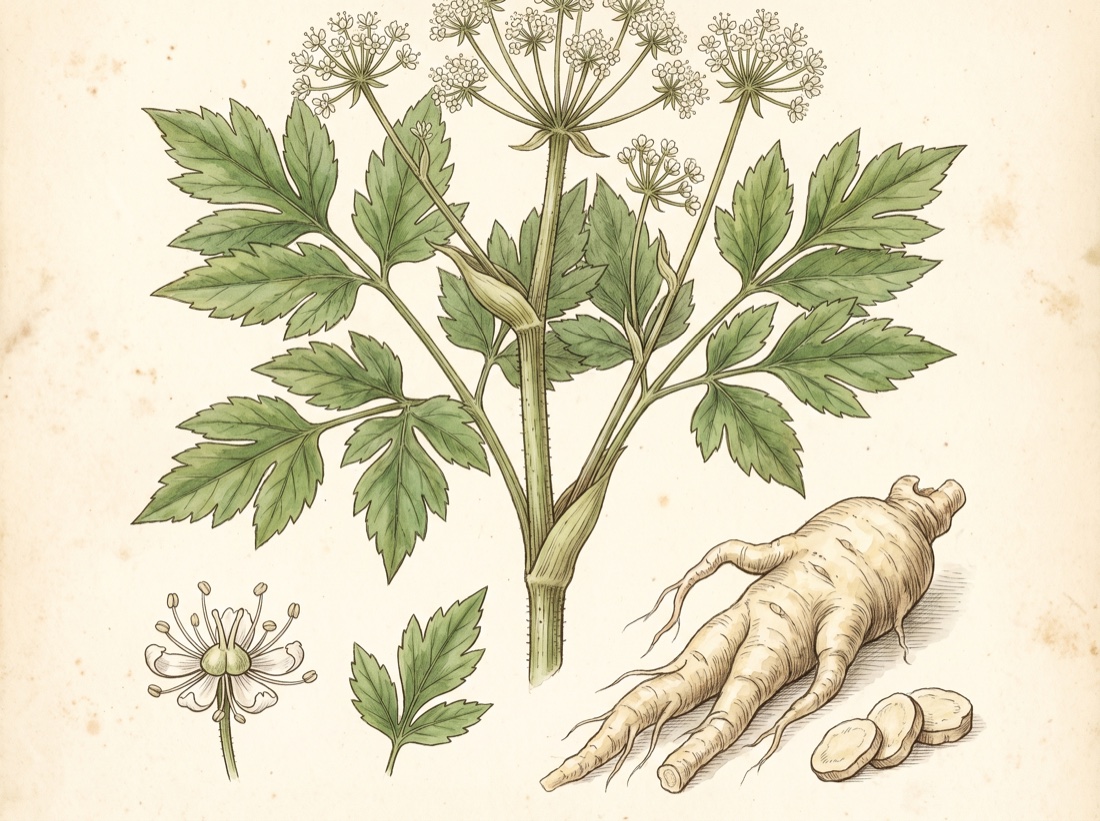 Dahurian angelicaAngelica dahurica
 Damask RoseRosa x damascena
The whole plate is in the library. The compass, Compare, the Sky of eleven hundred plants and the formulary open with an email address and a password, free, with the formula builder and its safety engine. Herbert without limit, his formulating, clients, the handouts and the labels are the paid room.
Open the library, free