Western Herbalism
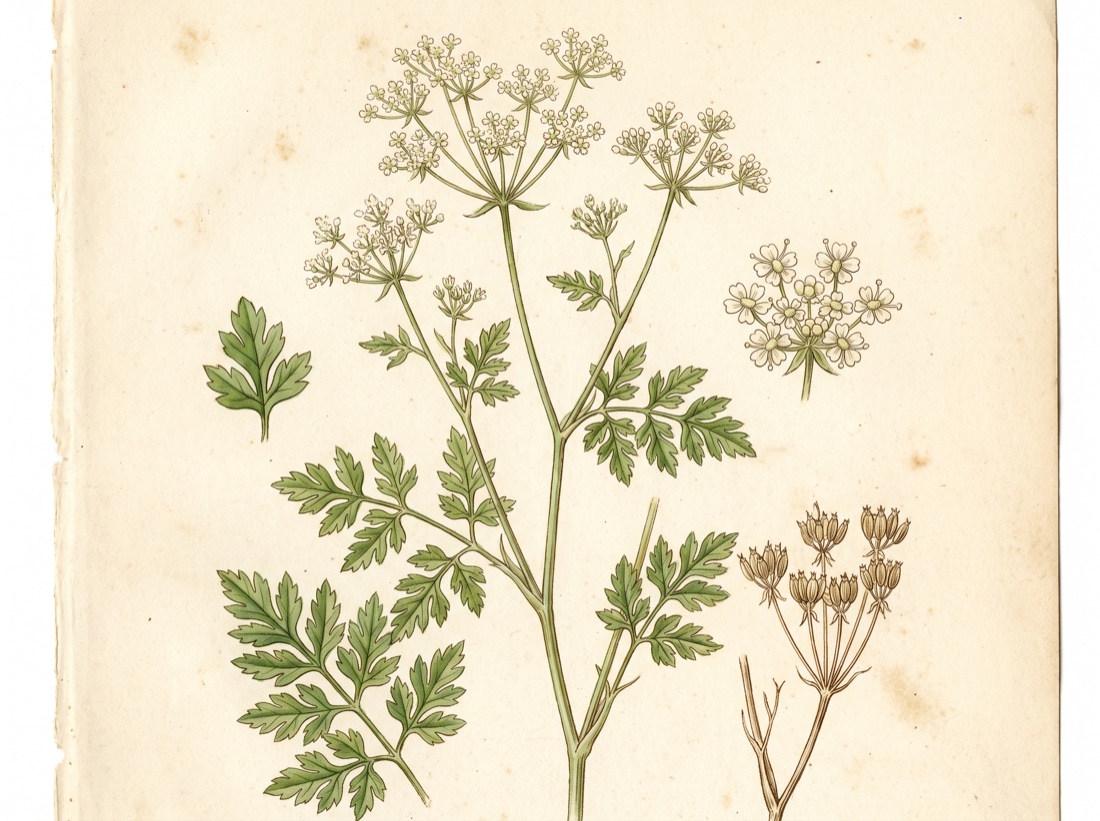
Chervil
Anthriscus cerefolium
Also known as garden chervil, French parsley, salad chervil.
Anthriscus cerefolium, chervil, is an annual of the carrot family native to the Caucasus and western Asia and long naturalized across Europe, where it is grown as a fine culinary herb with a soft anise-parsley flavor. The whole aerial plant, fresh or freshly dried, is used; the leaves lose most of their aroma when stored. In the Western tradition chervil is a gentle spring remedy, a diuretic and digestive stimulant taken as a fresh juice or infusion, with a folk reputation as a mild emmenagogue and a topical vulnerary.

Ask Herbert about Chervil. Herbert is the master herbalist inside Bountiful Herbs: he answers from this plate and eleven hundred others, with dosing, pairing and cautions. Your first ten questions are free.
Ask HerbertActions
Indications what the tradition reached for it in
- Sluggish digestion with mild bloating
- Mild fluid retention
- Spring cleansing and convalescent tonic
- Catarrhal cough (traditional)
- Delayed or scanty menses (traditional)
- Gout and rheumatic aching (folk diuretic use)
- Mild hypertension with fluid retention (folk)
- Bruises and slow-healing wounds (topical poultice)
- Inflamed eyelids and tired eyes (traditional wash)
- Hemorrhoids (topical, traditional)
Specific indications
The sluggish, puffy patient in early spring who wants a gentle green tonic to lift appetite and urine flow
Mild dyspepsia with gas after meals in someone who dislikes strong bitters and prefers a food-like remedy
A bruise or small clean wound in the garden, where a poultice of fresh crushed leaves is at hand
Safety
Pregnancy: Not for use in pregnancy
The record lists 6 contraindications; open the plate in the library to read them in full.
In practice
Chervil earns its place as a mild, pleasant, food-like remedy rather than a strong drug. Use it fresh where possible: the juice of the fresh herb or a tea of the freshly cut tops in the spring cleansing tradition, for the patient who feels heavy, puffy and off their food after winter.
Dosing as the sources wrote it
| Preparation | As written | Metric |
|---|---|---|
| Infusion | 2-4 g dried aerial parts three times daily | 2000-4000 mg |
| Fresh juice | 10-20 mL fresh plant juice daily | 10-20 mL |
| Tincture (1:5, 25%) | 2-4 mL three times daily | 2-4 mL |
| Poultice | bruised fresh leaves applied to bruises or wounds |
Doses are reproduced from the sources for practitioners and are not a recommendation for any person.
From the sources
Overview. Anthriscus cerefolium, chervil, is an annual of the carrot family native to the Caucasus and western Asia and long naturalized across Europe, where it is grown as a fine culinary herb with a soft anise-parsley flavor. The whole aerial plant, fresh or freshly dried, is used; the leaves lose most of their aroma when stored. In the Western tradition chervil is a gentle spring remedy, a diuretic and digestive stimulant taken as a fresh juice or infusion, with a folk reputation as a mild emmenagogue and a topical vulnerary.
Clinical Notes. Chervil earns its place as a mild, pleasant, food-like remedy rather than a strong drug. Use it fresh where possible: the juice of the fresh herb or a tea of the freshly cut tops in the spring cleansing tradition, for the patient who feels heavy, puffy and off their food after winter.
Nearby on the shelf
 ChavyaPiper chaba
 Chebulic myrobalanTerminalia chebula
 Cherokee roseRosa laevigata
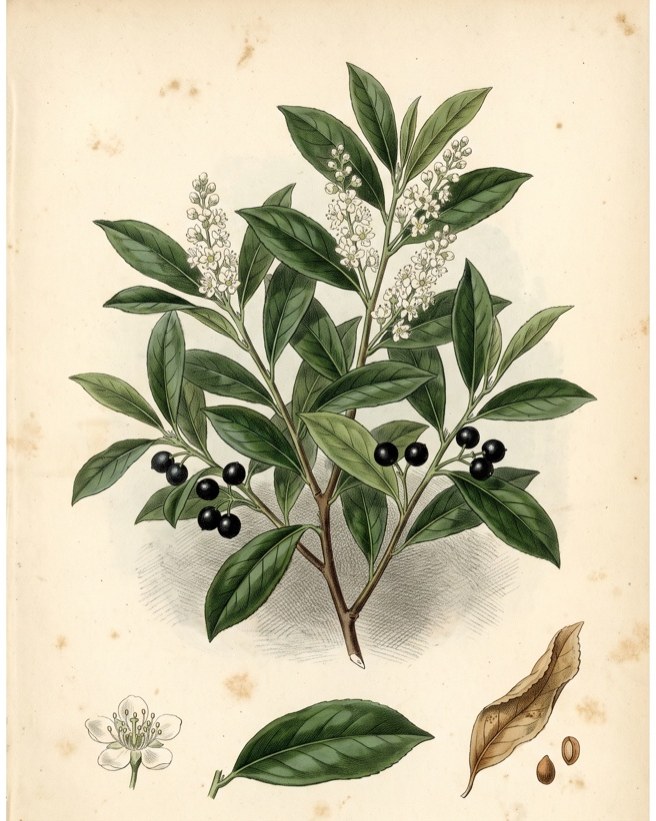 Cherry-Laurel LeavesLaurocerasi Folia
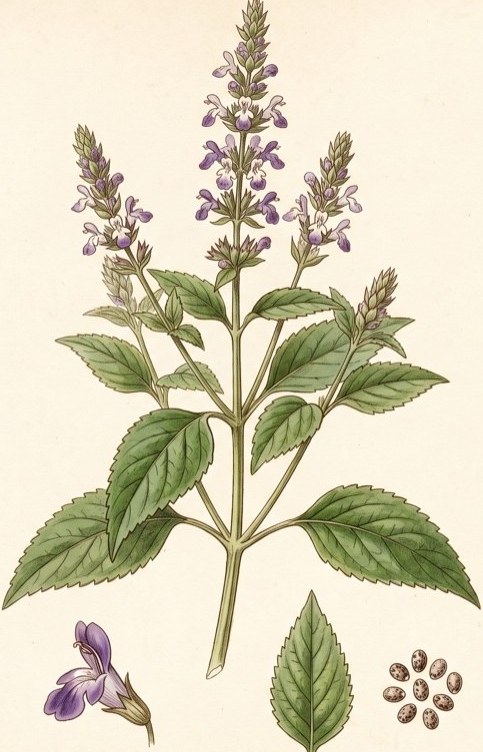 ChiaSalvia hispanica
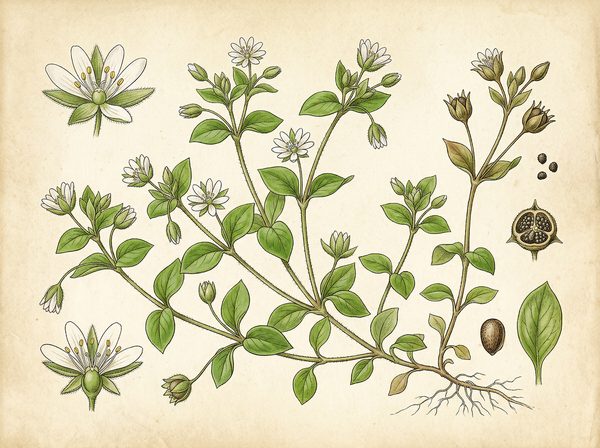 ChickweedStellaria media
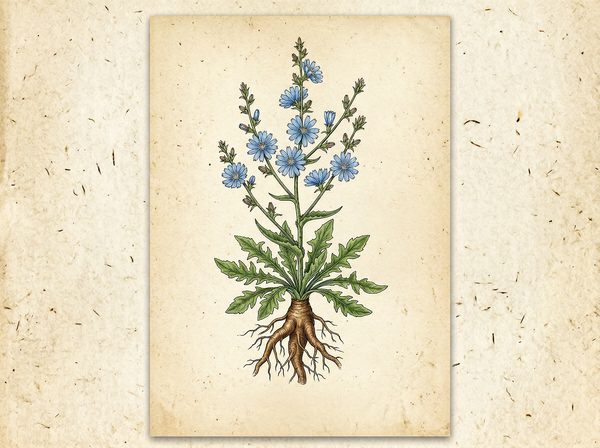 ChicoryCichorium intybus
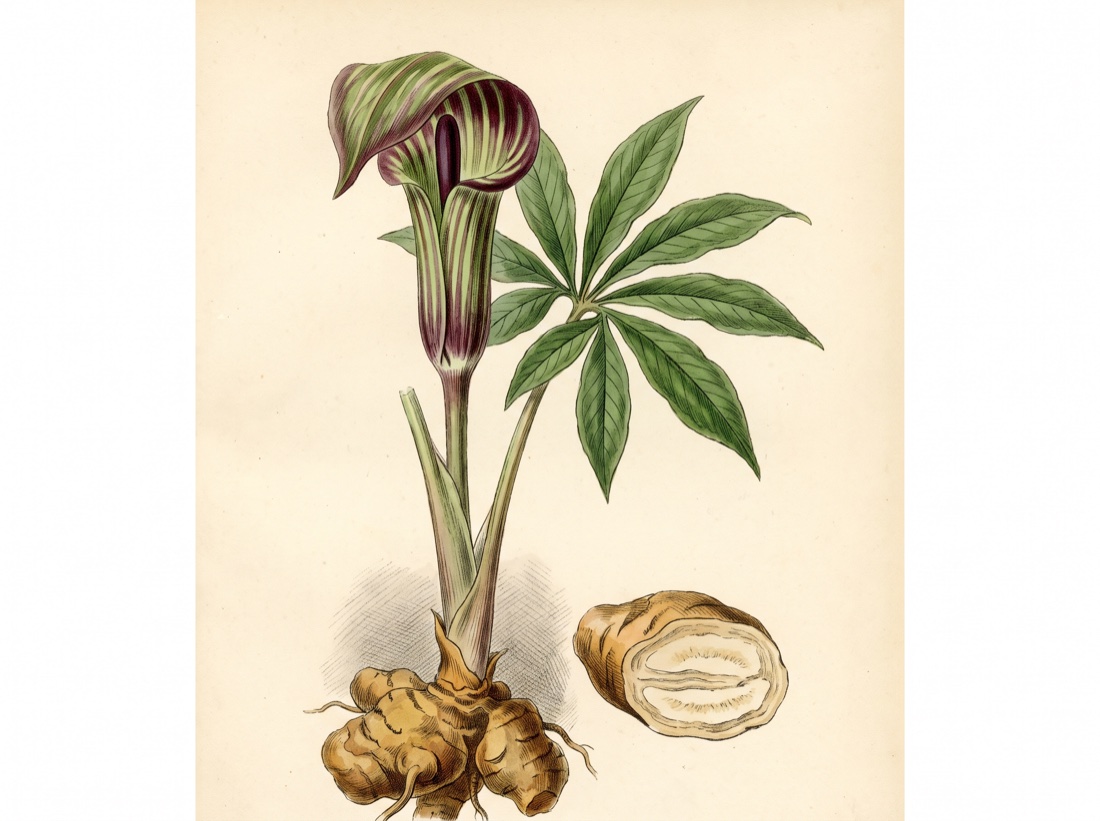 Chinese arisaemaArisaema erubescens
The whole plate is in the library. The compass, Compare, the Sky of eleven hundred plants and the formulary open with an email address and a password, free, with the formula builder and its safety engine. Herbert without limit, his formulating, clients, the handouts and the labels are the paid room.
Open the library, free