Western Herbalism
Catalpa
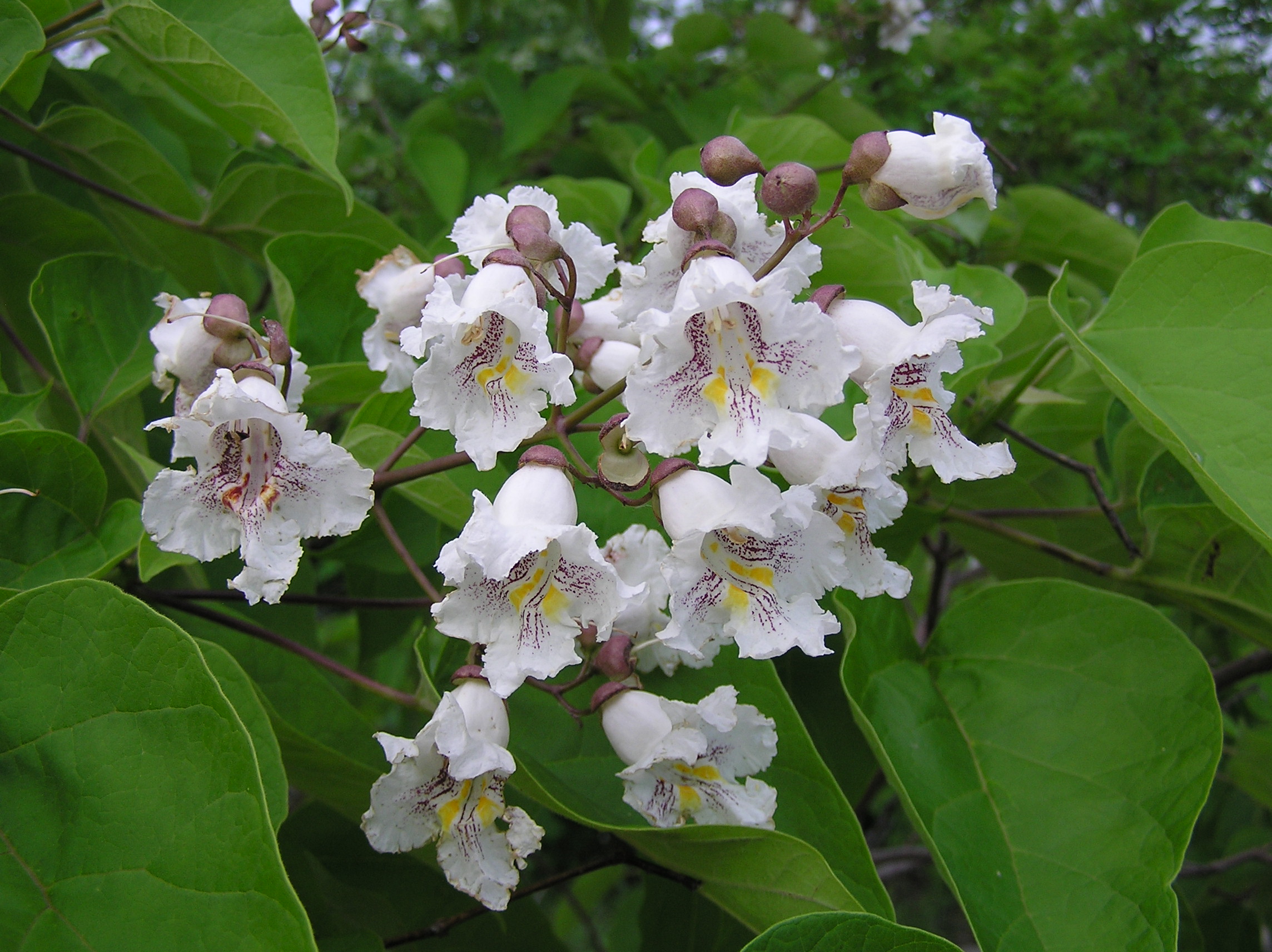
Catalpa bignonioides
Also known as Southern catalpa, Indian bean tree, Cigar tree, Bean Tree, Catalpa-tree.
Catalpa bignonioides is a spreading deciduous tree of the southeastern United States, long planted as an ornamental shade tree further north for its large heart-shaped leaves and showy white panicled flowers. The bark, and later the seed pods, were taken up by nineteenth century American physiomedical and eclectic practitioners as a warming bitter tonic and antispasmodic, though it never became a major materia medica item and has not been meaningfully studied in modern clinical research.

Ask Herbert about Catalpa. Herbert is the master herbalist inside Bountiful Herbs: he answers from this plate and eleven hundred others, with dosing, pairing and cautions. Your first ten questions are free.
Ask HerbertActions
Indications what the tradition reached for it in
- General debility with sluggish digestion
- Torpid appetite
- Chronic catarrh
- Bronchitis with wheeze
- Whooping cough
- Asthma with spasmodic cough
- Sluggish skin and poor peripheral circulation
- Intestinal worms (traditional use)
Specific indications
Persistent spasmodic cough with wheeze in a debilitated, cold-natured patient, calling for a warming antispasmodic expectorant
Languid digestion with cold extremities and dull, inactive skin in a generally torpid constitution
Safety
Low dose botanical. Used in drop doses in the classical practice; not a plant to dose freely.
Pregnancy: Avoid in pregnancy: safety has never been established and historical sources disagree on toxicity.
Breastfeeding: Avoid in lactation: no safety data exists for this plant in nursing mothers.
The record lists 5 contraindications; open the plate in the library to read them in full.
In practice
The historical physiomedical use centers on the bark as a bitter, mildly stimulating tonic for the person who is generally languid, cold, and sluggish in digestion and elimination, in the same broad category as other bitter alteratives of that tradition.
Dosing as the sources wrote it
| Preparation | As written | Metric |
|---|---|---|
| Bark decoction | 1-2 g dried bark per cup, once to twice daily | 1000-2000 mg |
| Tincture of seed pods (1:5) | 1-2 mL two to three times daily | 1-2 mL |
| Dose, 1 to 20 drops. | 0.02-0.4 mL | |
| The pods and seeds have been employed in decoction in chronic bronchial affections, spasmodic asthma, and dyspnoea, and certain forms of functional heart disease; 6 or 8 ounces to a pint of water, and given in tablespoonful doses, repeated every 1 or 2 hours. | 248828-248828 mg | |
| specific catalpa | Dose of specific catalpa, fraction of a drop to 20 drops. | 0.4 mL |
Doses are reproduced from the sources for practitioners and are not a recommendation for any person.
From the sources
Overview. Catalpa bignonioides is a spreading deciduous tree of the southeastern United States, long planted as an ornamental shade tree further north for its large heart-shaped leaves and showy white panicled flowers. The bark, and later the seed pods, were taken up by nineteenth century American physiomedical and eclectic practitioners as a warming bitter tonic and antispasmodic, though it never became a major materia medica item and has not been meaningfully studied in modern clinical research.
Clinical Notes. The historical physiomedical use centers on the bark as a bitter, mildly stimulating tonic for the person who is generally languid, cold, and sluggish in digestion and elimination, in the same broad category as other bitter alteratives of that tradition.
Properties and Uses. The bark of this tree is a strong bitter, and is among the positive and rather permanent stimulating tonics. It has been pronounced poisonous, but this is not my opinion. It arouses the stomach, and ultimately stimulates the circulation; and the entire list of secernent organs, but especially the skin, is steadily excited to better action under its use.
Description. Natural Order, Bignoniaceae. This is the beautiful spreading tree so common in the South, and cultivated widely in the Middle and Northern States as an ornamental shade tree. Its very large and nearly heart-shaped leaves, with its long panicles of large and nearly white flowers, at once attract the eye and make it a favorite. As cultivated, it commonly attains a height of thirty feet; and blooms during the latter part of June and early July in this latitude.
Drawn from Cook's Physio-Medical Dispensatory; King's American Dispensatory, 18th edition (Felter and Lloyd); Felter's Eclectic Materia Medica, Pharmacology and Therapeutics, and the Bountiful Herbs editorial.
Nearby on the shelf
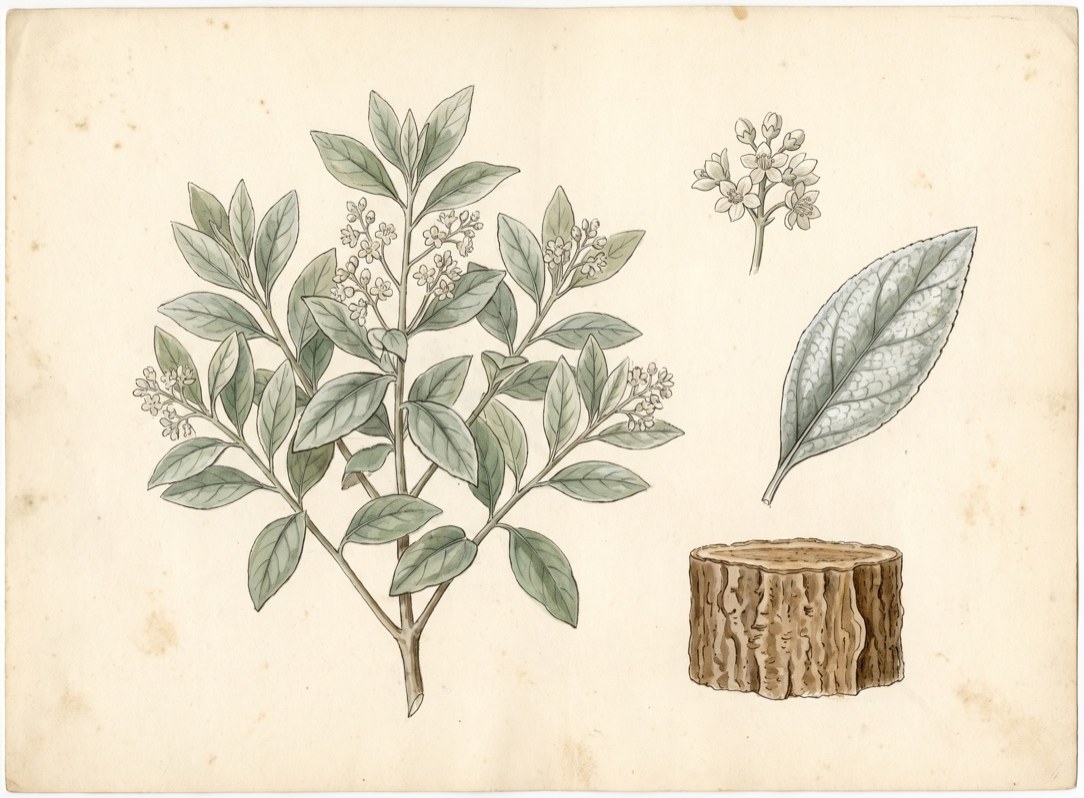 CascarillaCroton eleuteria
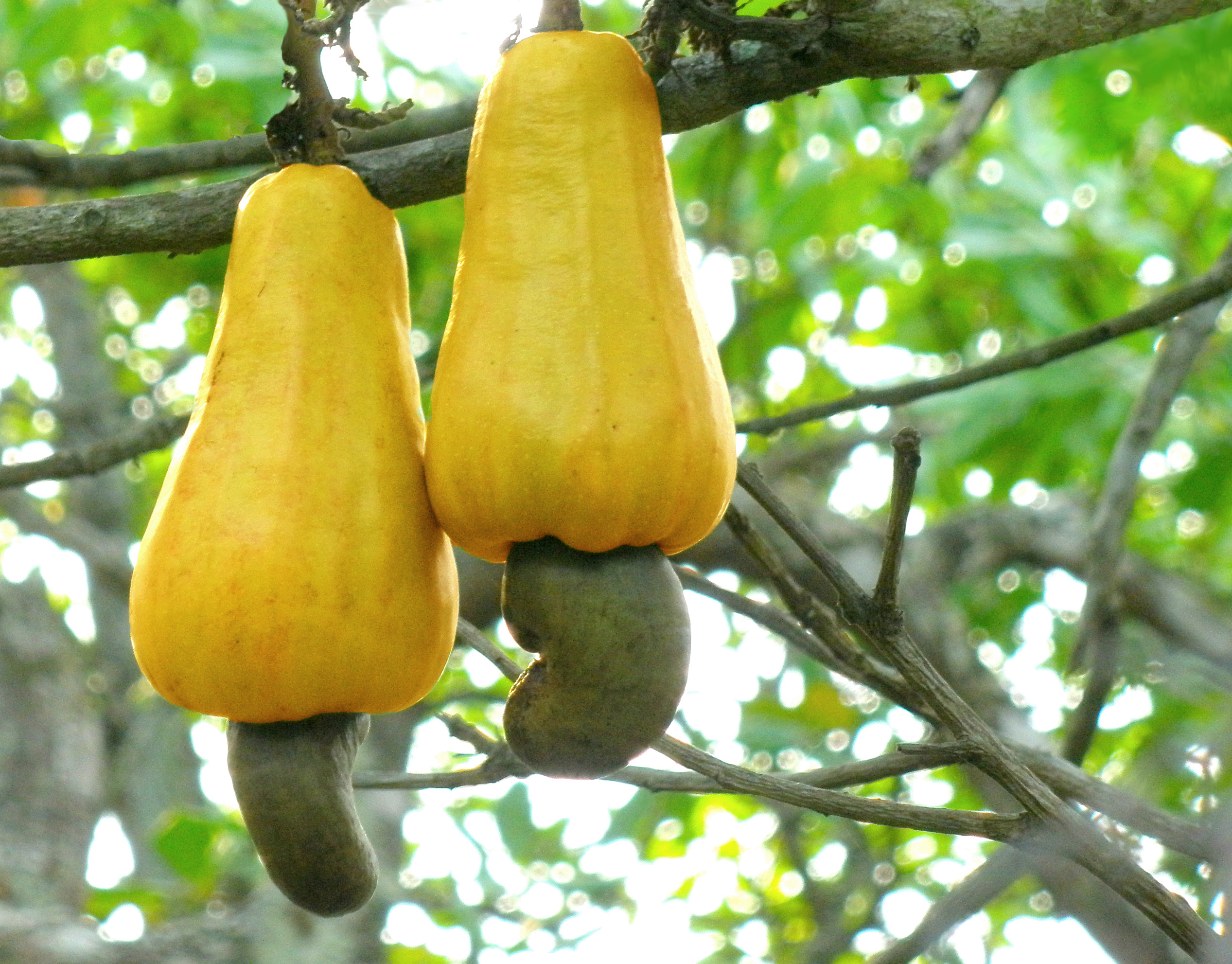 CashewAnacardium occidentale
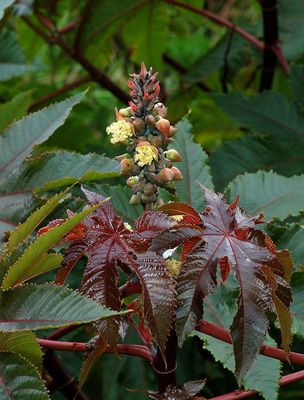 CastorRicinus communis
 Cat's ClawUncaria tomentosa
 Caterpillar fungusCordyceps sinensis
 CatnipNepeta cataria
 Cattail FlagTypha
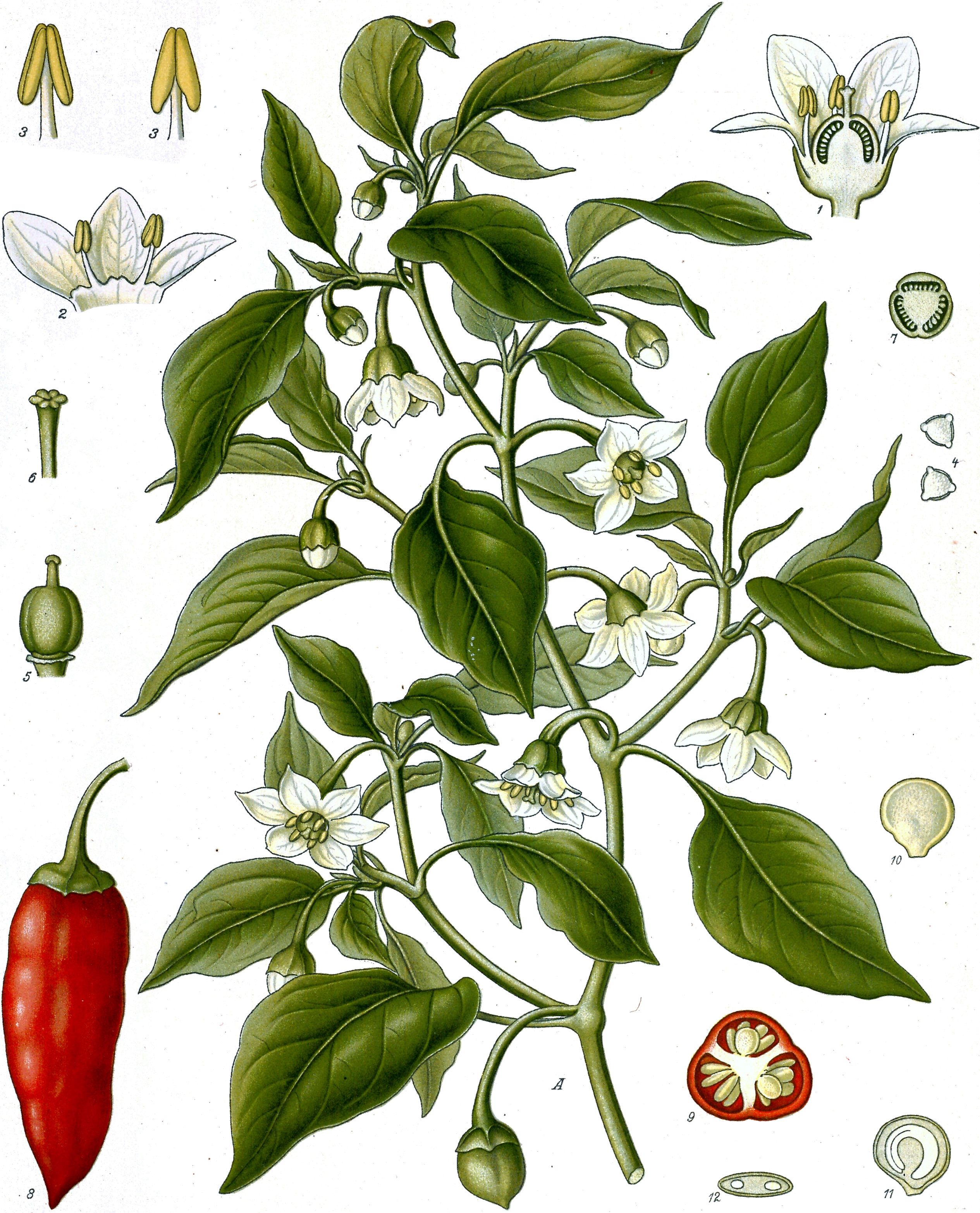 CayenneCapsicum frutescens
The whole plate is in the library. The compass, Compare, the Sky of eleven hundred plants and the formulary open with an email address and a password, free, with the formula builder and its safety engine. Herbert without limit, his formulating, clients, the handouts and the labels are the paid room.
Open the library, free