Chinese Herbalism
Cang zhu
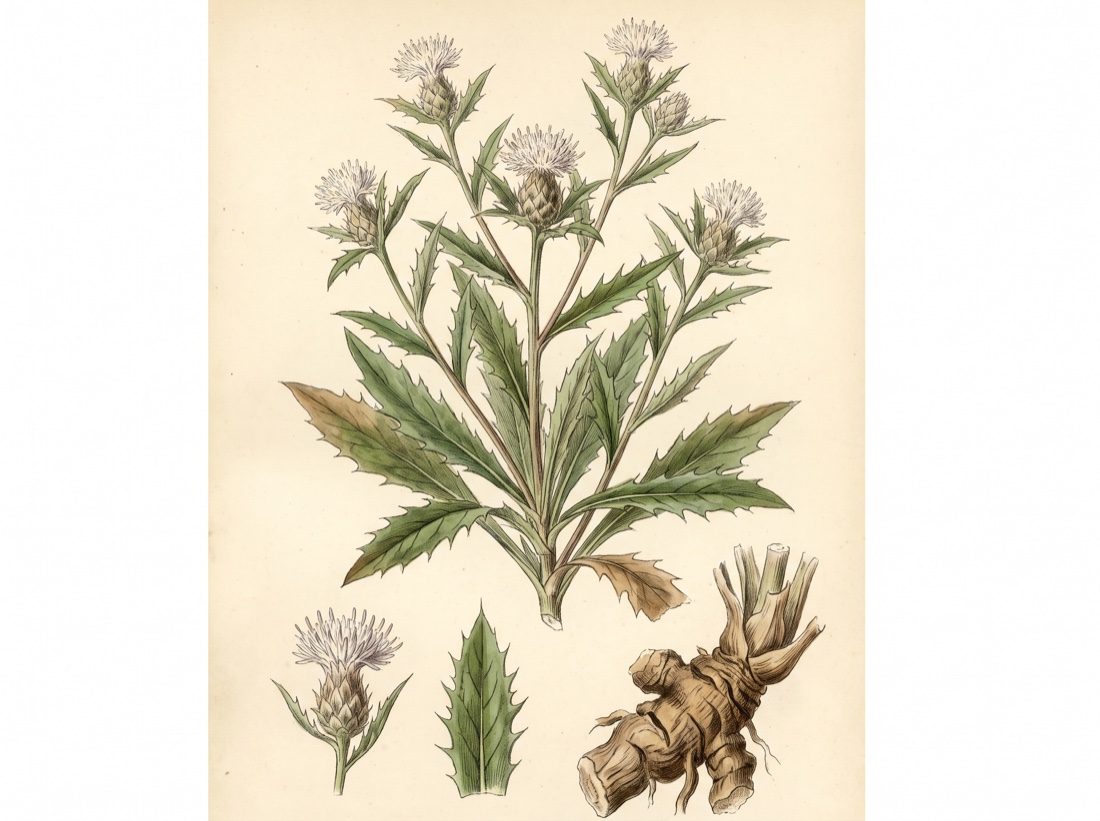
Atractylodes lancea
Also known as black atractylodes, grey atractylodes, southern atractylodes, cang zhu atractylodes, cāng zhú, máo cāng zhú, nán cāng zhú.
Cang zhu is the dried rhizome of Atractylodes lancea, a perennial daisy-family herb of hill slopes and open woods in eastern China, with the most prized material coming from the Maoshan area of Jiangsu. It is one of the core drying, aromatic herbs of Chinese medicine and also a mainstay of Japanese Kampo, warm and acrid, entering the spleen and stomach, and the natural choice whenever dampness is the main obstacle to digestion or movement.

Ask Herbert about Cang zhu. Herbert is the master herbalist inside Bountiful Herbs: he answers from this plate and eleven hundred others, with dosing, pairing and cautions. Your first ten questions are free.
Ask HerbertActions
Indications what the tradition reached for it in
- Abdominal fullness and bloating with a thick greasy tongue coat
- Nausea, poor appetite and loose stools from damp obstructing the spleen
- Diarrhea from summer damp
- Rheumatic joint pain worse in damp weather
- Leg edema and heaviness from dampness
- Wind-cold-damp common cold with body aches and no sweat
- Leucorrhea and damp-heat in the lower burner
- Night blindness and dry eyes (traditional)
- Atrophic gastritis and functional dyspepsia (modern formula use)
- Chemotherapy-related diarrhea (modern formula use)
Specific indications
A heavy, foggy, bloated patient with a thick white or greasy tongue coat, sticky stools and no appetite in humid weather
Aching, swollen joints that flare when it rains, in a person who also feels heavy and tired
Safety
The record lists 7 contraindications; open the plate in the library to read them in full.
In practice
Cang zhu and bai zhu (Atractylodes macrocephala) are often confused, and the distinction is clinical: bai zhu tonifies the spleen and is the gentler choice for a weak patient, while cang zhu is more aromatic and more strongly drying and is chosen when dampness itself is excess, with bloating, heaviness, nausea, sticky stools and a thick greasy coat.
In Chinese medicine
Temperature: warm. Taste: acrid, bitter. Channels: Spleen, Stomach, Liver. Actions: Dries dampness and strengthens the spleen; Dispels wind-damp and relieves painful obstruction; Induces sweating and releases the exterior; Clears damp-heat from the lower burner; Brightens the eyes and treats night blindness.
Dosing as the sources wrote it
| Preparation | As written | Metric |
|---|---|---|
| Decoction | 3-9 g dried rhizome daily | 3000-9000 mg |
| Powder or granules | 1-3 g twice daily | 1000-3000 mg |
| Tincture (1:5, 45%) | 1-3 mL three times daily | 1-3 mL |
Doses are reproduced from the sources for practitioners and are not a recommendation for any person.
From the sources
Overview. Cang zhu is the dried rhizome of Atractylodes lancea, a perennial daisy-family herb of hill slopes and open woods in eastern China, with the most prized material coming from the Maoshan area of Jiangsu. It is one of the core drying, aromatic herbs of Chinese medicine and also a mainstay of Japanese Kampo, warm and acrid, entering the spleen and stomach, and the natural choice whenever dampness is the main obstacle to digestion or movement.
Clinical Notes. Cang zhu and bai zhu (Atractylodes macrocephala) are often confused, and the distinction is clinical: bai zhu tonifies the spleen and is the gentler choice for a weak patient, while cang zhu is more aromatic and more strongly drying and is chosen when dampness itself is excess, with bloating, heaviness, nausea, sticky stools and a thick greasy coat.
Chinese Medicine Profile. Temperature: warm. Taste: acrid, bitter. Channels: Spleen, Stomach, Liver. Actions: Dries dampness and strengthens the spleen; Dispels wind-damp and relieves painful obstruction; Induces sweating and releases the exterior; Clears damp-heat from the lower burner; Brightens the eyes and treats night blindness.
In formulas
Cang zhu stands in 100 documented formulas in the library, among them dà giang huo tàng, chái ping tāng, jia jiǎn dá yuán yin, wu ji sǎn, xiãng shã yǎng wèi tàng, tiáo thông vì gì tāng.
Often paired with
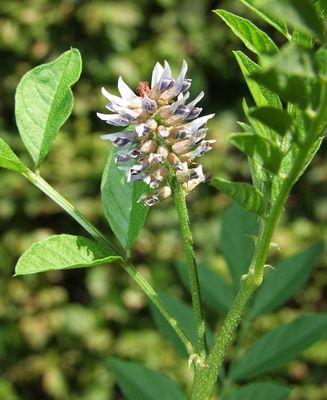 Licorice rootGlycyrrhiza glabra
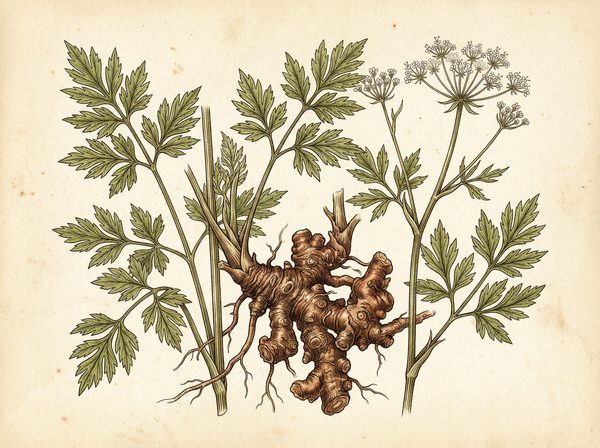 Sichuan Lovage RhizomeLigusticum chuanxiong
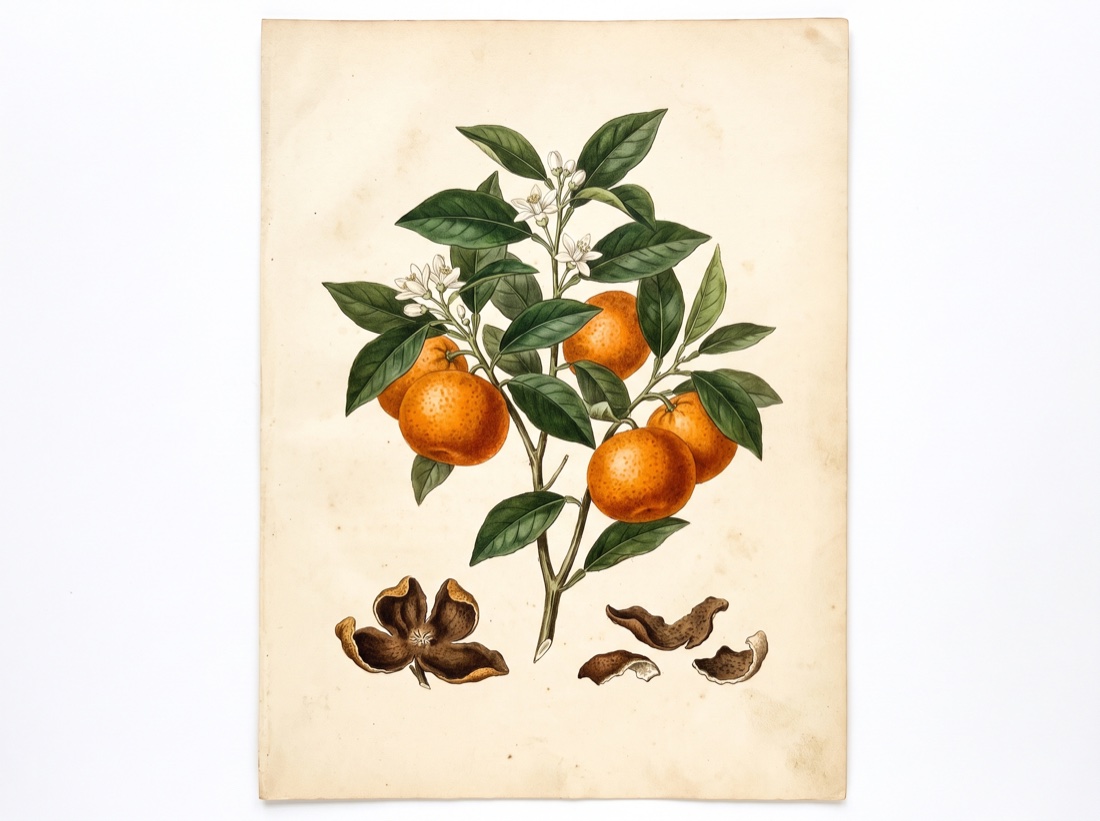 tangerineCitrus reticulata
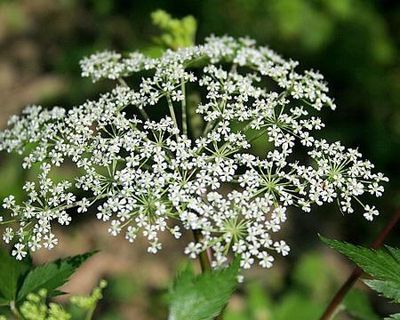 Dong QuaiAngelica sinensis
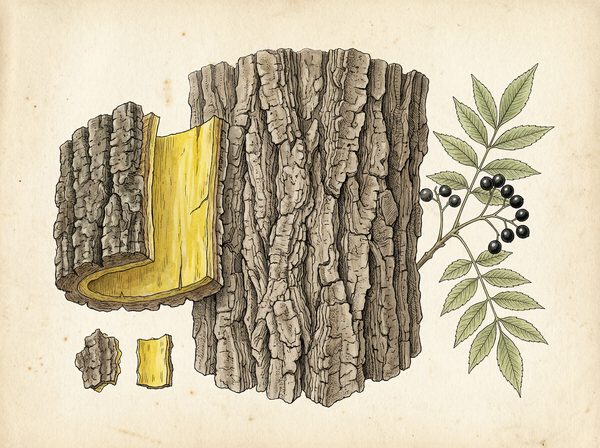 Huang BaiPhellodendron amurense
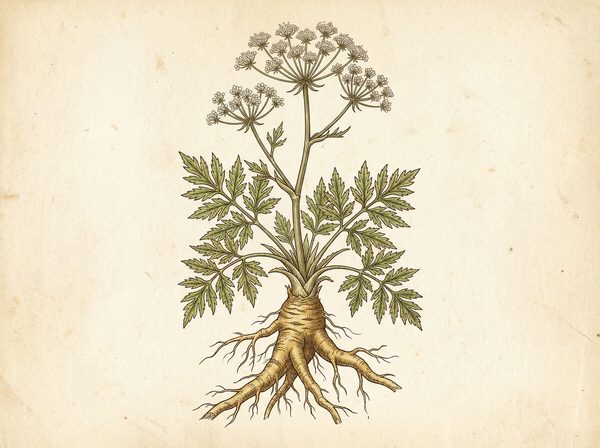 Fang FengSaposhnikovia divaricata
Nearby on the shelf
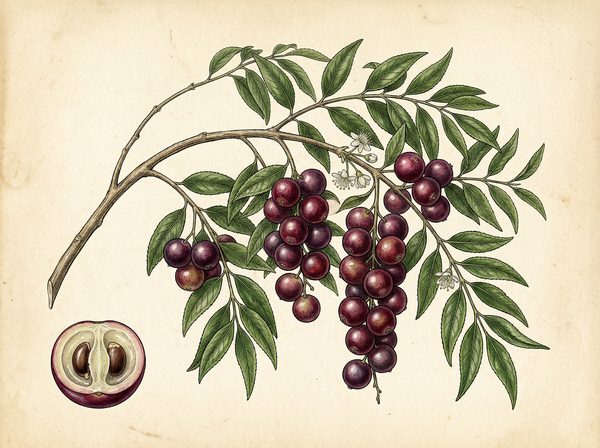 Camu CamuMyrciaria dubia
 Canada fleabaneErigeron canadense
 Canada thistleCirsium arvense
 CanellaCanella alba
 Capillary wormwoodArtemisia capillaris
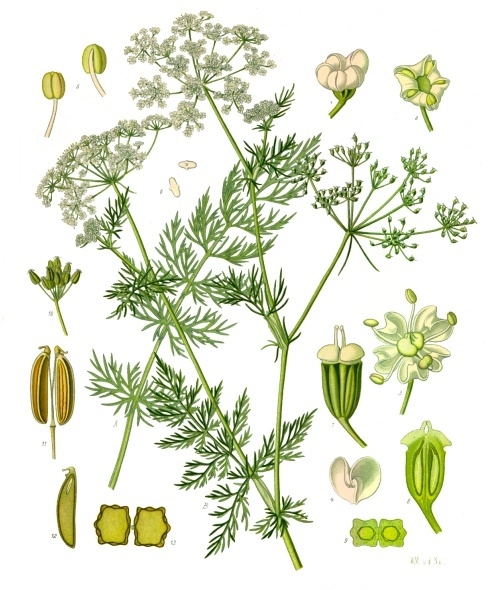 CarawayCarum carvi
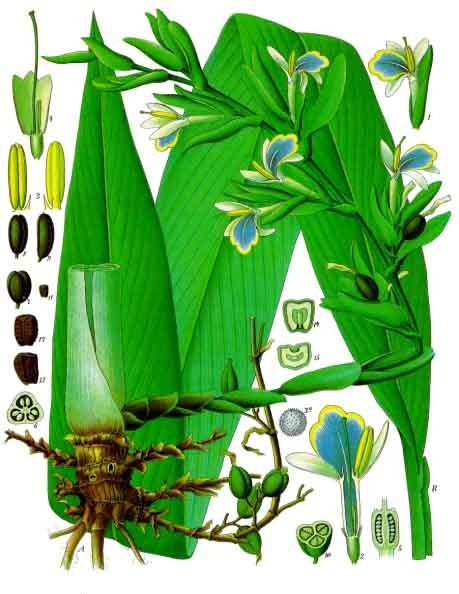 CardamomElettaria cardamomum
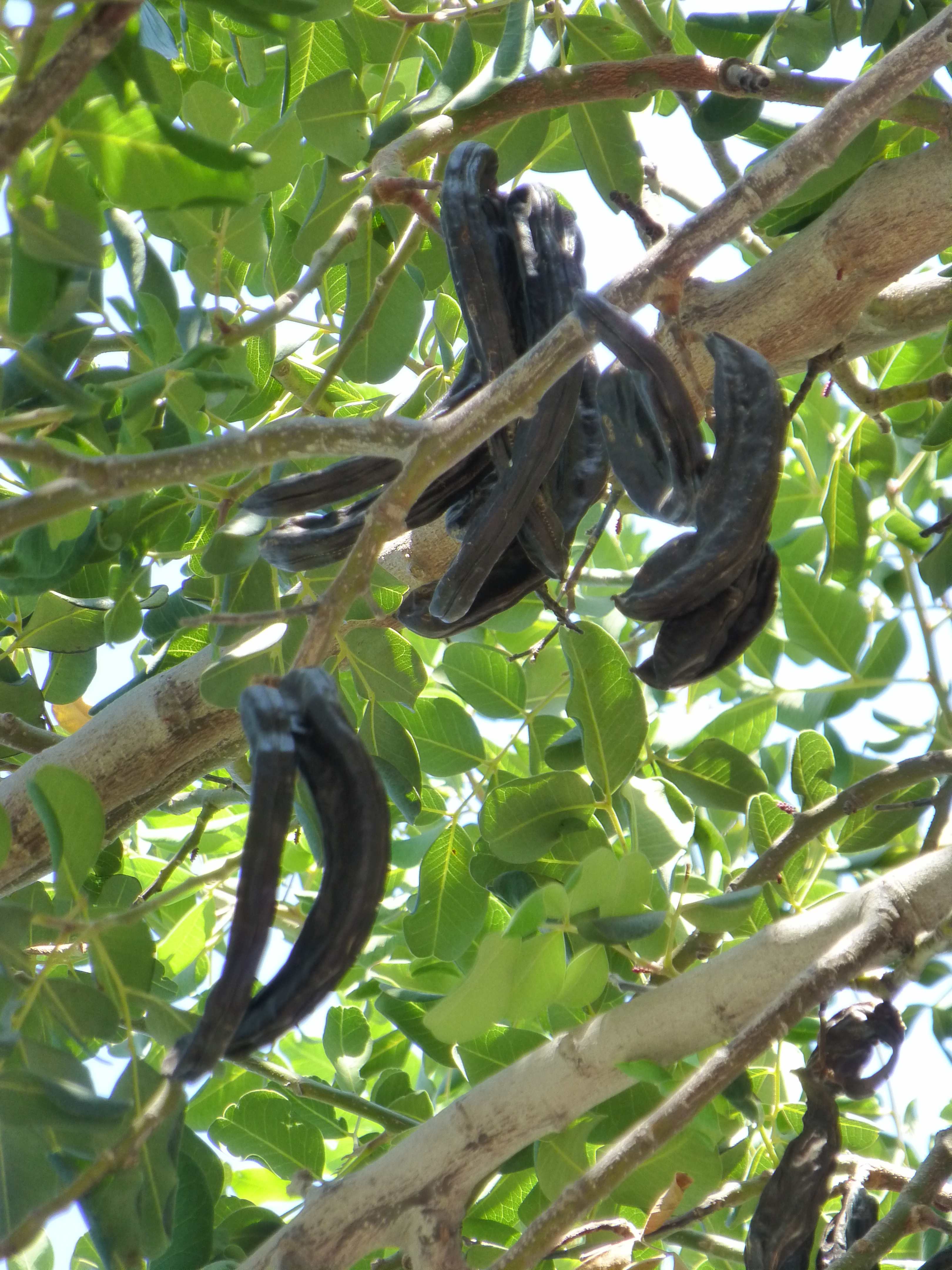 CarobCeratonia siliqua
The whole plate is in the library. The compass, Compare, the Sky of eleven hundred plants and the formulary open with an email address and a password, free, with the formula builder and its safety engine. Herbert without limit, his formulating, clients, the handouts and the labels are the paid room.
Open the library, free