Ayurvedic Herbalism
Bottle gourd
Lagenaria siceraria
Also known as calabash, white-flowered gourd, long melon, opo squash, lauki, Tumbi, Alabu, Katutumbi (the bitter form).
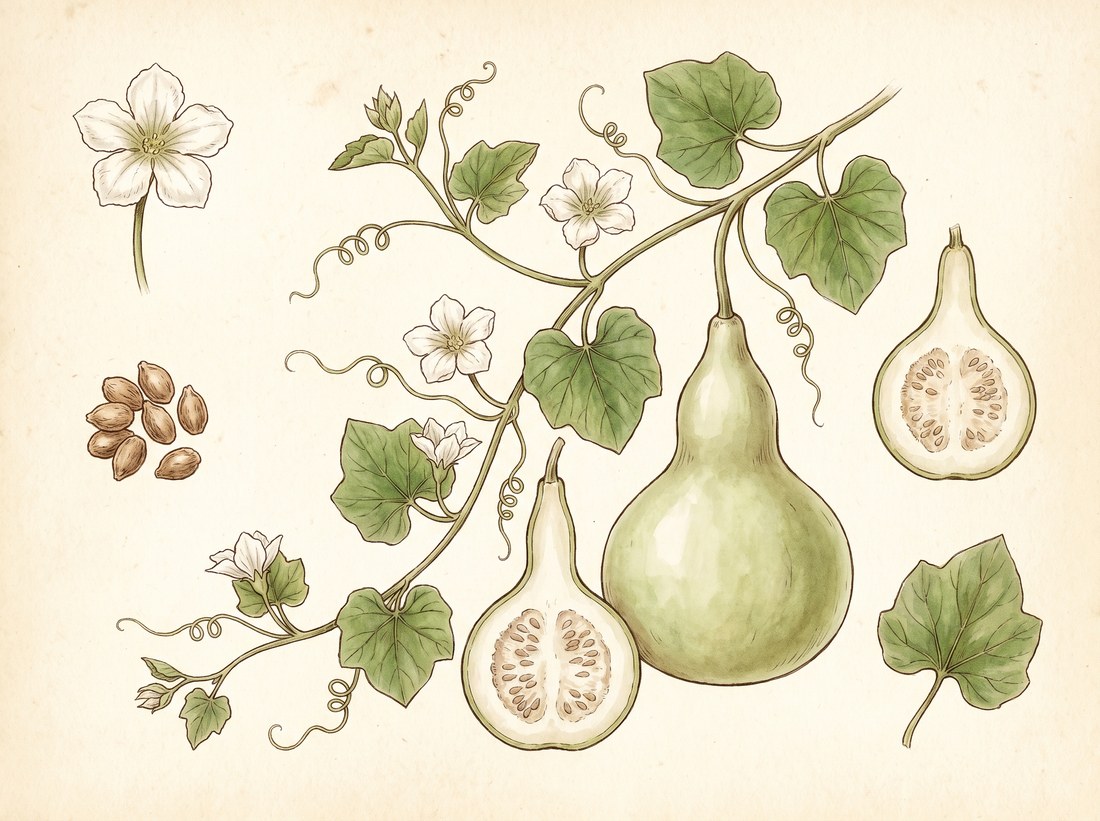
Lagenaria siceraria is the bottle gourd or calabash, a vigorous, white-flowered climbing vine of the cucumber family grown throughout India for its pale green, smooth-skinned fruit. Ayurveda calls the sweet edible gourd Alabu or Tumbi, a cooling, heavy, diuretic food-medicine for heat, thirst, urinary burning and constipation, and treats the bitter form, Katutumbi or Ikshvaku, as a separate emetic drug for supervised vamana therapy. Fruit, seed and leaf are used, the sweet fruit above all.

Ask Herbert about Bottle gourd. Herbert is the master herbalist inside Bountiful Herbs: he answers from this plate and eleven hundred others, with dosing, pairing and cautions. Your first ten questions are free.
Ask HerbertActions
Indications what the tradition reached for it in
- Burning urination and scanty urine
- Heat exhaustion, thirst and summer fever
- Constipation in hot, dry patients
- Hypertension and fluid retention (food adjunct)
- Elevated lipids and weight management (food adjunct)
- Acid dyspepsia and burning
- Convalescence with poor appetite
- Insomnia and agitation with heat (traditional)
- Fatty liver (adjunct, seed and fruit)
- Intestinal worms (seed, traditional)
- Kapha excess needing therapeutic emesis (bitter form, supervised)
Specific indications
A hot, thirsty, constipated pitta patient in high summer with burning urine and a dry mouth, who does well on cooked bottle gourd and a small glass of confirmed-sweet fresh juice
An overweight patient with borderline blood pressure and lipids who wants a light, cooling, low-calorie vegetable as the base of a diuretic diet
A convalescent with weak digestion who cannot manage heavy foods but tolerates bottle gourd soup with cumin and ginger
A kapha patient with thick chest congestion selected for vamana under a trained Ayurvedic physician, where the bitter gourd is one of the classical emetic drugs
Safety
Low dose botanical. Used in drop doses in the classical practice; not a plant to dose freely.
Breastfeeding: The sweet cooked fruit is a traditional food for nursing mothers and is regarded as safe; avoid raw juice and the bitter form.
The record lists 8 contraindications; open the plate in the library to read them in full.
In practice
The Ayurvedic practitioner uses sweet bottle gourd as a dietary medicine for pitta and for the heat of summer. Cooked with cumin, coriander and a little ghee it is the classic light food for fever, convalescence, burning and constipation; the fresh juice, taken in the morning, is prescribed for urinary burning, thirst, palpitation and hypertension; and the halwa or kheer is a cooling nourishment for the thin, hot patient.
In Ayurveda
Rasa: madhura (sweet) in the edible form; tikta (bitter) in Katutumbi, the bitter form. Virya: sheeta (cooling). Vipaka: madhura (sweet), sweet form; katu (pungent), bitter form. Guna: guru (heavy), snigdha (unctuous), sara (mobile) in the sweet form; laghu and ruksha in the bitter form. Dosha: the sweet fruit pacifies pitta and vata and increases kapha in excess; the bitter fruit reduces kapha and pitta and is used as an emetic. Prabhava: vamaka (emetic) action of the bitter fruit, Ikshvaku, which is a classical drug for therapeutic emesis. Karma: hridya (cardiac tonic); mutrala (diuretic); pittahara (reduces pitta); dahaprashamana (relieves burning); trishnanigrahana (quenches thirst); sara (promotes bowel movement); balya (strengthening); brimhana (nourishing); vamaka (emetic, bitter fruit); kaphahara (reduces kapha, bitter fruit); krimighna (anthelmintic, seed). Classical indications: hridroga (heart disease); mutrakricchra (painful urination); daha (burning sensation); trishna (thirst); vibandha (constipation); jvara (fever); raktapitta (bleeding disorders); unmada (mental disturbance, traditional); kasa and shvasa (cough and dyspnea, bitter fruit as emetic); visha (poisoning, bitter fruit as emetic); kapha roga (kapha disorders, bitter fruit); krimi (worms, seed). The sweet ripe fruit is a food-medicine, eaten cooked, taken as fresh juice or made into halwa and kheer; the seeds are powdered or pressed for oil; the leaves are juiced in regional practice. The bitter form, Ikshvaku or Katutumbi, is a separate drug used only in supervised vamana therapy as a decoction of the fruit or a paste of the seeds, never as a household remedy. Classical formulations: Alabu swarasa, Alabu beeja churna, Lauki halwa and kheer (food preparations), Ikshvaku kwatha (vamana, supervised only), Ikshvaku beeja kalka (vamana, supervised only). Described in: Charaka Samhita, Sushruta Samhita, Ashtanga Hridaya, Bhavaprakasha Nighantu, Dhanvantari Nighantu, Raja Nighantu, Kaiyadeva Nighantu, Ayurvedic Pharmacopoeia of India.
Dosing as the sources wrote it
| Preparation | As written | Metric |
|---|---|---|
| Swarasa (sweet fruit juice) | 50-100 mL fresh juice of confirmed sweet fruit once daily in the morning | 50-100 mL |
| Fruit as food | 100-200 g cooked fruit daily as a dietary medicine | 100000-200000 mg |
| Churna (seed) | 3-6 g powdered seed twice daily | 3000-6000 mg |
| Swarasa (leaf) | 10-20 mL fresh leaf juice daily | 10-20 mL |
| Ikshvaku kwatha (bitter fruit, vamana) | 50-100 mL decoction of bitter fruit as a single supervised emetic dose, Panchakarma use only | 50-100 mL |
Doses are reproduced from the sources for practitioners and are not a recommendation for any person.
From the sources
Overview. Lagenaria siceraria is the bottle gourd or calabash, a vigorous, white-flowered climbing vine of the cucumber family grown throughout India for its pale green, smooth-skinned fruit. Ayurveda calls the sweet edible gourd Alabu or Tumbi, a cooling, heavy, diuretic food-medicine for heat, thirst, urinary burning and constipation, and treats the bitter form, Katutumbi or Ikshvaku, as a separate emetic drug for supervised vamana therapy. Fruit, seed and leaf are used, the sweet fruit above all.
Clinical Notes. The Ayurvedic practitioner uses sweet bottle gourd as a dietary medicine for pitta and for the heat of summer. Cooked with cumin, coriander and a little ghee it is the classic light food for fever, convalescence, burning and constipation; the fresh juice, taken in the morning, is prescribed for urinary burning, thirst, palpitation and hypertension; and the halwa or kheer is a cooling nourishment for the thin, hot patient.
Ayurvedic Profile. Rasa: madhura (sweet) in the edible form; tikta (bitter) in Katutumbi, the bitter form. Virya: sheeta (cooling). Vipaka: madhura (sweet), sweet form; katu (pungent), bitter form. Guna: guru (heavy), snigdha (unctuous), sara (mobile) in the sweet form; laghu and ruksha in the bitter form.
Nearby on the shelf
 BoldoPeumus boldus
 BonducCaesalpinia bonducella
 BonesetEupatorium perfoliatum
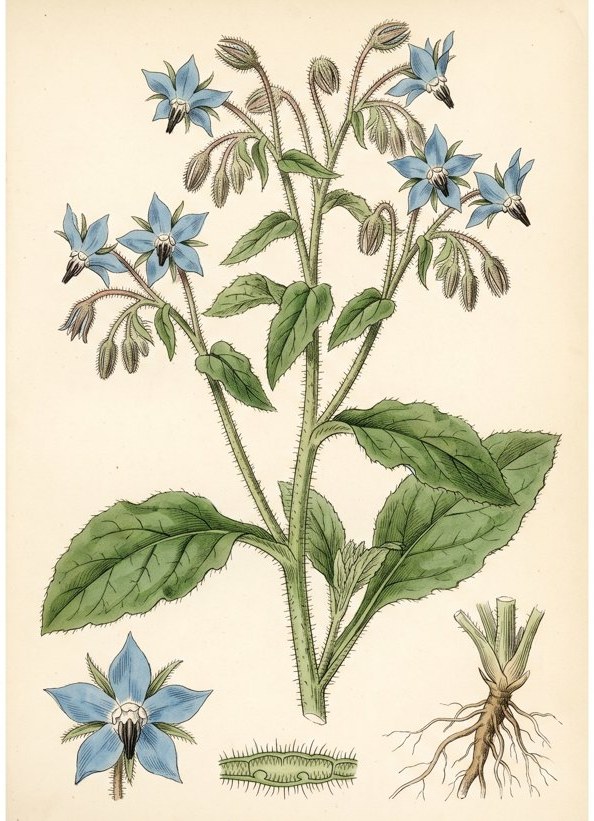 BorageBorago officinalis
 BoxBuxus
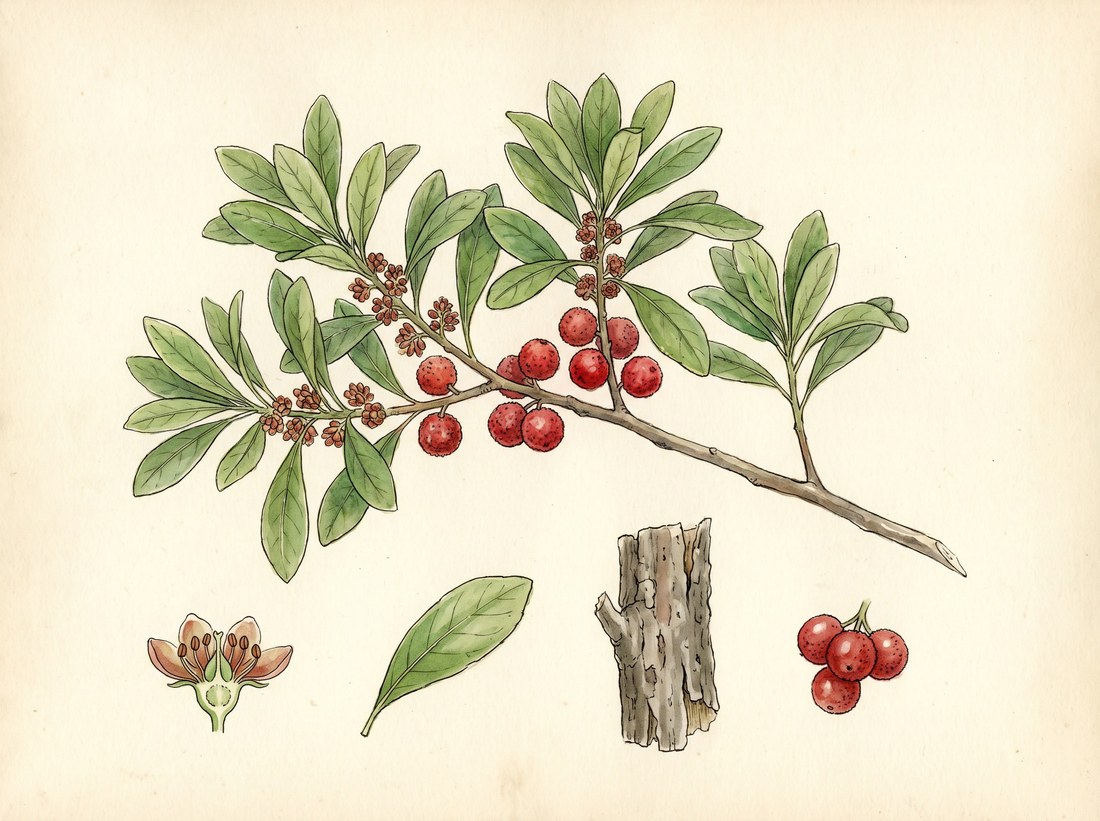 Box myrtleMyrica esculenta
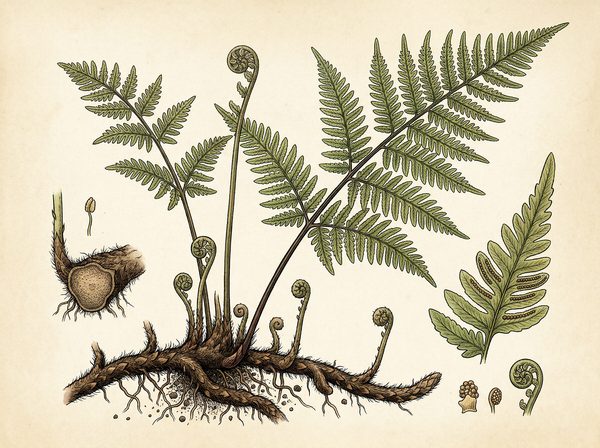 Bracken FernPteridium aquilinum
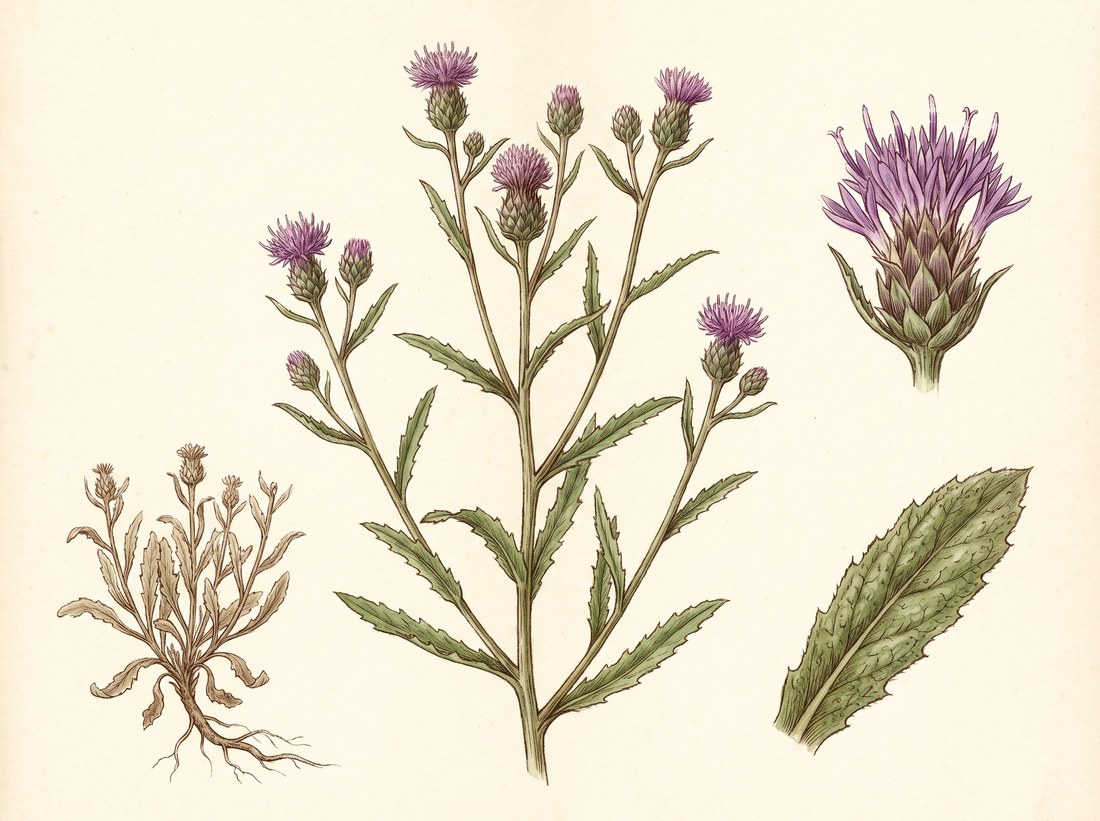 BrahmadandiTricholepis glaberrima
The whole plate is in the library. The compass, Compare, the Sky of eleven hundred plants and the formulary open with an email address and a password, free, with the formula builder and its safety engine. Herbert without limit, his formulating, clients, the handouts and the labels are the paid room.
Open the library, free