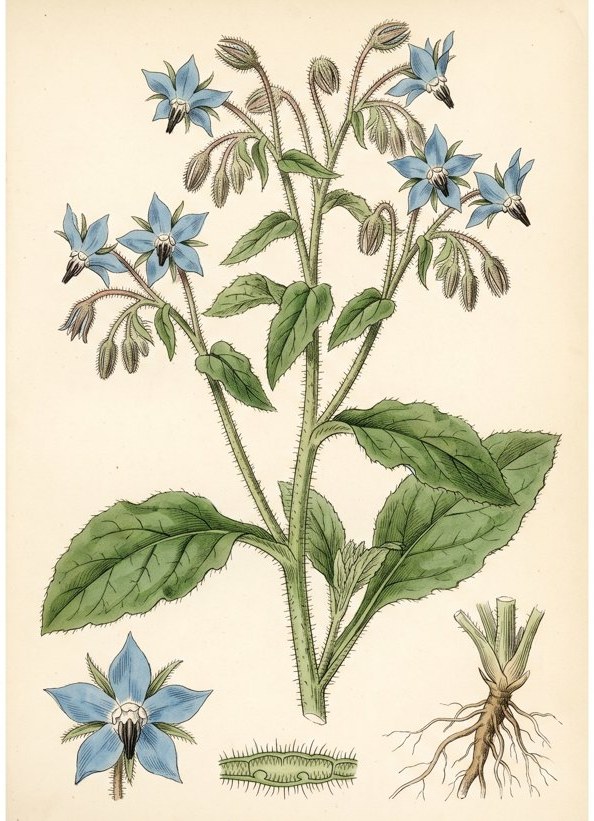
Western Herbalism
Borage
Borago officinalis
Also known as Starflower, Beebread, Bee Plant, Burrage.
Contains pyrrolizidine alkaloids (PAs) with hepatotoxic, genotoxic, carcinogenic potential use low doses short-term (4-6 weeks max), prefer PA-free seed oil or young leaves traditional 'herb of courage' for melancholy unapproved due to risks outweighing undocumented benefits No recorded adverse effects when used properly historically

Ask Herbert about Borage. Herbert is the master herbalist inside Bountiful Herbs: he answers from this plate and eleven hundred others, with dosing, pairing and cautions. Your first ten questions are free.
Ask HerbertActions
Indications what the tradition reached for it in
- Dyspnea
- Stomach-aches
- Digestive issues (gastritis)
- Asthma (cough)
- Pleurisy
- Depression
- Nocturnal symptoms
- Rheumatism
- Boils
- Inflammation
- Pulmonary complaints
- Bronchitis
- Melancholy
- Psoriasis
- Dermatitis
- Cough
- Irritable bowel syndrome
- Colds
- Rashes
- Wheezing
- Insomnia
- Heart palpitations (thyrotoxicosis)
- Convalescence
- Nervous tension
- Fever
- Eczema
- Burnout
- Dry cough
- Edema
- Fatigue
Safety
Recognised toxicity. This plant carries a toxicity flag in the record; it is for trained practitioners only.
Low dose botanical. Used in drop doses in the classical practice; not a plant to dose freely.
Pregnancy: Not for use in pregnancy
Breastfeeding: Not for use while breastfeeding
The record lists 3 contraindications; open the plate in the library to read them in full.
Dosing as the sources wrote it
| Preparation | As written | Metric |
|---|---|---|
| Tea | Tea (leaf/flower): 2 tsp/cup, 1 cup BID | |
| Tincture | Tincture (leaf/flower 1:5, 60%): 1-10 mL BID (low dose: 1-3 drops 1-3x/day) | 1-10 mL |
| Fresh leaf juice: 10 mL BID | 10-10 mL | |
| Seed oil: 500 mg capsules, 1-4/day | 500 mg | |
| Infusion T wo 5-mL spoonfuls of dried herb to one cup boiling water three times daily .(3) Tincture 1-4 mL three times daily .(3) | 1-4 mL | |
| 2 tsp. /cup; 1 cup BID (Alschuler) |
Doses are reproduced from the sources for practitioners and are not a recommendation for any person.
From the sources
Clinical Notes. Contains pyrrolizidine alkaloids (PAs) with hepatotoxic, genotoxic, carcinogenic potential use low doses short-term (4-6 weeks max), prefer PA-free seed oil or young leaves traditional 'herb of courage' for melancholy unapproved due to risks outweighing undocumented benefits No recorded adverse effects when used properly historically
rheumatoid-arthritis. Multiple studies demonstrate significant improvements in morning stiffness, joint pain and overall disease activity with GLA supplementation (1.4-2.8 g daily), with combination of GLA and omega-3 fatty acids showing enhanced efficacy compared to either alone.
atopic-dermatitis. Clinical trials of GLA in atopic dermatitis show mixed but promising results with some reporting reduced symptom severity, and efficacy appears to correlate with the plasma GLA levels achieved during treatment.
asthma. Combined GLA/omega-3 supplementation reduces leukotriene generation and improves quality of life in mild asthmatics, with a 50% reduction in basophil and 35% reduction in neutrophil leukotriene production.
Nearby on the shelf
 Blueberry LeafVaccinium corymbosum
 BoldoPeumus boldus
 BonducCaesalpinia bonducella
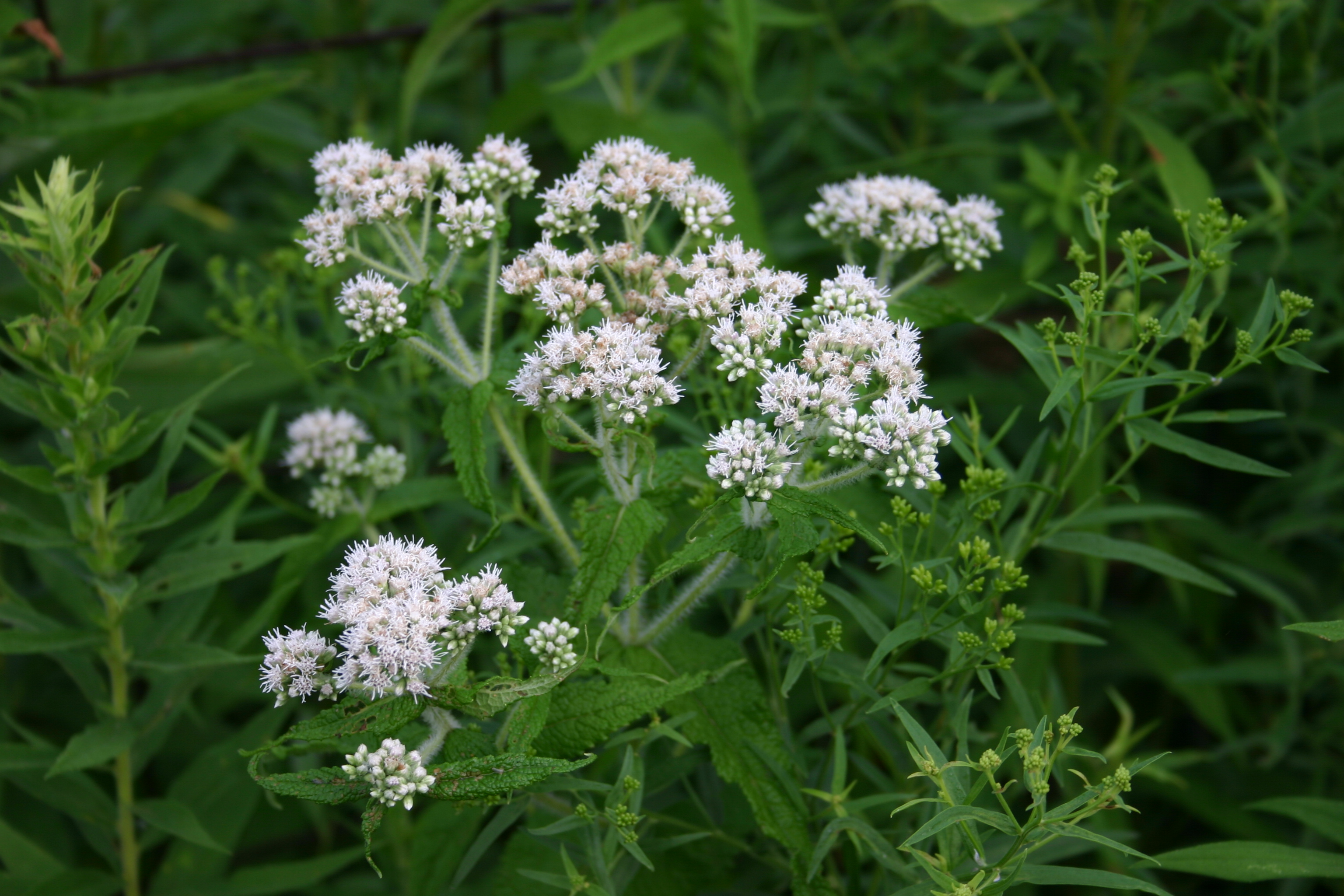 BonesetEupatorium perfoliatum
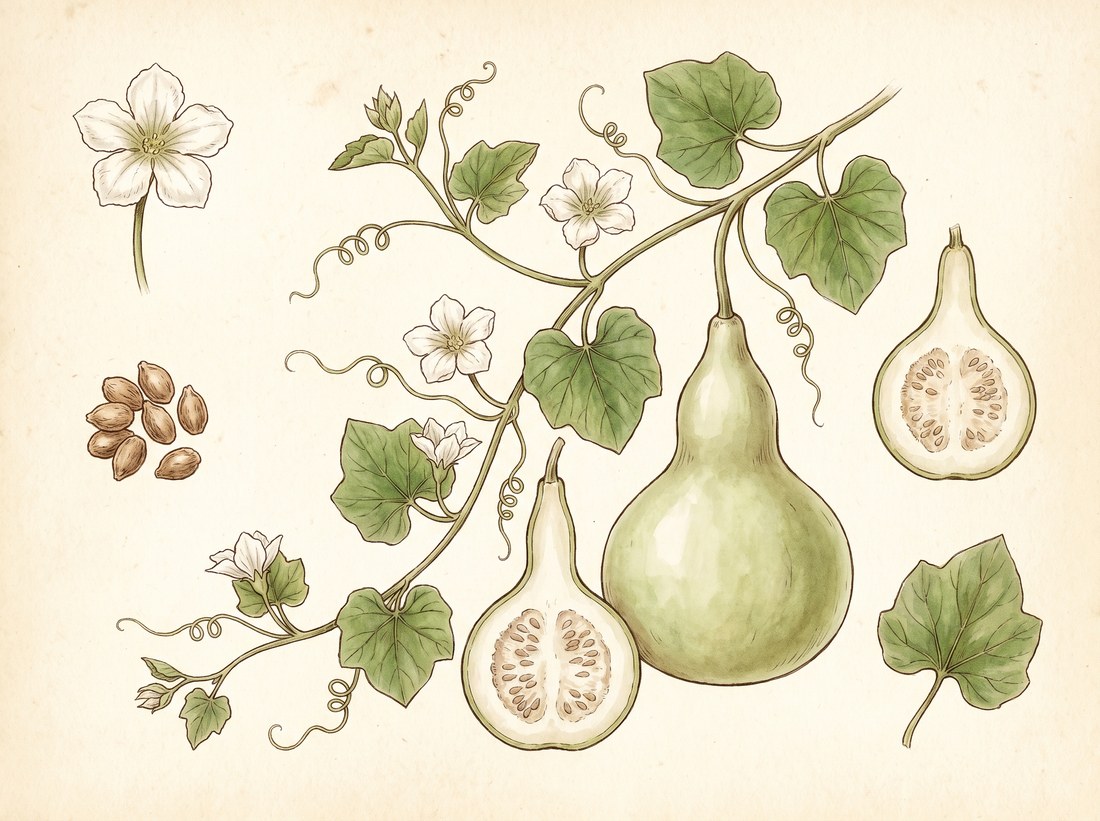 Bottle gourdLagenaria siceraria
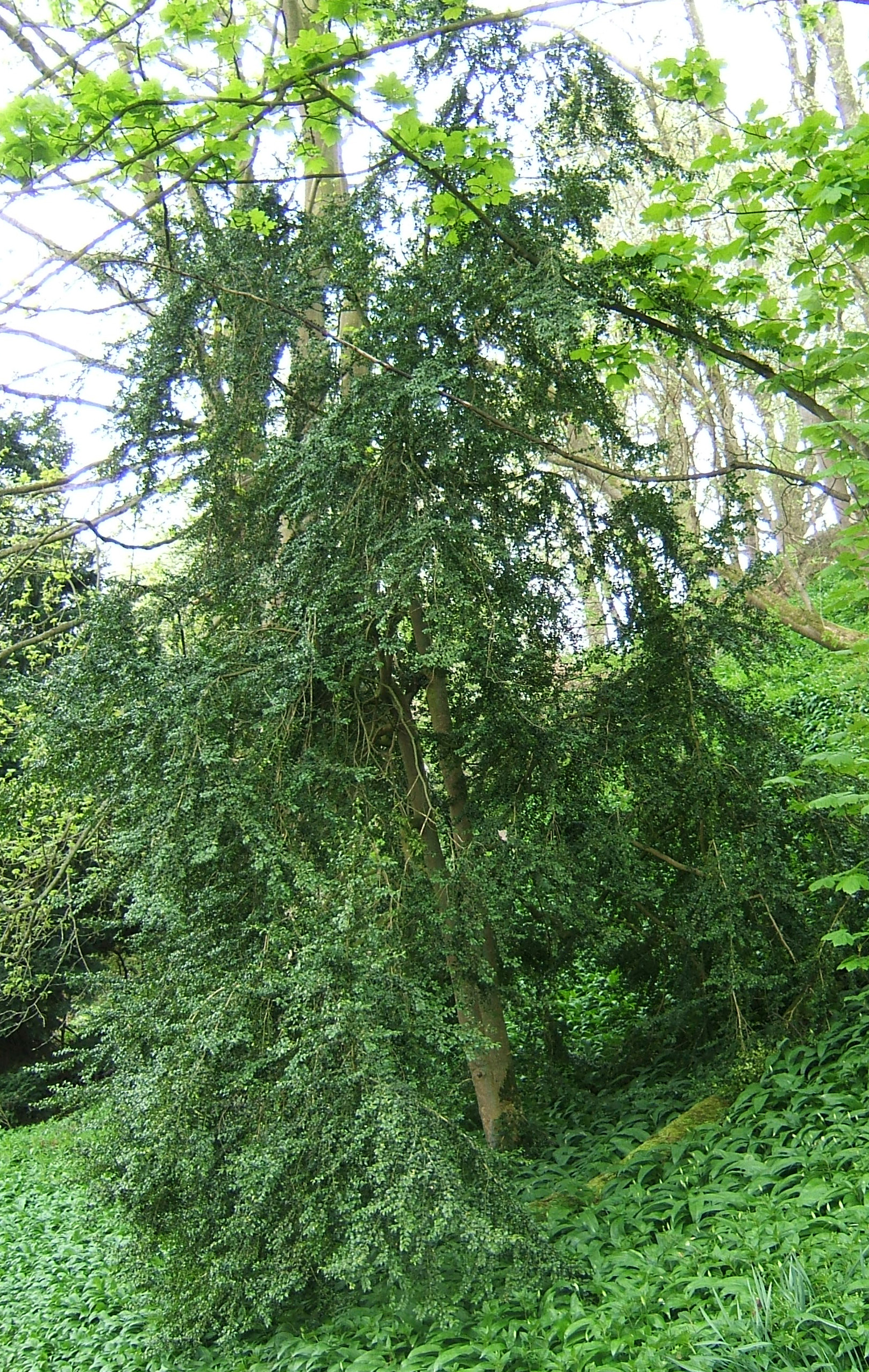 BoxBuxus
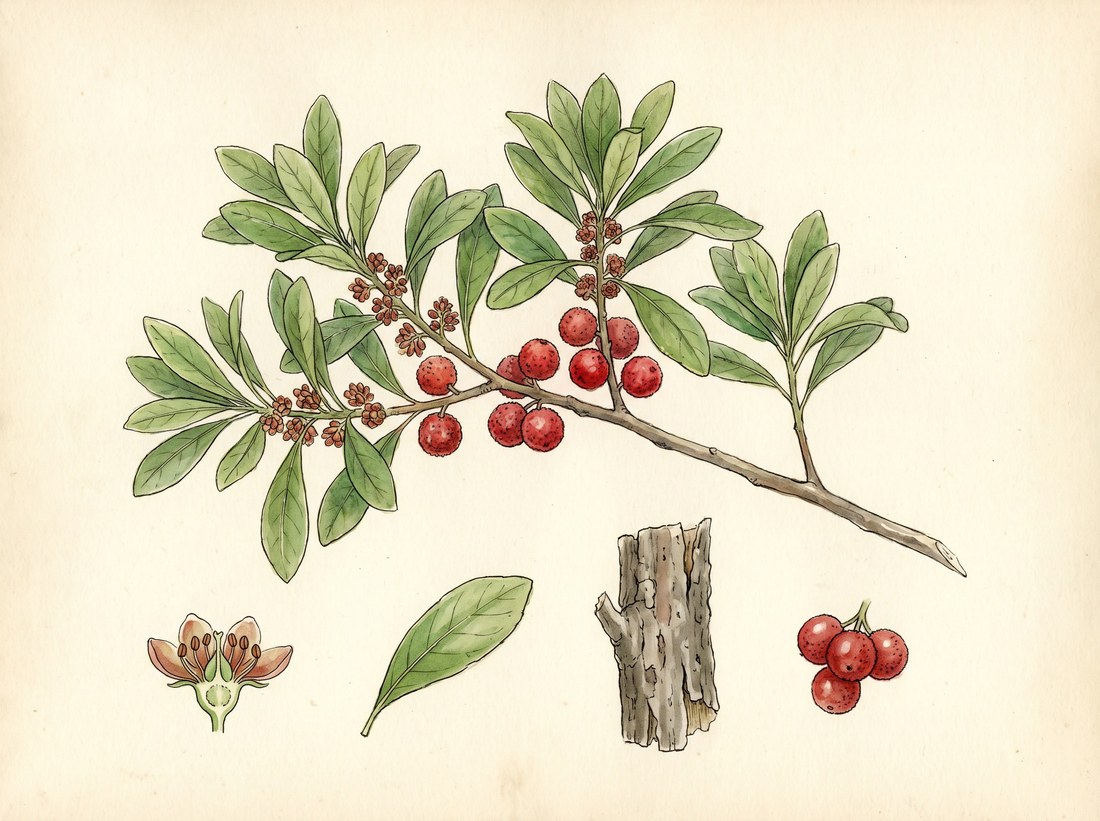 Box myrtleMyrica esculenta
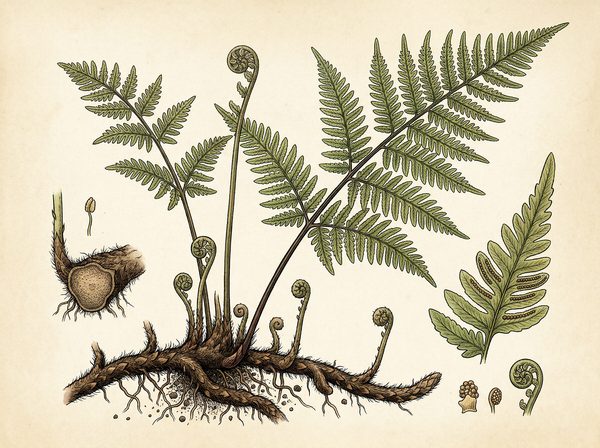 Bracken FernPteridium aquilinum
The whole plate is in the library. The compass, Compare, the Sky of eleven hundred plants and the formulary open with an email address and a password, free, with the formula builder and its safety engine. Herbert without limit, his formulating, clients, the handouts and the labels are the paid room.
Open the library, free