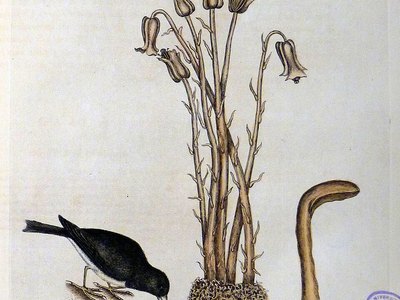
Western Herbalism
Beechdrops
Orobanche virginiana
Also known as Beech-drops, Cancer root, Broom rape.
Beechdrops is a small, leafless, chlorophyll-free herb of the broomrape family that parasitizes the roots of American beech trees, from which it draws all its nourishment; it appears as pale, scaly, brownish-purple flowering stalks rising from the forest floor in late summer. The whole plant, gathered when in flower, was the part used by nineteenth-century American physiomedicalist and eclectic practitioners, who valued it chiefly as a strong, bitter astringent. Its old name of cancer-root reflects its historical topical use on indolent ulcers and sores rather than any established action against malignancy.

Ask Herbert about Beechdrops. Herbert is the master herbalist inside Bountiful Herbs: he answers from this plate and eleven hundred others, with dosing, pairing and cautions. Your first ten questions are free.
Ask HerbertActions
Indications what the tradition reached for it in
- Aphthous stomatitis
- Canker sores of the mouth
- Bleeding, spongy gums
- Chronic diarrhea
- Dysentery
- Leucorrhea
- Indolent, slow-healing ulcers
- Contact dermatitis from poison ivy
- Loose, atonic bowel with mucus
- Weeping skin sores
- Herpetic sores of lips and mouth
- Diarrhea
- Chronic mucous discharges
- Bleeding or spongy gums
- Slow-healing skin ulcers
- Poison ivy dermatitis
- Weeping eczema
Specific indications
Painful, raw aphthous ulcers of the mouth that bleed easily and resist other remedies
Chronic watery diarrhea with a relaxed, atonic bowel unresponsive to milder astringents
Indolent, weeping ulcers or sores of the skin that call for a strongly astringent topical wash
Painful aphthous ulcers of the mouth with a raw, burning quality, used as a local wash
Safety
Pregnancy: Avoid in pregnancy: there is no modern safety data and historical use does not substitute for toxicological study.
Breastfeeding: Avoid in lactation for the same reason of insufficient safety data.
The record lists 4 contraindications; open the plate in the library to read them in full.
In practice
Beechdrops was reached for in nineteenth-century American practice mainly as a locally applied astringent: a strong decoction or the fresh bruised plant was used as a mouthwash for aphthous ulcers and bleeding gums, or as a wash for indolent, weeping skin sores, including reported use on the rash of poison ivy.
Dosing as the sources wrote it
| Preparation | As written | Metric |
|---|---|---|
| Decoction (dried whole plant) | 2-4 g dried plant in decoction, taken in divided doses through the day | 2000-4000 mg |
| Tincture (1:5, 50%) | 1-2 mL three times daily | 1-2 mL |
| Topical wash or mouthwash | strong decoction applied locally to ulcers, sores, or skin eruptions as needed | |
| powder | Dose of the powder, from 10 to 15 grains. | 648-972 mg |
| Decoction (topical wash or mouthwash) | 10-20 g dried plant per 500 mL water, simmered and cooled, applied locally several times daily | 10000-20000 mg |
| Tincture (1:5) | 1-2 mL diluted in water as a mouth rinse or wound wash, up to three times daily | 1-2 mL |
Doses are reproduced from the sources for practitioners and are not a recommendation for any person.
From the sources
Overview. Beechdrops is a small, leafless, chlorophyll-free herb of the broomrape family that parasitizes the roots of American beech trees, from which it draws all its nourishment; it appears as pale, scaly, brownish-purple flowering stalks rising from the forest floor in late summer. The whole plant, gathered when in flower, was the part used by nineteenth-century American physiomedicalist and eclectic practitioners, who valued it chiefly as a strong, bitter astringent. Its old name of cancer-root reflects its historical topical use on indolent ulcers and sores rather than any established action against malignancy.
Overview. Epiphegus virginiana, known as beech drops or cancer-root, is a small leafless, chlorophyll-free plant that grows as a root parasite on American beech (Fagus grandifolia). Native to eastern North America, the whole dried plant was gathered by nineteenth-century eclectic physicians for its markedly astringent, tannin-rich tissue. It never became a mainstream herb and has no established modern trade, but it holds a place in older American materia medica as a local astringent for mouth and skin lesions.
Clinical Notes. Beechdrops was reached for in nineteenth-century American practice mainly as a locally applied astringent: a strong decoction or the fresh bruised plant was used as a mouthwash for aphthous ulcers and bleeding gums, or as a wash for indolent, weeping skin sores, including reported use on the rash of poison ivy.
Clinical Notes. Eclectic physicians valued beech drops chiefly as a topical and mucosal astringent rather than as a systemic remedy. A strong decoction or diluted tincture was swabbed on aphthous ulcers, herpetic sores, and bleeding gums, and used as a wash for indolent, discharging skin ulcers, the plant's heavy tannin content giving it a tightening, drying action on raw or weeping tissue.
Drawn from Cook's Physio-Medical Dispensatory; Scudder's Specific Medication and Specific Medicines; King's American Dispensatory, 18th edition (Felter and Lloyd), and the Bountiful Herbs editorial.
Nearby on the shelf
 BearberryArctostaphylos uva-ursi
 BeautyberryCallicarpa macrophylla
 BebeeruNectandra rodiei
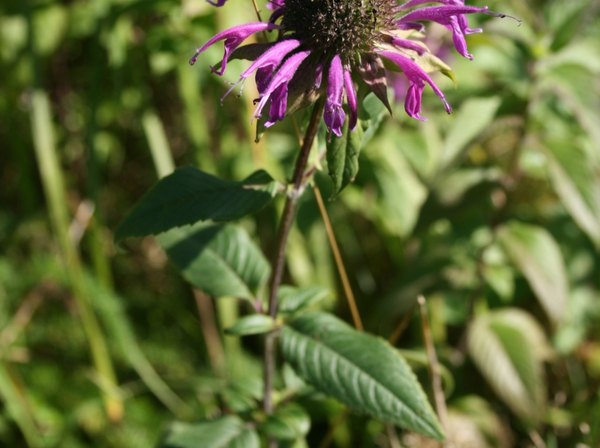 Bee BalmMonarda didyma
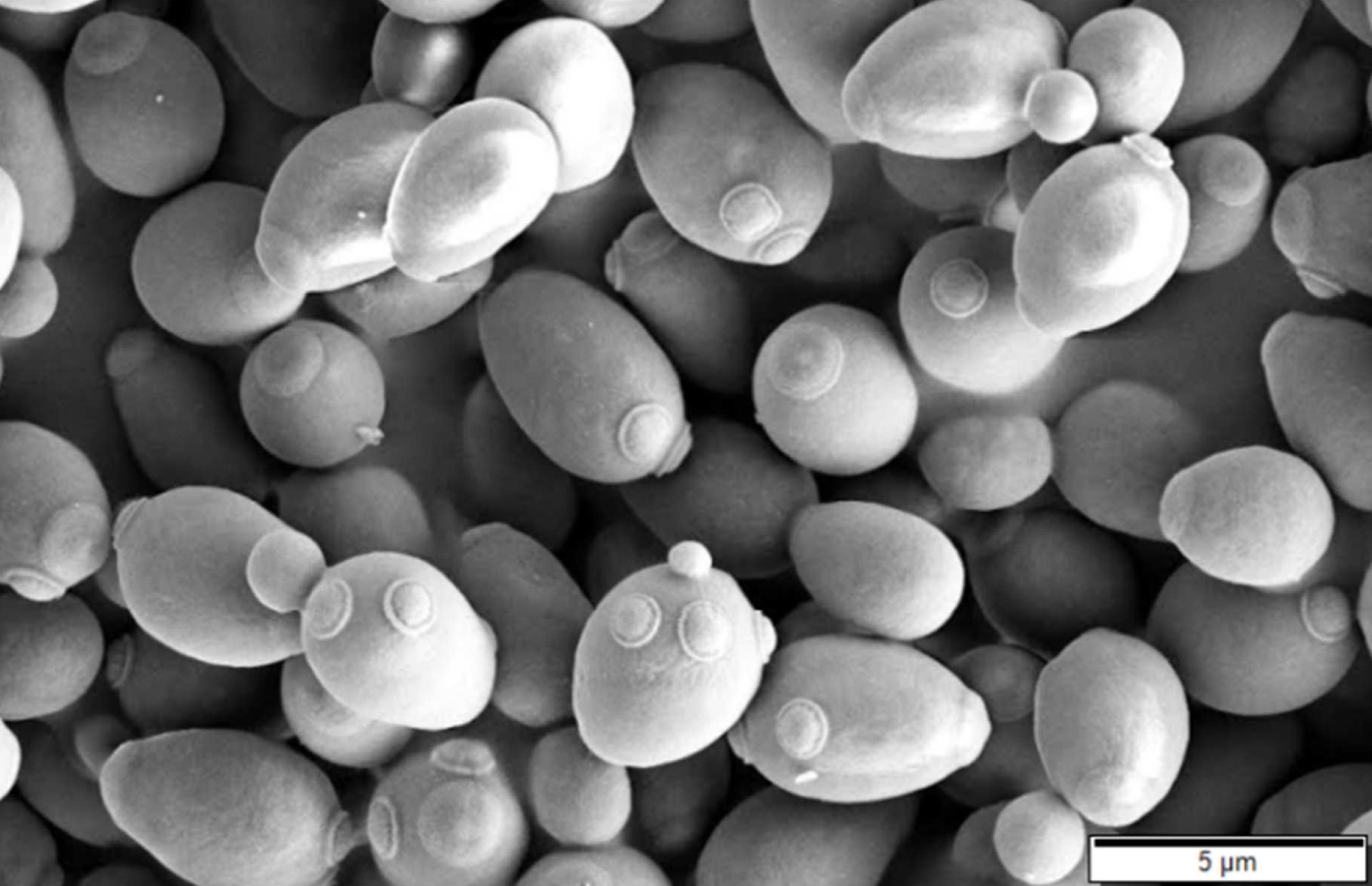 Beer YeastCerevisiae Fermentum
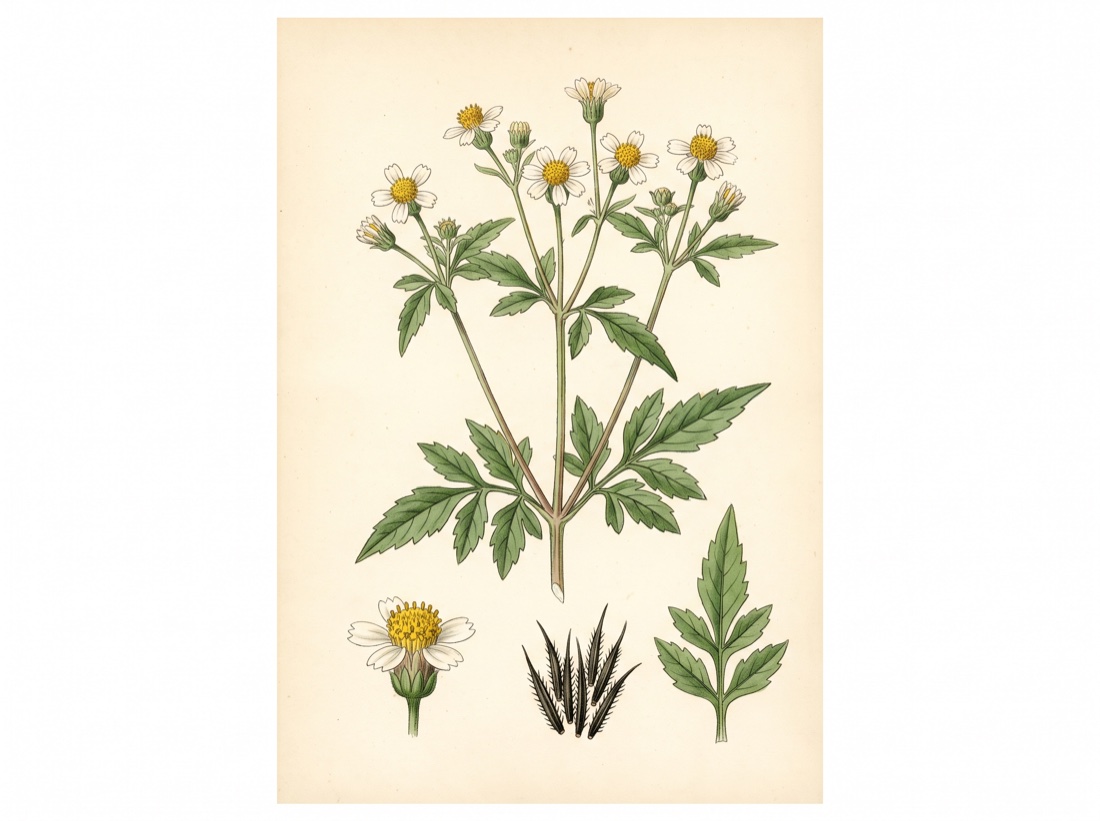 BeggarticksBidens pilosa
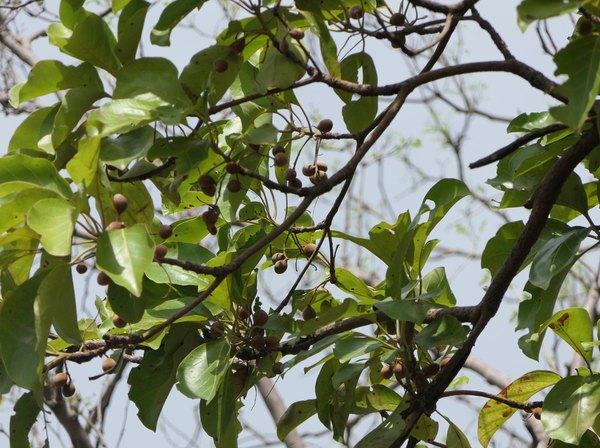 Beleric myrobalanTerminalia bellirica
 BellwortUvularia
The whole plate is in the library. The compass, Compare, the Sky of eleven hundred plants and the formulary open with an email address and a password, free, with the formula builder and its safety engine. Herbert without limit, his formulating, clients, the handouts and the labels are the paid room.
Open the library, free