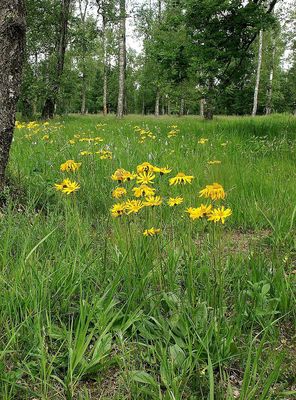
Western Herbalism
Arnica
Arnica spp.
Also known as Arnicae Flos, Leopard's Bane, Mountain Tobacco, Wolf's Bane.
External. Arnica, in tincture or fomentation, has long been a popular but by no means safe discutient to prevent and discuss inflammatory swellings, and to relieve the soreness of myalgia and the effects of sprains, bruises, and contusions.

Ask Herbert about Arnica. Herbert is the master herbalist inside Bountiful Herbs: he answers from this plate and eleven hundred others, with dosing, pairing and cautions. Your first ten questions are free.
Ask HerbertActions
Indications what the tradition reached for it in
- Sores (old)
- Edema (w/ tissue injury or fracture)
- Hematoma
- Sprain
- Bruises
- Soft tissue injury
- Sore muscles from overexertion
- Injury (severe)
- Phlebitis
- Pain
- Abscess
- Musculoskeletal strain
- Sore breasts
- Inflammation
- Wounds
- Unbroken chilblains
- Alopecia neurotica
- Insect bites
- Gingivitis
- Aphthous ulcers
- Rheumatoid complaints
- Specifically for sprains
- Injuries
- Consequences of accidents
- Homeopathic preparations
Safety
Recognised toxicity. This plant carries a toxicity flag in the record; it is for trained practitioners only.
Low dose botanical. Used in drop doses in the classical practice; not a plant to dose freely.
Pregnancy: Not safe. Use should be avoided in pregnancy.
Pregnancy, our record's flag: Caution. Use with care in pregnancy (our record's flag)
Pregnancy, our record's flag: Not safe. Not for use in pregnancy (our record's flag)
Pregnancy, a modern clinical reference: There are insufficient data on the use of arnica preparations during pregnancy and breastfeeding, and their use should be avoided during these periods
Pregnancy, published rating: Not safe. High risk of fetal damage (Mills & Bone X); AHPA Botanical Safety Handbook class 3, 2d, NRP, NRL (not recommended in pregnancy except under qualified supervision, not recommended in lactation except under qualified supervision)
Breastfeeding: Not safe. Contraindicated while breastfeeding (Mills & Bone X); AHPA Botanical Safety Handbook class 3, 2d, NRP, NRL (not recommended in pregnancy except under qualified supervision, not recommended in lactation except under qualified supervision)
Breastfeeding, our record's flag: Caution. Use with care while breastfeeding (our record's flag)
Breastfeeding, our record's flag: Not safe. Not for use while breastfeeding (our record's flag)
Breastfeeding, a modern clinical reference: There are insufficient data on the use of arnica preparations during pregnancy and breastfeeding, and their use should be avoided during these periods
The record lists 5 contraindications; open the plate in the library to read them in full.
Dosing as the sources wrote it
| Preparation | As written | Metric |
|---|---|---|
| Topical application of tincture | mix 30 ml of 1:10 tincture w 150 ml warm H2O, soak cloth, apply | |
| Infusion | 1-2 tsp flower/c H2O, infuse, strain, soak cloth, apply | |
| Tincture of arnica flower (BPC 1949) 2 -4 mL for external application only | ||
| Dose, 1 to 10 grains. | 64.8-648 mg | |
| Specific Medicine Arnica | Dose, 1/4 to 10 drops. | |
| Emulsum Asafœtidæ, Emulsion of Asafetida (Milk of Asafetida) | Dose, 1 fluidrachm to 1 fluidounce. | 3.7-29.57 mL |
Doses are reproduced from the sources for practitioners and are not a recommendation for any person.
From the sources
Therapy. External. Arnica, in tincture or fomentation, has long been a popular but by no means safe discutient to prevent and discuss inflammatory swellings, and to relieve the soreness of myalgia and the effects of sprains, bruises, and contusions.
Therapy. Asafetida is carminative and antispasmodic, and is a very useful nervine for functional spasmodic affections. It is especially adapted to neurotic individuals subject to hysterical or emotional attacks, usually attended by flatulent distention of the abdomen.
Therapy. In small doses, arnica causes increased perspiration, increased secretion of urine, and an accelerated pulse. Its tonic influence upon the nervous system, and directly upon the heart and circulatory organs, make it a useful remedy indeed.
Action, Medical Uses, and Dosage. Locally arnica is irritant, the preparations of the flowers being most powerful. Strong preparations should not be applied full strength, for in some instances of tender skin, or in accidents occurring after its use, an erysipelatous inflammation has followed.
Drawn from Scudder's Specific Medication and Specific Medicines; King's American Dispensatory, 18th edition (Felter and Lloyd); Ellingwood's American Materia Medica, Therapeutics and Pharmacognosy; Felter's Eclectic Materia Medica, Pharmacology and Therapeutics, and the Bountiful Herbs editorial.
Nearby on the shelf
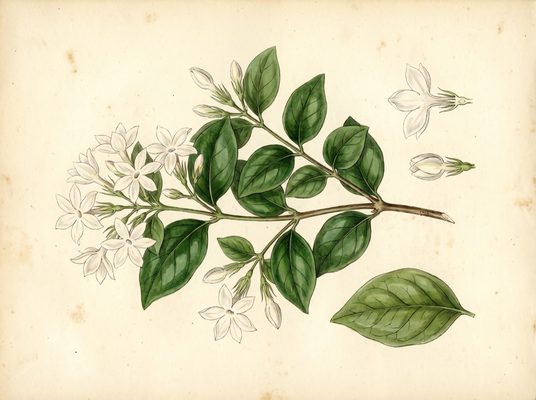 Arabian jasmineJasminum sambac
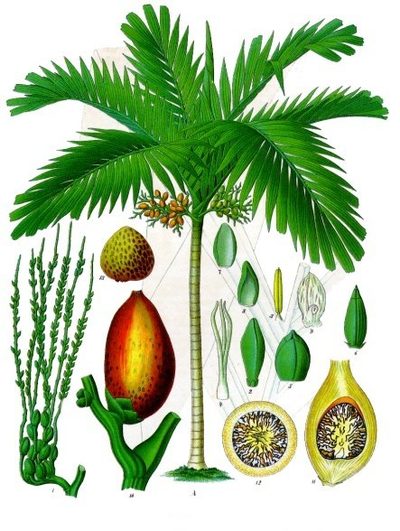 Areca nutAreca catechu
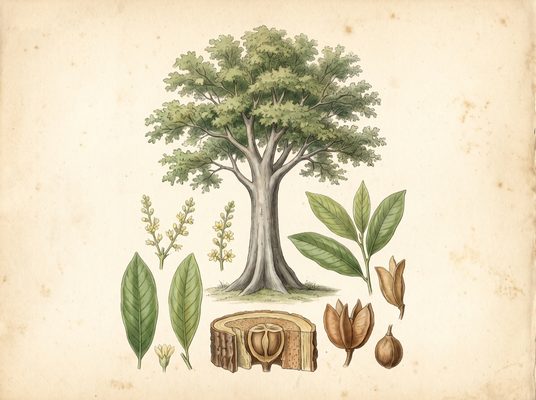 ArjunaTerminalia arjuna
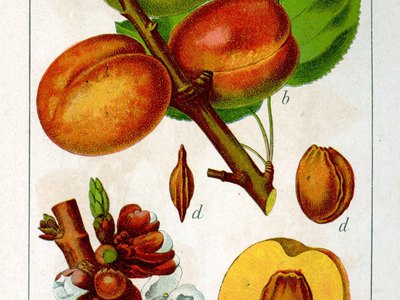 Armeniaca vulgarisArmeniaca vulgaris
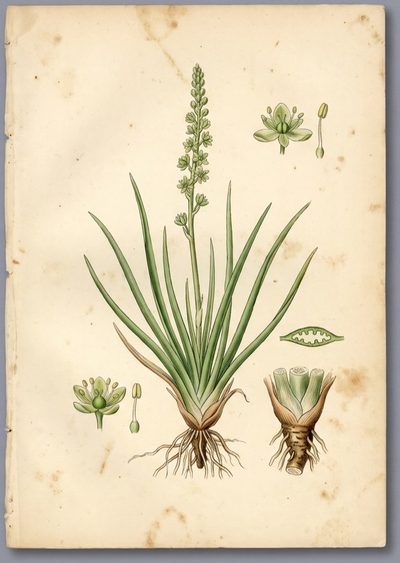 Arrow-GrassTriglochin maritimum
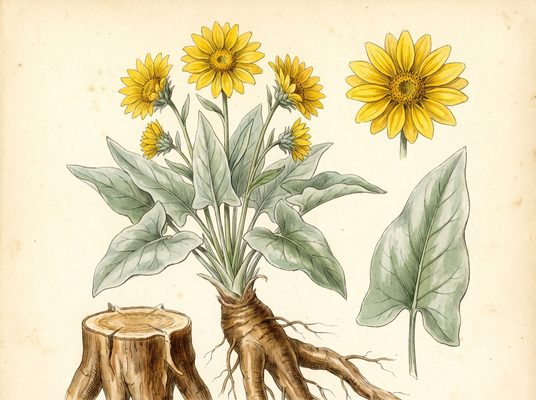 Arrowleaf balsamrootBalsamorhiza sagittata
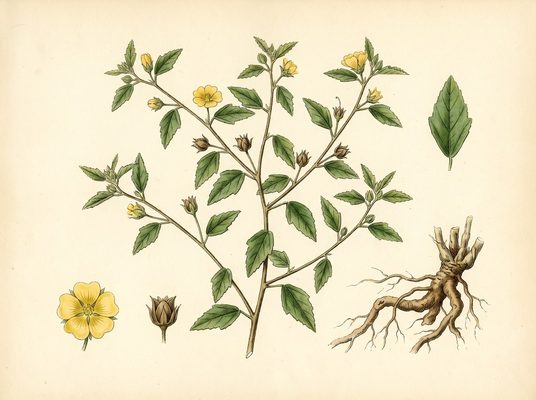 Arrowleaf sidaSida rhombifolia
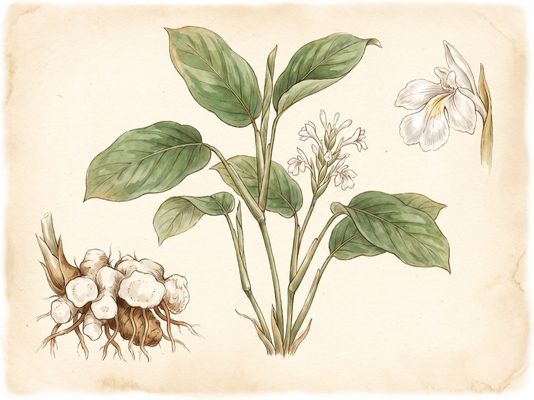 ArrowrootMaranta arundinacea
The whole plate is in the library. The compass, Compare, the Sky of eleven hundred plants and the formulary open with an email address and a password, free, with the formula builder and its safety engine. Herbert in full, his formulating, clients, the handouts and the labels are the paid room.
Open the library, free