Western Herbalism
Arrowleaf balsamroot
Balsamorhiza sagittata
Also known as balsamroot, balsam root, Oregon sunflower, spring sunflower.
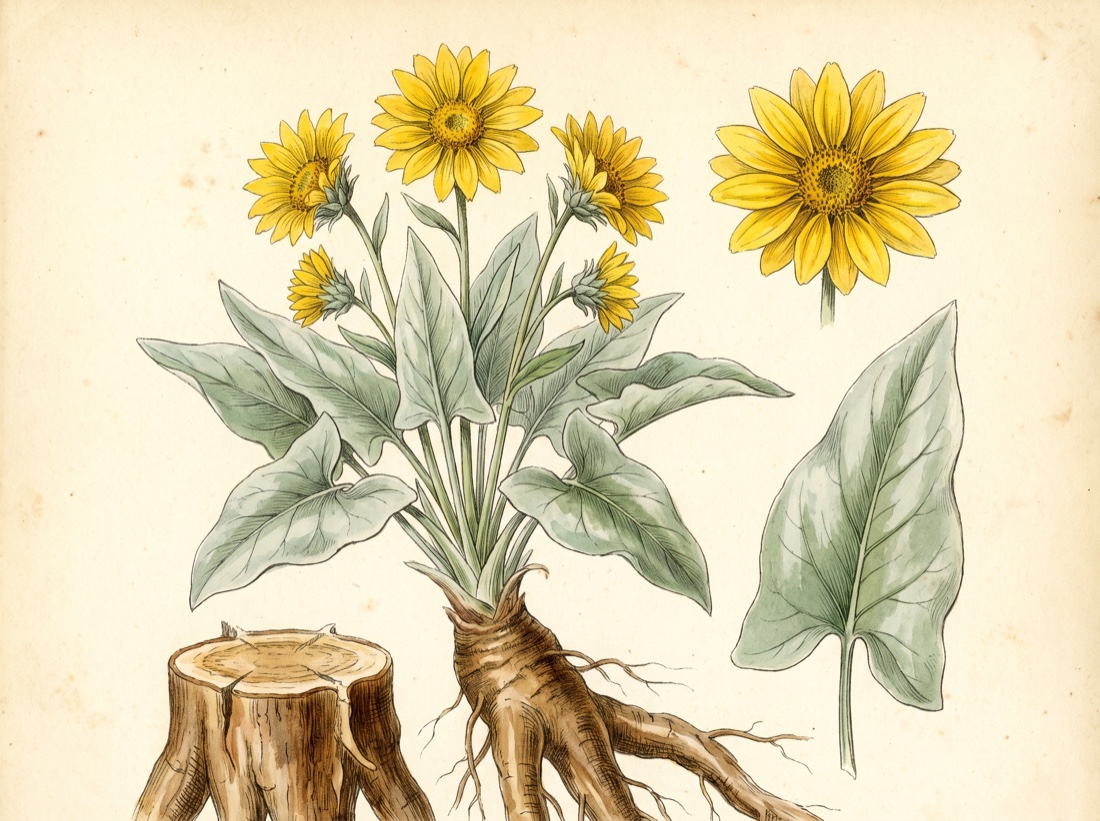
Arrowleaf balsamroot is the big, silver-leaved spring sunflower that covers dry hillsides from British Columbia to Colorado, with a deep, resinous taproot that smells of balsam when cut. Root, leaf and seed are all used, the root medicinally. It is a foundational medicine and food of the Indigenous peoples of the Columbia Plateau and Great Basin, and in the regional Western herbal tradition it serves as a local substitute for echinacea and as an expectorant and wound herb.

Ask Herbert about Arrowleaf balsamroot. Herbert is the master herbalist inside Bountiful Herbs: he answers from this plate and eleven hundred others, with dosing, pairing and cautions. Your first ten questions are free.
Ask HerbertActions
Indications what the tradition reached for it in
- Early upper respiratory infection
- Bronchitis with thick, stuck mucus
- Sore throat and tonsillitis
- Influenza with chills
- Sinusitis
- Poor digestion with low appetite
- Wounds, burns and insect bites (topical)
- Skin infections and boils (poultice)
- Sluggish lymphatic drainage with recurrent infection
- Rheumatic aches (topical or bath)
Specific indications
A cold or flu settling into the chest with thick, hard-to-raise mucus and a sluggish, chilly patient
Recurrent minor infections in someone who is run down and would benefit from an echinacea-like root that is locally abundant
Safety
The record lists 4 contraindications; open the plate in the library to read them in full.
In practice
Balsamroot sits between echinacea and osha in feel: warming, pungent, resinous and immune-stimulating, but with more of osha's push on the lungs. It is best at the first sign of infection, given every couple of hours as tincture, and it stays useful into a bronchitis where the mucus is thick and the cough unproductive.
Dosing as the sources wrote it
| Preparation | As written | Metric |
|---|---|---|
| Tincture (1:5, 60%) | 1-3 mL three times daily | 1-3 mL |
| Decoction | 2-4 g dried root daily | 2000-4000 mg |
| Topical | 10-20 g dried root decocted in 500 mL water as a wash or poultice | 10000-20000 mg |
Doses are reproduced from the sources for practitioners and are not a recommendation for any person.
From the sources
Overview. Arrowleaf balsamroot is the big, silver-leaved spring sunflower that covers dry hillsides from British Columbia to Colorado, with a deep, resinous taproot that smells of balsam when cut. Root, leaf and seed are all used, the root medicinally. It is a foundational medicine and food of the Indigenous peoples of the Columbia Plateau and Great Basin, and in the regional Western herbal tradition it serves as a local substitute for echinacea and as an expectorant and wound herb.
Clinical Notes. Balsamroot sits between echinacea and osha in feel: warming, pungent, resinous and immune-stimulating, but with more of osha's push on the lungs. It is best at the first sign of infection, given every couple of hours as tincture, and it stays useful into a bronchitis where the mucus is thick and the cough unproductive.
Nearby on the shelf
 ArjunaTerminalia arjuna
 Armeniaca vulgarisArmeniaca vulgaris
 ArnicaArnica spp.
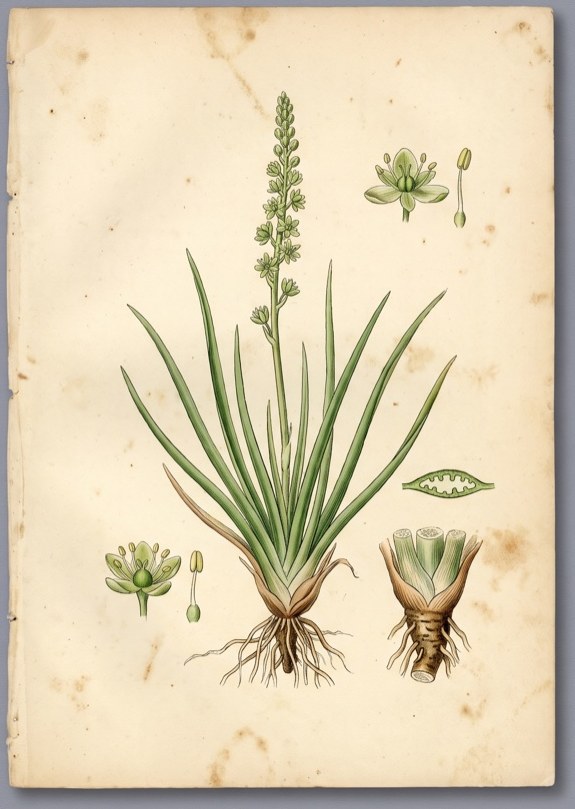 Arrow-GrassTriglochin
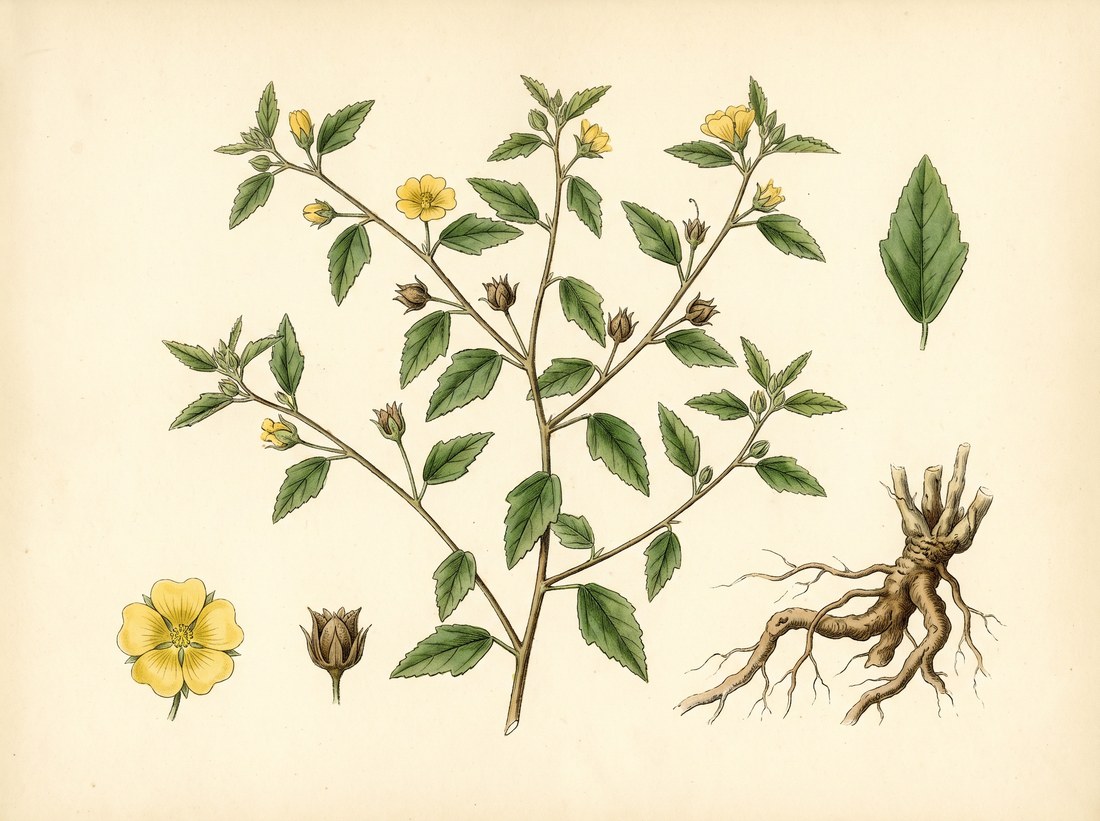 Arrowleaf sidaSida rhombifolia
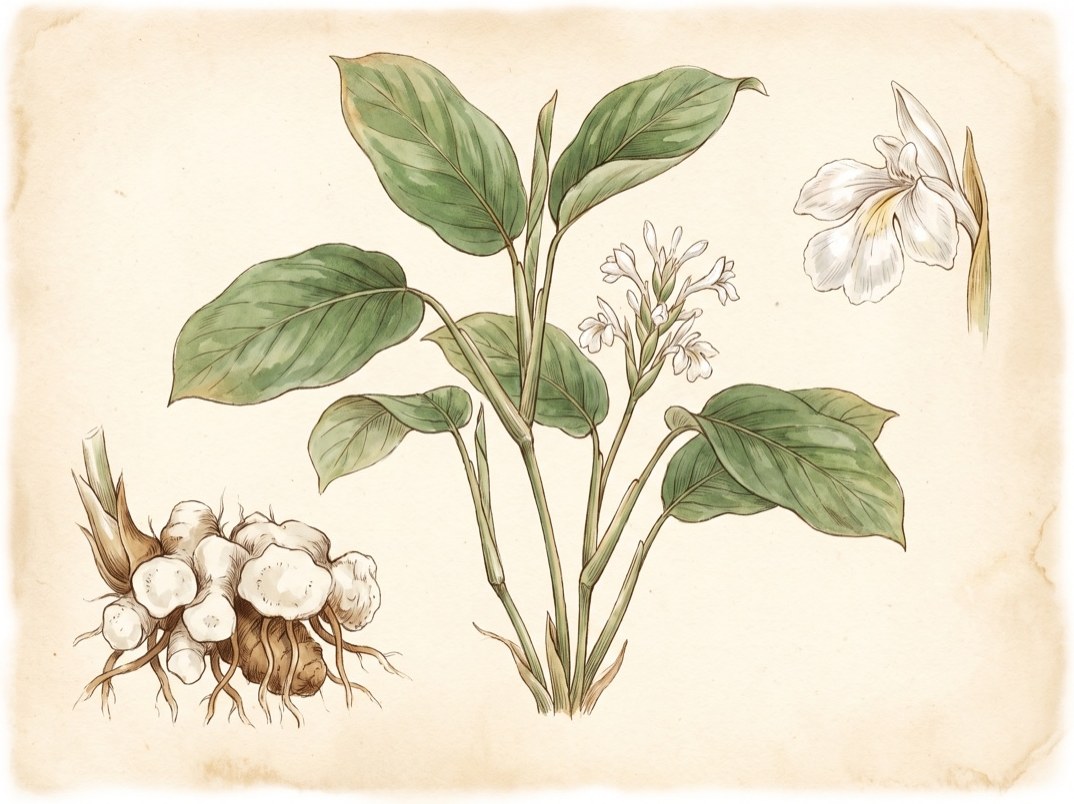 ArrowrootMaranta
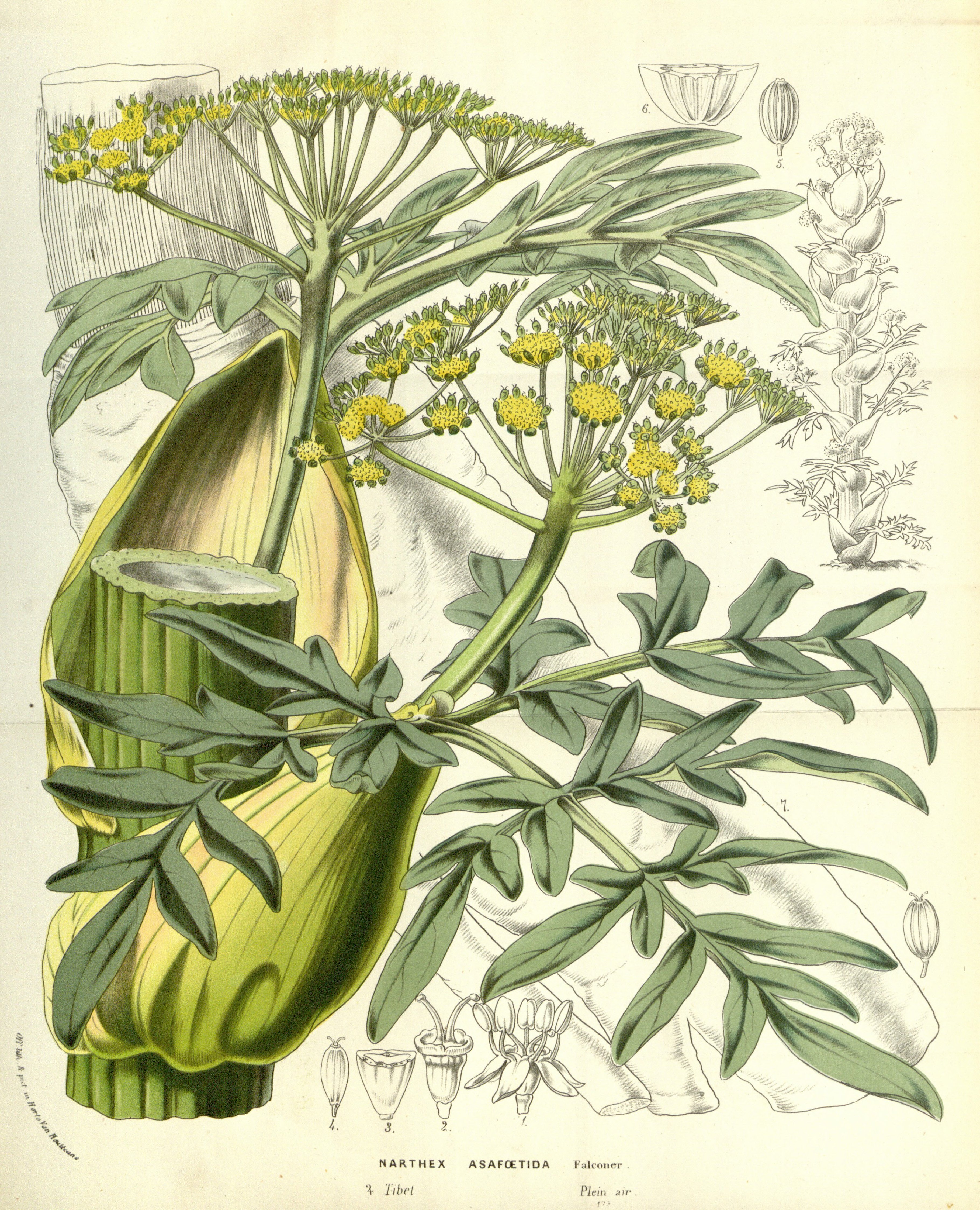 AsafoetidaFerula asafoetida
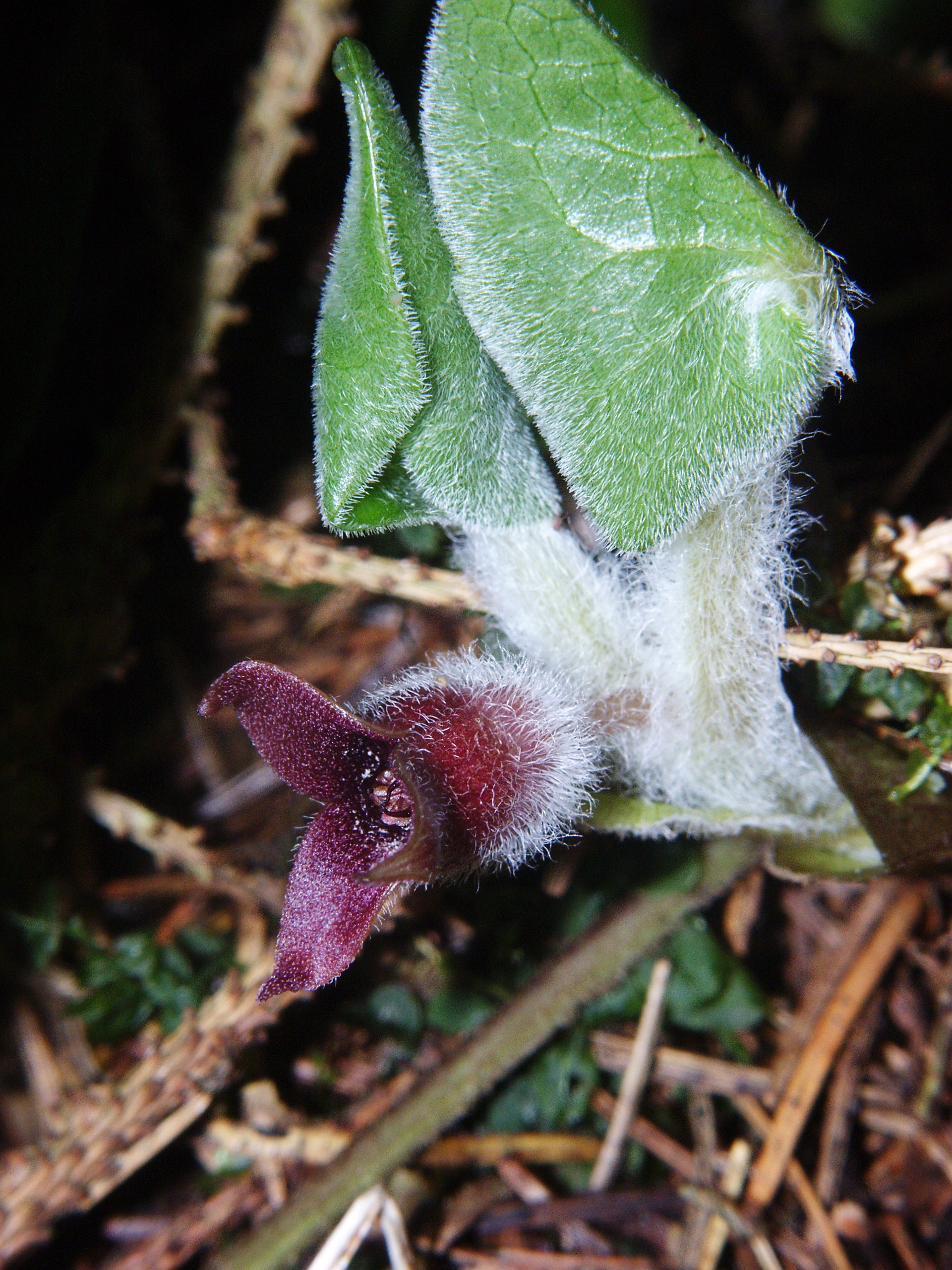 AsarabaccaAsarum Europaeum
The whole plate is in the library. The compass, Compare, the Sky of eleven hundred plants and the formulary open with an email address and a password, free, with the formula builder and its safety engine. Herbert without limit, his formulating, clients, the handouts and the labels are the paid room.
Open the library, free