Western Herbalism
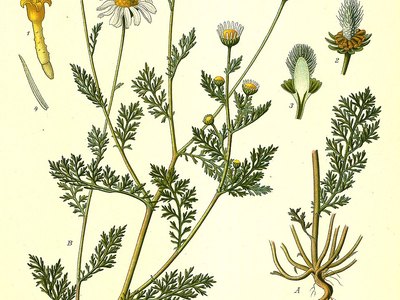
Anthemis cotula
Anthemis cotula
Also known as May weed, Dog fennel, Wild camomile, Wild chamomile, Dog chamomile, Mayweed, Stinking chamomile, Fetid chamomile.
Mayweed, or dog fennel, is a common weedy annual of the daisy family found through much of Europe and naturalized widely across North America. It closely resembles German chamomile in growth habit but is coarser, more strongly branched, and carries a sharp, unpleasant odor when bruised. The flowering herb is the part used medicinally. In the physiomedicalist tradition it was classed among the relaxant, diaphoretic herbs, valued as a stronger, more acrid substitute for chamomile when a firmer stimulus to the skin and uterus was wanted.

Ask Herbert about Anthemis cotula. Herbert is the master herbalist inside Bountiful Herbs: he answers from this plate and eleven hundred others, with dosing, pairing and cautions. Your first ten questions are free.
Ask HerbertActions
Indications what the tradition reached for it in
- Delayed or suppressed menses
- Dysmenorrhea with nervous tension
- Hysteria and nervous excitability
- Common cold with chill and poor sweating
- Flatulent colic
- Intermittent fever
- Skin eruptions treated with a topical wash
- Insect bites and stings (topical)
- Worms (traditional use)
- General nervous unrest with a cold, sluggish circulation
- Amenorrhea
- Dysmenorrhea with spasmodic pain
- Feverish colds with restlessness
- Intermittent fever (traditional use)
- Minor skin eruptions
- Uterine colic
- Nervous headache associated with suppressed menses
Specific indications
Suppressed or scanty menses in a person with cold extremities and nervous tension
Feverish cold with restlessness, chilliness, and failure to break a sweat
Safety
Low dose botanical. Used in drop doses in the classical practice; not a plant to dose freely.
Pregnancy: Avoid in pregnancy: traditionally used as an emmenagogue and uterine stimulant, insufficient safety data to support use.
Breastfeeding: Avoid in lactation given the absence of safety data and its traditional emmenagogue reputation.
Dosing as the sources wrote it
| Preparation | As written | Metric |
|---|---|---|
| and the dose is from one to three grains, at intervals of six or more hours | 64.8-194 mg | |
| infusion | Dose of the infusion, from 1 to 4 fluid ounces, as often as required. | 29.57-118 mL |
| Infusion (dried herb) | 1-2 g dried herb as an infusion, up to three times daily | 1000-2000 mg |
| Tincture (1:5, 45%) | 1-2 mL three times daily | 1-2 mL |
| Infusion | 1-2 g dried flowering tops as a warm infusion, three times daily | 1000-2000 mg |
Doses are reproduced from the sources for practitioners and are not a recommendation for any person.
From the sources
Overview. Mayweed, or dog fennel, is a common weedy annual of the daisy family found through much of Europe and naturalized widely across North America. It closely resembles German chamomile in growth habit but is coarser, more strongly branched, and carries a sharp, unpleasant odor when bruised. The flowering herb is the part used medicinally. In the physiomedicalist tradition it was classed among the relaxant, diaphoretic herbs, valued as a stronger, more acrid substitute for chamomile when a firmer stimulus to the skin and uterus was wanted.
Overview. Mayweed is an annual weedy member of the daisy family, native to Europe and widely naturalized as a roadside and pasture weed across North America. It gives off a strong, somewhat disagreeable odor when bruised, distinguishing it from true chamomile, to which it bears a close resemblance. The flowering tops were used by nineteenth century American eclectic physicians as a fresh-plant remedy, valued chiefly as a nervine antispasmodic and emmenagogue and as a mild diaphoretic in feverish colds.
Clinical Notes. Physiomedicalist writers placed mayweed alongside chamomile and pennyroyal as a relaxant diaphoretic, useful for opening the skin and equalizing circulation in feverish colds where sweating is sluggish, and for bringing on delayed menses when the picture includes coldness and nervous tension rather than heat and congestion.
Clinical Notes. Eclectic writers reached for mayweed in cases of hysterical or nervous complaints tied to menstrual irregularity, particularly where suppressed or scanty menses coincided with spasmodic pelvic pain and general nervous agitation.
Drawn from Cook's Physio-Medical Dispensatory; Scudder's Specific Medication and Specific Medicines; King's American Dispensatory, 18th edition (Felter and Lloyd), and the Bountiful Herbs editorial.
Nearby on the shelf
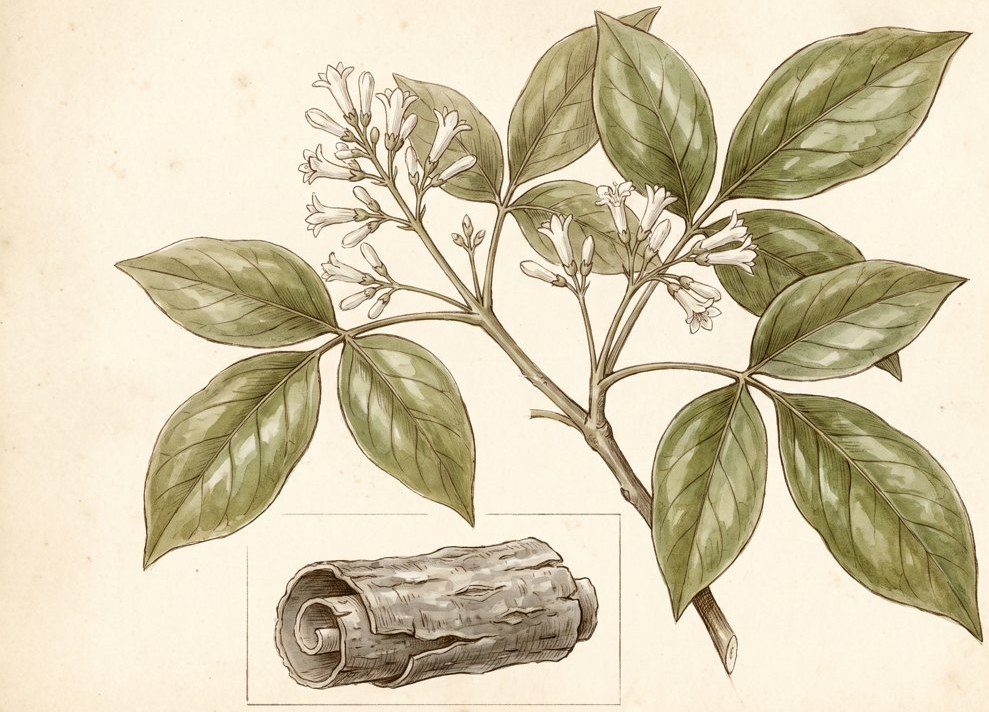 Angustura BarkAngustura
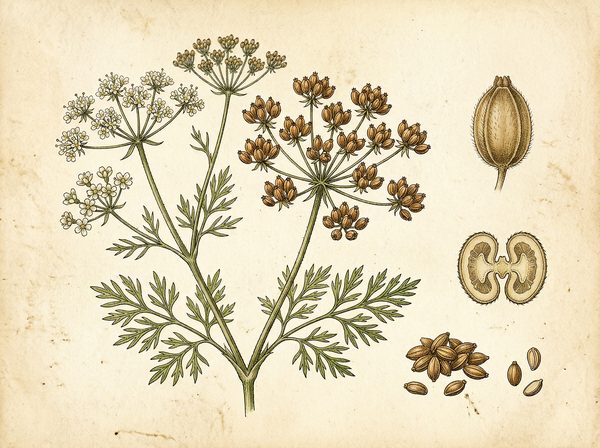 AnisePimpinella anisum
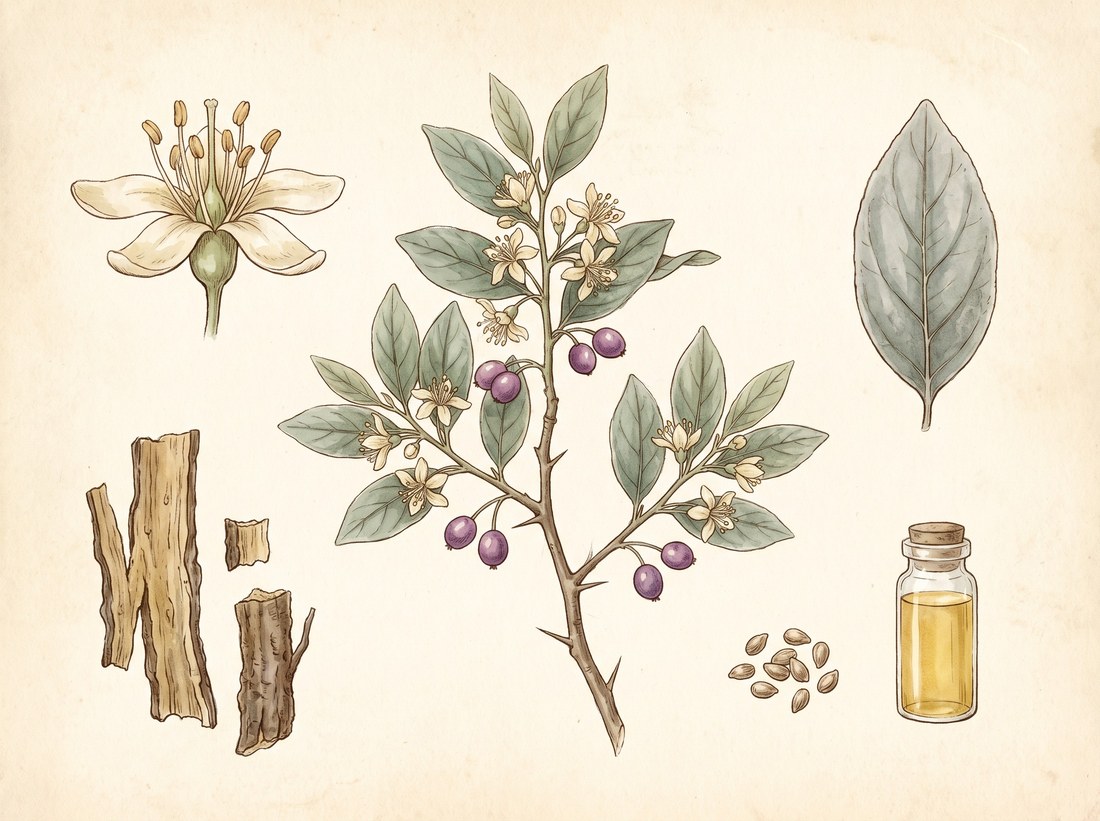 AnkolaAlangium salviifolium
 AnnattoBixa orellana
 AphanesAphanes arvensis
 ApplePyrus Malus
 Arabian jasmineJasminum sambac
 Areca nutAreca catechu
The whole plate is in the library. The compass, Compare, the Sky of eleven hundred plants and the formulary open with an email address and a password, free, with the formula builder and its safety engine. Herbert without limit, his formulating, clients, the handouts and the labels are the paid room.
Open the library, free