Western Herbalism
Thimbleweed
Rudbeckia laciniata
Also known as Cutleaf coneflower, Green-headed coneflower, Sochan, Cone-flower.
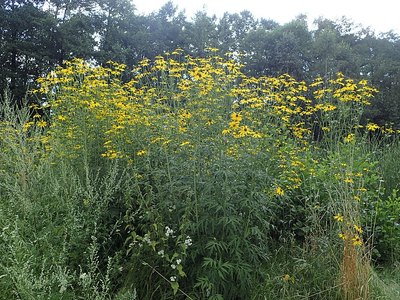
Rudbeckia laciniata is a tall, branching perennial of the daisy family, native to moist thickets and streambanks across much of eastern and central North America. The leaves and flowering tops, and in Cherokee foodways the young spring shoots (known as sochan), have a mild bitter, faintly balsamic character. In nineteenth century physiomedical and Eclectic practice the plant was valued chiefly as a gentle kidney remedy, used to restore tone to a sluggish urinary system rather than to force output through irritation.

Ask Herbert about Thimbleweed. Herbert is the master herbalist inside Bountiful Herbs: he answers from this plate and eleven hundred others, with dosing, pairing and cautions. Your first ten questions are free.
Ask HerbertActions
Indications what the tradition reached for it in
- Sluggish or inefficient urination
- Edema of renal origin (traditional)
- Chronic kidney weakness with poor tone (traditional)
- Cystitis with dull aching (traditional)
- Congestion of the kidneys and bladder (traditional)
- General debility with urinary torpor
- Bright's disease (historical term for nephritis, traditional use only)
- Low-grade pelvic congestion
Specific indications
Scanty, poorly toned urination with a sense of renal sluggishness rather than acute irritation
Chronic kidney weakness where the physiomedical aim is to restore tone rather than simply force diuresis
Safety
The record lists 3 contraindications; open the plate in the library to read them in full.
In practice
Physiomedical writers placed Rudbeckia laciniata among the tonic diuretics: agents thought to work by improving the intrinsic tone of the kidney tissue rather than by stimulating or forcing secretion, which they associated with harsher diuretics that could exhaust the organ over time.
Dosing as the sources wrote it
| Preparation | As written | Metric |
|---|---|---|
| Infusion | 1-2 g dried leaf and flower per cup, three times daily | 1000-2000 mg |
| Tincture (1:5, 40%) | 1-3 mL three times daily | 1-3 mL |
Doses are reproduced from the sources for practitioners and are not a recommendation for any person.
From the sources
Overview. Rudbeckia laciniata is a tall, branching perennial of the daisy family, native to moist thickets and streambanks across much of eastern and central North America. The leaves and flowering tops, and in Cherokee foodways the young spring shoots (known as sochan), have a mild bitter, faintly balsamic character. In nineteenth century physiomedical and Eclectic practice the plant was valued chiefly as a gentle kidney remedy, used to restore tone to a sluggish urinary system rather than to force output through irritation.
Clinical Notes. Physiomedical writers placed Rudbeckia laciniata among the tonic diuretics: agents thought to work by improving the intrinsic tone of the kidney tissue rather than by stimulating or forcing secretion, which they associated with harsher diuretics that could exhaust the organ over time.
Properties and Uses. The leaves and flowers are of a pleasant bitterish and somewhat balsamic odor, moderately diffusive, and leaving a tonic impression. Their chief action is upon the kidneys, effectually increasing the flow of urine without exhausting these organs; but rather distinctly improving their tone, and relieving inefficiency and torpor.
Description. Natural Order, Compositae. Genus RUDBECKIA: Perennial herbs with alternate leaves. Flower-heads large and showy, terminal to the branches; rays yellow, long and drooping, resembling a sunflower, neutral; scales of the involucre in two rows, leaf-like; receptacle long-conical, with short and soft chaff; achenia four-angled, smooth, with a minute crown-like border. R. LACINIATA: Stem smooth, branching, three to seven feet high. Leaves roughish, lower ones of five to seven-cut leaflets, upper ones irregularly three to five-parted. Heads long-peduncled; rays one to two inches long, strongly drooping; disk columnar in fruit, dull greenish-yellow. Common in low thickets, blooming from July to September. (Gray.)
Drawn from Cook's Physio-Medical Dispensatory, and the Bountiful Herbs editorial.
Nearby on the shelf
 Tea treeMelaleuca alternifolia
 TeaselDipsacus fullonum
 ThapsiaThapsia garganica
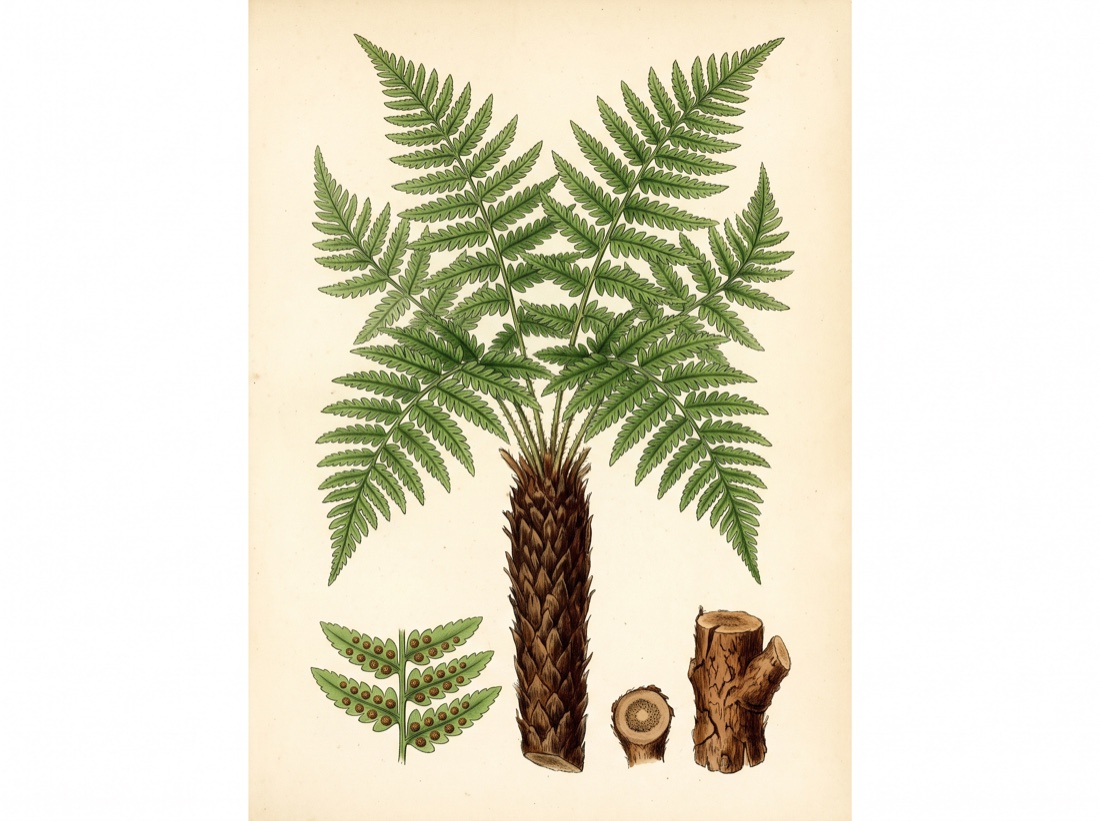 Thick-stemmed wood fernDryopteris crassirhizoma
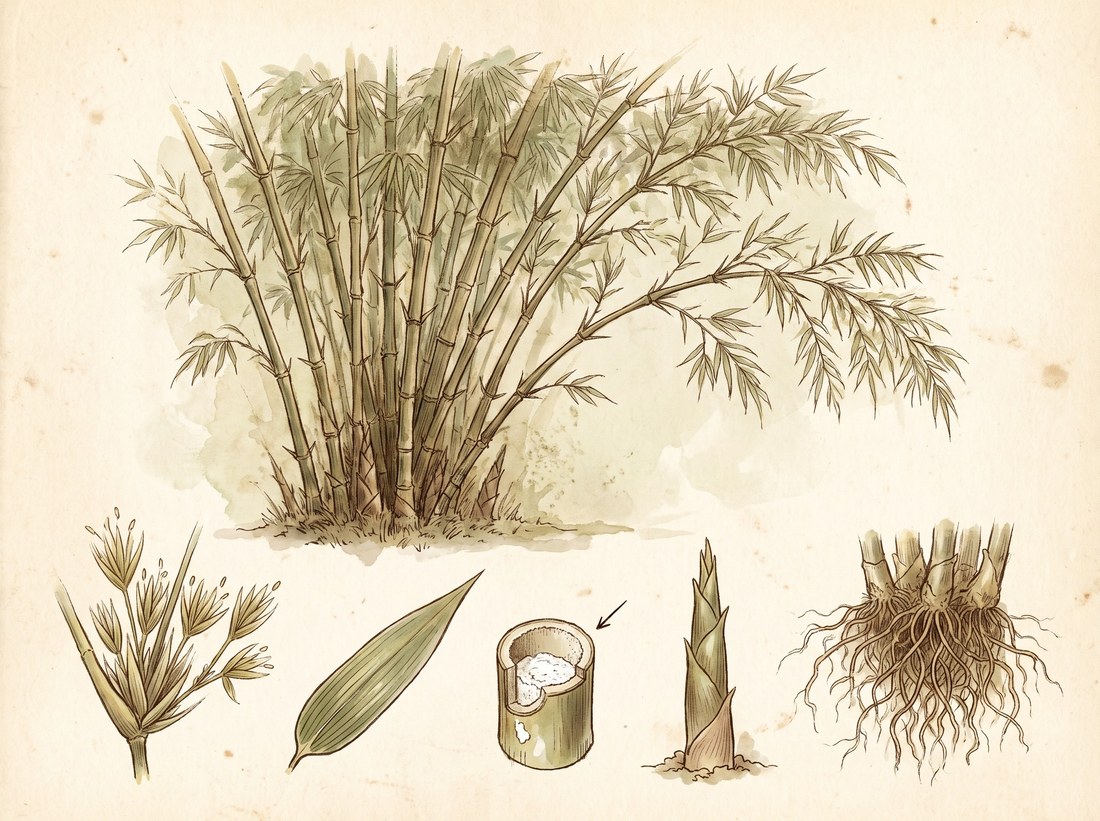 Thorny bambooBambusa arundinacea
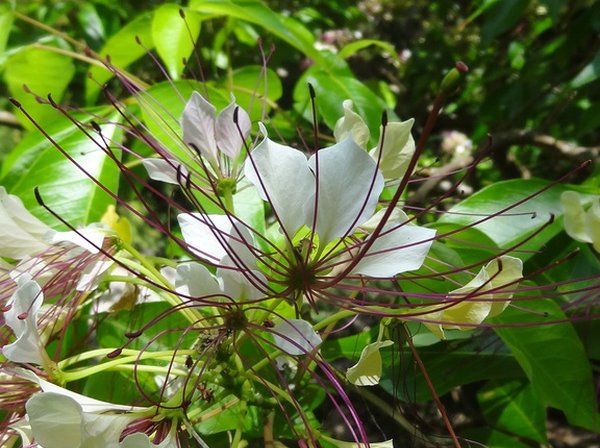 Three-leaved caperCrataeva nurvala
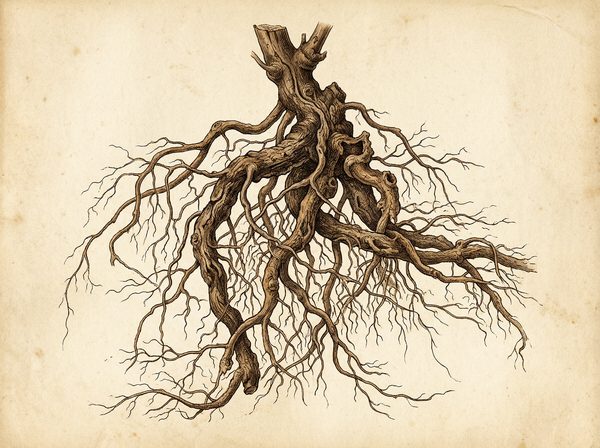 Thunder god vineTripterygium wilfordii
 ThymeThymus vulgaris
The whole plate is in the library. The compass, Compare, the Sky of eleven hundred plants and the formulary open with an email address and a password, free, with the formula builder and its safety engine. Herbert without limit, his formulating, clients, the handouts and the labels are the paid room.
Open the library, free