Western Herbalism
Tall Ambrosia
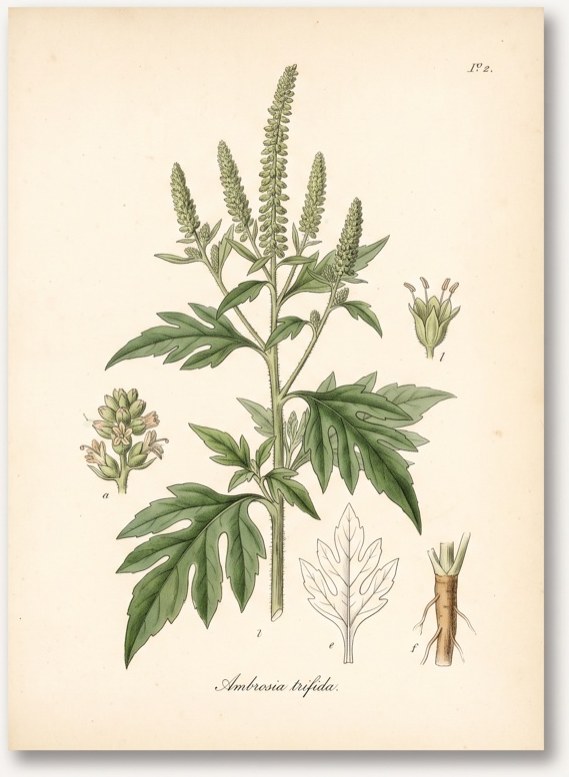
Ambrosia Trifida
Also known as Tall ragweed, Great ragweed, Giant ragweed, Horseweed, Horse cane, Richweed, Wild hemp, Bitterweed.
Ambrosia trifida is a tall, coarse annual of the Asteraceae family, native to much of North America and now widespread as a weed of disturbed ground, riverbanks, and cultivated fields. The Eclectic physicians of the nineteenth century used the fresh leaves and flowering tops of this and the related smaller ragweed, Ambrosia artemisiifolia, as a plain bitter tonic and mild antiperiodic, and applied the bruised herb topically to stings, bites, and small wounds. It is far better known today as one of the principal sources of allergenic pollen behind late-summer hay fever than as a medicinal plant, and its use in practice is now uncommon.

Ask Herbert about Tall Ambrosia. Herbert is the master herbalist inside Bountiful Herbs: he answers from this plate and eleven hundred others, with dosing, pairing and cautions. Your first ten questions are free.
Ask HerbertActions
Indications what the tradition reached for it in
- Poor appetite and sluggish digestion
- Intermittent fever (historical antiperiodic use)
- Diarrhea
- Dysentery
- Debility following fevers
- Minor wounds and insect stings (topical)
- Minor bleeding from cuts or stings (topical)
- General atonic dyspepsia
Specific indications
Debility with a bitter, weak digestion following a low intermittent fever, where a plain bitter tonic is wanted rather than a stimulating one
A fresh insect sting or minor wound where a bruised-leaf poultice is at hand and a quick astringent, hemostatic dressing is wanted
Safety
Pregnancy: Not rated in standard safety references and lacking any modern safety data; avoid in pregnancy as a precaution.
Breastfeeding: Not rated and lacking safety data; avoid during breastfeeding as a precaution.
The record lists 4 contraindications; open the plate in the library to read them in full.
In practice
Where this plant appears in the older American literature, it is almost always alongside its smaller relative Ambrosia artemisiifolia, and the two were used somewhat interchangeably as a simple bitter tonic for weak appetite and sluggish digestion, particularly in convalescence after a low fever.
Dosing as the sources wrote it
| Preparation | As written | Metric |
|---|---|---|
| Fresh-plant tincture (1:2, 60%) | 0.5-2 mL three times daily | 0.5-2 mL |
| Infusion of dried leaf | 1-2 g dried leaf as an infusion, taken in small divided doses through the day | 1000-2000 mg |
| Topical poultice | bruised fresh leaf applied directly to the affected area as needed | |
| Dose of the decoction from | Dose of the decoction (tops ℥ss, aqua Oj) from 1 to 2 fluid ounces. | 29.57-59.15 mL |
| Dose: Specific ambrosia artemisiaefolia, 1 to 10 drops every 1 to 4 hours. | 0.02-0.2 mL |
Doses are reproduced from the sources for practitioners and are not a recommendation for any person.
From the sources
Overview. Ambrosia trifida is a tall, coarse annual of the Asteraceae family, native to much of North America and now widespread as a weed of disturbed ground, riverbanks, and cultivated fields. The Eclectic physicians of the nineteenth century used the fresh leaves and flowering tops of this and the related smaller ragweed, Ambrosia artemisiifolia, as a plain bitter tonic and mild antiperiodic, and applied the bruised herb topically to stings, bites, and small wounds. It is far better known today as one of the principal sources of allergenic pollen behind late-summer hay fever than as a medicinal plant, and its use in practice is now uncommon.
Clinical Notes. Where this plant appears in the older American literature, it is almost always alongside its smaller relative Ambrosia artemisiifolia, and the two were used somewhat interchangeably as a simple bitter tonic for weak appetite and sluggish digestion, particularly in convalescence after a low fever.
Drawn from King's American Dispensatory, 18th edition (Felter and Lloyd), and the Bountiful Herbs editorial.
Nearby on the shelf
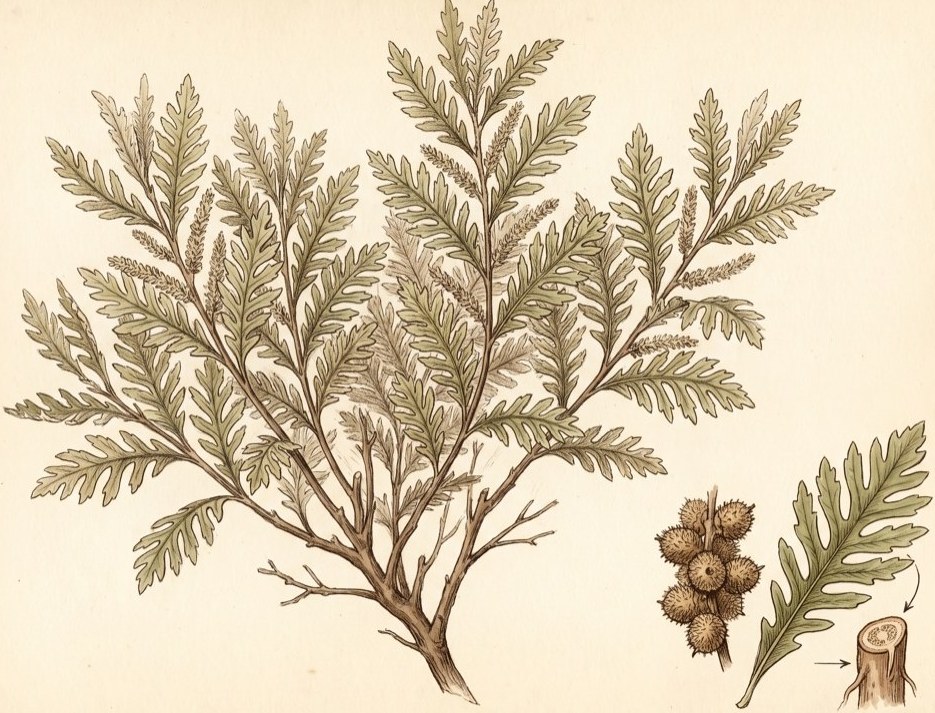 SweetfernComptonia asplenifolia
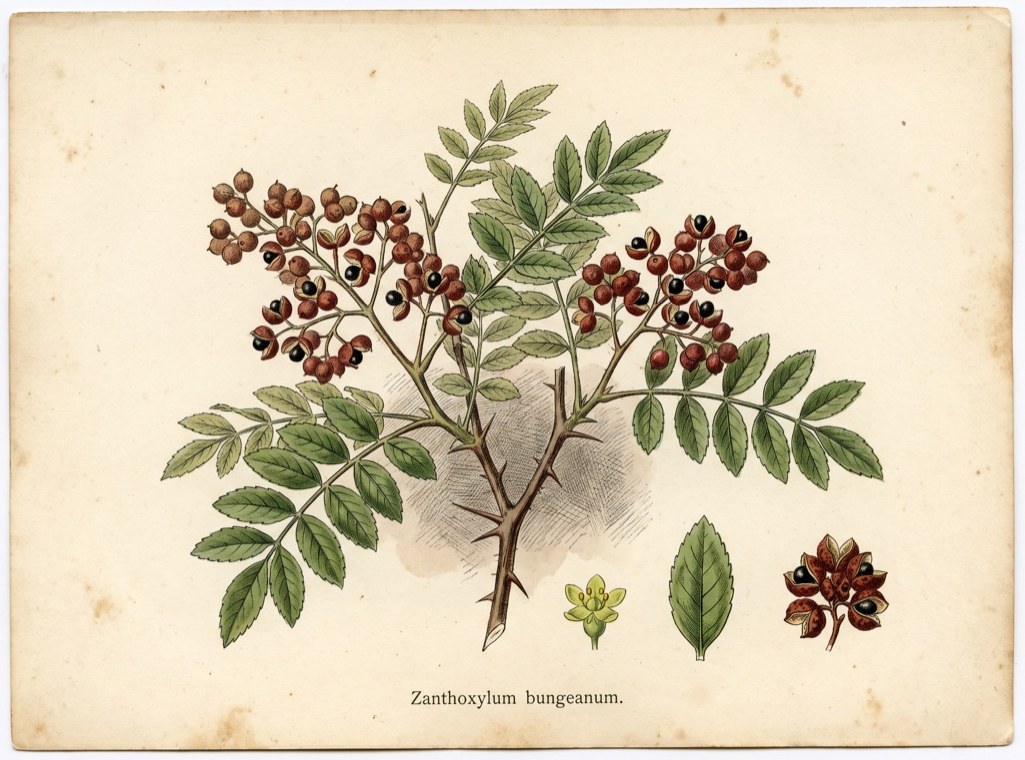 Szechuan PepperZanthoxylum bungeanum
 Tag AlderAlnus Serrulata
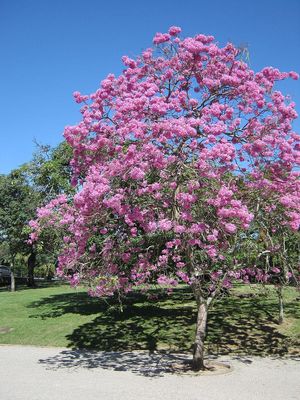 TaheeboTabebuia avellanedae
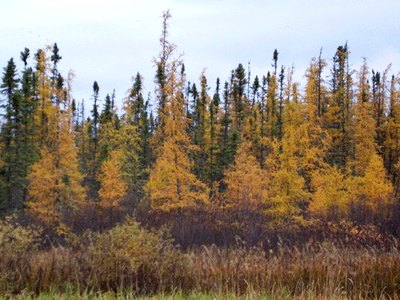 TamarackLarix Americana
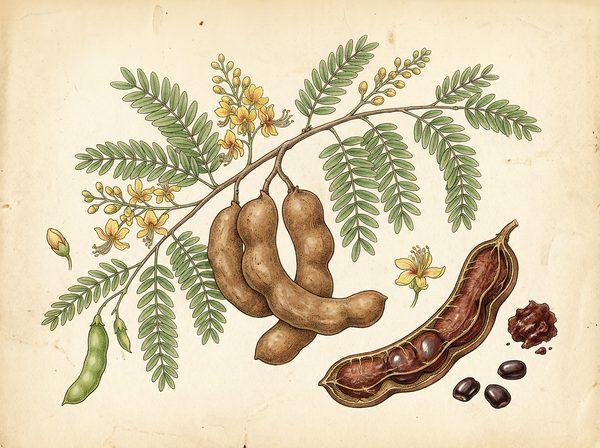 TamarindTamarindus indica
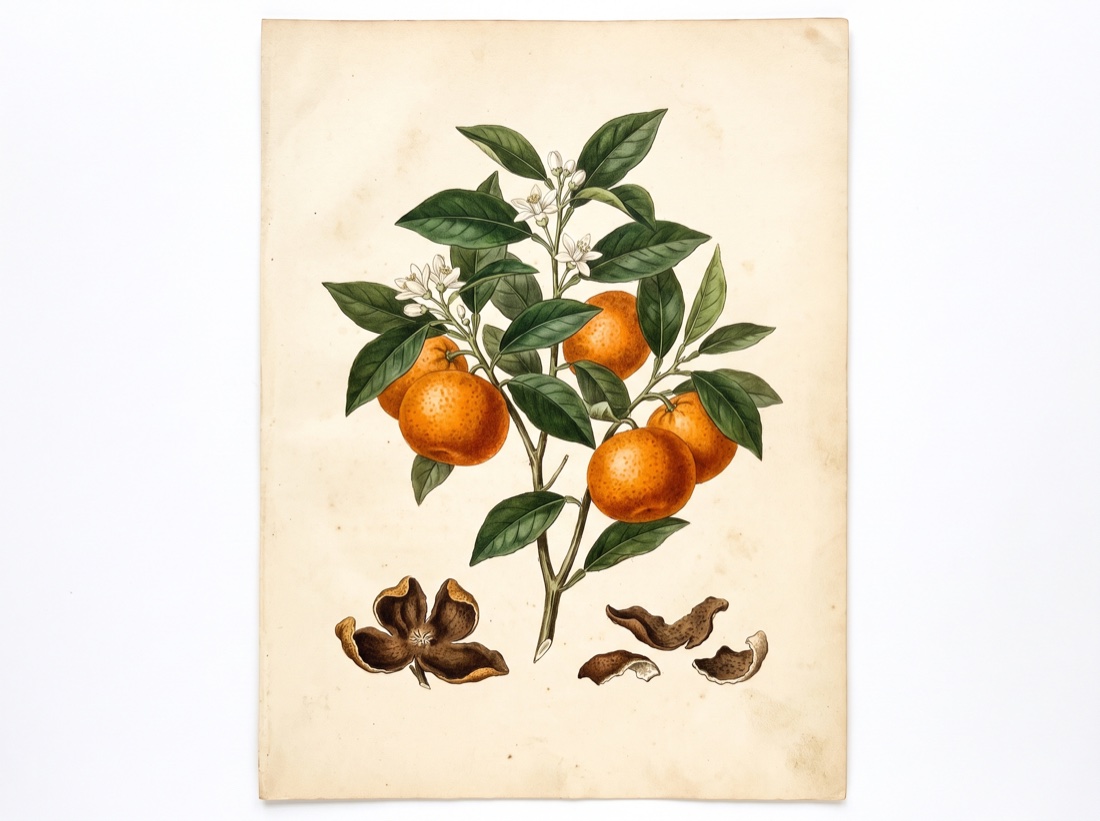 TangerineCitrus reticulata
 TansyTanacetum vulgare
The whole plate is in the library. The compass, Compare, the Sky of eleven hundred plants and the formulary open with an email address and a password, free, with the formula builder and its safety engine. Herbert without limit, his formulating, clients, the handouts and the labels are the paid room.
Open the library, free