Western Herbalism
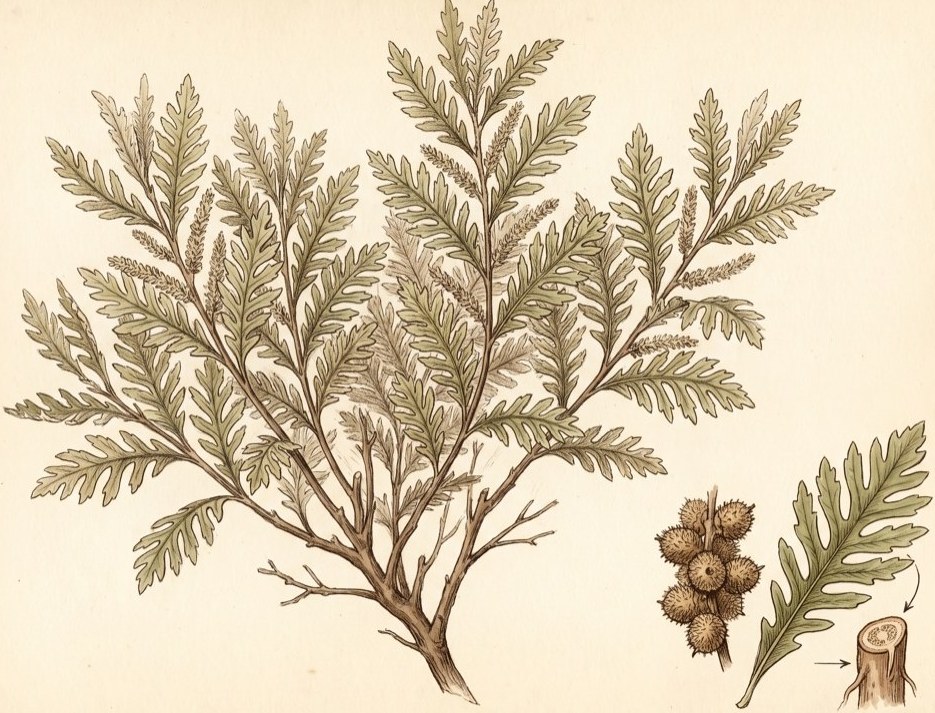
Sweetfern
Comptonia asplenifolia
Also known as Sweet fern, Spleenwort, Sweet-bush, Ricket plant, Fern gale, Meadow fern, Ferngale.
Sweetfern is a small aromatic shrub of the bayberry family, native to dry, sandy, and open woodland soils across eastern and central North America. The fragrant, fern-like leaves are the part gathered, traditionally dried for infusion or made into a wash. It held a place in nineteenth-century physiomedicalist and eclectic practice as a gentle astringent tonic for the bowel and a topical remedy for irritated, weeping skin, and it still turns up in folk use for poison ivy exposure in regions where it grows wild.

Ask Herbert about Sweetfern. Herbert is the master herbalist inside Bountiful Herbs: he answers from this plate and eleven hundred others, with dosing, pairing and cautions. Your first ten questions are free.
Ask HerbertActions
Indications what the tradition reached for it in
- Diarrhea
- Dysentery
- Chronic loose bowels in children
- Leucorrhea
- Poison ivy and poison oak dermatitis
- Weeping skin eruptions
- Sore throat (as gargle)
- Debility with poor tissue tone
- Colic
- Minor wounds and insect bites
Specific indications
Chronic, watery diarrhea with general debility and poor tone, especially in children (the traditional 'ricket plant' picture)
Weeping, itching, blistered dermatitis from poison ivy contact, used as a topical wash or fomentation
Safety
Pregnancy: Avoid or use only with professional guidance in pregnancy, as there is no reliable safety data for internal use.
Breastfeeding: Avoid or use only with professional guidance during lactation, as there is no reliable safety data.
The record lists 3 contraindications; open the plate in the library to read them in full.
In practice
In the older physiomedicalist framework sweetfern was reached for when tissue tone was slack, the picture being loose, watery stool with a generally lax, debilitated constitution rather than an acute inflammatory flux.
Dosing as the sources wrote it
| Preparation | As written | Metric |
|---|---|---|
| Infusion | 1-2 g dried leaf steeped 10-15 minutes, up to three times daily | 1000-2000 mg |
| Tincture (1:5, 40%) | 1-3 mL three times daily | 1-3 mL |
| Topical wash | strong decoction (about 30 g dried leaf per liter of water), applied cool to affected skin as needed | 30000-30000 mg |
| Dose, two fluid ounces three or four times a day | 59.15-59.15 mL | |
| decoction | Dose of the decoction, from 1 to 4 fluid ounces, 3 or 4 times a day. | 29.57-118 mL |
Doses are reproduced from the sources for practitioners and are not a recommendation for any person.
From the sources
Overview. Sweetfern is a small aromatic shrub of the bayberry family, native to dry, sandy, and open woodland soils across eastern and central North America. The fragrant, fern-like leaves are the part gathered, traditionally dried for infusion or made into a wash. It held a place in nineteenth-century physiomedicalist and eclectic practice as a gentle astringent tonic for the bowel and a topical remedy for irritated, weeping skin, and it still turns up in folk use for poison ivy exposure in regions where it grows wild.
Clinical Notes. In the older physiomedicalist framework sweetfern was reached for when tissue tone was slack, the picture being loose, watery stool with a generally lax, debilitated constitution rather than an acute inflammatory flux.
Properties and Uses. The leaves and shoots are fragrant, and mildly tonic-rather of the order of aromatic stimulants, and leaving a slight astringent impression upon the mucous membranes. They very gently promote digestion, especially in convalescence from acute forms of disease; and appear to exert an excellent influence upon the mesenteries and general assimilative apparatus, on which account they are good in scrofulous, rachitic, and mesenteric debility.
Properties and Uses. This root is moderately demulcent, and contains mild tonic properties about equally relaxant and stimulant. Its mild taste has created an opinion that it is nearly inert as a remedy; but in its own place it will be found among the most desirable articles of the Materia Medica.
Drawn from Cook's Physio-Medical Dispensatory; King's American Dispensatory, 18th edition (Felter and Lloyd), and the Bountiful Herbs editorial.
Nearby on the shelf
 Sweet OrangeCitrus sinensis
 Sweet VioletViola odorata
 Sweet WoodruffGalium odoratum
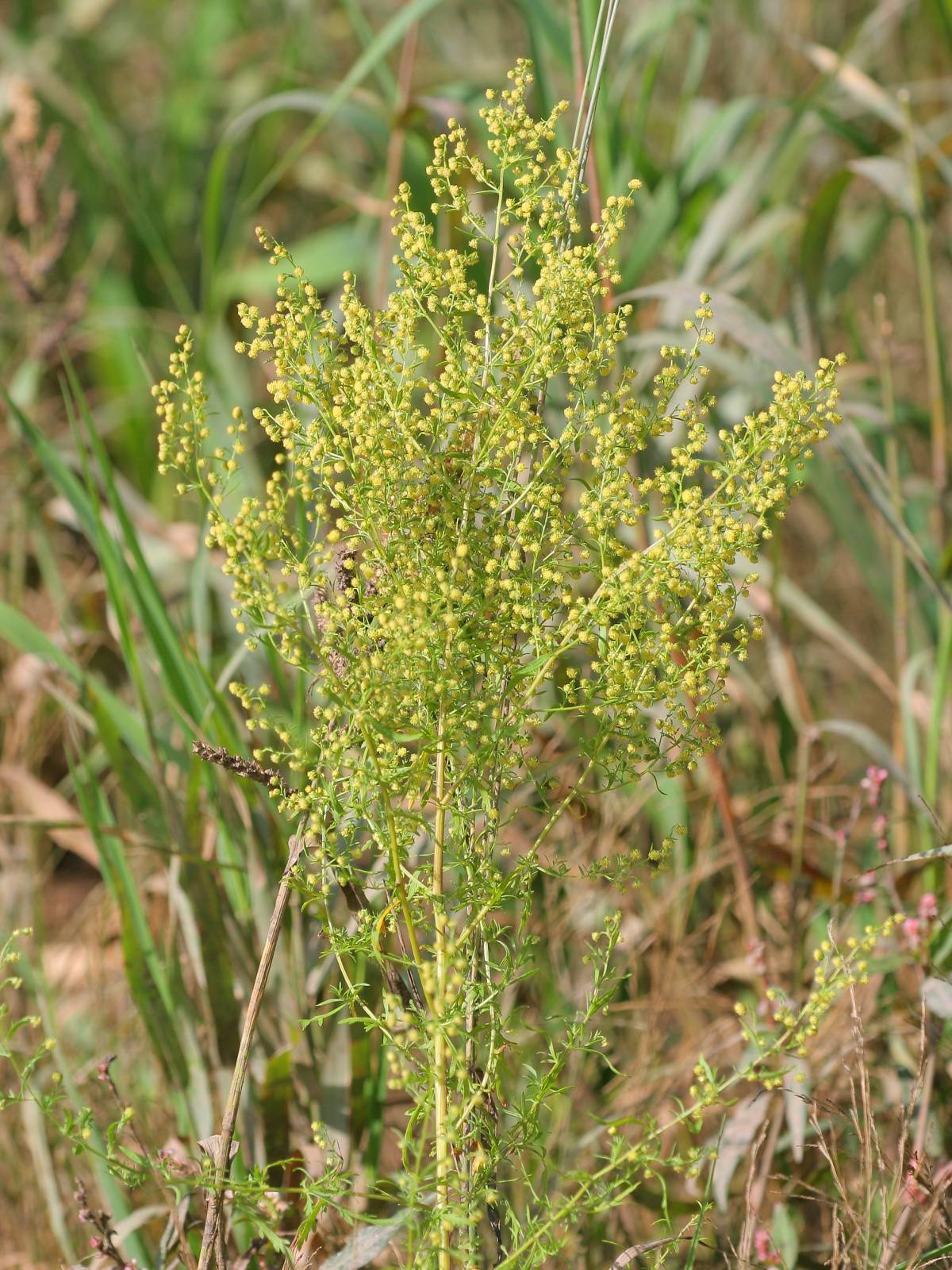 Sweet WormwoodArtemisia annua
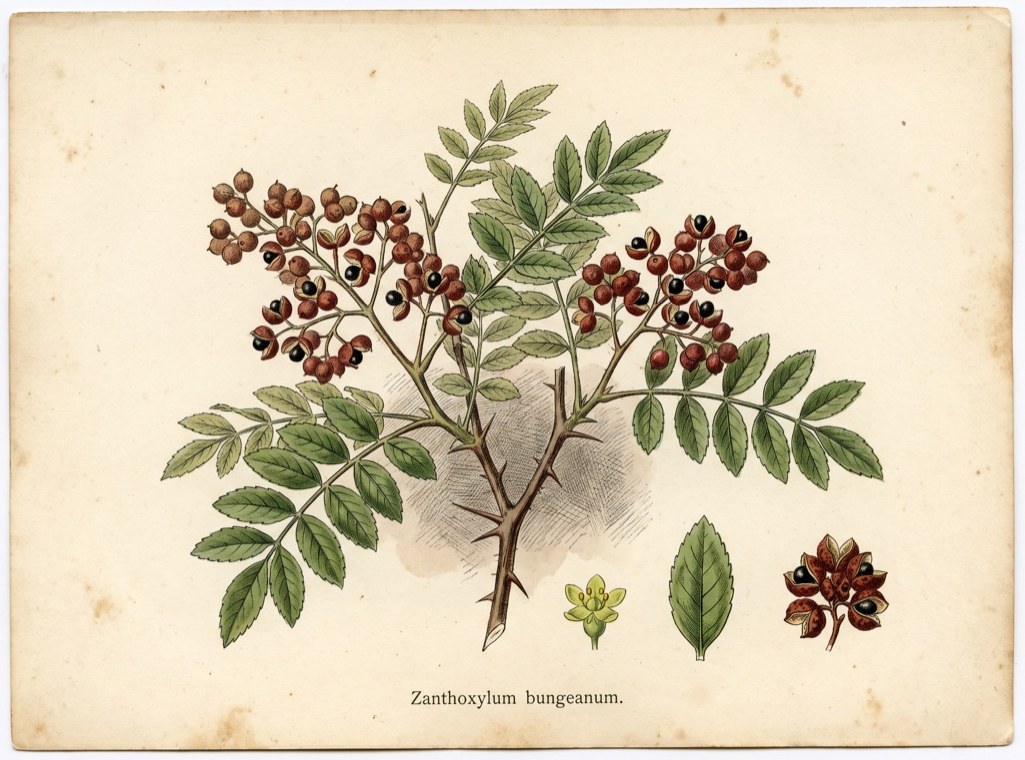 Szechuan PepperZanthoxylum bungeanum
 Tag AlderAlnus Serrulata
 TaheeboTabebuia avellanedae
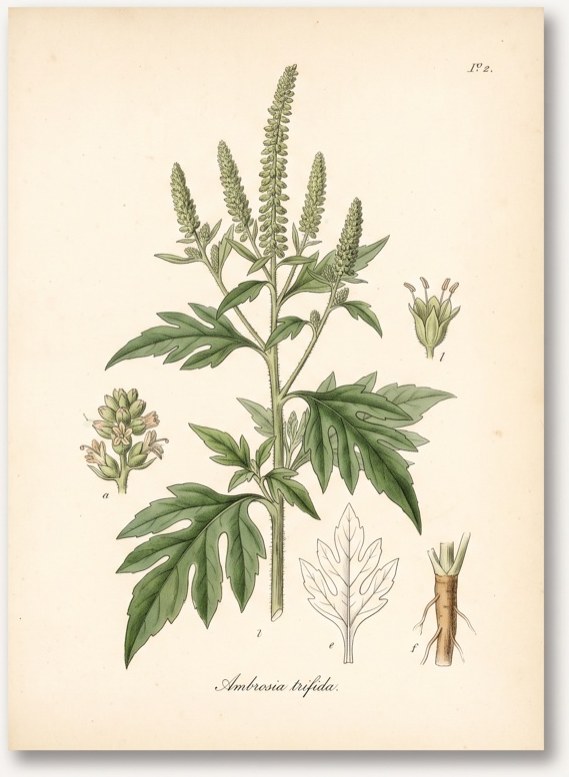 Tall AmbrosiaAmbrosia Trifida
The whole plate is in the library. The compass, Compare, the Sky of eleven hundred plants and the formulary open with an email address and a password, free, with the formula builder and its safety engine. Herbert without limit, his formulating, clients, the handouts and the labels are the paid room.
Open the library, free