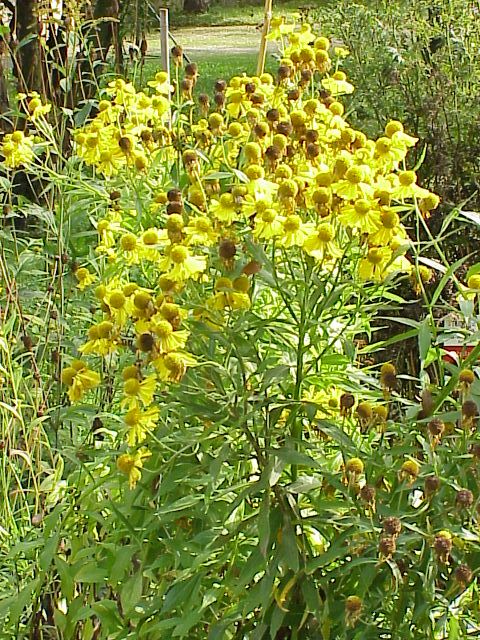
Western Herbalism
Sneezeweed
Helenium
Also known as Common sneezeweed, Autumn sneezeweed, Swamp sunflower, Wild sunflower, Sneezewort (regional, though this name more properly belongs to Achillea ptarmica), Sneezewort.
Helenium autumnale, the common sneezeweed, is a North American perennial of wet meadows and streambanks in the Asteraceae family, bearing yellow daisy-like flower heads in late summer and autumn. Its dried and powdered flowers were used by nineteenth century eclectic physicians as an errhine, a substance snuffed to provoke sneezing and clear the sinuses, much as older snuffs were used for head colds. The plant's common name reflects this historical use rather than any resemblance to the unrelated sneezewort, Achillea ptarmica, which shares the folk name in some regions.

Ask Herbert about Sneezeweed. Herbert is the master herbalist inside Bountiful Herbs: he answers from this plate and eleven hundred others, with dosing, pairing and cautions. Your first ten questions are free.
Ask HerbertActions
Indications what the tradition reached for it in
- Chronic nasal catarrh
- Sinus congestion
- Head colds with thick discharge
- Frontal headache from congestion
- Coryza
- Hay fever with heavy head
- Dull, aching frontal sinuses
- Loss of smell from chronic congestion
Specific indications
Thick, stagnant nasal mucus with a dull frontal headache that clears somewhat after sneezing
Chronic catarrhal deafness or dulled smell associated with long-standing sinus congestion
Safety
Low dose botanical. Used in drop doses in the classical practice; not a plant to dose freely.
Pregnancy: Avoid: no safety data exist and the plant contains sesquiterpene lactones with documented toxicity in animals, so it should not be used in pregnancy.
Breastfeeding: Avoid: there is no safety information for use during lactation and the constituent profile warrants caution.
The record lists 7 contraindications; open the plate in the library to read them in full.
In practice
In eclectic practice, powdered sneezeweed flower was insufflated in small pinches to trigger sneezing, on the theory that this reflex helped loosen and expel thick nasal secretions in chronic catarrh and sinus congestion, particularly when the head felt dull and heavy and ordinary decongestant measures had failed.
Dosing as the sources wrote it
| Preparation | As written | Metric |
|---|---|---|
| Errhine (dried, finely powdered flower) | a small pinch insufflated into one nostril as needed, used only occasionally | |
| Traditional infusion (historical use, not recommended without caution) | 0.5-1 g dried flower steeped briefly, used sparingly and not as routine internal therapy | 500-1000 mg |
Doses are reproduced from the sources for practitioners and are not a recommendation for any person.
From the sources
Overview. Helenium autumnale, the common sneezeweed, is a North American perennial of wet meadows and streambanks in the Asteraceae family, bearing yellow daisy-like flower heads in late summer and autumn. Its dried and powdered flowers were used by nineteenth century eclectic physicians as an errhine, a substance snuffed to provoke sneezing and clear the sinuses, much as older snuffs were used for head colds. The plant's common name reflects this historical use rather than any resemblance to the unrelated sneezewort, Achillea ptarmica, which shares the folk name in some regions.
Clinical Notes. In eclectic practice, powdered sneezeweed flower was insufflated in small pinches to trigger sneezing, on the theory that this reflex helped loosen and expel thick nasal secretions in chronic catarrh and sinus congestion, particularly when the head felt dull and heavy and ordinary decongestant measures had failed.
Drawn from King's American Dispensatory, 18th edition (Felter and Lloyd), and the Bountiful Herbs editorial.
Nearby on the shelf
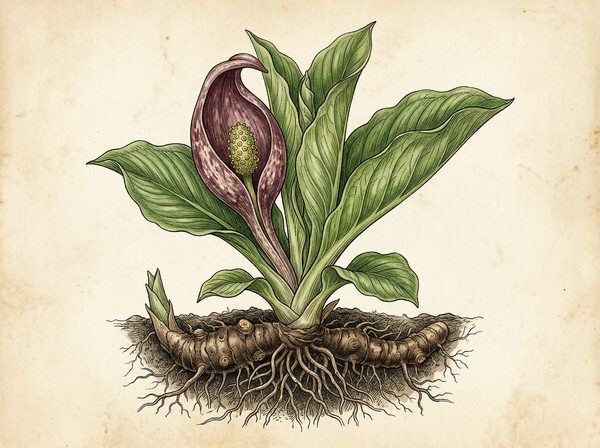 Skunk CabbageSymplocarpus foetidus
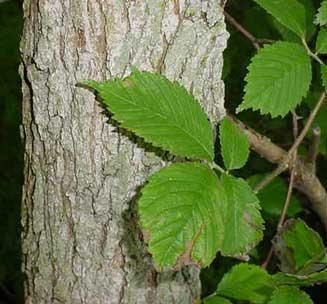 Slippery elmUlmus rubra
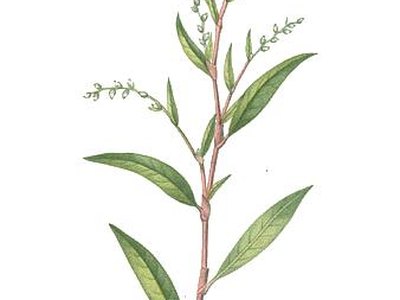 SmartweedPolygonum hydropiper
 Smilax regeliiSmilax regelii
 Snow roseRhododendron chrysanthum
 SoapwortSaponaria officinalis
 Socotrine aloesAloes socotrina
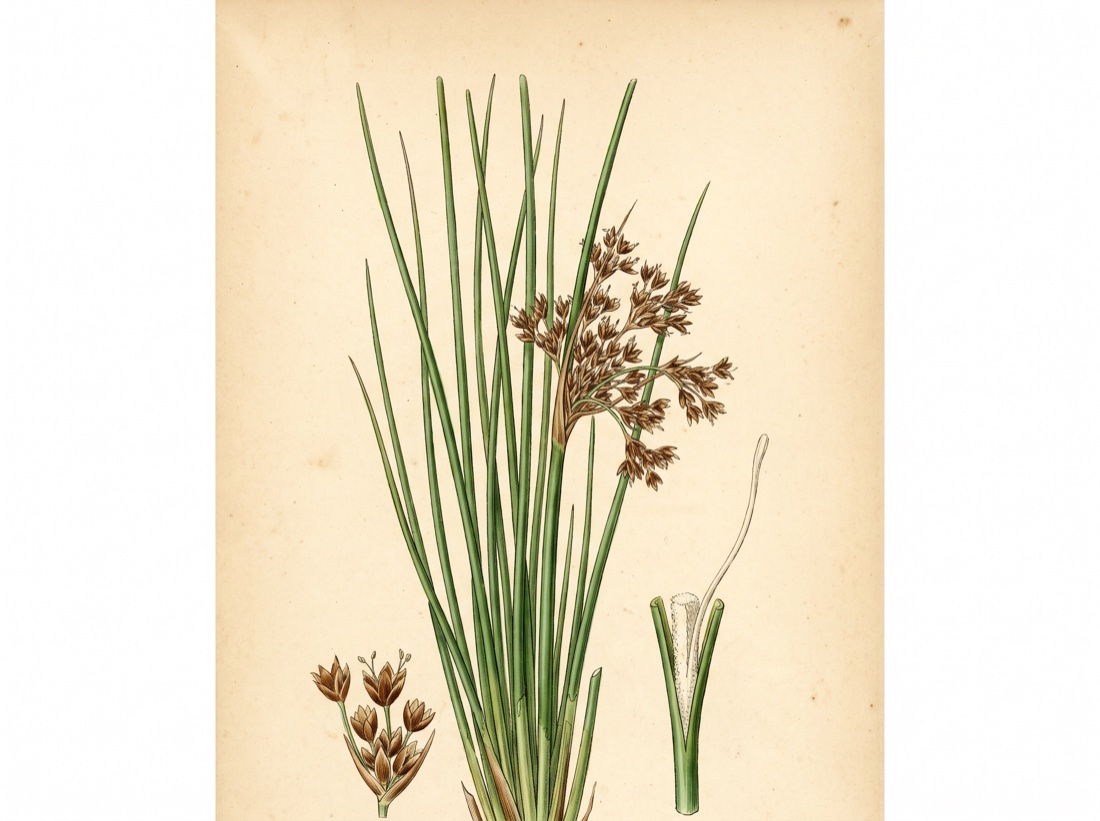 Soft rushJuncus effusus
The whole plate is in the library. The compass, Compare, the Sky of eleven hundred plants and the formulary open with an email address and a password, free, with the formula builder and its safety engine. Herbert without limit, his formulating, clients, the handouts and the labels are the paid room.
Open the library, free