Western Herbalism
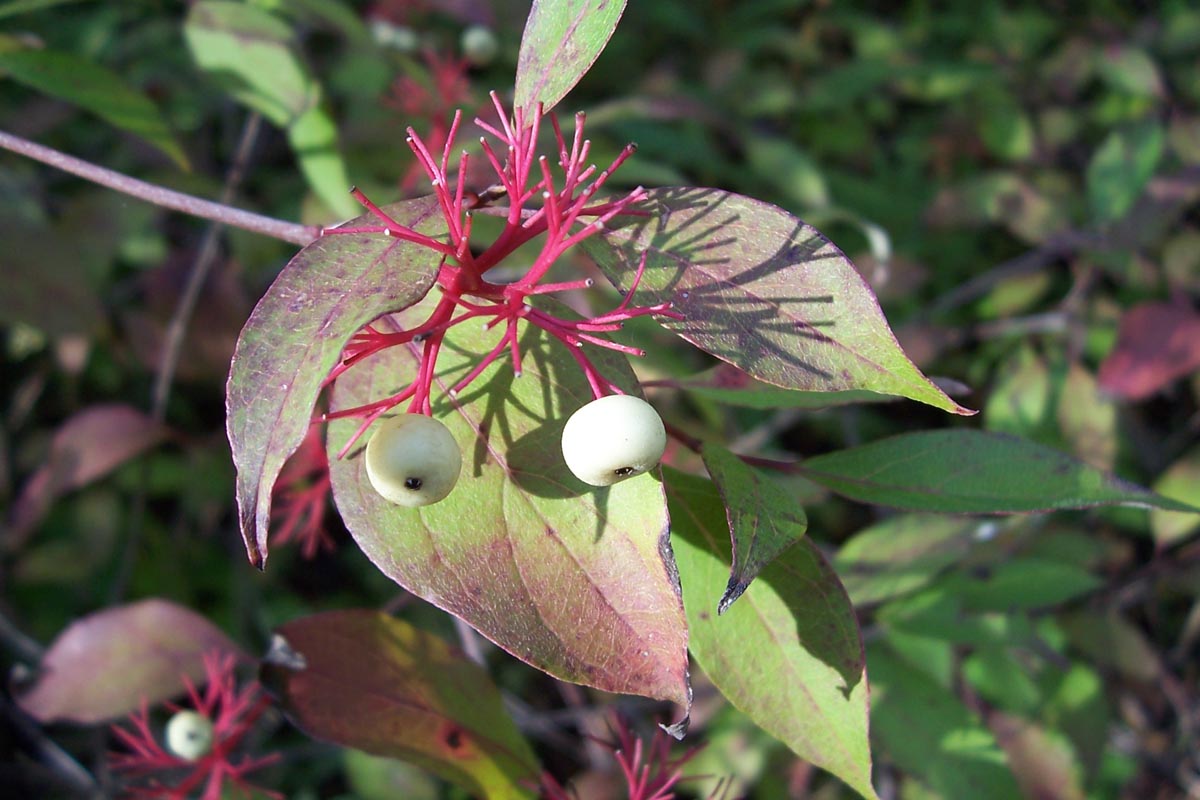
Red osier dogwood
Cornus sericea
Also known as Swamp dogwood, Red willow, Rose willow, Kinnikinnik, American dogwood, Red osier, Silky corxel.
Red osier dogwood is a wetland shrub native across much of North America, easily recognized by its bright red winter stems and blue-white berries. Early American physiomedicalist and eclectic physicians used the dried stem and root bark as a milder, more astringent cousin of flowering dogwood (Cornus florida), reserving it chiefly for atonic conditions of the female reproductive tissues. It never entered mainstream pharmacopoeial use and today survives mainly as a historical curiosity within the physiomedicalist repertoire.

Ask Herbert about Red osier dogwood. Herbert is the master herbalist inside Bountiful Herbs: he answers from this plate and eleven hundred others, with dosing, pairing and cautions. Your first ten questions are free.
Ask HerbertActions
Indications what the tradition reached for it in
- Atonic uterine conditions
- Chronic menorrhagia
- Uterine prolapse
- Leukorrhea with lax tissue
- Ineffectual or lax labor pains
- Nausea of pregnancy
- Diarrhea from relaxed bowel
- Intermittent fever (historical antiperiodic use)
- Chronic mucous discharges
Specific indications
Heavy, prolonged uterine bleeding in a woman whose tissues feel generally lax and toneless rather than congested or inflamed
Weak, inefficient labor pains where the system is described as lax rather than obstructed, used alongside partus-preparing herbs
Safety
Breastfeeding: Not rated and no safety data exist, so avoid during lactation unless under experienced guidance.
The record lists 4 contraindications; open the plate in the library to read them in full.
In practice
Physiomedicalist writers placed this bark toward the astringent end of the tissue-tone spectrum, using it where relaxation and lack of tone rather than heat or congestion seemed to be the picture: prolonged watery menstrual flow, a prolapsed or boggy uterus, or chronic leukorrhea in a woman who seemed generally toneless.
Dosing as the sources wrote it
| Preparation | As written | Metric |
|---|---|---|
| Decoction of dried bark | 2-4 g dried bark simmered gently, taken up to three times daily | 2000-4000 mg |
| Tincture (1:5, 40%) | 1-2 mL three times daily | 1-2 mL |
Doses are reproduced from the sources for practitioners and are not a recommendation for any person.
From the sources
Overview. Red osier dogwood is a wetland shrub native across much of North America, easily recognized by its bright red winter stems and blue-white berries. Early American physiomedicalist and eclectic physicians used the dried stem and root bark as a milder, more astringent cousin of flowering dogwood (Cornus florida), reserving it chiefly for atonic conditions of the female reproductive tissues. It never entered mainstream pharmacopoeial use and today survives mainly as a historical curiosity within the physiomedicalist repertoire.
Clinical Notes. Physiomedicalist writers placed this bark toward the astringent end of the tissue-tone spectrum, using it where relaxation and lack of tone rather than heat or congestion seemed to be the picture: prolonged watery menstrual flow, a prolapsed or boggy uterus, or chronic leukorrhea in a woman who seemed generally toneless.
Properties and Uses. The bark is similar to that of cornus florida, but partakes more of the characters of a pure astringent, and less of those of a tonic. It is also more stimulating than the other dogwoods. It expends a considerable influence upon the uterus, and is of service in atonic conditions of that organ.
Description. Natural Order and Generic characters the same as in cornus circinata. C. SERICEA: A shrub eight feet high, with opposite and dusky-purple branches, and dark-red shoots; young twigs woolly. Leaves opposite, ovate; two to four inches long by half as wide, nearly smooth above, soft-pubescent beneath, on petioles an inch long. Flowers small, yellowishwhite, in depressed and woolly cymes; no involucre. Fruit a bright-blue, spherical berry. Common in wet places. June.
Drawn from Cook's Physio-Medical Dispensatory, and the Bountiful Herbs editorial.
Nearby on the shelf
 Red budCercis canadensis
 Red ChickweedAnagallis Arvensis
 Red cloverTrifolium pratense
 Red mulberryMorus Rubra
 Red raspberryRubus idaeus
 Red rootCeanothus americanus
 Red rootLachnanthes
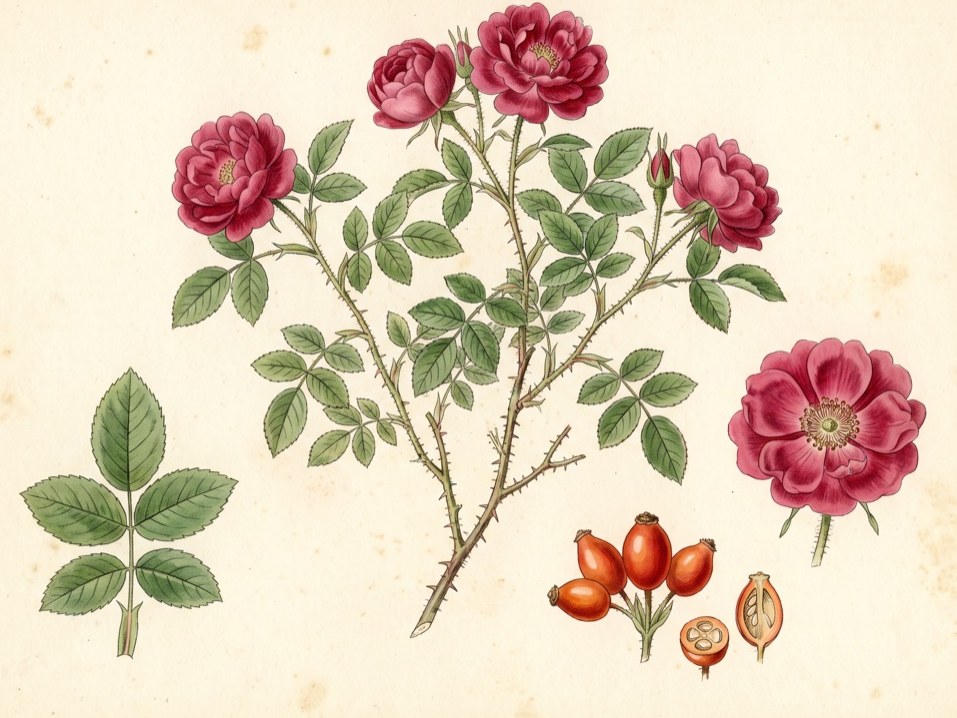 Red roseRosa Gallica
The whole plate is in the library. The compass, Compare, the Sky of eleven hundred plants and the formulary open with an email address and a password, free, with the formula builder and its safety engine. Herbert without limit, his formulating, clients, the handouts and the labels are the paid room.
Open the library, free