Western Herbalism
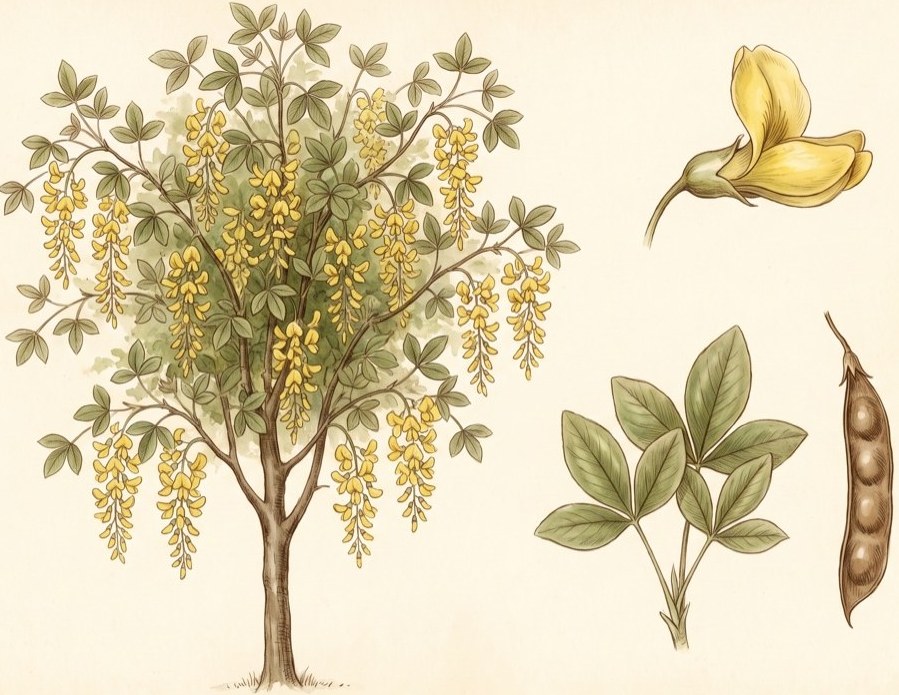
Laburnum
Laburnum
Also known as Bean-trefoil, Golden chain.
Both the flowers and the seeds have been employed in medicine, in dropsical affections, and with considerable efficacy. Sixty grains of the powdered seeds produce active catharsis, and even emesis, and is the dose generally advised in dropsy. An infusion of the flowers has been advantageously employed in gout and rheumatism, and is also stated to have been successful in several cases of albuminuria, in doses of 2 tablespoonfuls every 1 or 2 hours. Probably a tincture would be found more available. Formerly this plant had an unmerited reputation for the prevention, as well as the cure, of hydrophobia.

Ask Herbert about Laburnum. Herbert is the master herbalist inside Bountiful Herbs: he answers from this plate and eleven hundred others, with dosing, pairing and cautions. Your first ten questions are free.
Ask HerbertSafety
Recognised toxicity. This plant carries a toxicity flag in the record; it is for trained practitioners only.
Dosing as the sources wrote it
| Preparation | As written | Metric |
|---|---|---|
| Med.), suggests the small dose (teaspoonful of the solution of 10 drops of a tincture of the recent bark, made with 98 per cent alcohol, in 4 ounces of water), every 1 to 3 hours in irritation of mucous tissues occurring in nervous dyspepsia, in the restlessness and uneasiness which follows mental overwork, and in the excitation of the gastric and hepatic nerves giving rise to frequent and easily excited vomiting. | ||
| a decoction | The dose of a decoction, of sp. gr. |
Doses are reproduced from the sources for practitioners and are not a recommendation for any person.
From the sources
Action, Medical Uses, and Dosage. Both the flowers and the seeds have been employed in medicine, in dropsical affections, and with considerable efficacy. Sixty grains of the powdered seeds produce active catharsis, and even emesis, and is the dose generally advised in dropsy. An infusion of the flowers has been advantageously employed in gout and rheumatism, and is also stated to have been successful in several cases of albuminuria, in doses of 2 tablespoonfuls every 1 or 2 hours. Probably a tincture would be found more available. Formerly this plant had an unmerited reputation for the prevention, as well as the cure, of hydrophobia.
Botanical Source and History. This plant is an erect shrub, about a foot high, and is a native of Central Europe. It is quite common in poor soil throughout England, and has been naturalized, and grows abundantly, in a few localities of the eastern United States.
The young branches and leaves of Genista tinctoria, Linné. Nat. Ord: Leguminosae. COMMON NAMES: Dyer's green-weed, Wood-waxen, Green weed, Dyer's broom, Dyer's weed.
Drawn from King's American Dispensatory, 18th edition (Felter and Lloyd), and the Bountiful Herbs editorial.
Nearby on the shelf
 KudzuPueraria lobata
 KurchiHolarrhena antidysenterica
 KutkiPicrorhiza kurroa
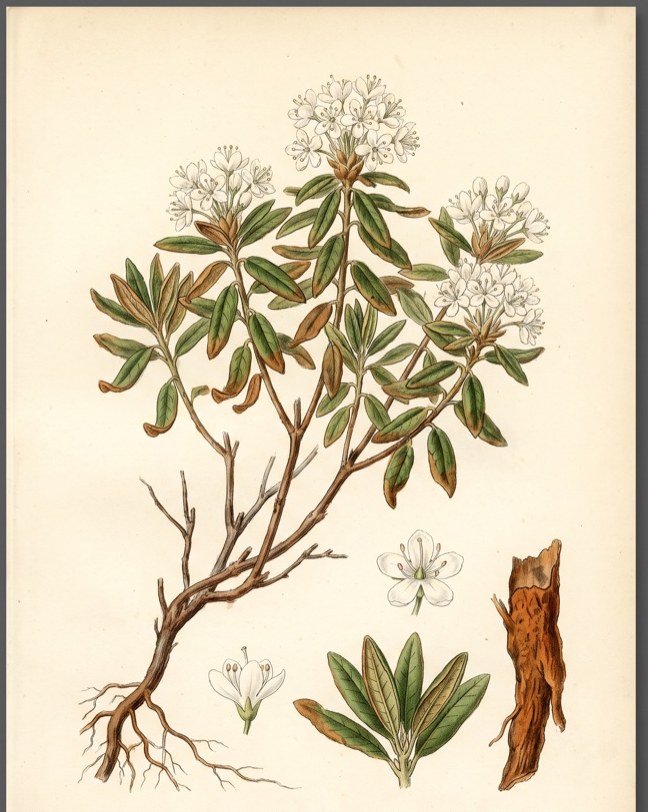 Labrador TeaRhododendron groenlandicum
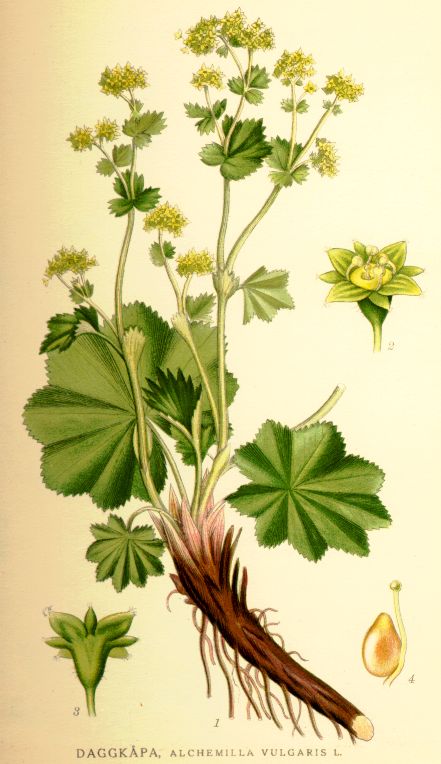 Lady's MantleAlchemilla vulgaris
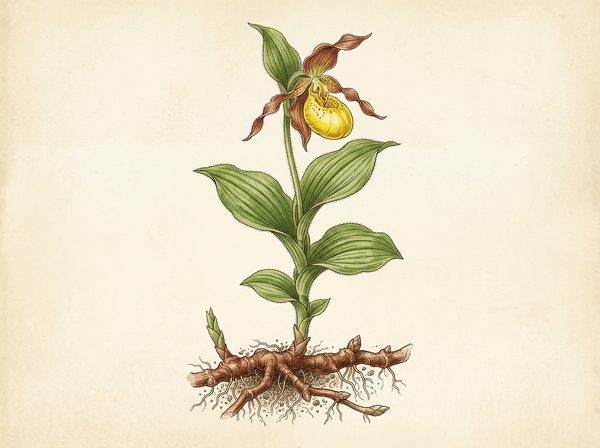 Lady's SlipperCypripedium pubescens
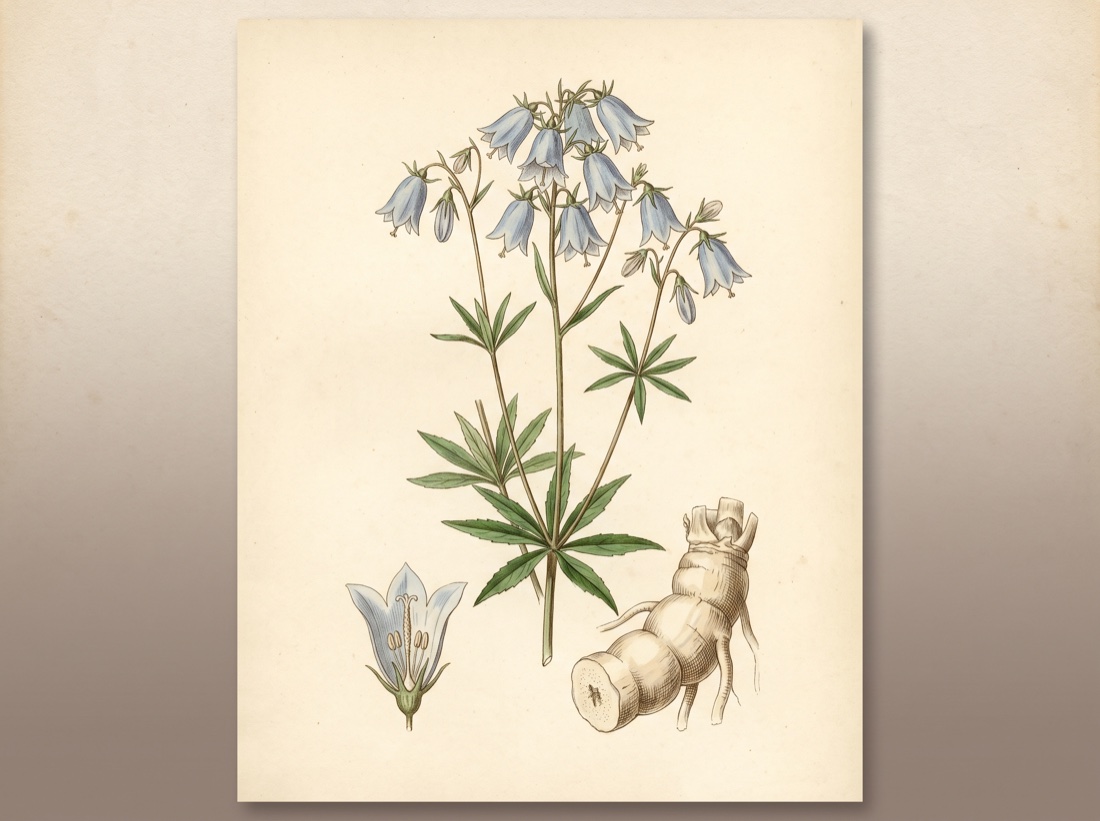 LadybellsAdenophora stricta
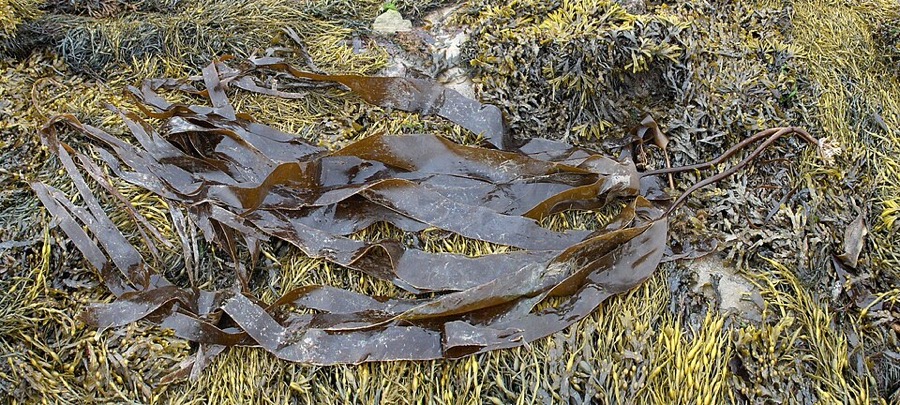 LaminariaLaminaria
The whole plate is in the library. The compass, Compare, the Sky of eleven hundred plants and the formulary open with an email address and a password, free, with the formula builder and its safety engine. Herbert without limit, his formulating, clients, the handouts and the labels are the paid room.
Open the library, free