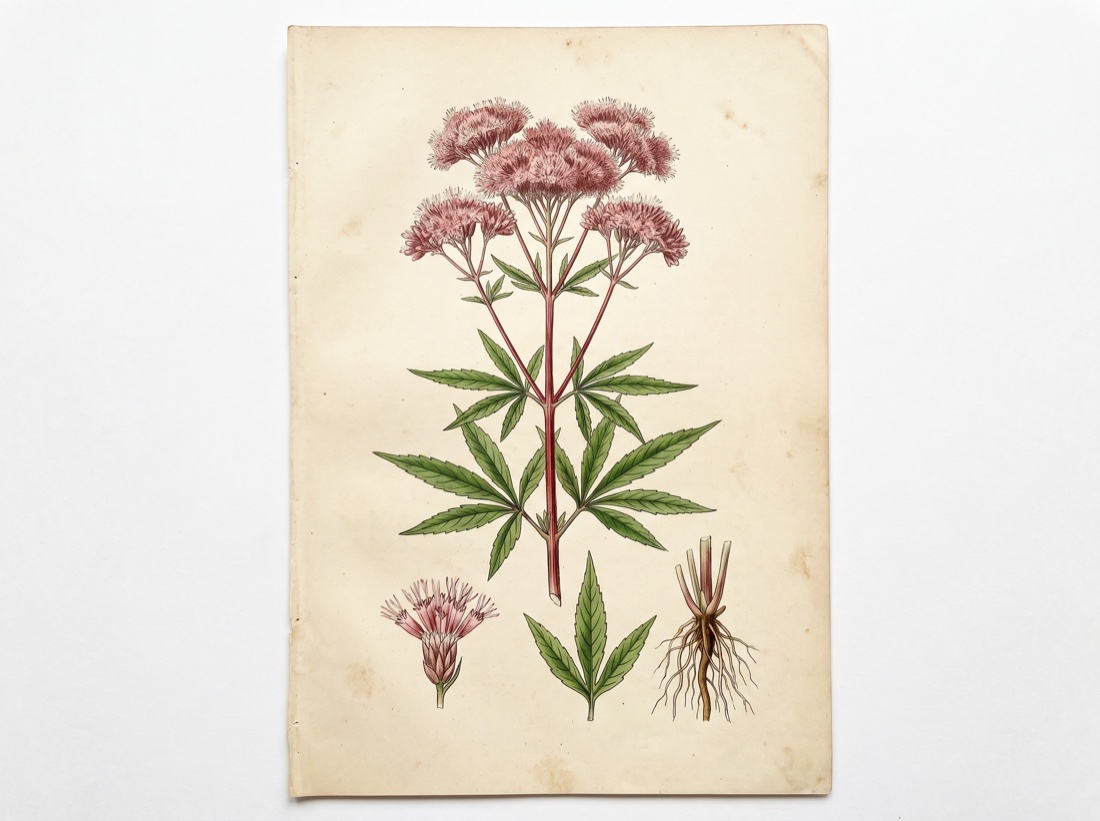
Western Herbalism
Hemp agrimony
Eupatorium cannabinum
Also known as water hemp, holy rope, Dutch agrimony, raspberries and cream, water maudlin.
Hemp agrimony is a tall, pink-flowered perennial of riverbanks, ditches and damp woodland margins across Europe, western Asia and North Africa, named for its palmate leaves that resemble hemp. The flowering aerial parts, and historically the root, were used as a bitter, cooling remedy for fevers, liver congestion and constipation, and it was a classic cottage remedy for influenza in continental Europe. It is the European cousin of boneset and gravel root, and shares their unsaturated pyrrolizidine alkaloids, which now restrict its internal use.

Ask Herbert about Hemp agrimony. Herbert is the master herbalist inside Bountiful Herbs: he answers from this plate and eleven hundred others, with dosing, pairing and cautions. Your first ten questions are free.
Ask HerbertActions
Indications what the tradition reached for it in
- Influenza and feverish colds (historical internal use, now restricted)
- Sluggish liver and biliary congestion (historical)
- Constipation with a sluggish liver (historical)
- Fluid retention (historical)
- Rheumatic aches with fever (historical)
- Slow-healing wounds and ulcers (topical)
- Skin eruptions and boils (topical wash)
- Scabby scalp conditions (topical)
Specific indications
A feverish, heavy-limbed influenza with a coated tongue and sluggish bowels, where the old herbalists reached for hemp agrimony as a bitter diaphoretic; today this picture is better met with boneset, elder and yarrow because of the alkaloid risk
Chronic, indolent skin ulcers or scabbed eruptions that respond to a bitter, antiseptic wash applied externally
Safety
Recognised toxicity. This plant carries a toxicity flag in the record; it is for trained practitioners only.
Low dose botanical. Used in drop doses in the classical practice; not a plant to dose freely.
Pregnancy: Contraindicated: unsaturated pyrrolizidine alkaloids cross the placenta and are hepatotoxic and genotoxic, so internal use is not acceptable at any dose.
Breastfeeding: Not for use while breastfeeding
The record lists 9 contraindications; open the plate in the library to read them in full.
In practice
This is a plant to know rather than one to dispense freely. Internally it was given as a bitter diaphoretic and cholagogue for feverish colds, influenza, a sluggish liver, constipation and dropsy, in small doses because the fresh plant is emetic and purgative in quantity.
Dosing as the sources wrote it
| Preparation | As written | Metric |
|---|---|---|
| Infusion (short course only, restricted) | 1-2 g dried aerial parts per cup up to twice daily for no more than 5 days | 1000-2000 mg |
| Tincture (1:5, 25%), historical, not recommended | 1-2 mL up to three times daily for no more than 5 days | 1-2 mL |
| Topical wash or poultice | 10-20 g dried herb per 500 mL water applied two to three times daily | 10000-20000 mg |
Doses are reproduced from the sources for practitioners and are not a recommendation for any person.
From the sources
Overview. Hemp agrimony is a tall, pink-flowered perennial of riverbanks, ditches and damp woodland margins across Europe, western Asia and North Africa, named for its palmate leaves that resemble hemp. The flowering aerial parts, and historically the root, were used as a bitter, cooling remedy for fevers, liver congestion and constipation, and it was a classic cottage remedy for influenza in continental Europe. It is the European cousin of boneset and gravel root, and shares their unsaturated pyrrolizidine alkaloids, which now restrict its internal use.
Clinical Notes. This is a plant to know rather than one to dispense freely. Internally it was given as a bitter diaphoretic and cholagogue for feverish colds, influenza, a sluggish liver, constipation and dropsy, in small doses because the fresh plant is emetic and purgative in quantity.
Nearby on the shelf
 Hedge MustardSisymbrium
 Hedge-hyssopGratiola
 HelleborusHelleborus niger
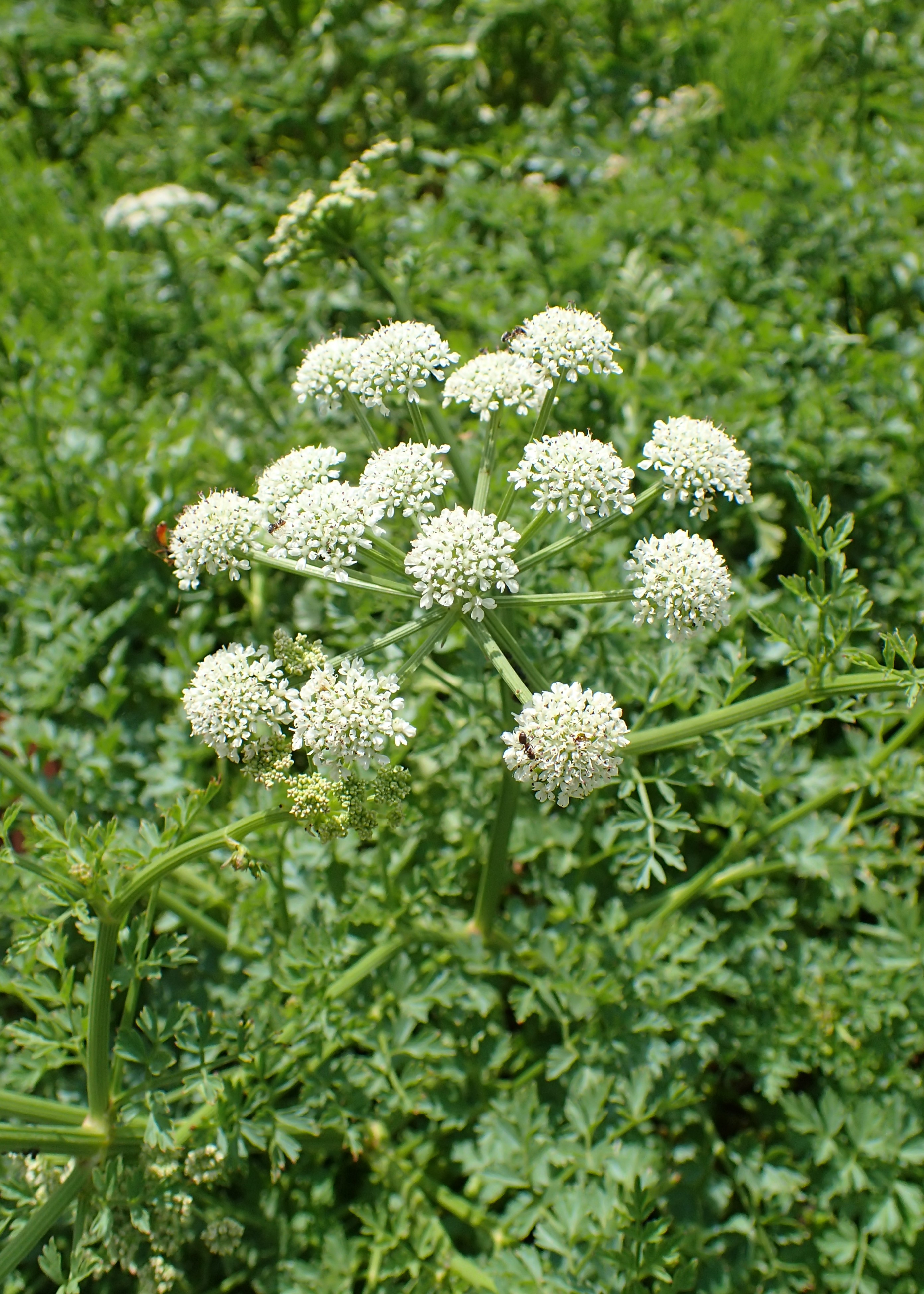 Hemlock water dropwortOenanthe crocata
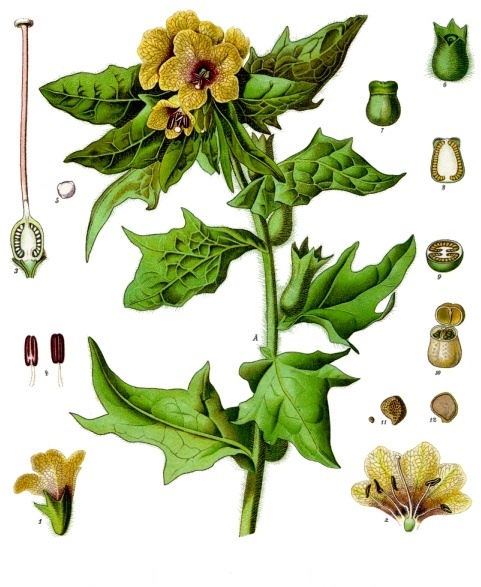 HenbaneHyoscyamus niger
 HennaLawsonia inermis
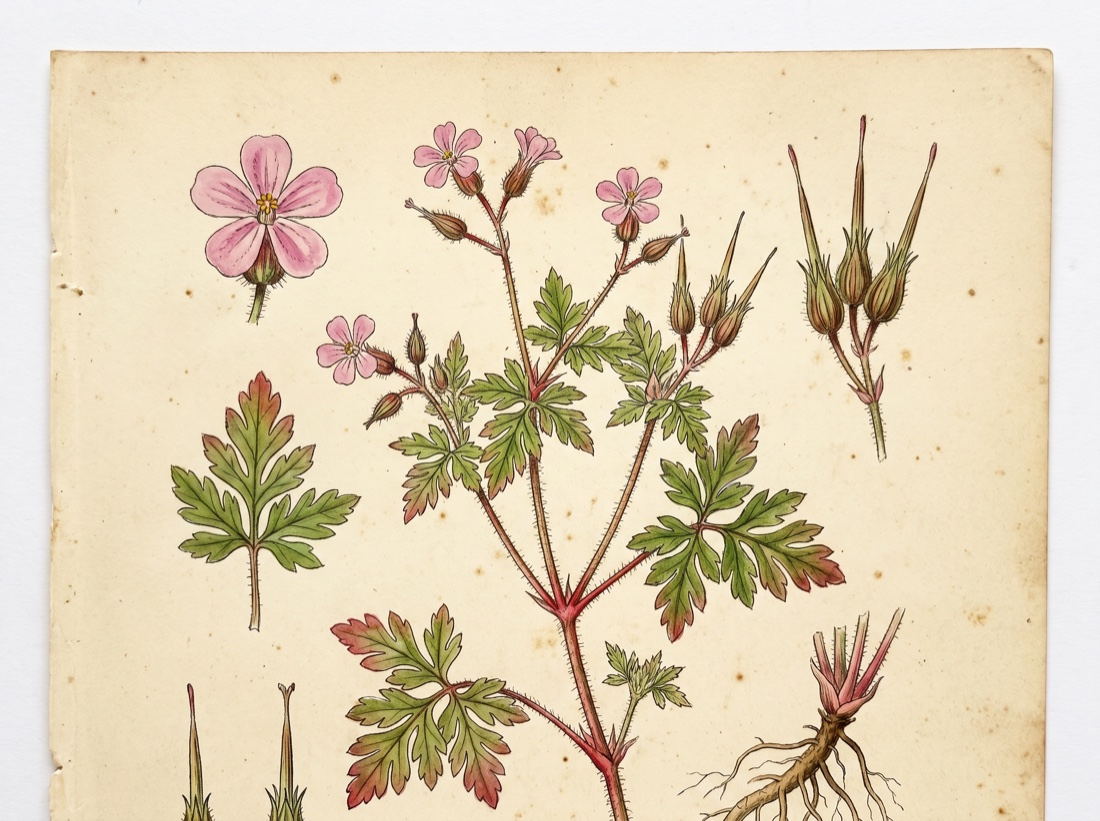 Herb RobertGeranium robertianum
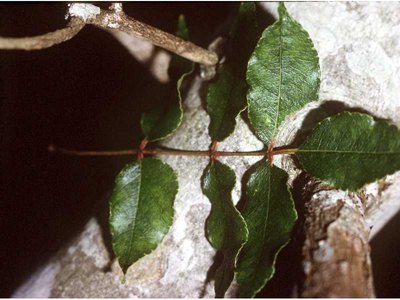 Hercules-clubZanthoxylum clava-herculis
The whole plate is in the library. The compass, Compare, the Sky of eleven hundred plants and the formulary open with an email address and a password, free, with the formula builder and its safety engine. Herbert without limit, his formulating, clients, the handouts and the labels are the paid room.
Open the library, free